


Vintage Bronze Mantel Clock
A vintage bronze mantel clock sits heavily upon the slate, bringing mechanical precision and French foundry craft into the room.
Vintage Bronze Mantel Clock
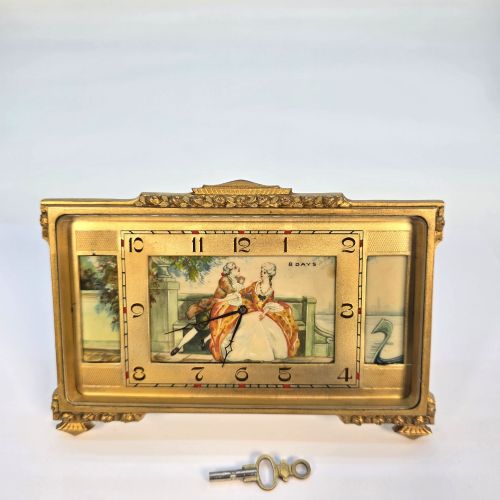
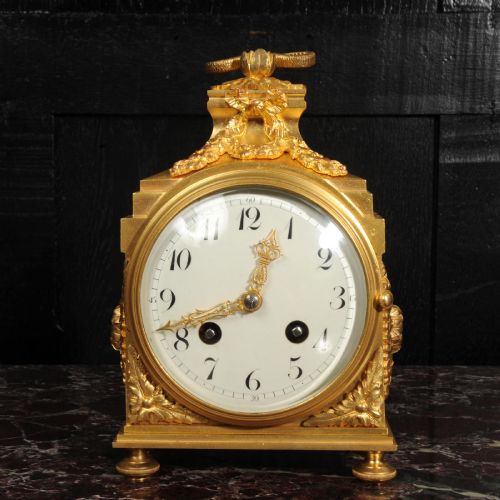
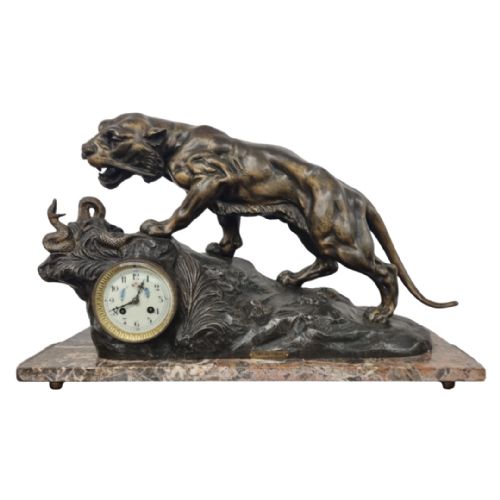
When you search for a vintage bronze mantel clock, you encounter heavy cast metal timepieces designed to sit prominently on domestic hearths and sideboards. The selection spans the nineteenth century and early twentieth century, drawing heavily on French stylistic revivals and Victorian domestic tastes.
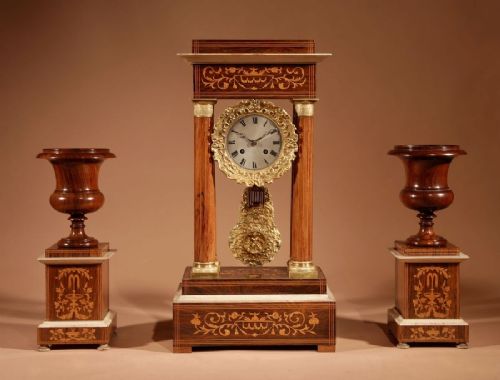
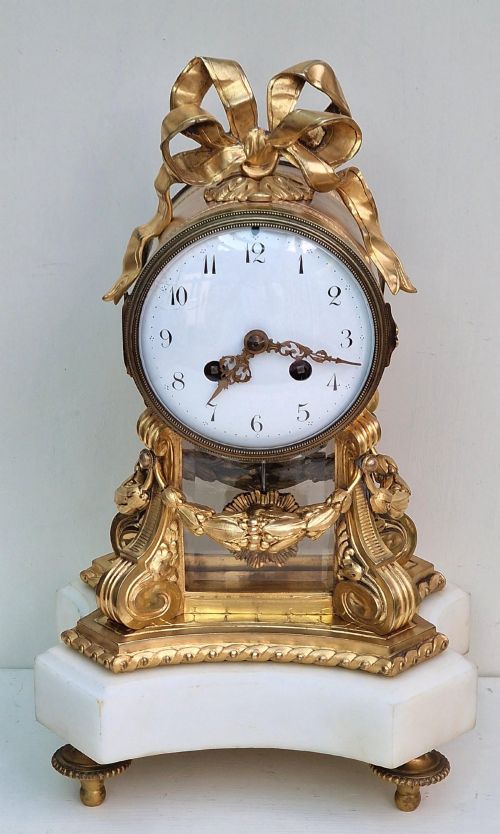
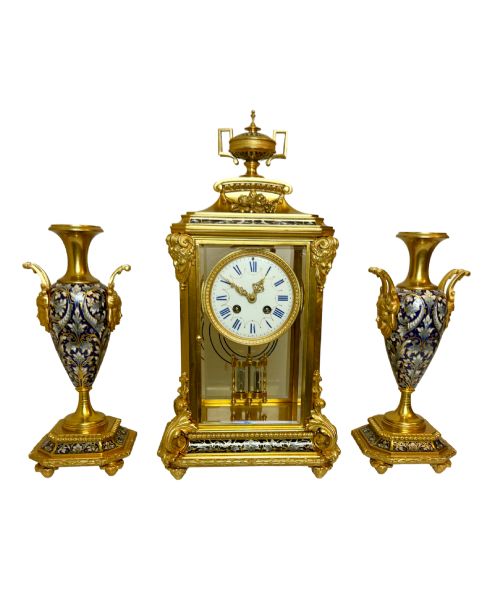
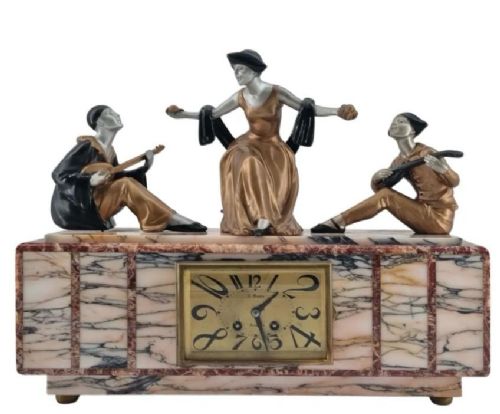
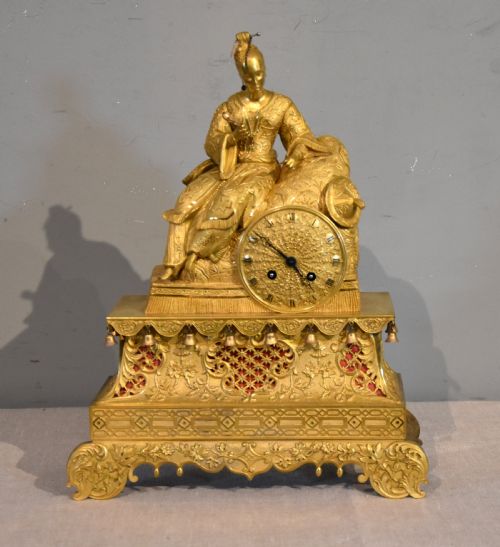
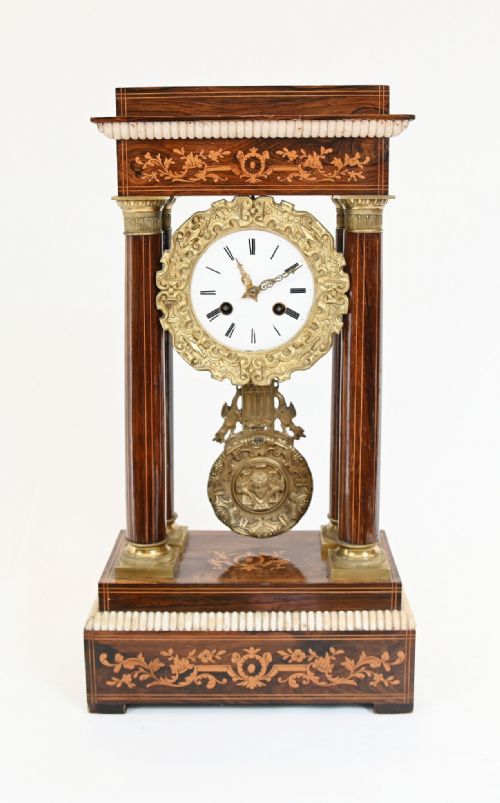
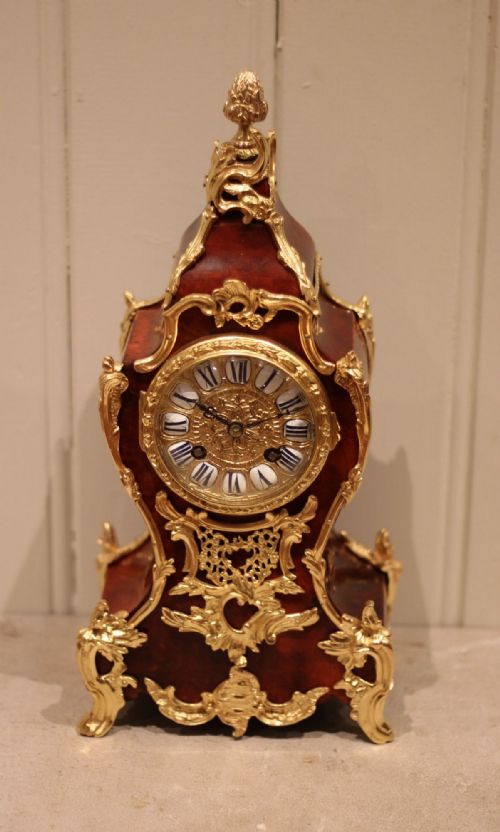
You meet elaborate figural designs involving animals or mythological subjects alongside architectural portico cases and symmetrical garniture sets. Ormolu and gilt bronze finishes dominate the forms, frequently paired with white marble bases or contrasting dark bronze patination.
Makers and workshops across France and Britain produced these heavy shelf pieces to mark hours with mechanical movements housed within decorative metal housings. The common threads on this page are cast bronze construction and shelf placement rather than a single unified design period.
Standards of Execution
Quality separates in the crispness of the bronze chasing and the weight of the cast metal body. Superior examples display deep, sharp relief work on figures and acanthus scrolls, whereas lesser items rely on softer castings with smoothed details.
The integration of the movement within the heavy case also marks the hierarchy of manufacture. Finer pieces use robust eight-day striking movements fitted securely to matching cast housings, accompanied by balanced side garnitures.
The listings here feature French and Victorian pieces made from bronze, marble, and gilt ormolu across the nineteenth and early twentieth centuries.
R Varnier·Sega·Louis Goret·Lenzkirch
The Vintage Bronze Mantel Clock Glossary
- Ormolu
- Gilt bronze produced by applying a mercury and gold amalgam to a bronze base and firing it to drive off the mercury. This technique creates a rich golden surface that resists tarnishing.
- Garniture
- A set of three matching decorative objects designed to stand together on a mantelpiece, usually comprising a central clock flanked by two matching vases or candelabra.
- Champleve
- An enamelling technique where troughs are dug into the bronze surface and filled with coloured glass paste before firing. The metal partitions remain visible between the enamel fields.
- Portico Clock
- A architectural clock style shaped like a small temple, supported by four columns framing a suspended pendulum. These were popular during the early nineteenth century.
- Spelter
- A zinc alloy used as a cheaper substitute for bronze in many nineteenth-century clock cases. It takes plating well but lacks the weight and tensile strength of true bronze.
Vintage Bronze Mantel Clock: Frequently Asked Questions
How do I wind a vintage bronze mantel clock?
Use the appropriate key on the winding arbors found on the dial face, turning gently until you feel resistance. Avoid over-winding to protect the internal springs.
Ensure the clock rests on a completely level surface so the pendulum swings evenly and the strike train remains synchronised.
What is the difference between bronze and spelter?
Bronze is an alloy of copper and tin that offers heavy weight and fine casting detail. Spelter is a zinc-based metal that is lighter and softer.
Magnets do not stick to either material, but spelter items feel noticeably lighter when lifted and often show white metal beneath worn plating.
Why does my clock gain or lose time?
Pendulum clocks rely on the precise length of the pendulum swing to regulate timekeeping. Adjust the small nut beneath the bob to speed up or slow down the beat.
Temperature changes and mechanical wear in nineteenth-century gear trains also influence daily accuracy.