






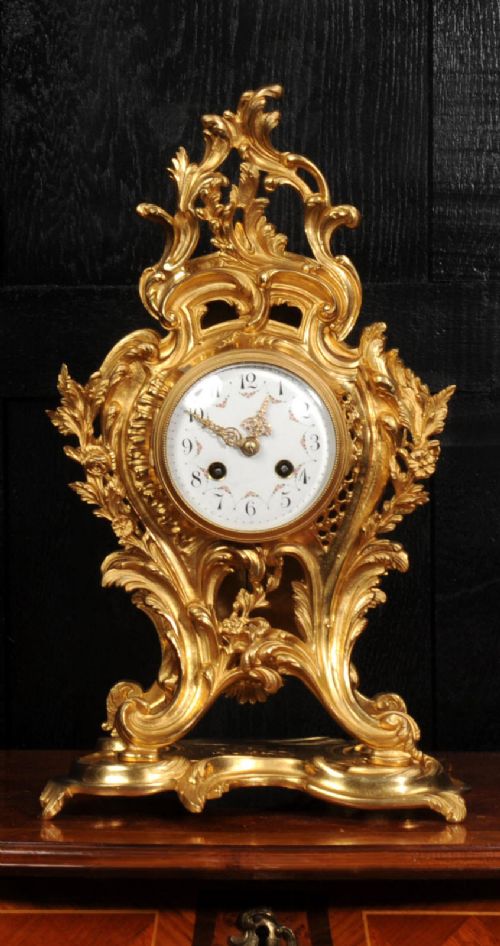

Rococo Ormolu Desk Clock
A rococo ormolu desk clock brings fluid asymmetry and heavy gilt warmth to a mantelpiece, combining decorative presence with precise mechanical timekeeping.
Rococo Ormolu Desk Clock
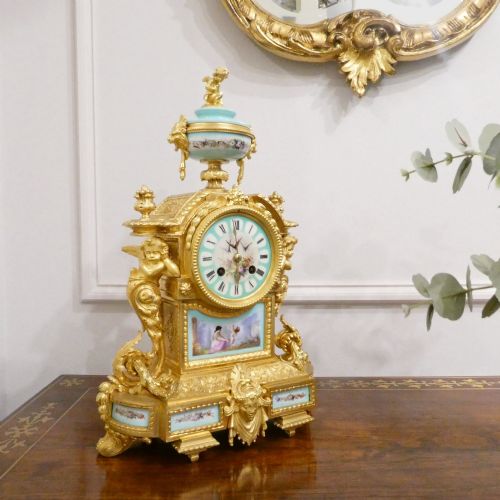
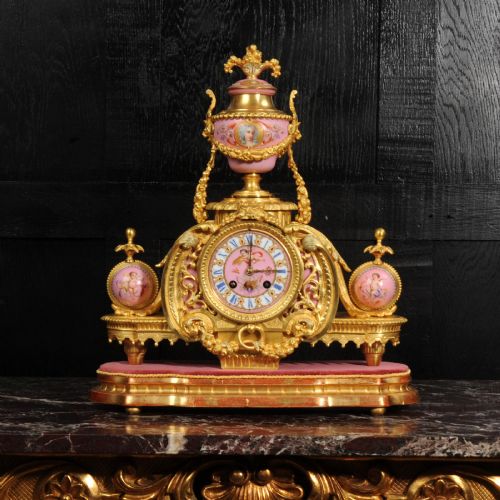
When someone searches for a rococo ormolu desk clock, they find nineteenth-century French mantel clocks and boudoir clocks shaped by revival styles. These objects originate largely from the Victorian era and the decades spanning eighteen sixty to nineteen hundred, though occasional Regency and mid-eighteenth-century pieces appear.
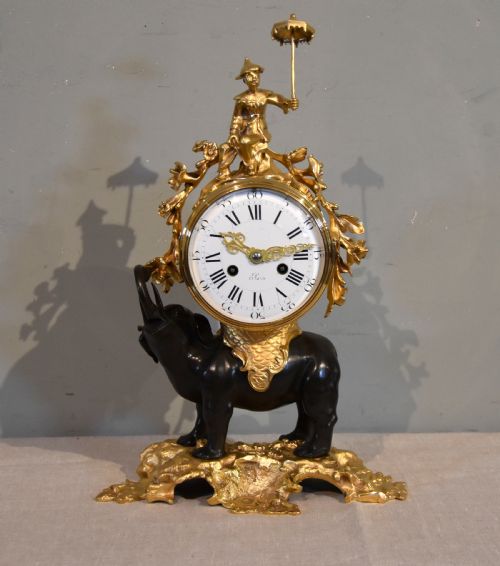
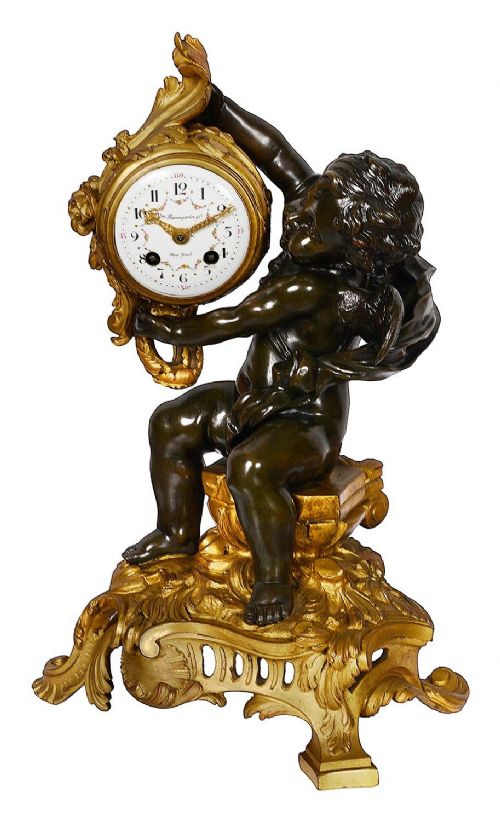
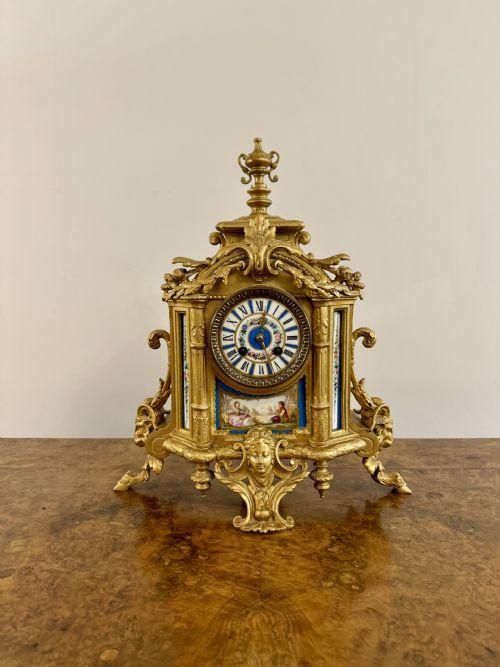
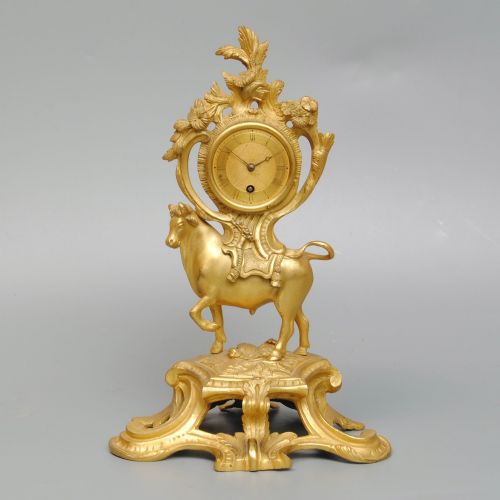
The forms range from large striking mantel clocks and four-glass bracket clocks to miniature bedside clocks and clock sets. Many examples incorporate porcelain panels, enamel dials, and figural elements such as cherubs, elephants, or putti.
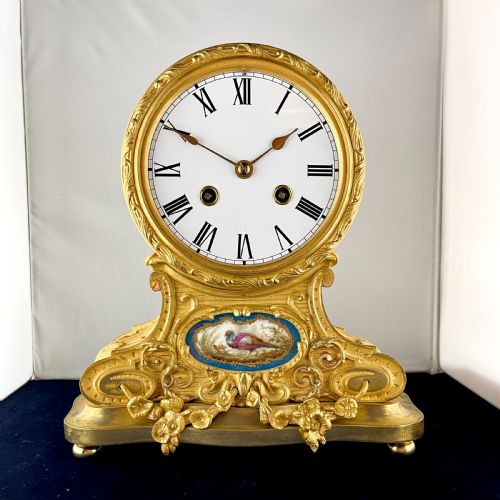
French workshops dominate the selection, heavily favouring Louis Quinze and rococo revival aesthetics. Buyers encounter everything from simple drumhead designs to ornate architectural cases housing fusee or pendulum movements.
How they were made
Maker-craftsmen cast cases primarily in bronze or brass before applying thick gold mercury gilding to produce the distinctive ormolu finish. This metallic foundation pairs frequently with hand-painted porcelain panels from Sèvres and delicate white enamel dials bearing Roman or Arabic numerals.
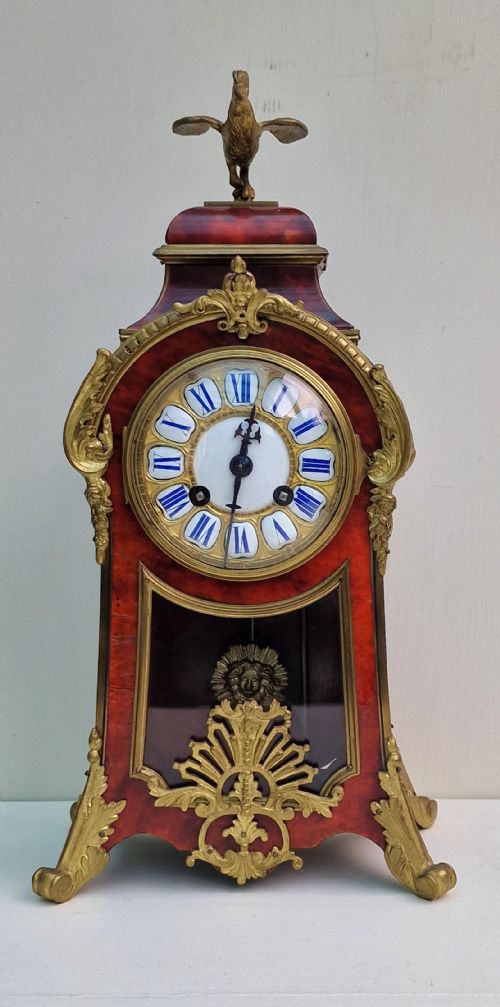
Intricate rococo scrollwork, botanical motifs, and asymmetrical shell patterns are chased directly into the metal surface after casting. Cabinetmakers also incorporated tortoiseshell and Boulle marquetry into select wooden frameworks to house the brass movements.
What varies in quality
The distinction between ordinary and exceptional pieces lies in the crispness of the bronze chasing and the depth of the ormolu gilding. Superior examples retain sharp relief in their scrollwork and smooth, unblemished enamel on the dial face.
The reputation of the movement maker dictates much of the standing within this category, as signed works from established horologists maintain higher mechanical integrity. Preserved gilding and fully restored, operational gear trains separate master-workshop pieces from mass-produced Victorian alternatives.
Achille Brocot·Leon Message·Jollet et Cie·Samuel Marti·John Barwise·Raingo Fres
The Rococo Ormolu Desk Clock Glossary
- Ormolu
- A gilded bronze technique utilising finely ground gold mercury amalgam applied to a cast brass or bronze base. This process creates a rich, warm metallic lustre characteristic of luxury French decorative arts.
- Rococo revival
- A nineteenth-century design movement that reinterprets the ornate, asymmetrical curves and naturalistic motifs of the mid-eighteenth-century French court. It dominates the ornamentation found on these mantel clocks.
- Fusee
- A conical pulley mechanism inside mechanical clocks that equalises the diminishing power of a mainspring as it unwinds. This device ensures consistent tension and accurate timekeeping.
- Enamel dial
- A metallic clock face coated with fused powdered glass, fired at high temperatures to create a smooth, glossy white surface. Numerals are painted onto this durable ground.
- Boulle
- An elaborate marquetry technique combining tortoiseshell and cut brass inlay, named after the master cabinetmaker André-Charles Boulle. It appears on select architectural clock cases within this tradition.
Rococo Ormolu Desk Clock: Frequently Asked Questions
Where should I place a heavy ormolu mantel clock?
These heavy gilt bronze timepieces require a sturdy, level surface such as a mantelpiece, heavy sideboard, or console table. Stability ensures the pendulum hangs vertically and beats evenly.
Avoid placing them in direct sunlight or areas subject to dampness, as environmental fluctuations can affect the delicate wood and enamel components.
How do I tell an original nineteenth century clock from a later copy?
Original pieces display hand-chased surface details, heavy cast bronze or brass construction, and period mechanical movements bearing maker signatures. The weight and patination of the metal offer strong indicators of age.
Examine the back plate and movement for stamps identifying makers like Samuel Marti or Achille Brocot. Machine-cast modern replacements lack the depth and crispness of nineteenth-century chasing.
What is the difference between a mantel clock and a boudoir clock?
Mantel clocks are generally larger, heavier architectural pieces designed to stand prominently on a fireplace mantel or large shelf. They often feature striking mechanisms and robust bronze cases.
Boudoir clocks are smaller, more intimate bedside or dressing table timepieces created for personal spaces. They frequently incorporate delicate gilt metal mounts and porcelain panels.