


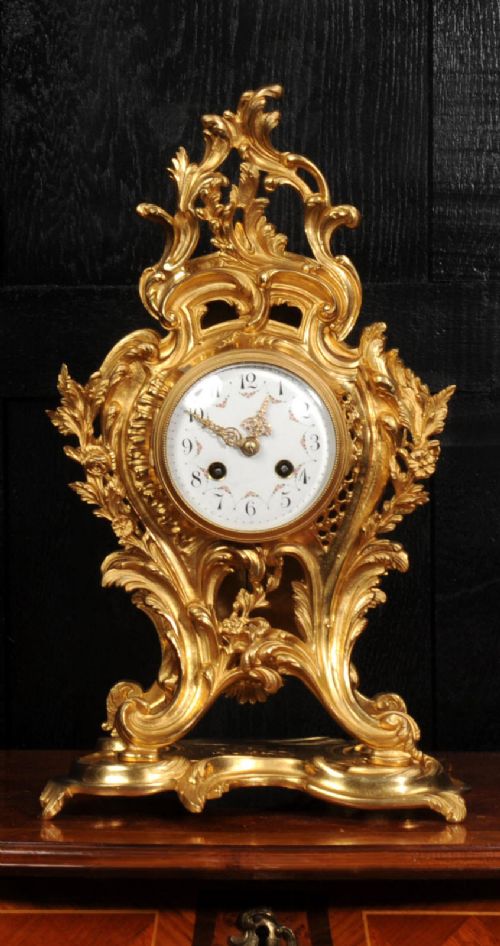


Restored Clock
A restored antique clock brings a room to life with mechanical precision and period character, offering historic craftsmanship for daily use.
Restored Clock
A restored antique clock encompasses mechanical timepieces originating primarily from the nineteenth century, including the Georgian era, with French and English workshops dominating the available selections.
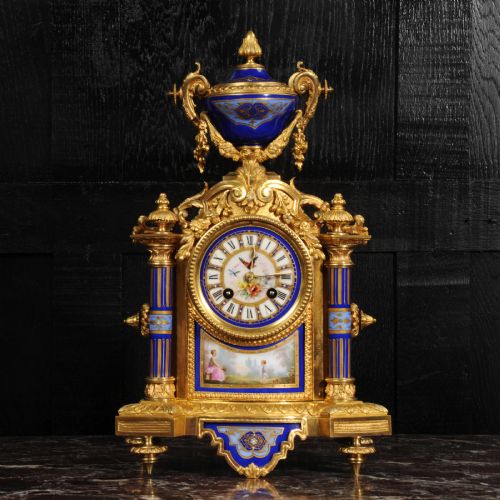
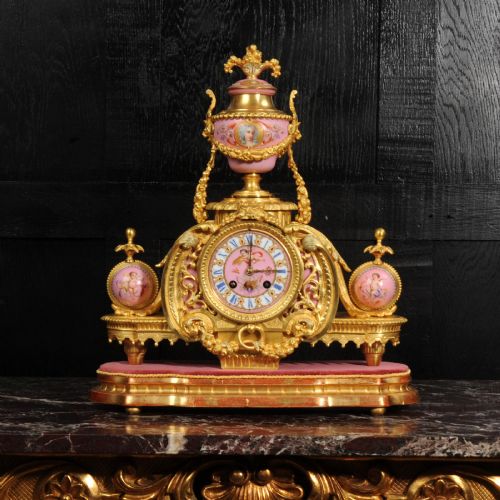
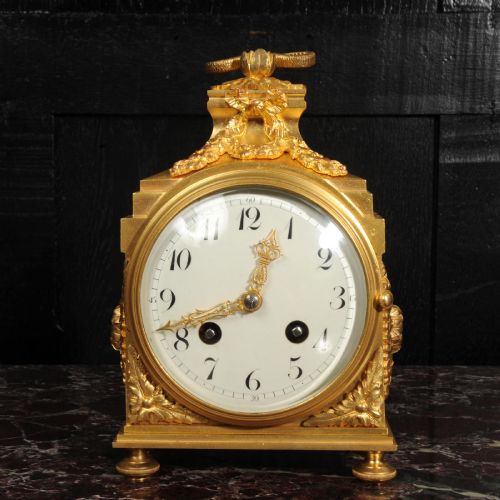
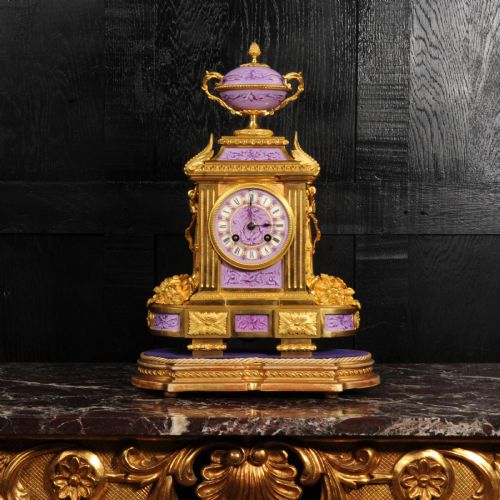
Buyers seeking a restored antique clock most frequently encounter mantel clocks, carriage clocks, and wall clocks, spanning styles from French Rococo and Louis XVI to Victorian and Gothic designs.
The inventory ranges from ornate ormolu and porcelain garniture sets to functional domestic wall clocks and travel timepieces, all returned to working order.
How they were made
Cases combine cast metals such as brass, bronze, gilt bronze, and ormolu with porcelain panels, enamel dials, and occasional wooden structures like oak or hand-carved housings.
Intricate decorative elements include hand-painted enamel panels, gilded surface treatments, and cast motifs like lions' masks or figural scenes.
Internal mechanisms rely on complex gear trains, fusee movements, and repeating complications housed within brass plates and steel arbors.
Listings feature French and English origins, spanning the Georgian period through the late nineteenth century in brass, bronze, and glass.
What varies in quality
Quality differentiates by the intricacy of the movement and the presence of high complications such as grand sonnerie striking, moon-phase indicators, and calendar work.
The execution of the case work sets superior pieces apart, seen in the depth of ormolu chasing, the artistry of enamel paintings, and the inclusion of signed makers on the dial or movement.
The standard of restoration defines how completely the original materials are preserved and polished while ensuring the mechanical reliability of the clock.
Japy Freres·Achille Brocot·Brunelot·Alfred Drocourt·Drocourt·Henri Riondet
The Restored Clock Glossary
- Ormolu
- Gilded bronze produced by applying a finely ground high-carat gold-mercury amalgam to a bronze object, then heating to drive off the mercury. This technique creates a rich, matte golden surface seen on many French nineteenth-century clock cases.
- Carriage clock
- A small, portable spring-driven timepiece designed for travel, typically featuring a brass case with glass panels to view the movement. They often include repeating mechanisms to strike the hours and quarters on demand.
- Fusee
- A conical grooved pulley connected to the mainspring barrel by a chain or cord, designed to equalize the diminishing power of the spring as it unwinds. This mechanism improves timekeeping consistency in better quality clocks.
- Grand Sonnerie
- A complex striking train that sounds both the hours and the quarters automatically on every quarter-hour. Such complications represent the upper tier of clockmaking skill.
Restored Clock: Frequently Asked Questions
How do I wind a carriage clock?
Insert the key into the appropriate winding arbor on the backplate and turn it gently until resistance is felt. Care should be taken not to overwind the mainspring.
Most carriage clocks require winding once a week, though models with complications may need attention sooner depending on the movement design.
Where should I place a mantel clock?
Position the clock on a stable, level surface away from direct sunlight, drafts, and sources of moisture or extreme temperature fluctuation. A sturdy mantelpiece or sideboard works well.
Ensuring the surface is level helps the pendulum swing evenly and keeps the escapement beating correctly.
What is a repeater mechanism?
A repeater is an added mechanical function that allows the clock to sound the last elapsed hour and quarter-hour when a button or lever is pressed. It was originally used to tell time in the dark.
Carriage clocks frequently feature this complication, housed beneath the top glass panel or on the side of the case.
How do I identify French nineteenth-century styles?
Examine the decorative motifs and case materials, as French pieces from this period often draw on Rococo scrolls, Louis XVI symmetry, or heavy gilt bronze cast work. Maker signatures on the backplate often confirm the origin.
Porcelain panels painted with pastoral scenes and ormolu mounts are also strong indicators of nineteenth-century French manufacture.