

Vintage Breakfront Cabinet
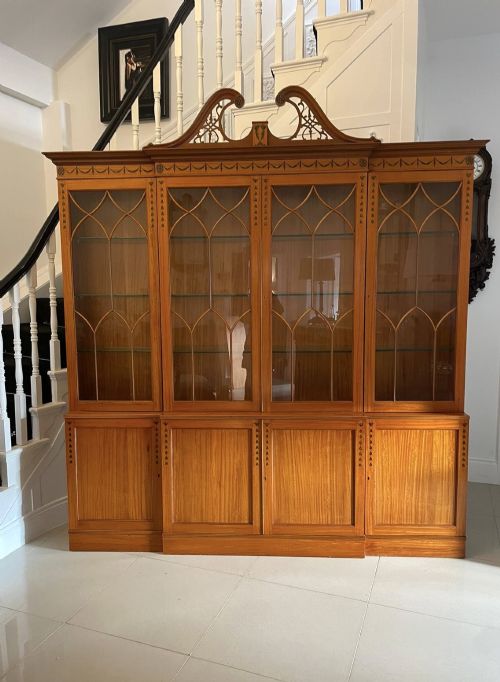
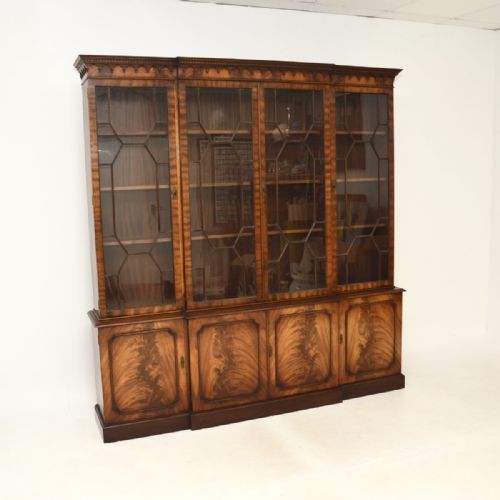
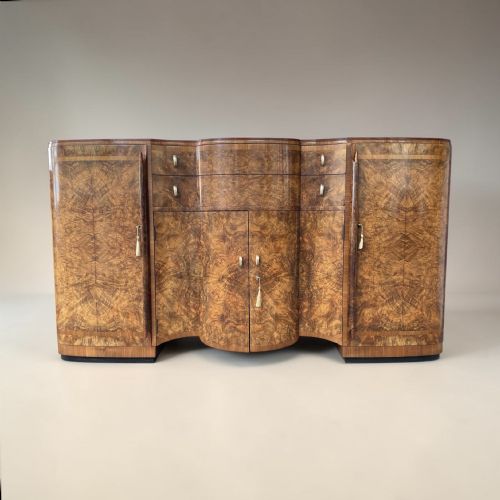
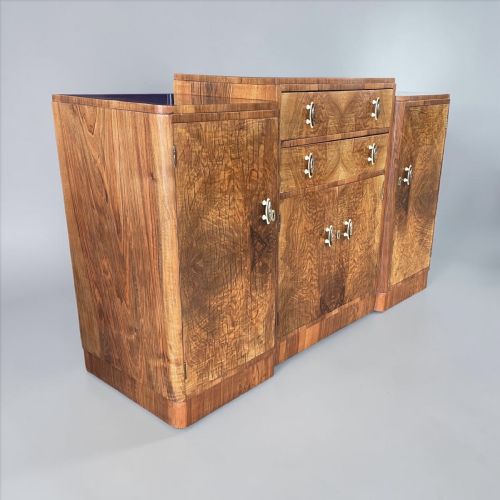
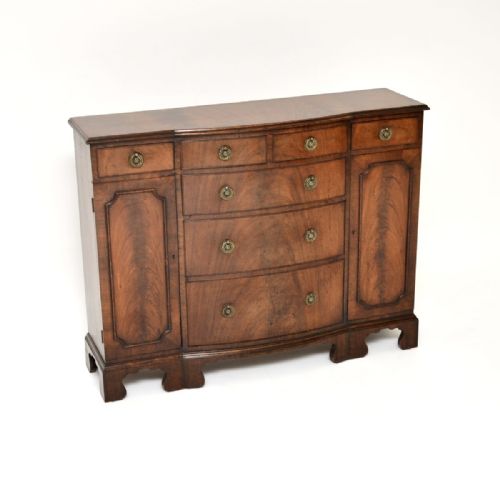
A vintage breakfront cabinet organises a room with its projecting central section, offering substantial display and storage space built in mahogany, walnut, and satinwood.
Vintage Breakfront Cabinet
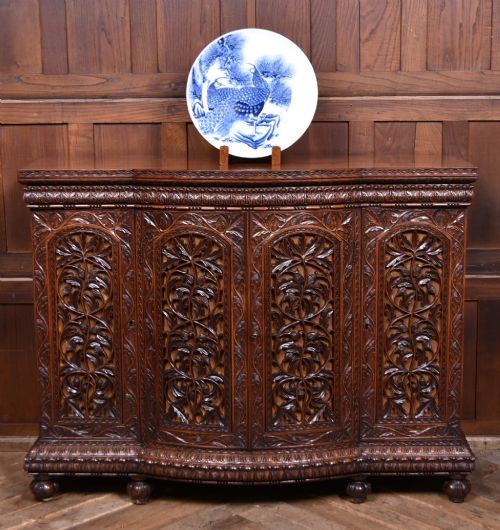
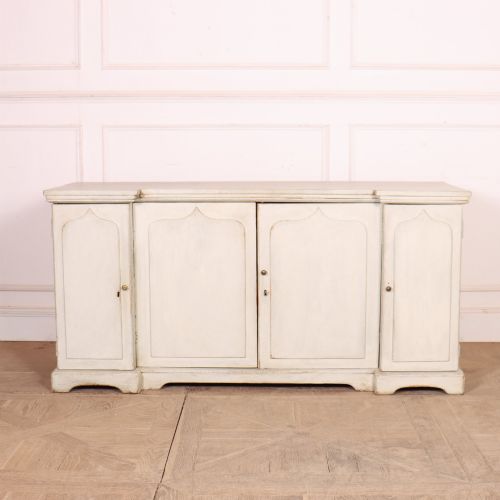
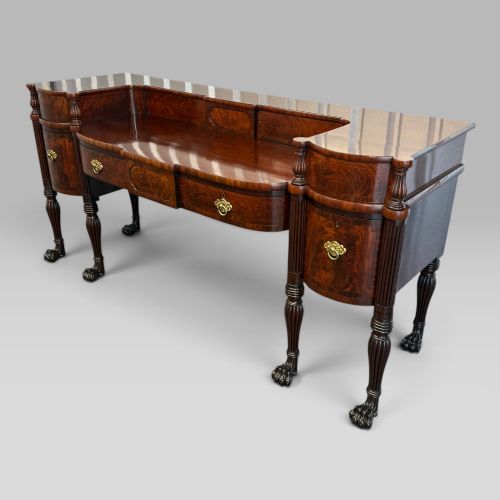
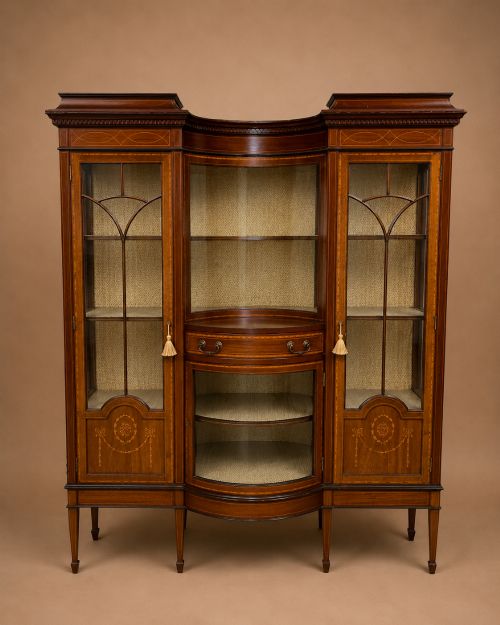
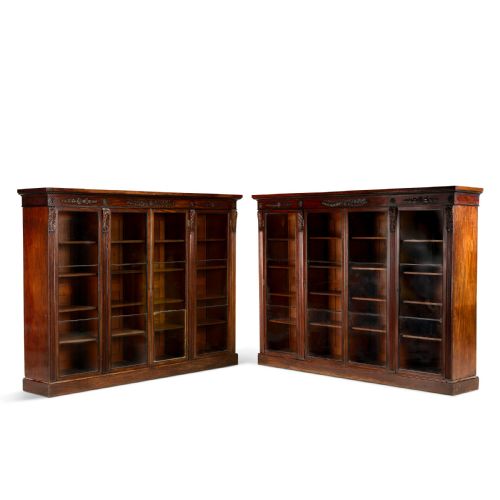
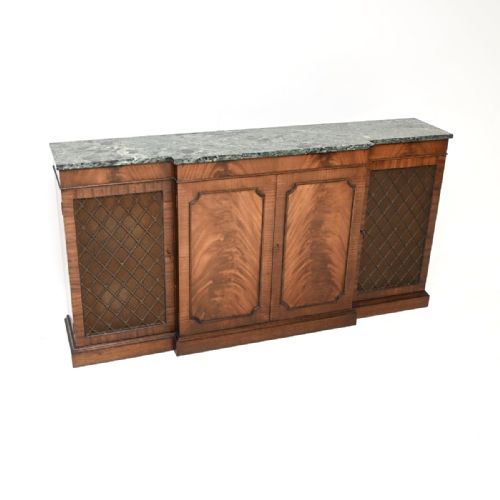
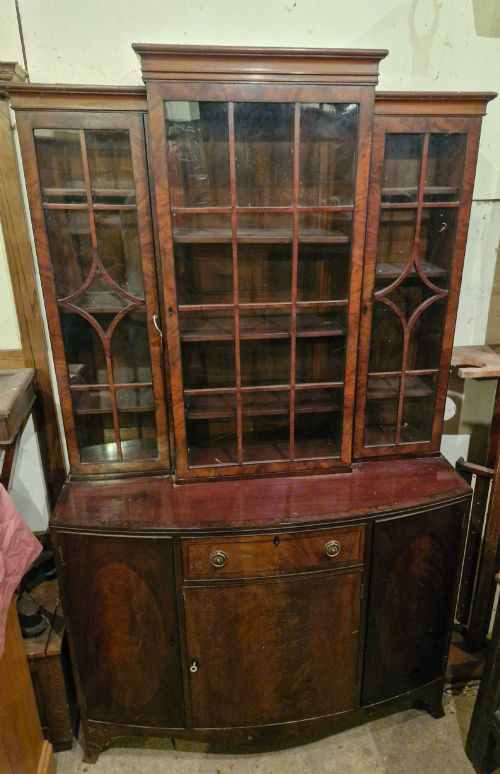
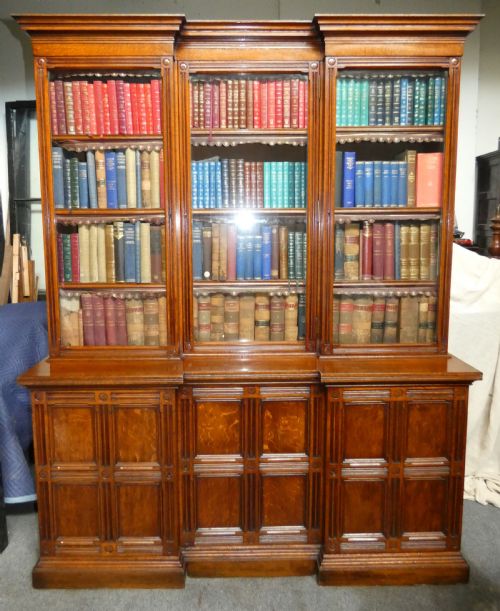
A vintage breakfront cabinet is primarily found as a large bookcase, display cabinet, or sideboard featuring a central section that projects forward from the flanking wings. When you search for this phrase, you encounter pieces spanning from the nineteenth century through the Edwardian period and the 1930s. The most common forms on this page are mahogany and walnut bookcases and sideboards built in Georgian, Regency, and Edwardian styles.
These architectural pieces serve major living spaces and libraries, designed to break up long expanses of wall with depth and proportion. Makers adopted earlier idioms such as Sheraton Revival and Chippendale Revival to create formal display furniture for books and china. The format includes glazed bookcase upper sections alongside solid sideboard and dresser bases.
Originating largely from English workshops, these cabinets showcase traditional cabinetmaking adapted to changing domestic requirements across eras. You will see restrained Georgian proportions alongside elaborate Edwardian inlay and later twentieth-century interpretations. Each piece relies on the characteristic stepped facade to create shadow and visual interest.
Materials and construction
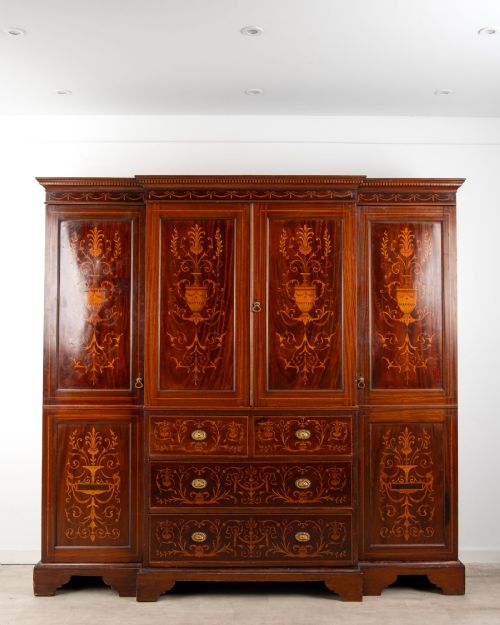
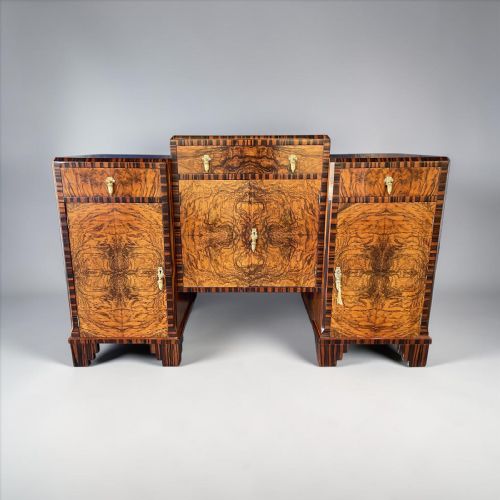
Construction relies heavily on solid and veneered hardwoods, principally mahogany, walnut, and satinwood, chosen for their grain and stability. Workshops applied flame mahogany and burr walnut veneers over secondary timbers to achieve decorative panels on doors and drawers. Brass hardware and glass glazing panels complete the primary structural elements.
Joinery methods combine traditional mortise and tenon framing with hand-cut dovetails for internal drawer construction. Glazed doors feature timber glazing bars arranged in geometric or astragal patterns to secure individual glass panes. Surface finishes depend on hand-rubbed polishes that enhance the natural figure of the wood.
The selection spans bookcases, display cabinets, and sideboards built in Regency, Georgian, and Sheraton Revival styles.
Distinctions in quality
Quality rests upon the selection of timber veneers and the crispness of applied decorative details such as boxwood stringing or marquetry. Superior examples exhibit continuous grain matching across multi-door facades and well-proportioned architectural cornices. The refinement of the glazing bars and the weight of the brass fitments also separate standard production from finer cabinetwork.
Structural integrity reveals itself in the smoothness of drawer operation and the precise alignment of the projecting central section. Cabinets retaining original glass, backboards, and hardware demonstrate higher fidelity to their period of manufacture. The depth of the hand-finished polish further distinguishes superior pieces from heavier, industrial surfaces.
Maurice Adams·Maple & Co.
The Vintage Breakfront Cabinet Glossary
- Breakfront
- An architectural cabinet design where the central section projects further forward than the left and right sides. This arrangement creates visual depth and breaks the linear monotony of large furniture.
- Astragal
- A small convex moulding used to divide panes of glass within a cabinet door. Fine astragal bars indicate careful joinery and period authenticity.
- Flame mahogany
- A veneer cut from the fork of the mahogany tree where the branches join the trunk. It produces a distinctive flickering, flame-like pattern prized by cabinetmakers.
- Compactum
- A large fitted wardrobe combining hanging space with internal drawers, shelves, and sliding trays. This form maximises storage within a single architectural footprint.
- Marquetry
- The art of applying decorative veneer pieces of different woods to a structure to form pictures or ornamental patterns. It requires considerable skill to cut and fit each piece precisely.
Vintage Breakfront Cabinet: Frequently Asked Questions
What is a breakfront cabinet?
A breakfront cabinet is a large piece of furniture featuring a central section that steps forward from the two flanking wings. This three-part facade creates distinct sections for display or storage.
Originally designed for grand libraries and formal dining rooms, these cabinets accommodate books, porcelain, and silver behind glazed or panelled doors.
How do I date a breakfront cabinet?
Dating relies on examining timber species, construction techniques, and stylistic revival cues. Pieces from the nineteenth century often show heavy mahogany solids, while Edwardian versions frequently use satinwood and delicate inlay.
Hardware styles, secondary woods inside drawers, and the method of glass manufacture also provide reliable clues to the decade of production.
Where should I place a breakfront cabinet?
These large cabinets require a substantial wall with adequate width and ceiling clearance to let the projecting central section breathe. They suit formal sitting rooms, dining rooms, and home libraries.
Ensure the room has stable humidity and temperature to protect nineteenth-century veneers and solid timber panels from warping.
Are breakfront bookcases adjustable?
Period breakfront bookcases often feature fixed shelving or traditional wooden ratchets and peg supports for adjusting shelf heights. Later revival pieces from the early twentieth century may incorporate more modern adjustable timber tracks.
Checking the interior vertical surfaces reveals how the original maker intended the internal space to be configured.