






Vintage Brass Scope
These vintage brass scope pieces range from nineteenth-century naval day or night telescopes to First World War military periscopes, offering collectors genuine utilitarian history.
Vintage Brass Scope
A vintage brass scope encompasses a variety of optical and navigational instruments spanning the eighteenth, nineteenth, and early twentieth centuries. Buyers searching for a vintage brass scope will encounter terrestrial telescopes, naval watch telescopes, opera glasses, microscopes, and military periscopes.
The material profile of a vintage brass scope is dominated by polished brass barrels, frequently complemented by leather grips, wooden storage cases, and glass lenses. These items originate from English and German workshops, reflecting both maritime utility and scientific advancement across multiple periods from the Georgian era to the First World War.
Construction and Materials
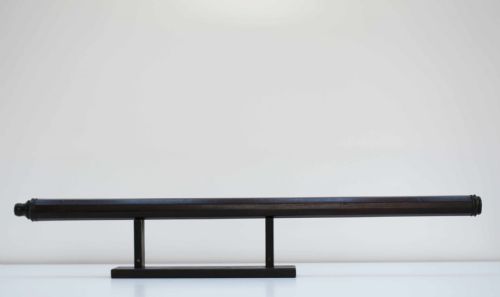
Makers constructed the primary bodies of these instruments from polished brass, often utilising draw tubes to allow the telescope to extend for focusing. Many examples incorporate stitched leather sleeves around the brass tubes to provide a secure grip during maritime or field use.
Lenses of varying focal lengths paired with internal glass optics formed the sighting systems, housed within protective metal housings. Storage vessels such as mahogany cases provided dedicated protection for delicate scientific and navigational tools.
Vintage Brass Scope Retail Price Guide 2026
Typical asking prices for vintage brass scope among the pieces listed under this phrase on Sellingantiques today, from the lower quarter to the upper quarter. They describe what is for sale here now, not the wider market.
German naval officers peered through watch telescopes bearing Braunschweig marks while English observers relied on London opticians for day or night navigation.
Factors of Quality
Quality in these instruments depends upon the precision of the draw-tube mechanism and the clarity of the optical glass. Signatures and maker marks engraved into the brass barrel indicate workshop provenance and professional standard construction.
The condition of accompanying fitted wooden cases and the preservation of exterior leather wraps influence the overall integrity of the piece. Fine engineering is evident in the smooth operation of multi-draw terrestrial telescopes and the stability of mounted altazimuth instruments.
R & J Beck Ltd·H Hughes & Son London·Voigtländer & Sohn AG·Ross of London·Broadhurst Clarkson & Co·Chadburn Brothers of Sheffield·John Gilbert
The Vintage Brass Scope Glossary
- Draw tube
- A sliding section of a telescope barrel that extends to adjust the focal length. Multiple draw tubes allow a long instrument to collapse into a portable size.
- Terrestrial telescope
- An optical instrument designed for viewing land objects rather than astronomical bodies. It includes correcting lenses to ensure the image appears upright.
- Periscope
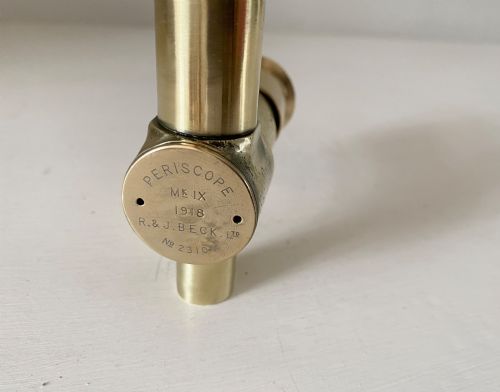
- An optical instrument utilising prisms and lenses to observe objects above an obstacle or from a concealed position. Military examples from the First World War often feature designated trench markings.
- Altazimuth theodolite
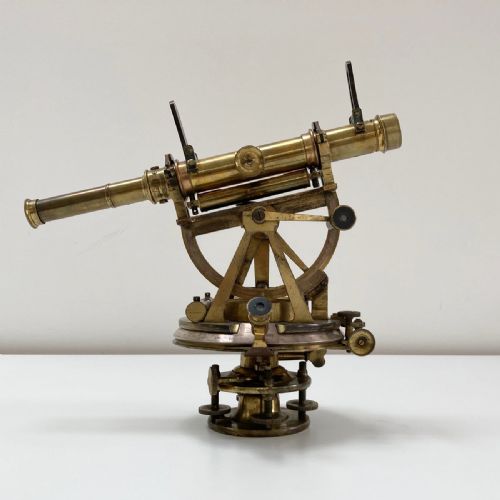
- A precision instrument used for measuring horizontal and vertical angles in surveying and navigation. These typically mount on a dedicated stand.
Vintage Brass Scope: Frequently Asked Questions
How do I use a multi-draw telescope?
Extend each brass draw tube fully starting from the smallest section nearest the eyepiece until the image comes into focus. Fine adjustments are made by sliding the final section.
Ensure the lenses remain clean and avoid forcing stiff joints to protect the vintage metal threads and fittings.
What is a day or night telescope?
A day or night telescope is a maritime optical instrument designed with larger objective lenses to gather extra light during dusk, dawn, or poor weather conditions at sea.
These pieces typically feature protective leather casings and robust brass construction suited for active service on naval decks.
How do I identify the date of a brass scope?
Dates can often be established through engraved maker signatures, address details on the barrel, and stylistic indicators such as the number of draw tubes or the presence of specific military markings.
Comparative study of known workshop operating periods helps narrow down the decade of manufacture.
How should I display and care for brass and leather?
Keep brass instruments in stable indoor environments away from excessive humidity to prevent verdigris and tarnishing on the metal surface. Leather wraps benefit from occasional light conditioning to maintain flexibility.
Display them securely on flat surfaces or within their original fitted wooden cases to protect the exterior finishes.