




Vintage Brass Hearth Surround
A vintage brass hearth surround anchors the fireplace, bringing warmth and structure to a room through solid metalwork and period character.
Vintage Brass Hearth Surround
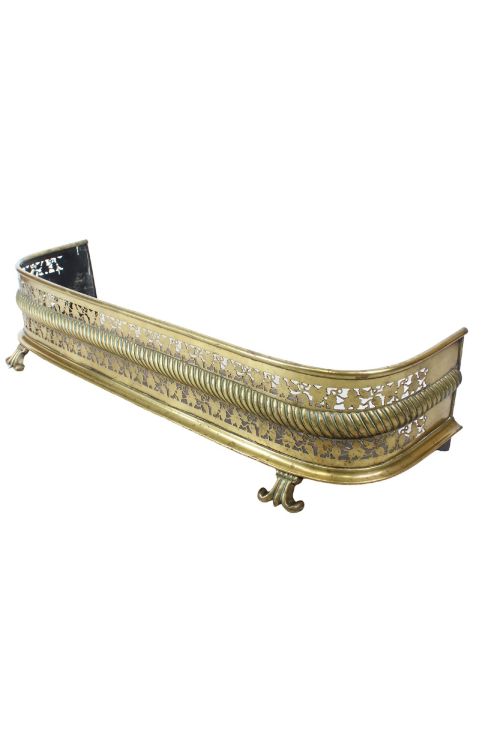
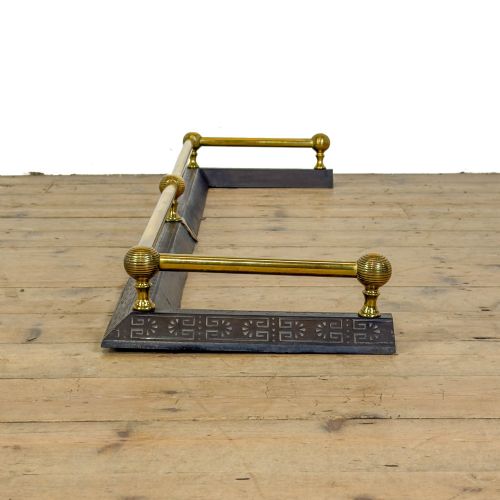
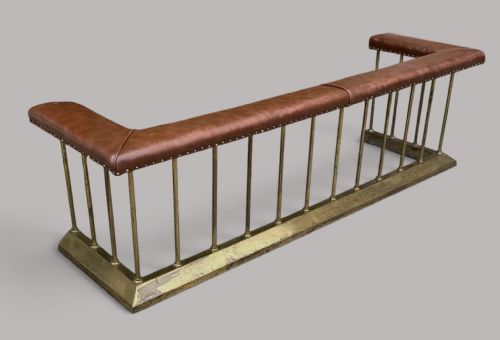
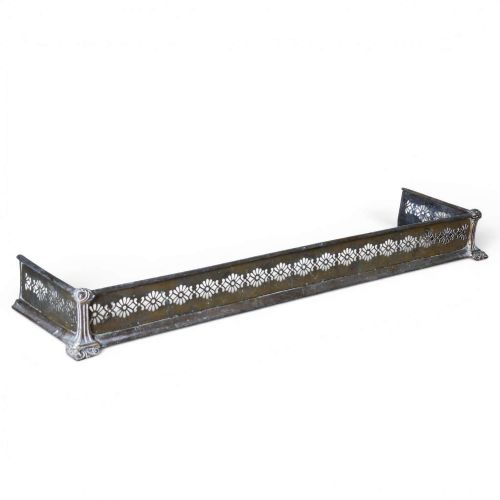
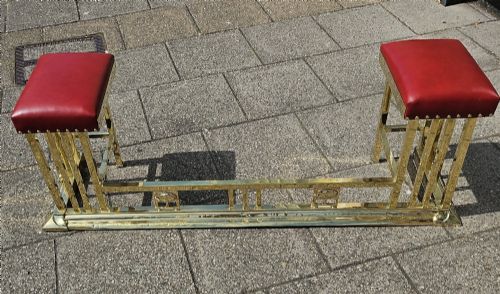
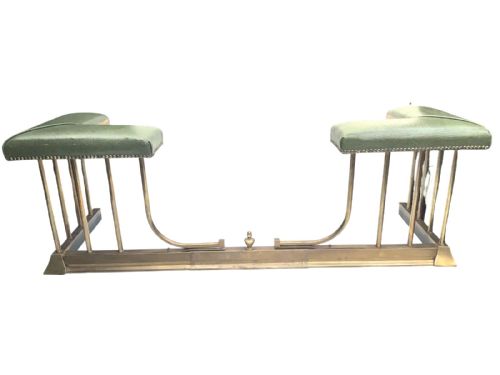
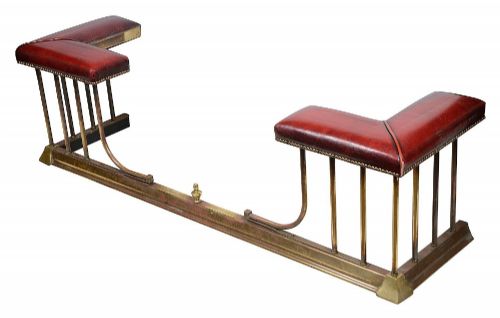
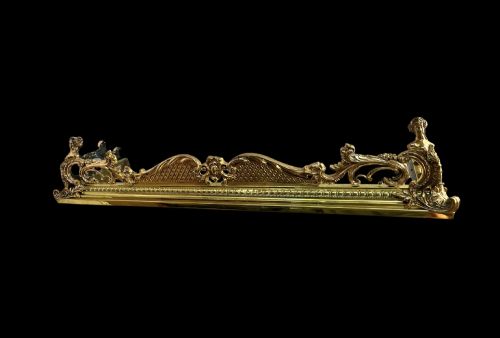
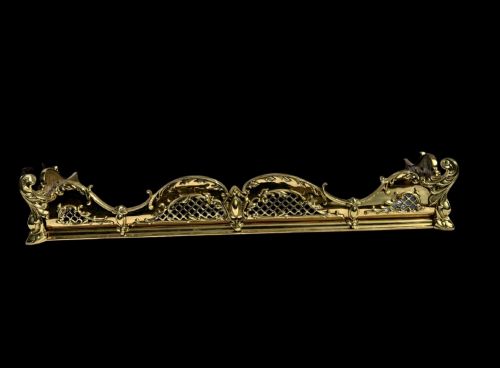
A vintage brass hearth surround, appearing across this page in various nineteenth-century and early twentieth-century iterations, protects the floorboards and frames the fireplace opening. These pieces range from simple pierced kerbs to substantial club fenders equipped with upholstered seats.
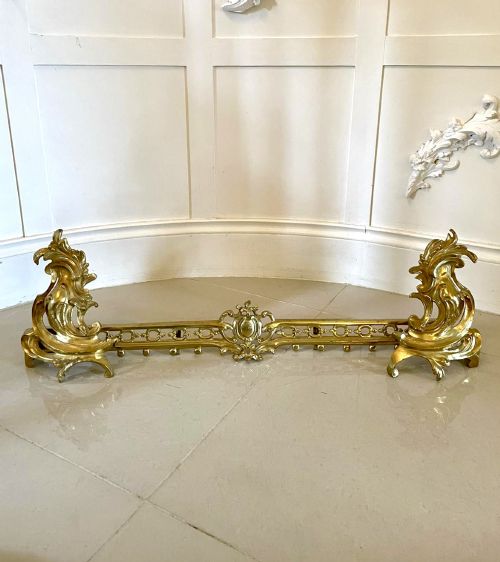
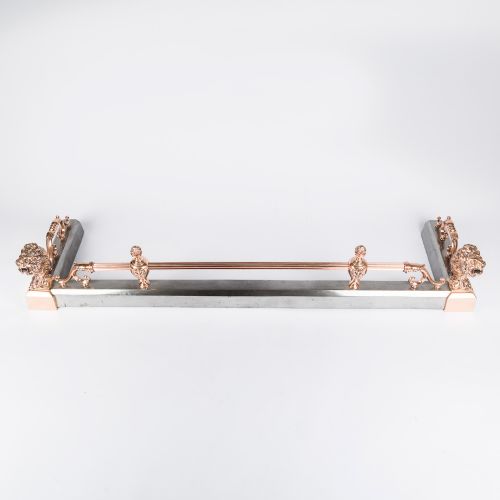
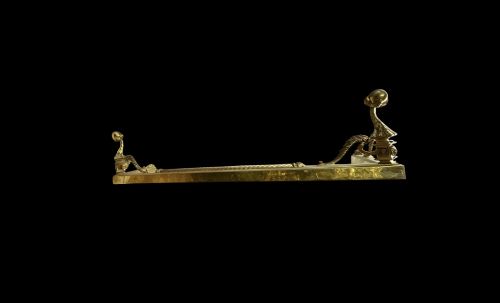
The most common examples encountered here are Victorian and Edwardian brass fire fenders, often featuring adjustable frames or detailed metal casting. Buyers seek these objects to restore period authenticity to a chimney breast or to introduce metallic warmth into a modern interior.
How they were made
Maker workshops combined sheet brass with cast iron, steel, and copper components, often piercing the metal or applying scrollwork to create decorative borders. Many examples incorporate leather upholstery, such as tan or green hide, fixed over padded seat rails for fireside seating.
Extending mechanisms were engineered into the metal frames to allow precise adjustment against hearth dimensions. Polishing and patination finished the surfaces, balancing bright brass with darker bronze and iron elements.
Listings span Victorian, Edwardian, and Art Deco periods, utilising brass, copper, iron, and leather.
What varies in quality
The standard of a vintage brass hearth surround depends on the weight of the metal and the crispness of the casting or piercing work. Thicker gauge brass and substantial iron cores distinguish robust construction from lighter, decorative alternatives.
Detailing on the corners and the quality of leather hide on club fender seats elevate the piece. Refined finishing on scrolled mounts and intact extending mechanisms separate ordinary examples from exceptional ones.
The Vintage Brass Hearth Surround Glossary
- Club fender
- A low fireside seat with an open metal frame and an upholstered top, designed to allow warmth from the fire to circulate around seated guests.
- Pierced brass
- Sheet metal perforated with decorative patterns, frequently seen along the front rails of Victorian hearth surrounds.
- Kerb
- The low border or barrier enclosing the hearth area to contain embers and ash.
- Patination
- The natural surface sheen and ageing developed on brass, copper, and leather over decades of exposure to heat and air.
Vintage Brass Hearth Surround: Frequently Asked Questions
How do I measure for a club fender?
Measure the width, depth, and height of your fireplace hearth carefully, taking into account any protruding stone or tile surrounds.
Many vintage pieces feature extending frames, allowing minor adjustments to fit the hearth aperture precisely.
Can these fenders be adjusted?
Numerous models incorporate sliding metal mechanisms designed to alter the overall width of the surround.
Checking the specific listing details will confirm whether a particular piece offers this extending capability.
What materials are combined with the brass?
Makers frequently paired brass with steel, iron, and copper to provide structural strength and contrasting tones.
Upholstered club fenders also introduce leather seating elements in shades such as tan and green.
How do I care for the leather seats?
Clean the leather gently with a dry or slightly damp cloth, avoiding harsh chemical cleaners that might strip the original finish.
Applying a neutral leather balm periodically helps maintain the suppleness of vintage hide.