


Vintage Brass Gallery Table
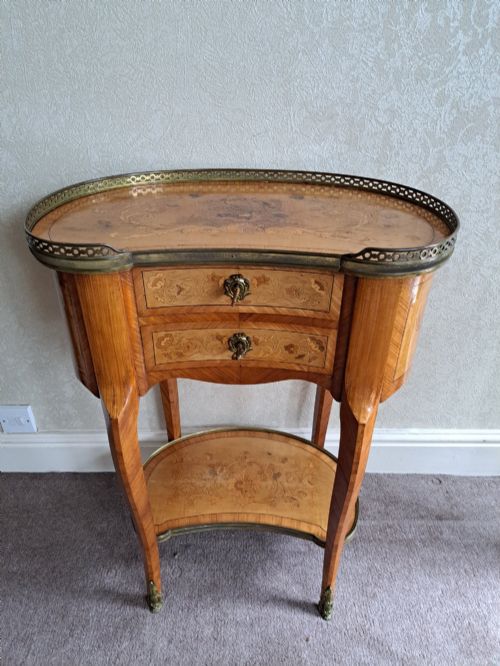
A vintage brass gallery table brings together refined timber frames and delicate metal railings, offering a functional surface suited to a drawing room or study.
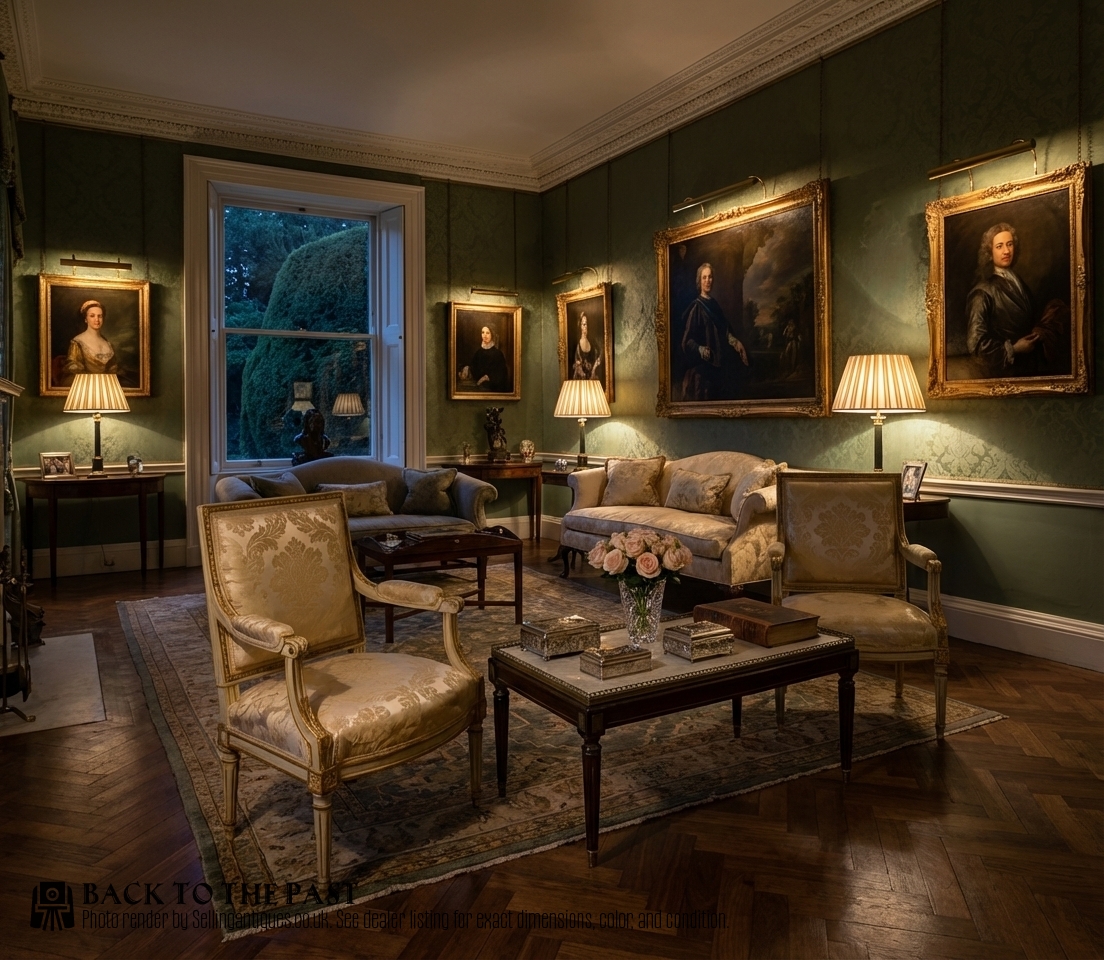
Vintage Brass Gallery Table
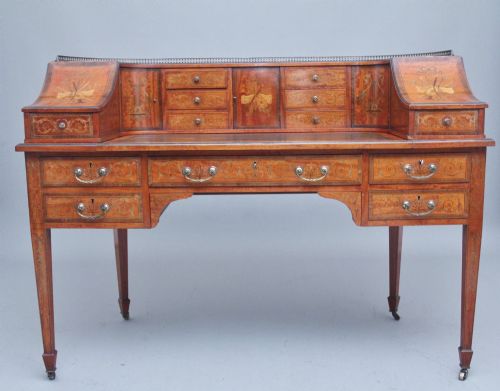
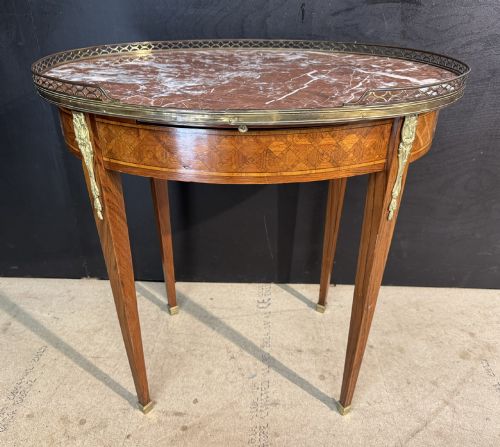
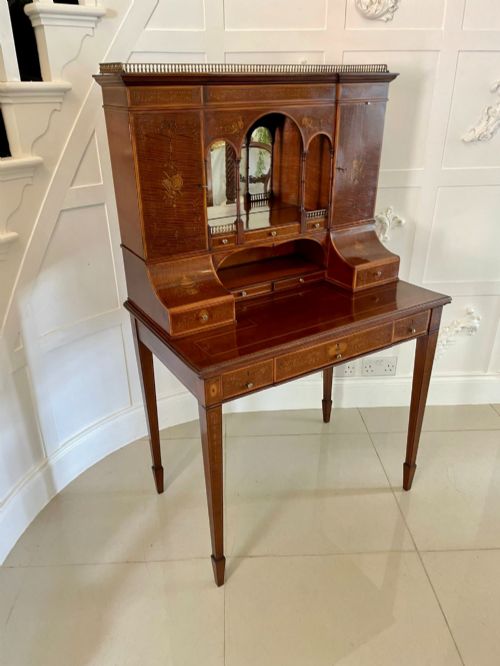
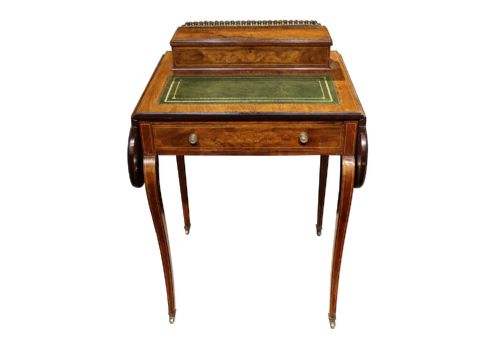
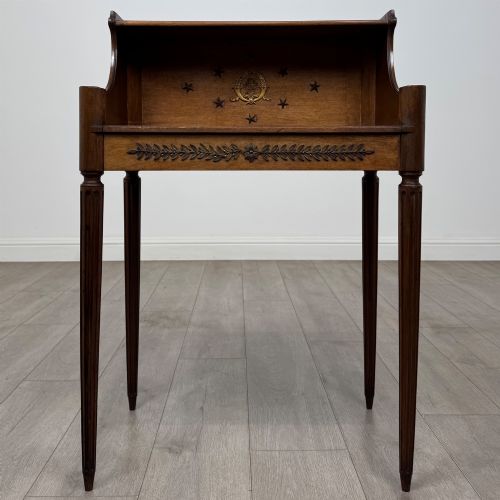
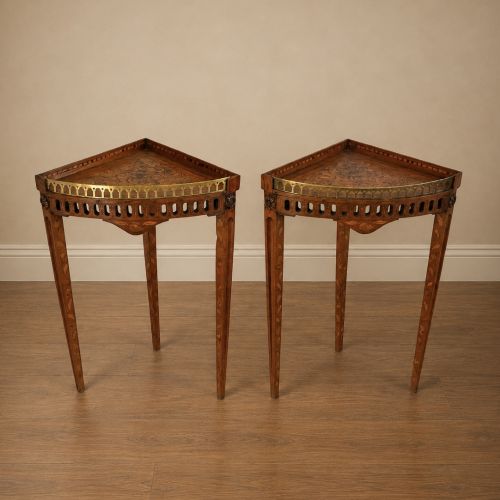
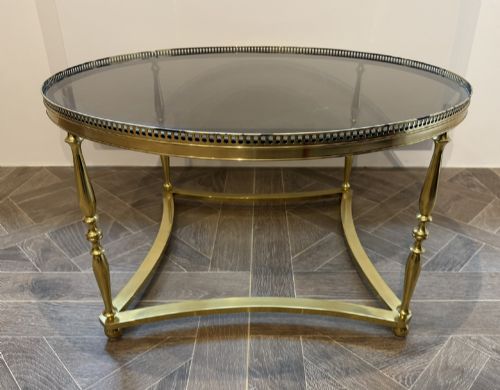
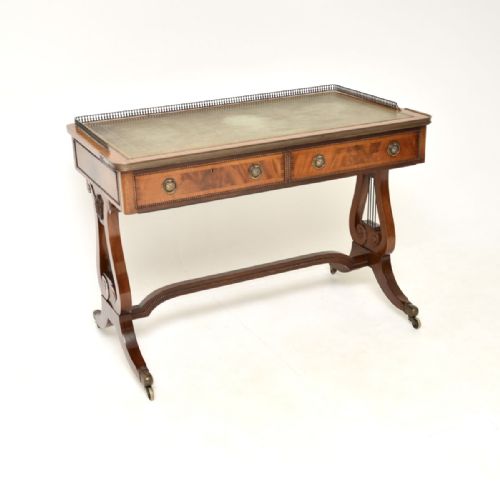
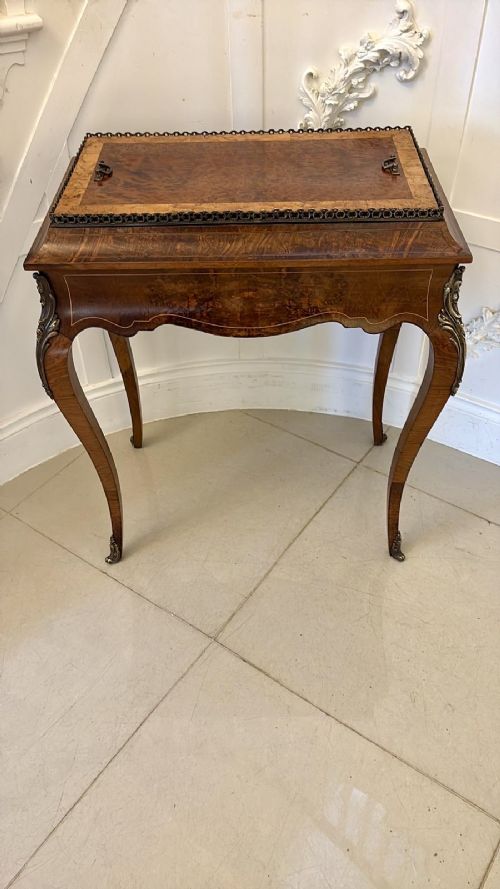
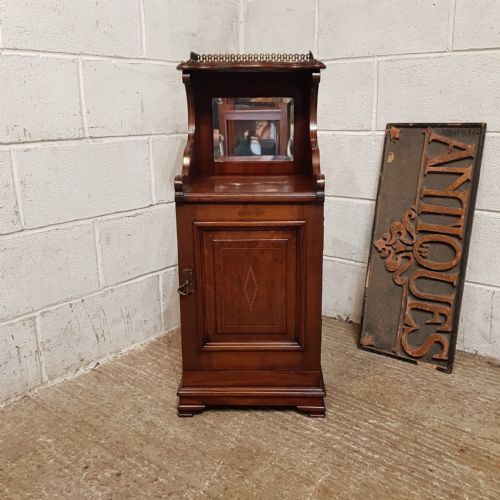
A vintage brass gallery table is defined by a low raised metal railing encircling its upper surface, designed to keep small objects from rolling off. The selections found here span forms such as side tables, coffee tables, occasional pieces, and writing desks, drawing upon periods from the Victorian era through the 1930s.
Most examples originate from British and French traditions, frequently employing styles like Edwardian, Sheraton Revival, and French Empire. These pieces function equally well as bedside stands, lamp tables, or compact display surfaces within a traditional interior.
Makers and workshops of the nineteenth and early twentieth centuries produced these items in various woods, often mounting them with cast metal galleries to secure ornaments, books, or writing implements.
Materials and construction
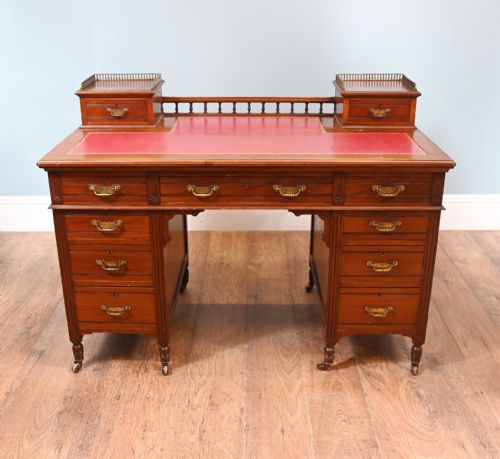
Cabinet makers utilised dense hardwoods such as mahogany, walnut, satinwood, and kingwood as the primary structural foundations. These timbers were frequently selected for their grain patterns and enhanced through crossbanding, marquetry inlay, or polished leather writing surfaces.
The characteristic gallery consists of brass spindles and rails fitted securely around the perimeter of the top. Additional decorative elements include ormolu mounts, marble inserts, and original cast brass handles on associated drawers.
Some estate managers required dedicated kneehole desks fitted with galleries to keep stationery from sliding during drafting tasks.
Assessing craftsmanship and execution
Quality rests upon the crispness of the brass gallery work, the precision of the timber inlay, and the integrity of the underlying cabinet construction. Superior examples exhibit tightly fitted drawer linings, well-matched wood veneers, and substantial cast mounts.
Pieces carrying documented workshop attribution or retaining original surface patination command distinct attention from collectors. The integration of fine materials like satinwood, marble, or ormolu elevates an ordinary occasional table into a significant decorative object.
Edwards and Roberts·Gillow and Co·Halls Patent
The Vintage Brass Gallery Table Glossary
- Brass gallery
- A low openwork metal railing fixed to the outer edge of a tabletop to retain items. This defining feature is typically cast or assembled from individual spindles and rails.
- Marquetry
- Decorative patterns formed by fitting together small pieces of tinted wood veneers into timber surfaces. This technique often depicts floral motifs or geometric borders.
- Ormolu
- Gilded bronze mounts applied to furniture for decorative effect, common in French Empire and continental pieces. The technique involves treating metal with a mercury and gold amalgam.
- Crossbanding
- A narrow strip of veneer laid around the border of a tabletop so that the grain runs perpendicular to the centre panel. It creates a framed visual border.
- Gueridon
- A small occasional table, often round, originating in seventeenth-century France and revived in later periods. They serve as candle stands, plant holders, or lamp tables.
Vintage Brass Gallery Table: Frequently Asked Questions
What is a gallery table used for?
These tables provide a decorative surface for holding lamps, drinks, or writing equipment while the raised metal rim secures loose items.
They sit comfortably beside armchairs, sofas, or bedsides, functioning as both utility furniture and display stands.
How do I date a brass gallery table?
Dating relies on identifying the underlying timber, the construction of the drawers, and stylistic markers such as Edwardian inlay or Victorian proportions.
Secondary indicators include the fastening methods of the brass gallery and the presence of period secondary woods like oak.
Are marble top tables difficult to maintain?
Marble surfaces require simple dusting and prompt wiping of liquid spills to prevent staining or etching of the polished stone.
Avoid harsh chemical cleaners, relying instead on a damp cloth to preserve the natural finish.
Where were these tables made?
Production centred largely in British workshops and Parisian cabinet-making houses during the nineteenth and early twentieth centuries.
Maker attributions occasionally appear on stamped drawer linings or patent brass fittings.