
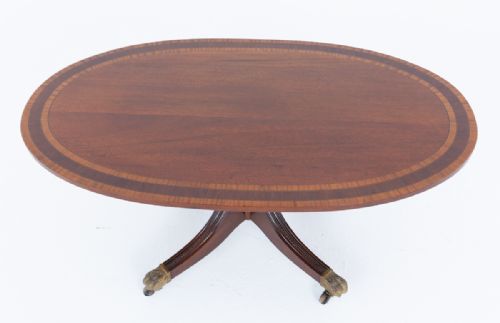


Mahogany Brass Coffee Table
A mahogany brass coffee table brings together warm timber and gleaming metal, offering a functional centrepiece grounded in historical craft.
Mahogany Brass Coffee Table
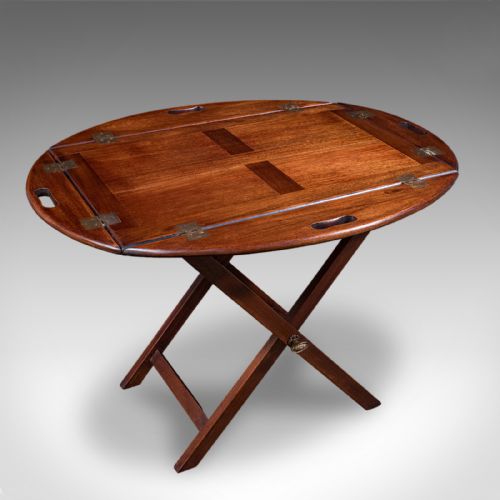
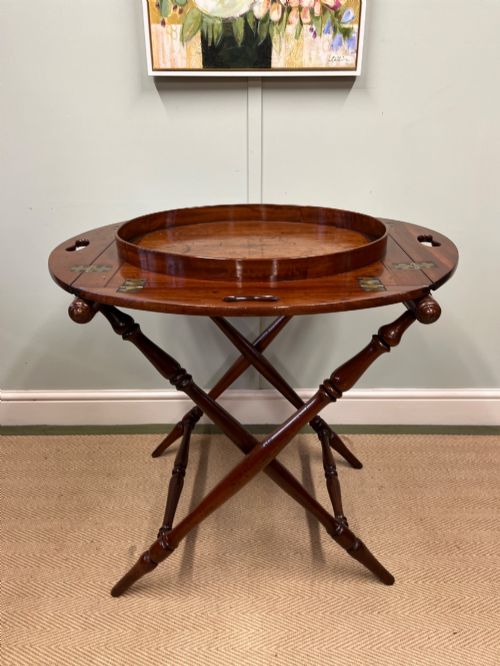
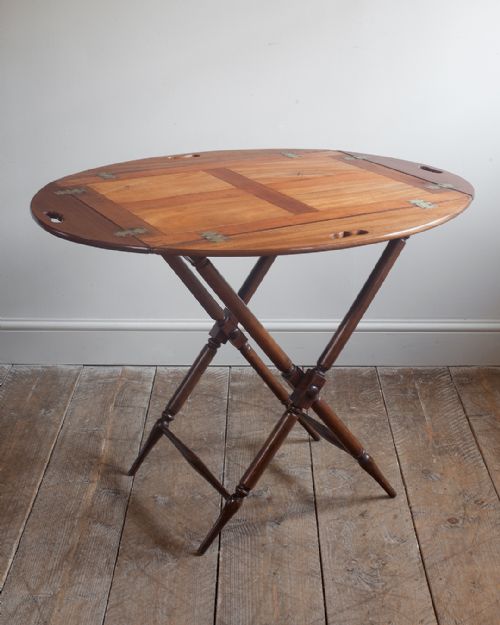
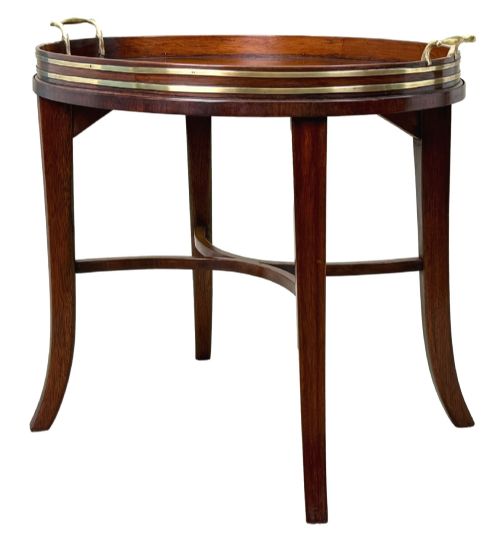
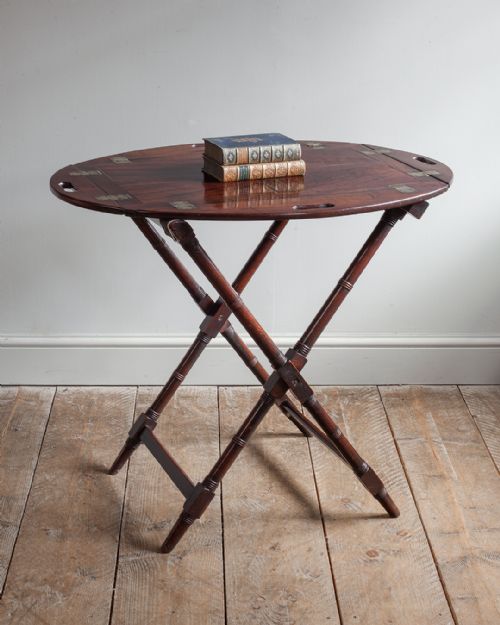
When searching for a mahogany brass coffee table, a buyer encounters forms derived from earlier serving furniture, such as butler's trays, campaign pieces and drum tables, adapted for modern domestic use. These low tables range from eighteenth-century trays placed on folding stands to nineteenth-century campaign designs and twentieth-century revival pieces.
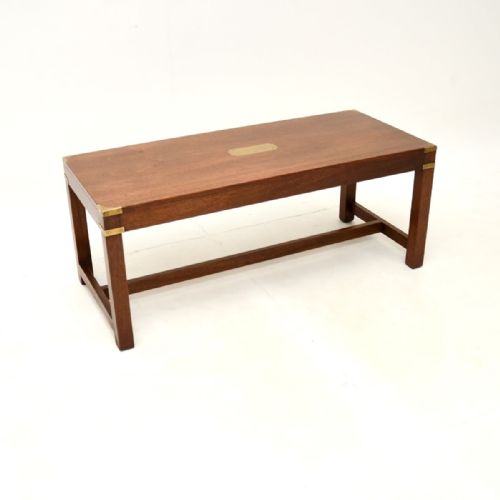
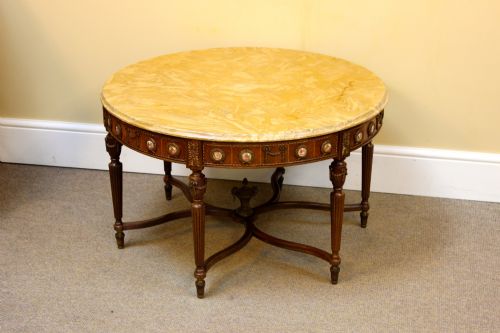
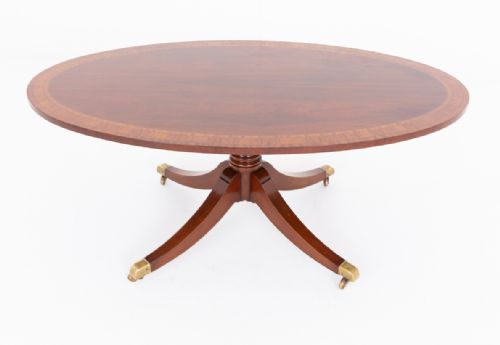
The most common formats on this page include oval butler's trays fitted with brass hinges or carrying handles, alongside circular and drum tables featuring brass-bound decoration. Materials span solid mahogany and flame mahogany veneers, frequently accented with brass corners, mounts and inlay.
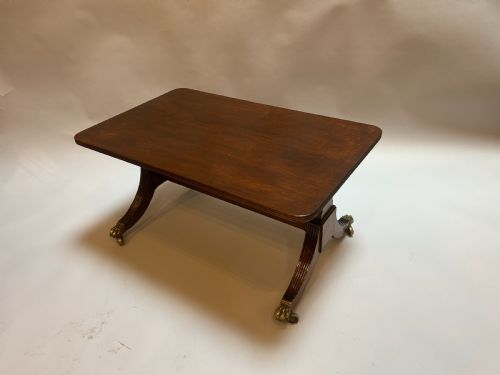
Origins stretch across Georgian, Regency, Victorian and Edwardian periods, including specific revivals like Sheraton and Louis XVI styles. Buyers find pieces designed originally for serving tea or managing travel equipment, now converted or constructed to serve as durable coffee tables.
How they were made
Cabinetmakers utilised dense timbers such as Cuban mahogany and flame mahogany, often selecting boards with rich grain patterns for table tops and tray surfaces. Satinwood inlay and marble inserts appear alongside the primary wood, creating contrast on top surfaces.
Brass formed an integral structural and decorative component, appearing as bound edges, hinged drop-flaps, recessed carrying handles and corner brackets borrowed from military campaign furniture. Joinery relied on traditional techniques suitable for items expected to withstand movement and daily use.
Many a butler's tray started life carrying port across a country house before retiring to hold coffee mugs.
What varies in quality
Quality rests in the selection of the timber, where figured flame mahogany or dense Cuban mahogany denotes superior cabinetmaking compared to plain secondary woods. The crispness of satinwood inlay and the weight and finish of cast brass handles and bound edges distinguish finer workshops from simpler production.
Proportion and structural integrity dictate the standing of a piece, particularly in how trays fit securely onto their stands or how drum tables balance on central pedestals. Original brass hardware and well-preserved patination on the timber surface set apart superior examples from later alterations or heavy restorations.
The Mahogany Brass Coffee Table Glossary
- Butler's tray
- A removable wooden tray with hinged or panelled sides, originally designed for carrying dining items and later mounted onto folding or fixed stands to function as a table.
- Campaign furniture
- Portable pieces made for military officers, characterised by brass corners, inset handles and collapsible elements designed for easy transport.
- Flame mahogany
- A veneer cut from the fork of the mahogany tree, producing a distinctive, fiery grain pattern highly prized in formal cabinetmaking.
- Drum table
- A circular library or centre table with a deep skirt containing drawers, resting on a central pillar and tripod base.
- Satinwood inlay
- Contrasting light-coloured wood inserted into the mahogany surface in geometric or floral motifs to ornament the top or borders.
Mahogany Brass Coffee Table: Frequently Asked Questions
Are these tables original butler's trays?
Many tables utilise genuine eighteenth or nineteenth-century butler's trays paired with contemporary or period stands to achieve a comfortable coffee table height.
Other examples were manufactured directly as low tables or occasional pieces during the Edwardian period and later twentieth-century revivals.
How do I care for mahogany and brass?
Protect the timber surface with beeswax polish rather than silicone sprays to maintain the natural lustre of the grain.
Clean brass elements gently with a dry cloth, avoiding harsh metal cleaners that can damage the surrounding wood polish.
What is campaign style furniture?
Campaign furniture was built for travel, featuring durable hardwoods and protective brass corners designed to withstand rough transit.
These practical details translate into sturdy coffee tables featuring recessed handles and bound edges well-suited to active living spaces.
How do I distinguish Georgian from later revivals?
Georgian pieces display eighteenth-century construction methods, hand-cut joinery and timber patination developed over centuries of use.
Revival pieces from the Edwardian era or the nineteen-twenties emulate these earlier styles using machinery appropriate to their later manufacturing dates.