




Brass Rimmed Table
A brass rimmed table brings understated metalwork to timber furniture, offering a refined gallery edge that secures small items atop occasional and centre tables.
Brass Rimmed Table
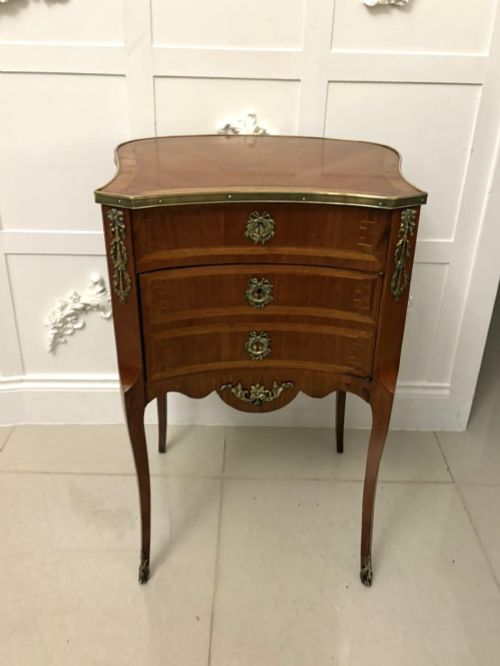
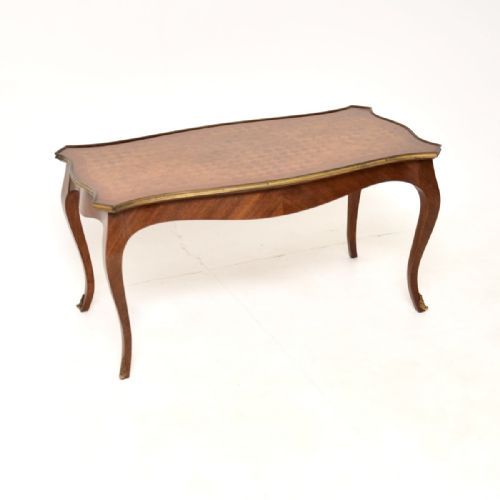
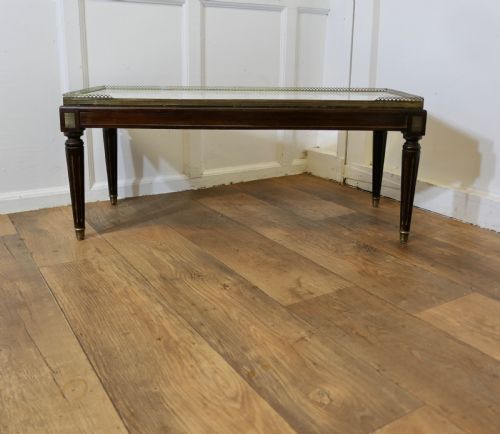
A brass rimmed table most frequently appears in nineteenth-century French and English designs, spanning compact occasional tables, tiered étagères, and low coffee tables. These pieces utilise timber frames ranging from mahogany and walnut to marquetry and parquetry veneers, finished with characteristic raised metal borders.
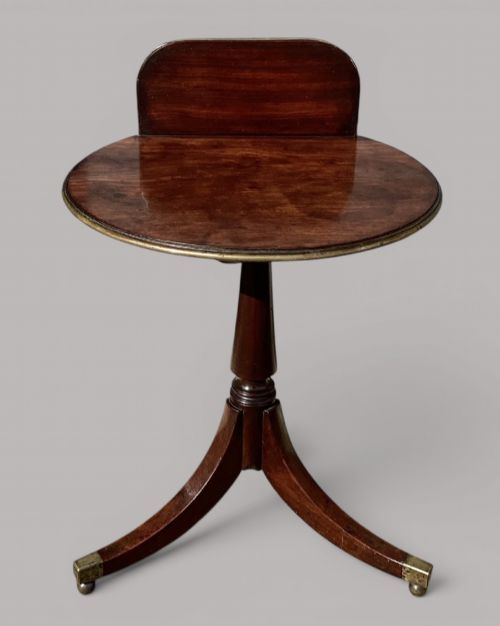
Buyers encounter forms such as circular bouillotte tables, two-tier occasional pieces, and tripod tables originating from the Georgian period up to the early twentieth century. The proportion remains domestic and practical, designed for placement beside seating or as central display surfaces.
Craftsmanship and distinction
The standard of timber selection and the precision of the veneer work largely determine the quality of a brass rimmed table, with complex floral marquetry demanding greater skill than plain mahogany boards. Cabinetmakers who matched grain patterns across drawers and tiers achieved a more cohesive visual weight.
The gauge and finishing of the brass gallery itself set apart finer examples, as heavy cast or pierced galleries require superior metalworking compared to thin stamped brass strips. Original fixings and crisp chasing on ormolu mounts indicate workshop standards of a higher order.
Some tables guard your wine with raised metal walls, ensuring no bottle rolls too far during lively card games.
W. Turner Lord & Co
The Brass Rimmed Table Glossary
- Gallery
- A raised border or railing running around the edge of a table top, typically cast or pierced in brass to prevent items from sliding off.
- Marquetry
- Decorative veneer work arranged in pictorial or geometric patterns using diverse coloured woods laid onto a carcase.
- Parquetry
- Geometric wood inlay forming repeating patterns such as cubes or chequers across a table surface.
- Étagère
- A piece of furniture consisting of several open shelves or tiers for displaying small objects.
- Gueridon
- A small round table supported by a central column or three legs, originating in seventeenth-century France.
Brass Rimmed Table: Frequently Asked Questions
What is a bouillotte table?
A bouillotte table is a small French round card table featuring a raised brass gallery designed to hold counters during play. They typically incorporate candle arms and small drawers.
These pieces date largely from the eighteenth and nineteenth centuries, serving today as versatile bedside or occasional tables in private interiors.
How do I clean brass galleries?
Brass galleries require gentle dusting with a soft cloth to prevent the accumulation of grime in recessed patterns. Avoid harsh commercial dips that strip aged patination from the metal.
Apply a mild metal cleaner sparingly with a cotton bud if polishing is necessary, taking care to shield adjacent wood and veneer surfaces.
Are these tables sturdy?
Most occasional and centre tables are built to support lamps, books, and decorative objects rather than heavy structural loads. Slender legs and tiered designs require careful placement away from high-traffic zones.
Checking the joints beneath the tiers and around the central column ensures the stability of older frames remains intact.
Where should I place an étagère?
An étagère suits corners or wall placements where multiple tiers can display collections of ceramics, glass, or small decorative items. The open shelving structure benefits from ambient natural light.
Keep such pieces away from direct sunlight and heat sources to protect delicate veneers and aged timber finishes.