
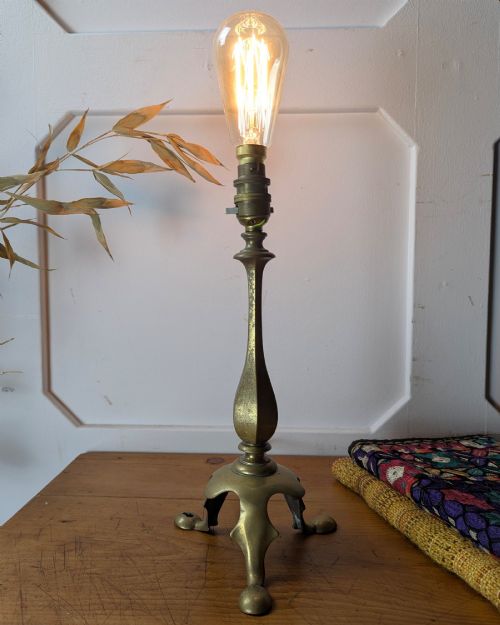
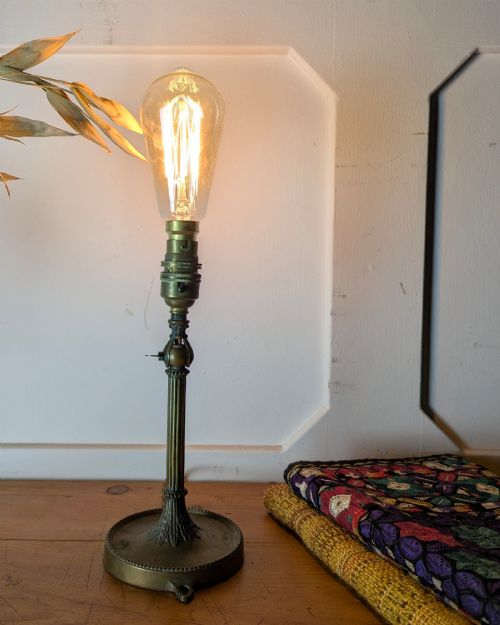
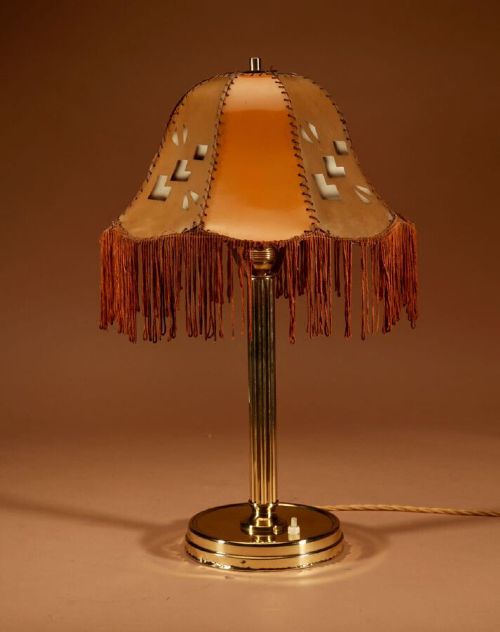
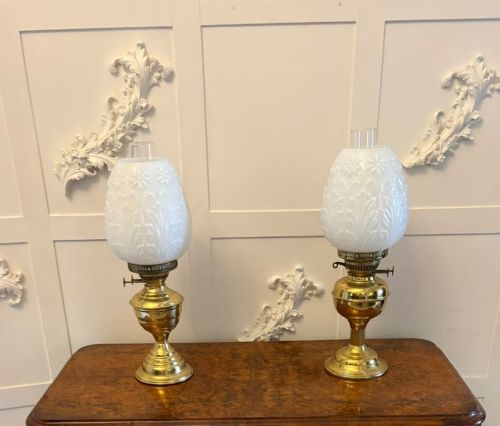
Vintage Brass Desk Lamp
A vintage brass desk lamp brings practical light and warm metallic shine to a workspace, combining period craftsmanship with enduring utility.

Vintage Brass Desk Lamp
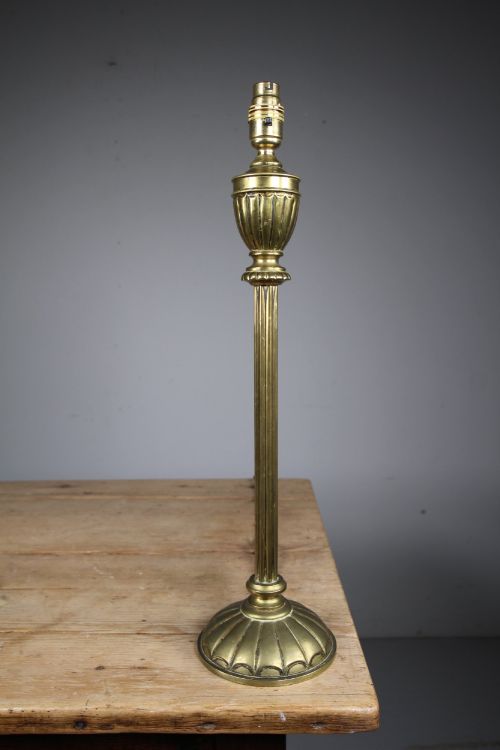
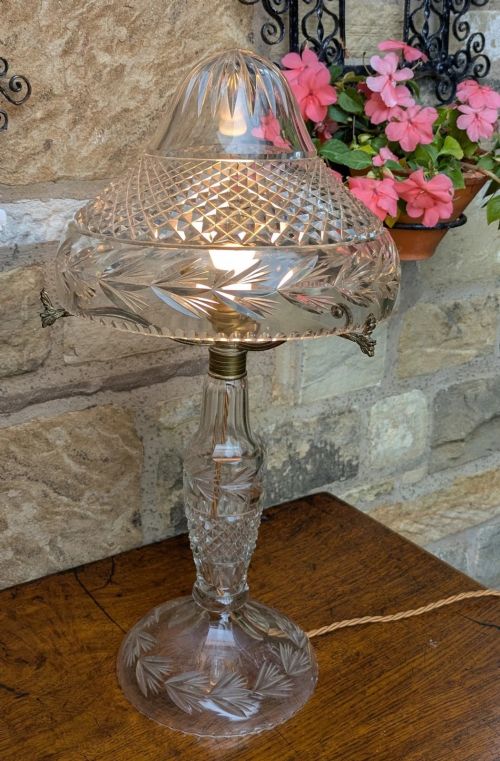
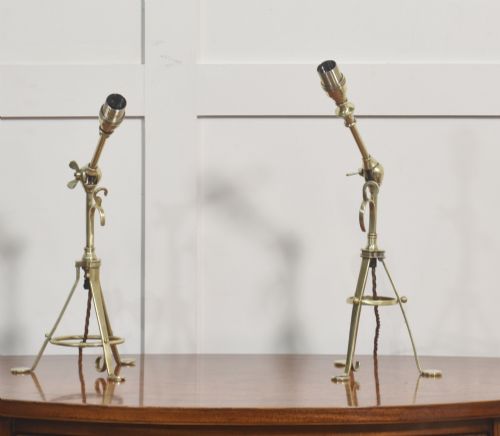
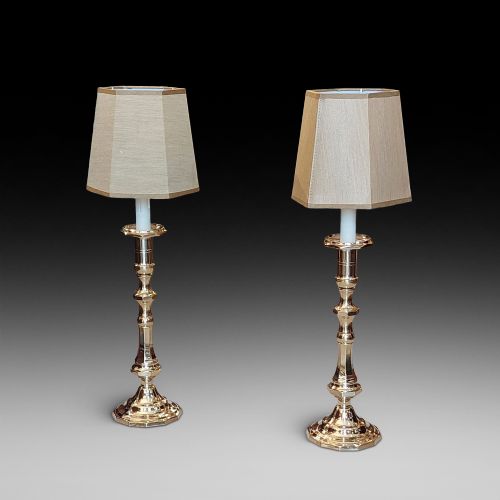
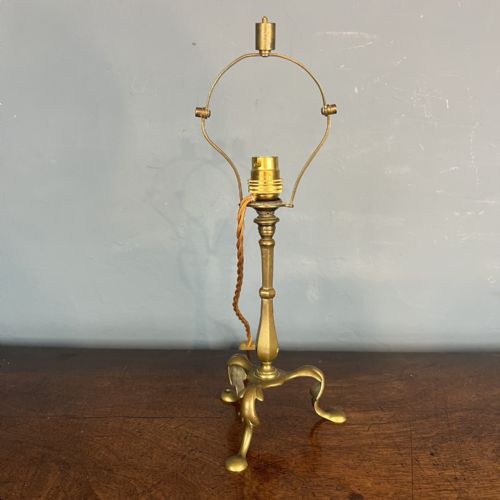
When you search for a vintage brass desk lamp, you encounter items designed for focused workspace illumination from periods spanning the late nineteenth century through the early decades of the twentieth century. These objects include adjustable student lamps, reeded columns, and pivoting reading lights created to sit upon writing surfaces.
The versions most common on this page originate from Victorian, Edwardian, and Art Deco eras, alongside French and English workshops. They frequently incorporate adjustable arms, weighted bases, and metal or glass shades designed to direct light downward onto a desk.
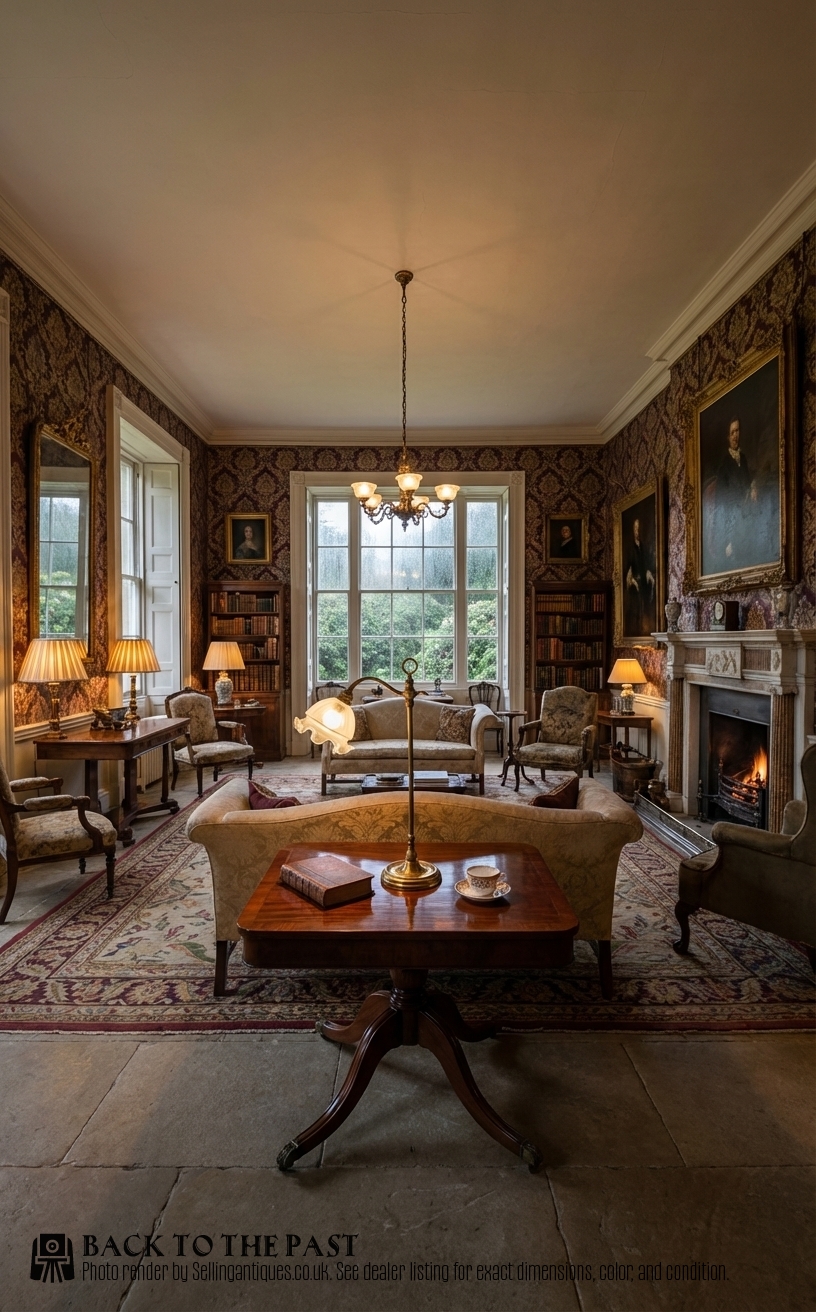
How they were made
Maker's workshops built these lamps primarily using cast and spun brass, often combining the metal with marble, opaline glass, fabric, or porcelain elements. Components were turned on lathes or cast in moulds before being hand-finished, polished, and assembled with threaded fittings.
Adjustable models utilised heavy weighted bases to counterbalance extended arms, while specialised reading lamps incorporated swivel joints and pierced shades to manage heat and light distribution.
Vintage Brass Desk Lamp Retail Price Guide 2026
Typical asking prices for vintage brass desk lamp among the pieces listed under this phrase on Sellingantiques today, from the lower quarter to the upper quarter. They describe what is for sale here now, not the wider market.
At least one brass table lamp draws direct design inspiration from Fritz Lang's dystopian silent film Metropolis.
What varies in quality
The distinction between ordinary and exceptional examples rests in the crispness of the casting, the weight of the base, and the sophistication of the mechanical joints. Superior pieces exhibit clean lines in classical columns or geometric Art Deco forms, with smoothly operating swivel mechanisms that hold their position without slipping.
Material integration also separates the tiers, with high-grade specimens featuring heavy-gauge brass, original patination, and complementary components such as hand-blown glass shades or carved marble plinths rather than lightweight plated substitutes.
W.A.S. Benson·Fratelli Toso·Angelo Brotto for Esperia·GLC
The Vintage Brass Desk Lamp Glossary
- Corinthian column
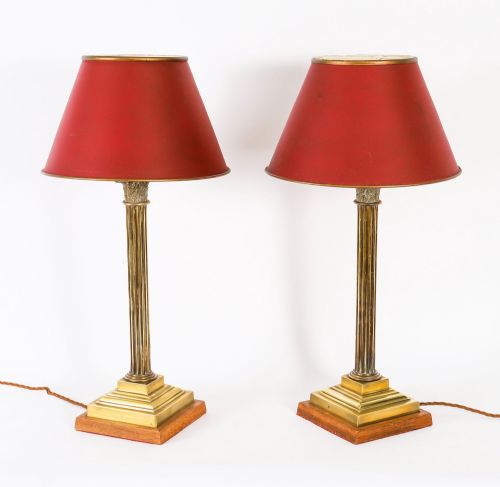
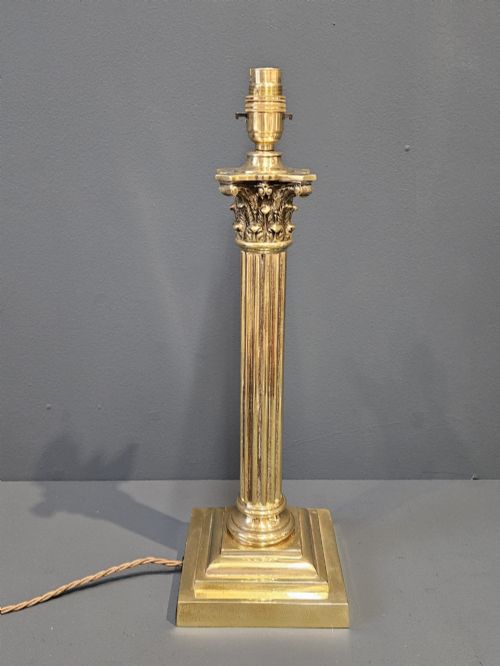
- A classical architectural column form featuring an ornate capital decorated with acanthus leaves, frequently utilised for the stems of nineteenth-century table and desk lamps.
- Opaline glass
- A pale, translucent milk glass often blown into shades for Victorian and Edwardian lamps to diffuse light softly without glare.
- Bouillotte lamp
- A traditional French desk or card-table lamp characterised by a central shaft, a saucer base to catch wax, and an adjustable metal shade.
- Ormolu
- Gilded bronze produced by applying a mercury-gold amalgam to cast bronze, seen on decorative nineteenth-century French lighting.
- Champlevé
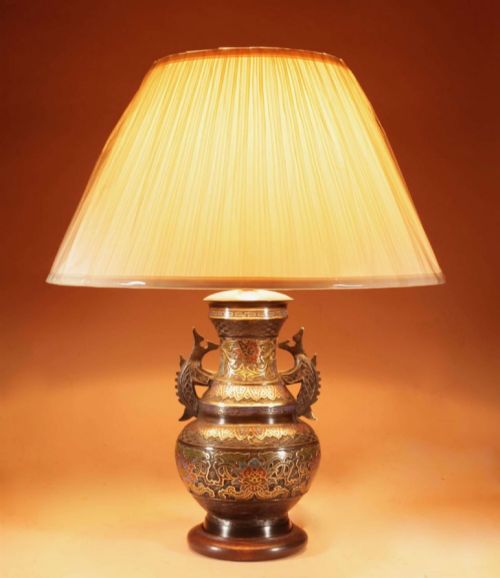
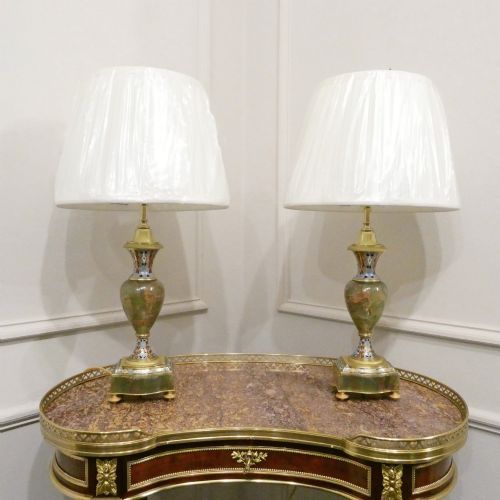
- An enamelling technique where troughs are carved into a metal surface and filled with vitreous enamel before firing, found on select turn-of-the-century decorative bases.
Vintage Brass Desk Lamp: Frequently Asked Questions
How do I adjust a desk lamp?
Many period reading lamps utilise mechanical joints, thumbscrews, or rise-and-fall counterweight systems to alter the height and angle of the light. Users loosen the pivot screw slightly, position the arm to direct illumination downward onto the work surface, and retighten the fixture.
Heavier student lamps often rely on internal springs or friction fittings within the central column. Care must be taken not to force seized joints, applying appropriate lubricant if movement feels restricted after decades of stationary use.
What periods do these lamps cover?
The lighting fixtures listed here span from the late nineteenth century through the Art Deco era of the nineteen-thirties. Victorian and Edwardian examples lean toward classical columns and oil lamp conversions, while later pieces embrace industrial articulation and geometric styling.
Design influences draw from Gothic revival, Neoclassical tastes, and Arts and Crafts movements. Each era introduced specific mechanical improvements for adjustable reading and desk work.
Were these lamps originally electric?
Many early examples began as oil lamps or gas lights before conversion to electricity during subsequent decades. Candlestick forms and column lamps were routinely adapted to take bulb holders as domestic wiring spread through homes and offices.
Purpose-built electric desk lamps emerged around the turn of the twentieth century, featuring integrated switches, braided flex cords, and adjustable metal shades designed specifically to house incandescent bulbs safely.
How do I clean brass desk lamps?
Maintenance requires gentle dusting with a soft, dry cloth to preserve the historical patina accumulated over generations. Aggressive metal polishes strip away the aged surface character that collectors value, altering the original appearance of the brass.
If the metal requires deeper cleaning to remove grime, mild soap and water applied sparingly with a soft brush will suffice. The surface must be dried thoroughly immediately afterward to prevent water spotting.
How are glass shades secured?
Shades on period desk lamps are typically held in place by three or four thumbscrews spaced evenly around a brass gallery ring. The screws are tightened gently against the collar of the glass shade to hold it securely without exerting excessive pressure that might crack the material.
Some designs utilise slip-fit galleries where the shade rests inside a retaining ring by gravity. Checking the tightness of these fittings periodically prevents the shade from shifting or slipping during adjustment.