
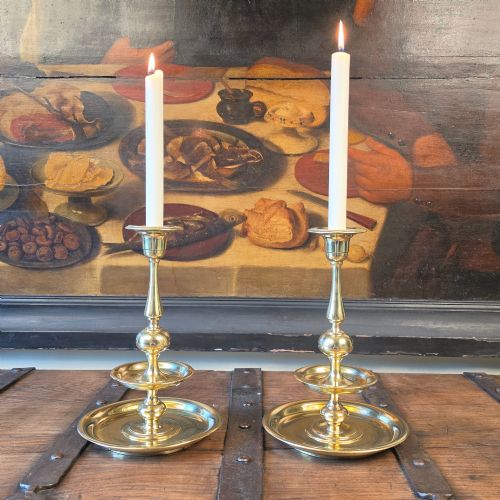
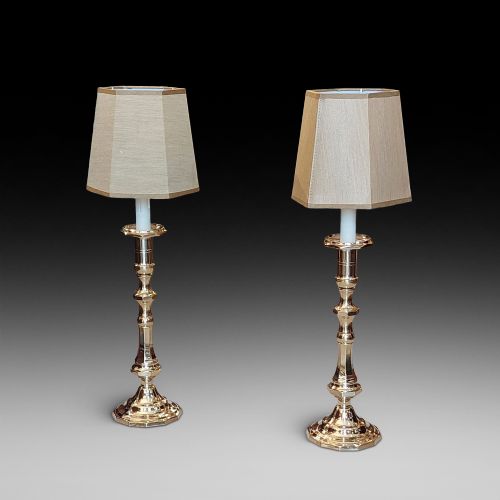
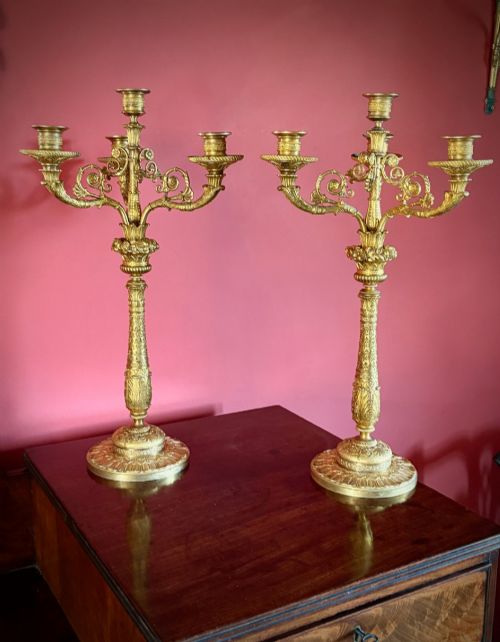
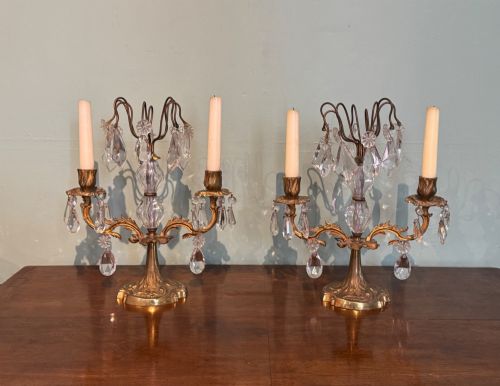
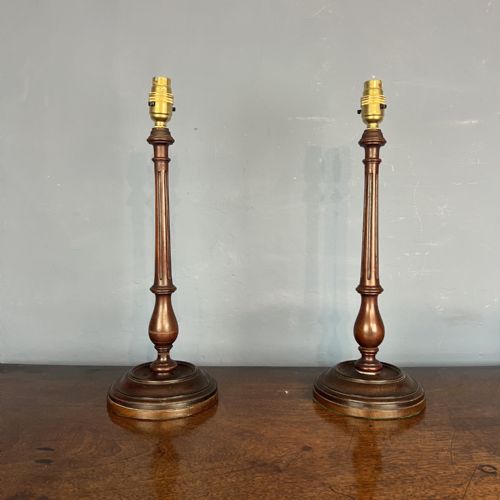
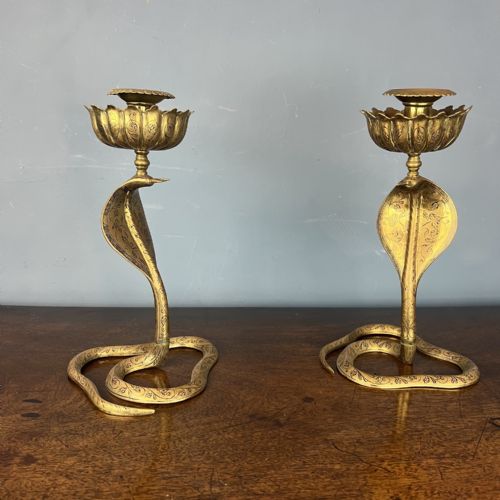
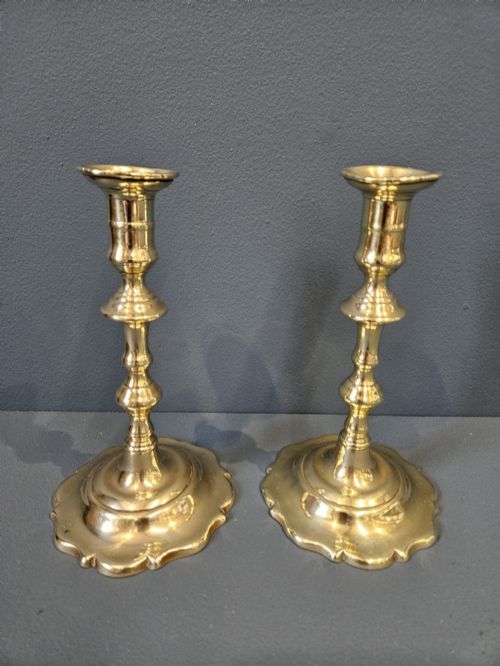
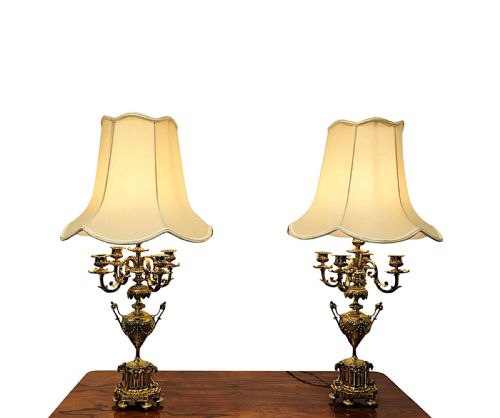
Vintage Brass Candlestick Pair
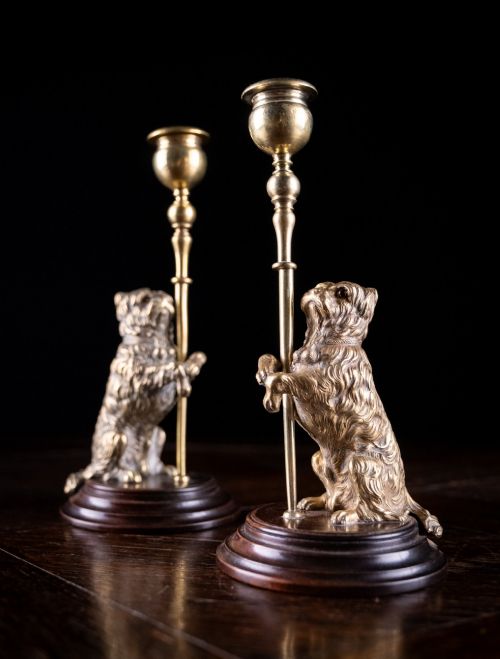
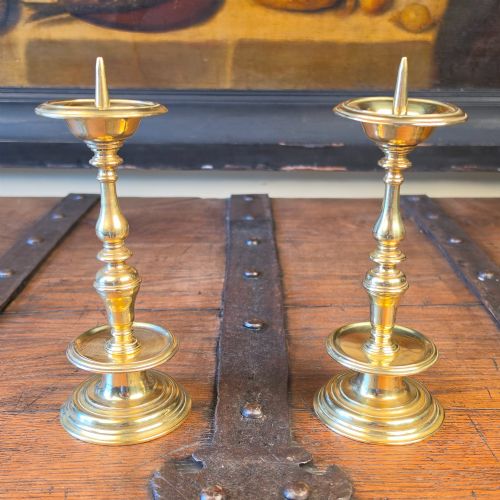
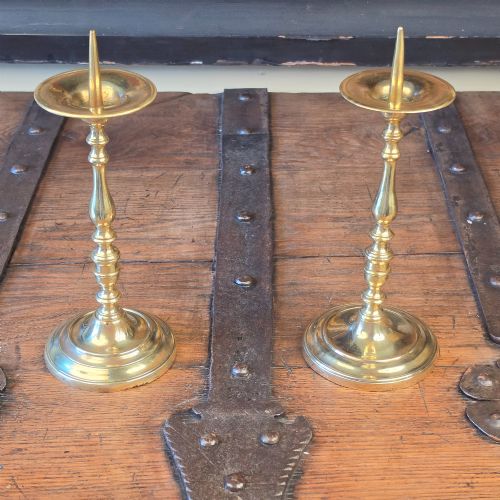
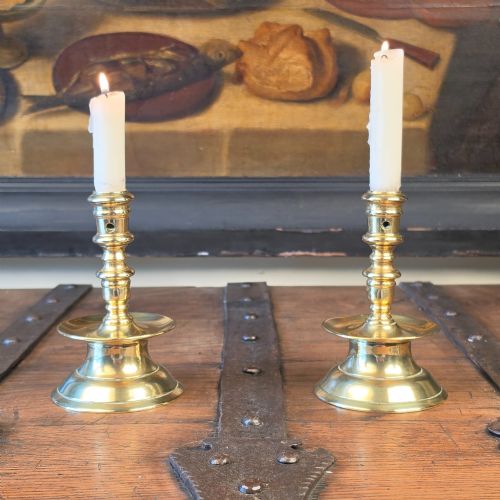
These vintage brass candlestick pair examples bring instant warmth and character to a table, combining enduring utility with period craftsmanship.
Identifying your vintage brass candlestick pair
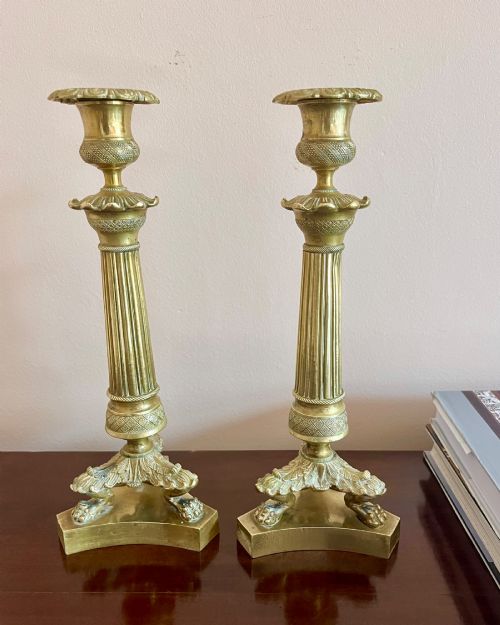
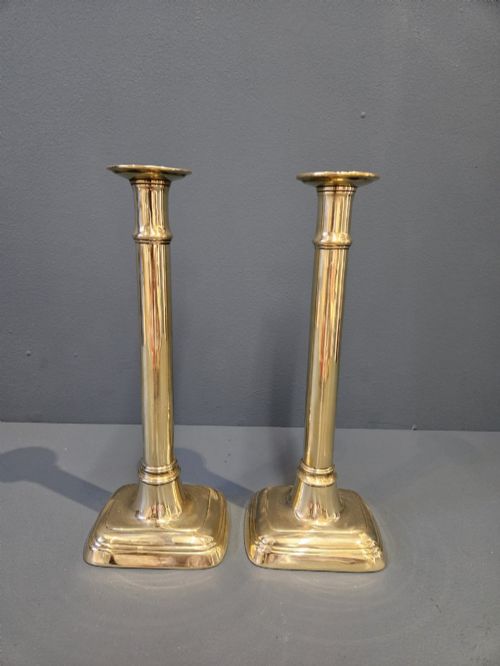
A vintage brass candlestick pair comprises matched holders designed to support tallow candles or wax tapers securely. When you search for a vintage brass candlestick pair, you encounter items spanning the Georgian era through to the Edwardian period and nineteen-hundred.
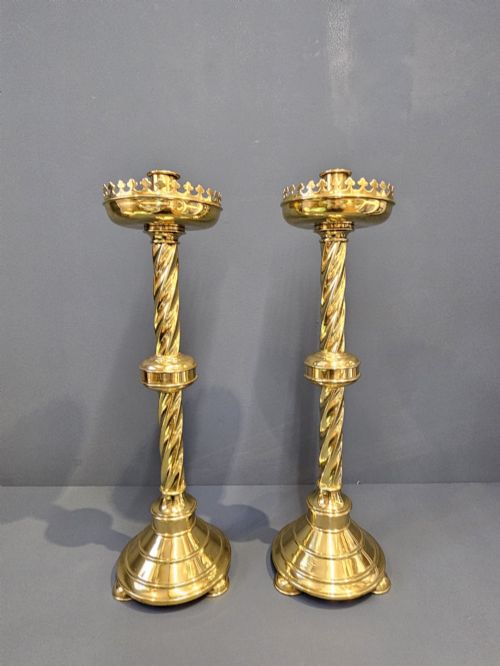
Forms on offer range from tall church designs and elegant Edwardian shapes to unusual configurations and octagonal bases. Eighteenth-century examples demonstrate early manufacturing traits, whilst later Victorian and Edwardian items reflect evolving domestic tastes.
The materials remain consistent across the selection, utilising solid brass throughout. Each matched pair demonstrates the domestic lighting requirements of its respective era, from Georgian parlours to Edwardian drawing rooms.
Materials and construction methods
Every piece in this selection is cast from brass, exploiting the metal's durability and capacity for taking a bright polish. Makers utilised traditional foundry techniques appropriate to the period, whether working during the Georgian epoch or the later Edwardian years.
Construction methods evolved from early eighteenth-century techniques, such as the incorporation of ejector mechanisms designed to push up remaining candle stubs. Surface finishes and turning marks on the brass reflect the manual lathe work and hand-finishing standard in earlier workshops.
Retail Price Guide 2026
Typical UK retail prices for vintage brass candlestick pair, calculated from the Sellingantiques database of over a million retail prices indexed since 2003. This retail price guide relies exclusively on Sellingantiques data; no external sources or auction records are used, so the figures do not describe the wider market.
Some eighteen-eighty pieces carry whimsical names like King of Diamond, adding a touch of Victorian personality to the domestic mantelpiece.
Judging quality in brass lighting
Quality in a matched pair rests upon the crispness of the casting and the proportional balance of the stem and base. Earlier eighteenth-century and Georgian pieces often display heavier metal weight and more complex geometric forms, such as octagonal bases.
The refinement of the turning and the integrity of the original components distinguish finer examples from standard production. A well-preserved surface patina and minimal wear to threaded joints or ejector mechanisms indicate superior original manufacture.
The Vintage Brass Candlestick Pair Glossary
- Brass
- A copper and zinc alloy valued for its golden lustre and suitability for casting intricate shapes. It forms the sole material foundation for all items in this category.
- Ejector mechanism
- An internal sliding device operated by a thumbpiece, designed to raise the candle stub for easy removal. This ingenious feature appears on mid-eighteenth-century examples.
- Octagonal base
- A geometric eight-sided foot that provides stability and stylistic elegance. This form is particularly associated with early eighteenth-century and Georgian pieces.
- Church candlesticks
- Tall, imposing holders originally produced for ecclesiastical settings. Their grand scale makes them striking decorative objects for modern domestic interiors.
Frequently Asked Questions
How do I date a brass candlestick?
Dating relies upon stylistic markers, construction methods, and base shapes. Georgian items often feature distinct octagonal or square bases, whereas Edwardian pieces display lighter, more decorative proportions.
Changes in manufacturing techniques, such as the introduction of specific casting seams or ejector mechanisms, also help establish the period of origin.
How should I clean antique brass?
Maintenance typically requires only a soft cloth to remove dust. Avoid harsh chemical polishes that strip away the aged surface appearance.
Allowing a natural patina to develop preserves the character and historical integrity of the metal over time.
What is an ejector candlestick?
An ejector candlestick incorporates a built-in internal push-rod mechanism. This clever device allows the user to elevate the remaining candle remnants without difficulty.
Such functional additions are characteristic of mid-eighteenth-century design and add considerable interest for collectors.