
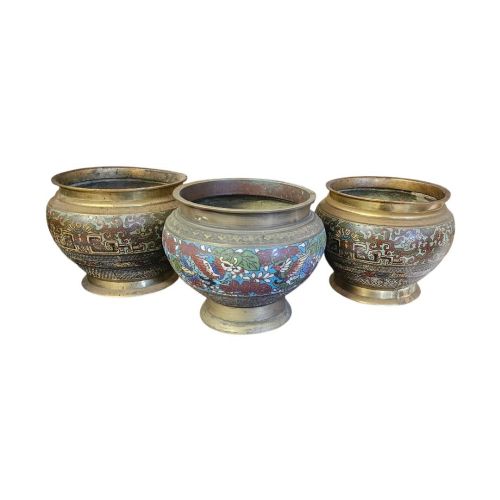
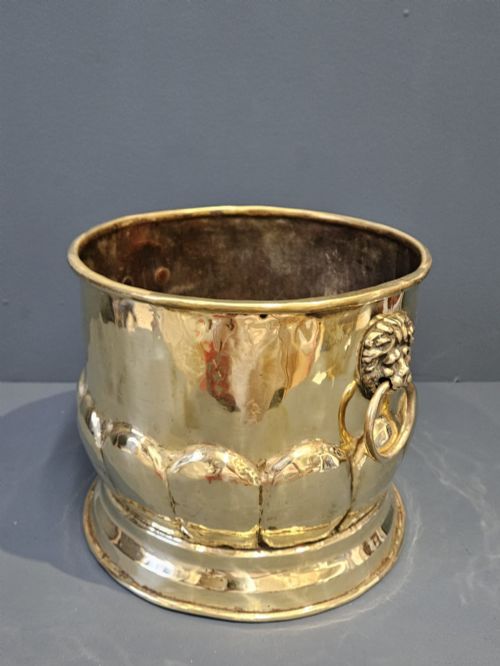
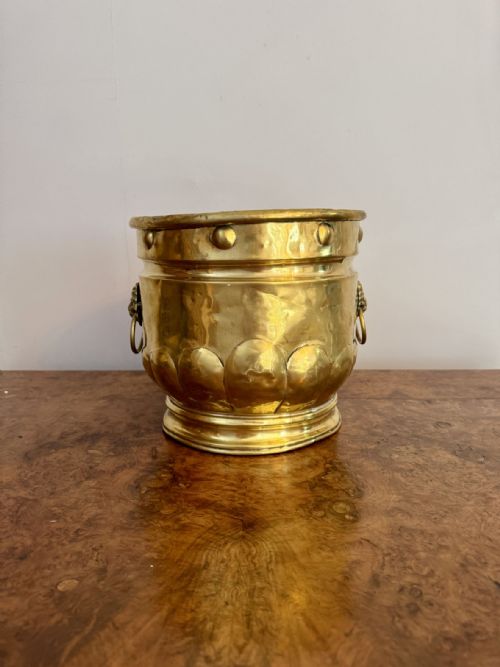
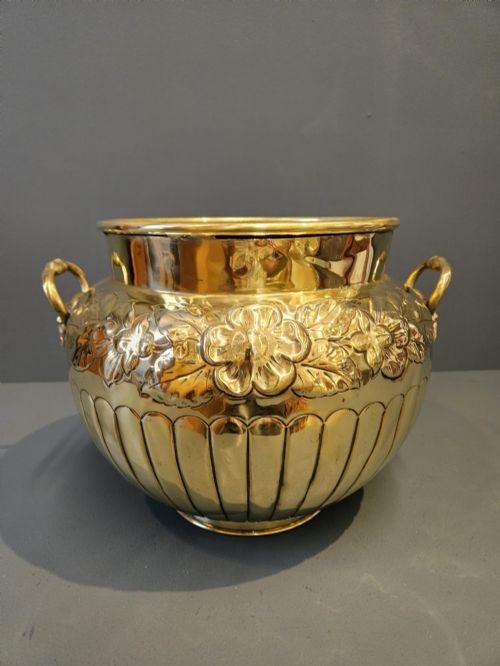



Vintage Brass Cachepot
These vintage brass cachepot pieces bring botanical display indoors, offering heavy metal vessels shaped to hold potted plants with historic style.
Vintage Brass Cachepot
When you search for a vintage brass cachepot, you are looking at metal plant holders and jardinieres designed to sit inside a room rather than in the garden. Most examples met on this page date from the Victorian and Edwardian eras, alongside pieces from the nineteenth century and around nineteen hundred.
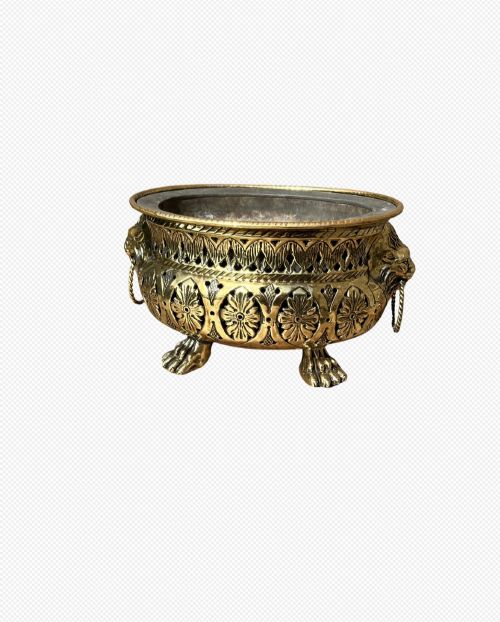
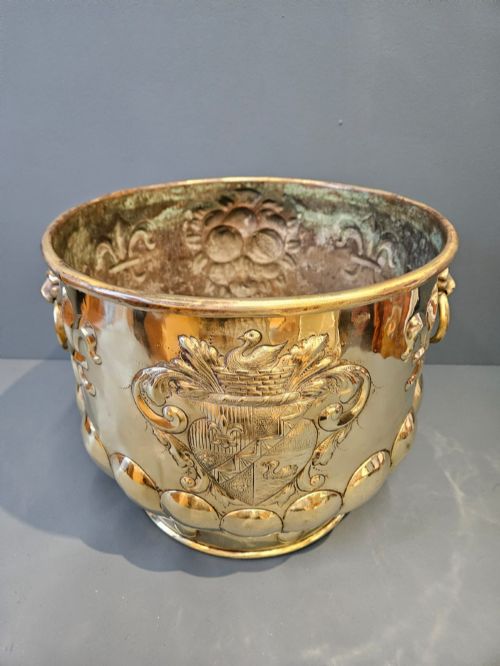
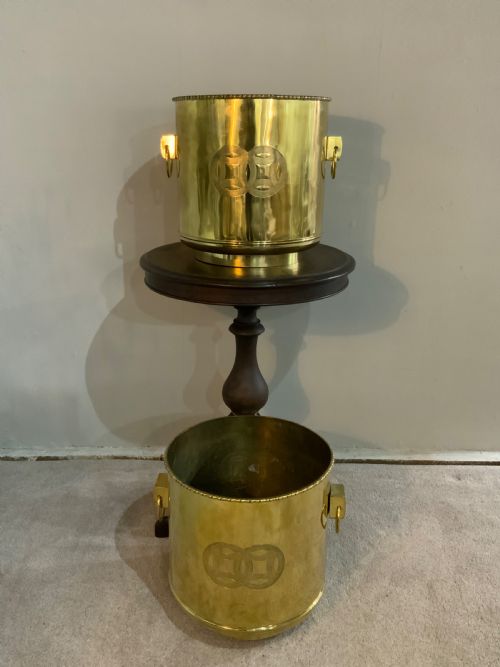
The forms vary from simple cylindrical buckets to elaborate vessels featuring lions mask handles, crests, and animal heads. Alongside solid brass, you will find items pairing brass with copper, bronze, marble, and mahogany.
Origins stretch from British workshops to French, Dutch, and Asian makers, encompassing styles such as Art Nouveau, Aesthetic Movement, and Gothic revivals. These vessels served to hide ordinary clay flower pots while protecting interior surfaces from water.
How they were made
Metalsmiths utilised techniques such as repoussé and embossing to hammer patterns and decorative motifs directly into brass and copper sheets. Piercing was also employed to create openwork metal designs around the rim or body of the vessel.
Some pieces incorporate cast elements like bronze handles shaped as animal masks, attached securely to spun or beaten bodies. Wooden planters often utilise coopered staves held together with metal bands, combining timber with brass components.
Enamel work and champlevé techniques appear on Asian bronze and brass bowls, fusing coloured glass pastes into recessed metal channels. Polished finishes highlight the natural warmth of the base metals used across these items.
Several pieces feature fierce lions mask handles, ready to guard your ferns from unwanted pests.
What varies in quality
The thickness and weight of the metal set the foundation for a superior piece, with heavier bronze and brass vessels showing greater substance. Finer items display crisp, deeply hammered repoussé work rather than shallow, indistinct surface stamping.
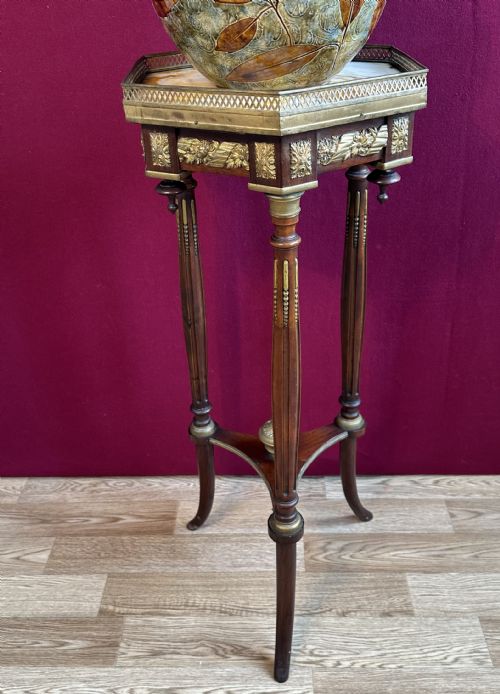
Detailing on handles, crests, and feet distinguishes standard production items from masterwork creations. The integration of original stands or complementary materials like marble and mahogany adds distinct character to the upper tier of objects.
J Sankey and Sons
The Vintage Brass Cachepot Glossary
- Cachepot
- A decorative container designed to hold a flower pot and catch drainage water. The word derives from the French for hiding a pot.
- Repoussé
- A metalworking technique where the artisan hammers patterns from the reverse side to form raised designs on the front. This method creates tactile, three-dimensional surface decoration.
- Jardiniere
- An ornamental pot or stand for holding plants or flowers, usually large and freestanding. These vessels often feature decorative handles or feet.
- Dinanderie
- A term for various objects made of brass, copper, and bronze, originating from the Belgian town of Dinant. It covers medieval and later beaten metalwork.
- Champlevé
- An enamelling technique where troughs are carved into the metal surface and filled with vitreous enamel before firing. The technique produces colourful patterns bounded by thin metal lines.
Vintage Brass Cachepot: Frequently Asked Questions
What is a vintage brass cachepot used for?
These vessels were originally made to conceal plain terracotta flower pots indoors, allowing house plants to sit in living rooms without spoiling the furniture.
They catch excess water after watering, though liners are often recommended to protect the historic metal interiors from prolonged dampness.
How do I clean a brass cachepot?
Dust gently with a soft cloth and avoid harsh chemical cleaners that strip away the aged surface patina accumulated over decades.
Many collectors prefer to leave the natural oxidation and darkening in place, as this shows the true age of the metal.
Are these planters waterproof?
While metal vessels held water historically, older seams and pierced designs mean some pieces may leak over time.
It is safest to place a modern plastic saucer or liner inside the vessel before adding a potted plant.
How do I date a brass cachepot?
Dating relies on stylistic clues, manufacturing techniques, and occasional maker marks stamped on the base or rim.
Victorian and Edwardian pieces often feature specific revival styles, Gothic motifs, or Art Nouveau fluid lines that point to a particular decade.