



Brass Vessel Plant Pots
Brass vessel plant pots bring sculptural weight and warm metallic tones to interiors, uniting utility with ornamental display.
Brass Vessel Plant Pots
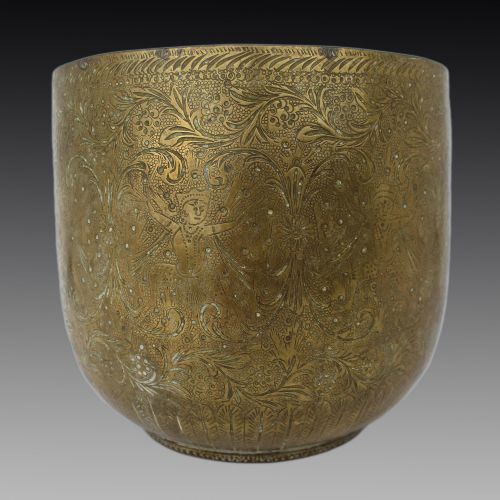
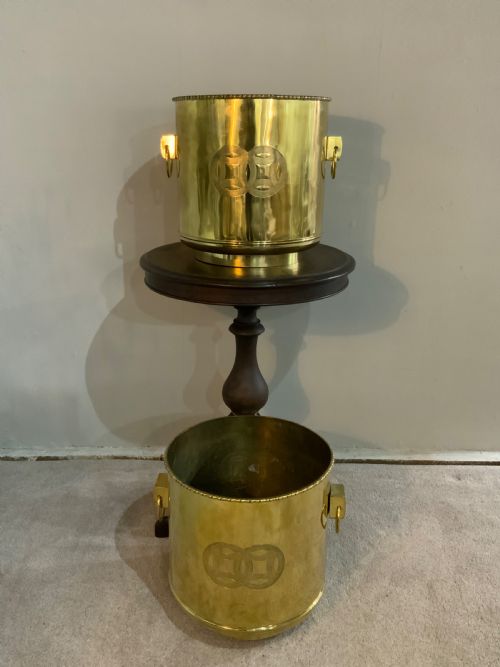
Brass vessel plant pots encompass substantial jardinieres, cachepots, and planters designed to house greenery within domestic spaces. These pieces emerge predominantly from Victorian and Edwardian workshops, alongside earlier 18th-century examples and continental or oriental workshops.
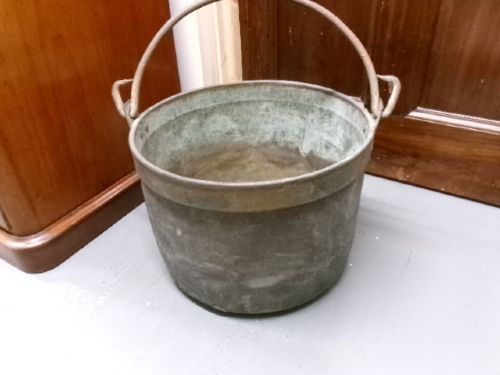
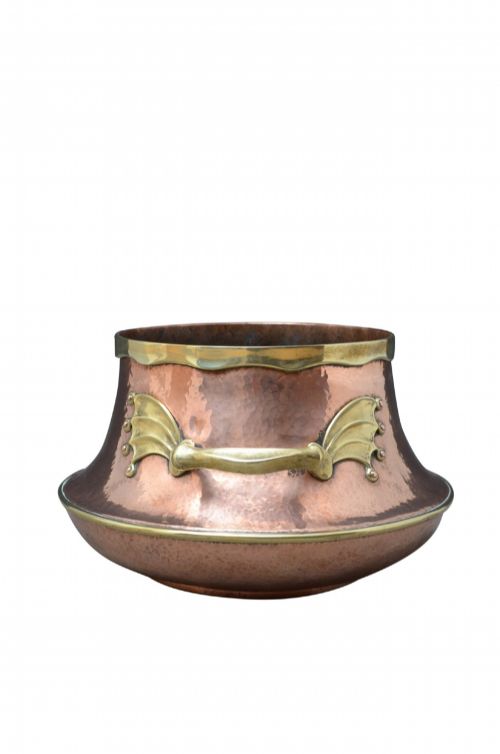
The most common formats on this page are Victorian and Edwardian brass jardinieres, often accompanied by copper combinations, cauldrons, and coal buckets repurposed for horticulture. Forms range from cylindrical and elliptical bodies to footed bowls and handled vessels.
Origin points span domestic British manufacturing centres, continental Europe, and international sources including Chinese, Japanese, and Indian Raj production. Buyers encounter objects shaped by distinct stylistic movements such as Gothic Revival, Art Nouveau, and Anglo-Indian design.
Construction and Materials
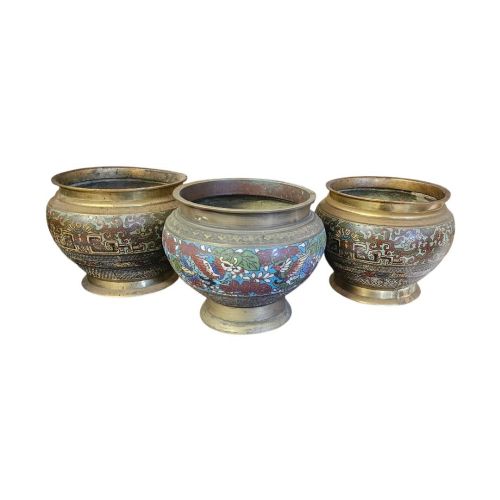
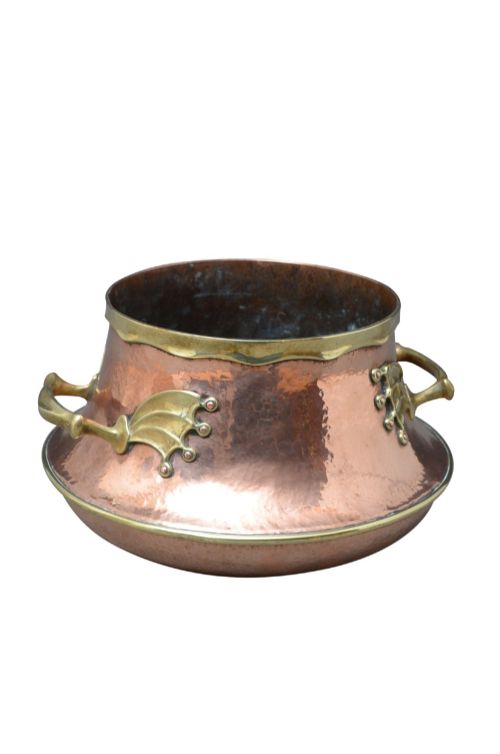
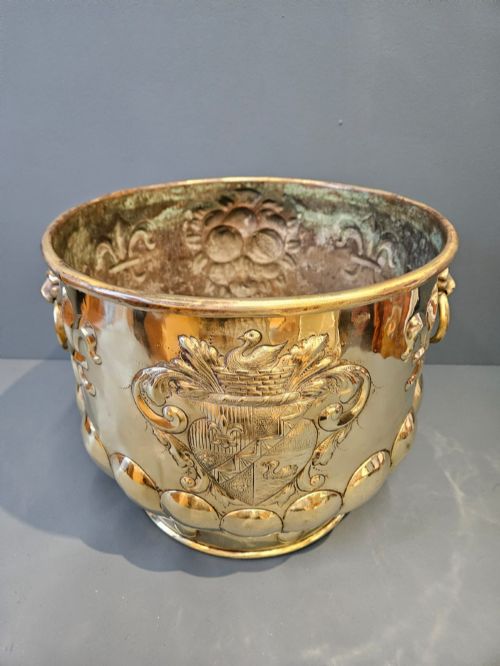
Makers utilised sheet brass, cast bronze, and copper, frequently combining metals to achieve textural contrast between body and mount. Surface decoration relied upon techniques such as hand-hammering, repoussé embossing, piercing, and champlevé enamel work.
Structural integrity often depended upon riveted seams, soldered joints, or applied swing handles and crests. Finishes varied from polished brass and ormolu to patinated surfaces influenced by age and environmental exposure.
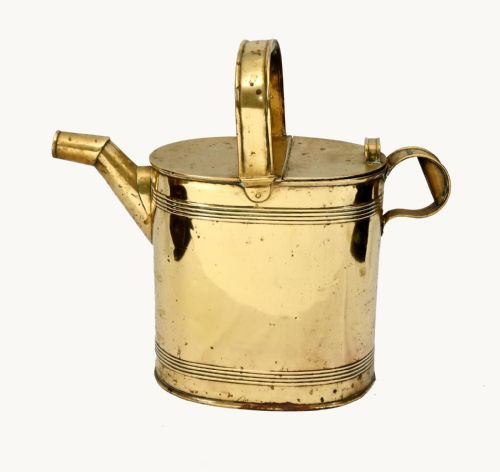
Several country house watering cans and coal buckets share shelf space with fine oriental bronze bowls.
Grading Quality
Quality rests upon the thickness of the metal gauge, the crispness of embossed or hand-engraved detailing, and the integrity of construction methods. Substantial weight and balanced proportions distinguish superior vessels from lighter, mass-produced counterparts.
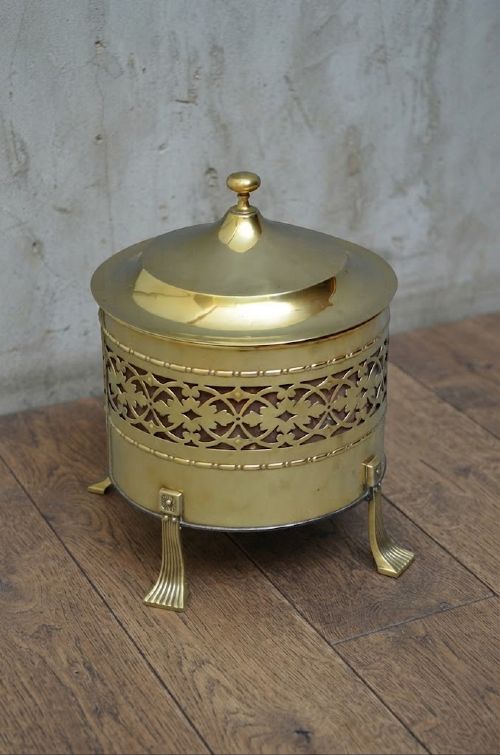
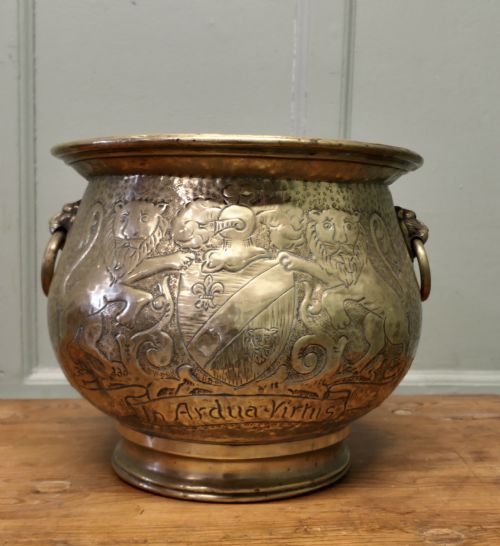
Artistic ambition sets the upper tier apart, visible in complex pierced fretwork, specialised dinanderie work, or integrated crests and shields. The harmony between decorative motifs and the vessel form dictates the enduring appeal of each piece.
The Brass Vessel Plant Pots Glossary
- Jardiniere
- An ornamental pot or stand designed to hold flowers or plants. These vessels often feature decorative embossing or handles suited for prominent interior placement.
- Cachepot
- A decorative container used to conceal an ordinary flowerpot. This term appears alongside planter classifications in historical listings.
- Repoussé
- A metalworking technique where the metal is hammered from the reverse side to form a raised design in relief. This method creates tactile surface patterns on copper and brass bodies.
- Dinanderie
- Objects made of beaten brass or copper originating from medieval centres such as Dinant. The term describes decorative domestic metalware with embossed surface enrichment.
- Champlevé
- An enamelling technique where troughs or cells are carved into the metal surface and filled with vitreous enamel before firing. Chinese bronze vessels frequently employ this method.
- Ormolu
- Gilded bronze applied as a decorative mount or finish. This treatment lends a bright golden lustre to ornamental metalwork.
Brass Vessel Plant Pots: Frequently Asked Questions
What is a jardiniere?
A jardiniere is an ornamental receptacle intended to hold potted plants or cut flowers within a room.
These vessels function primarily as decorative containers rather than direct planting beds, often sitting on tables, floors, or dedicated stands.
How do I clean brass planters?
Cleaning depends upon the desired preservation of historical patina, as harsh polishes can strip aged surfaces.
Dusting with a dry cloth or gentle washing with mild soapy water preserves the integrity of antique brass and copper finishes.
Can I plant directly inside them?
Direct planting can introduce moisture that accelerates corrosion and damages historical linings.
Using an inner plastic or ceramic pot protects the metal vessel while allowing easy removal for watering.
How do I identify Victorian pieces?
Victorian metalwork often displays specific manufacturing signatures such as heavy gauge brass, riveted construction, and Gothic or aesthetic movement motifs.
Weight, construction seams, and stylistic indicators like crests or embossed shields help date these items to the nineteenth century.