
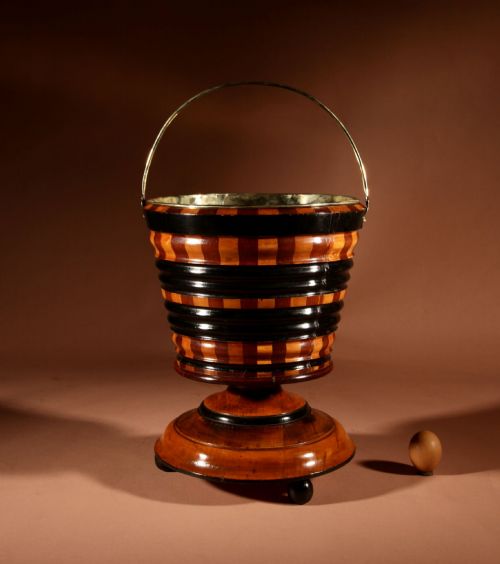


Traditional Brass Planters
Traditional brass planters bring genuine warmth to a room, offering sturdy metal vessels built to hold greenery and flowers.
Traditional Brass Planters
Traditional brass planters encompass metal vessels and jardinieres spanning the Victorian, Edwardian, and nineteenth-century periods. These pieces often overlap with utilitarian forms such as coal buckets, peat buckets, and log bins.
The materials combine solid brass with copper, iron, oak, mahogany, and ebonised wood. Examples range from plain fluted bodies to embossed dinanderie work and riveted joints.
How they were made
Construction relies heavily on traditional coopered wood techniques, binding staves of oak or mahogany with brass hoops. Metal bodies are shaped from sheet brass, featuring riveted seams and hand-embossed surface patterns.
Many items incorporate swing handles, iron fittings, and contrasting timber bases. The manufacturing process bridges domestic cookware production and decorative household container crafting.
Listings span periods from George III through the Edwardian era, incorporating oak, mahogany, copper, and iron alongside brass.
What varies in quality
Quality rests on the weight of the metal and the precision of the cooperage on wood-bound examples. Thicker gauge brass and well-fitted timber staves distinguish better pieces from lighter utilitarian items.
The distinction also lies in decorative execution, such as crisp embossing and clean riveted construction versus simpler, purely functional metal containers.
The Traditional Brass Planters Glossary
- Jardiniere
- An ornamental pot or stand for holding plants or flowers. These items sit on floors or furniture surfaces.
- Coopered
- Made with staves of wood fitted together and bound by metal hoops, similar to barrel construction. This technique appears on buckets and planters using oak or mahogany.
- Dinanderie
- Objects made of brass or copper, typically hammered or embossed. The term originates from the Belgian town of Dinant.
- Fluted
- Decorated with parallel shallow grooves running vertically. This surface treatment appears on solid brass bodies.
Traditional Brass Planters: Frequently Asked Questions
What is a jardiniere?
A jardiniere is an ornamental pot designed specifically to hold growing plants or floral displays.
Unlike standard flower pots, these decorative vessels are intended to sit visibly inside living spaces.
How were coopered buckets used?
Coopered buckets served various domestic purposes including holding coal, peat, or water.
Over time, many of these sturdy wood and brass vessels found new life as plant containers.
Are these planters waterproof?
Many metal and wood vessels require an internal liner to protect the structure from moisture.
Original linings are frequently replaced or supplemented with modern pots to hold damp soil safely.
How do I identify Victorian pieces?
Victorian examples often feature heavy brass construction, riveted seams, or distinctive mahogany and oak coopered staves.
Stylistic cues draw from nineteenth-century Dutch and English domestic metalware traditions.