


Brass Lion Foot Planters
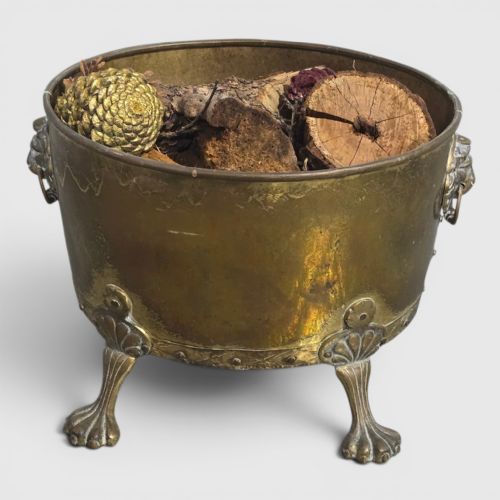
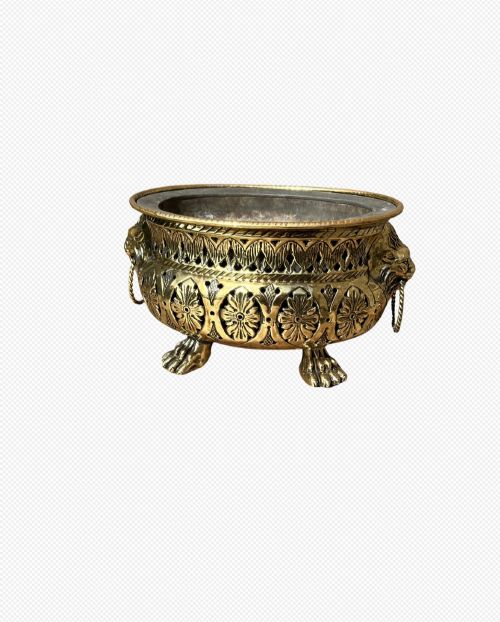
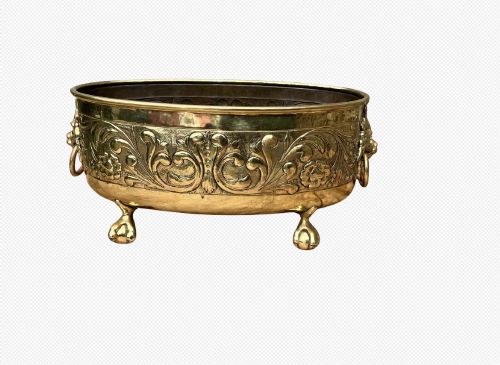
Brass lion foot planters are robust domestic vessels designed for plants and firesides, combining heavyweight metalwork with sculptural claw supports.
Brass Lion Foot Planters
Brass lion foot planters emerge as functional vessels intended for domestic greenery and fireside storage, spanning forms from jardiniere bowls to cylindrical log bins. When searching for brass lion foot planters, buyers encounter items categorised across multiple utilitarian object types, including hearthware, log scuttles, and wine coolers.
The selections span periods from the eighteenth century through to the Edwardian era, with Victorian examples appearing frequently alongside earlier Dutch and French pieces. Styles range from Gothic Revival and Grand Regency to Dutch Traditional and French Empire, reflecting diverse regional aesthetics applied to heavy metal vessels.
Makers and origins cross various European workshops, including English, Belgian, and French examples. Forms alternate between open circular bowls, handled cauldrons, and deep cylindrical bins designed for functional display.
How they were made
Construction relies primarily on heavy sheet brass and copper, often combined within a single vessel through contrasting metal bands, rivets, or applied mounts. Metals are shaped via hammering, spinning, or casting, creating rigid bodies capable of holding substantial weight.
Surface decoration employs techniques such as repoussé work, embossing, and piercing to produce textured floral or geometric patterns. Cast elements like lion mask handles and claw feet are then attached securely to the main body.
Periods represented span the eighteenth century, the Victorian era, and early twentieth-century dates up to nineteen-ten.
What varies in quality
Quality depends upon the depth and crispness of the repoussé or embossed decoration, where sharp, hand-hammered relief work separates superior vessels from plain or mechanically pressed alternatives. The gauge of the brass or copper also dictates durability, with heavier metal walls preventing distortion.
The execution of cast details, particularly the fidelity and weight of the lion feet and mask handles, marks the distinction between standard production items and finer display pieces. Furthermore, the integrity of joined seams and applied copper bands influences the structural success of each planter.
The Brass Lion Foot Planters Glossary
- Jardiniere
- An ornamental pot or stand for holding plants or flowers, typically manufactured from ceramic or metal. These vessels sit upon tables or floors depending on their scale.
- Repoussé
- A metalworking technique in which a malleable metal is hammered from the reverse side to create a design in low relief. This method produces tactile surface decoration across brass bodies.
- Dinanderie
- Medieval and later brass or bronze wares, named after the Belgian town of Dinant. The term describes decorative and utilitarian domestic metalwork.
- Cauldron
- A large metal pot with a wide mouth, often fitted with handles for lifting. In historic interiors, these served both culinary and utilitarian storage functions.
- Hearthware
- Utilitarian equipment and decorative accessories kept around a fireplace. This category includes log bins, scuttles, and coal buckets.
Brass Lion Foot Planters: Frequently Asked Questions
What were brass lion foot planters used for?
These vessels served primarily as indoor plant holders or heavy-duty containers for hearthside coal and logs. Their robust metal construction protected interior surfaces while displaying decorative metallic finishes.
Larger variations functioned as wine coolers or grand jardinieres in reception rooms, combining domestic utility with formal interior decoration.
How do I date a brass planter?
Dating relies on observing construction methods, material combinations like copper bands, and stylistic indicators such as Gothic Revival or Regency motifs. Eighteenth-century examples often display simpler hammered forms or distinct Dutch characteristics.
Victorian pieces frequently feature heavier embossed decoration and distinct maker techniques, while Edwardian and later items show standardised machine finishing alongside traditional hand-working.
Are these planters suitable for real plants?
Historic metal planters can accommodate potted plants, provided a protective inner liner is utilised to prevent moisture damage to the antique brass. Direct planting accelerates internal corrosion and tarnishing of the metal.
Using a modern nursery pot inside the decorative vessel preserves the antique structure while allowing proper drainage away from the historic base.
How should I clean antique brass?
Maintenance requires gentle dusting and occasional wiping with a soft, dry cloth to remove surface grime without disturbing the aged patina. Aggressive metal polishes strip away historical oxidation that collectors value.
Preserving the natural surface coloration maintains the visual depth developed over centuries of handling and exposure to domestic environments.