


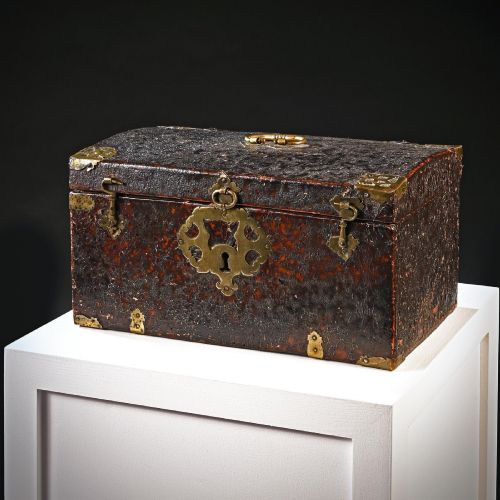
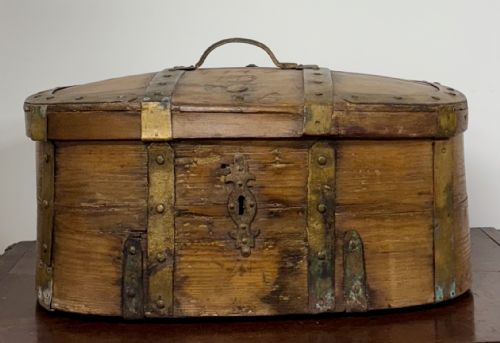
Vintage Brass Bound Chest
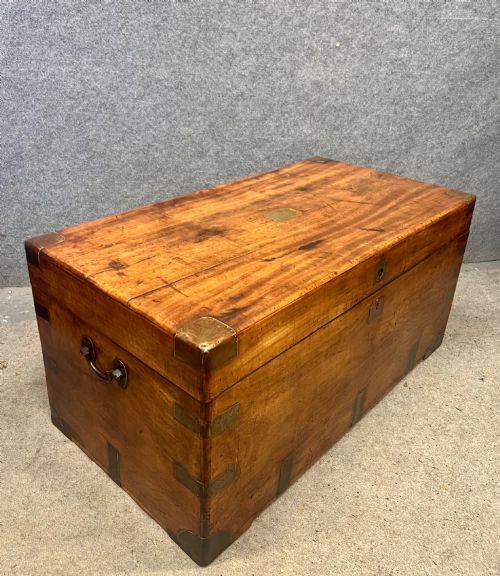
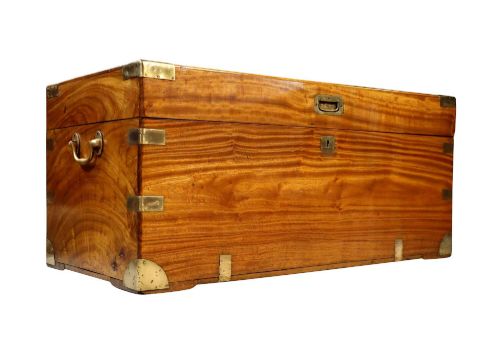
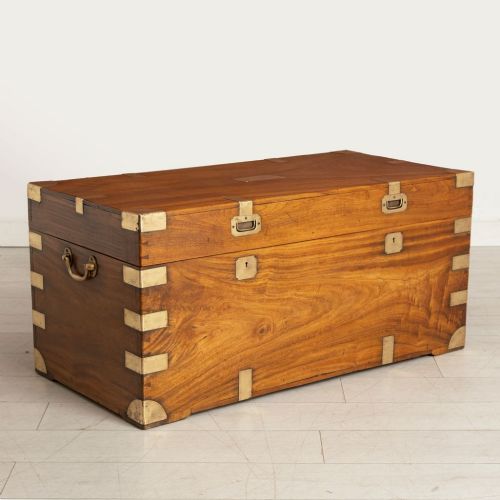
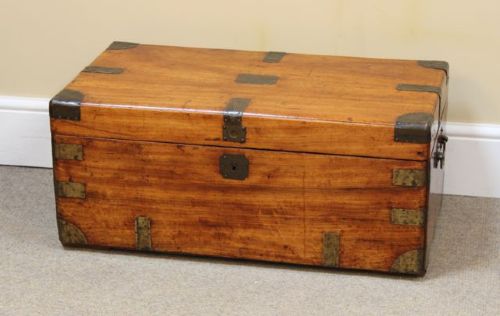
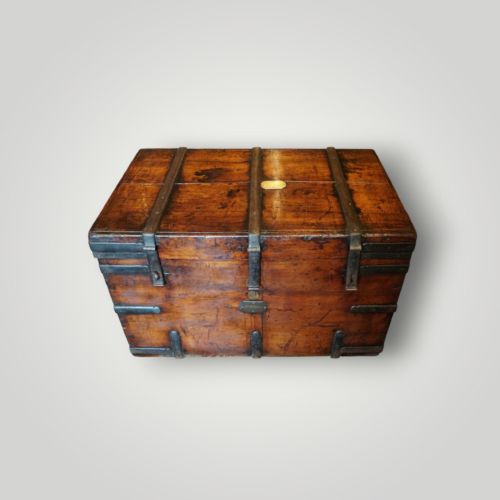
A vintage brass bound chest provides robust storage with structural metal corners and strapping designed for travel or campaign use.
Vintage Brass Bound Chest
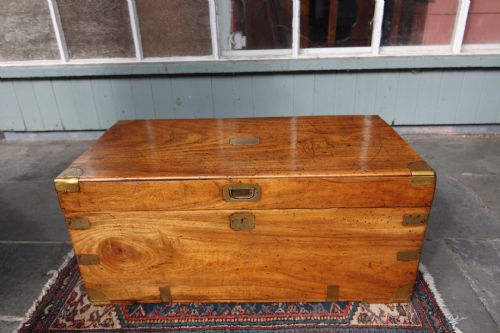
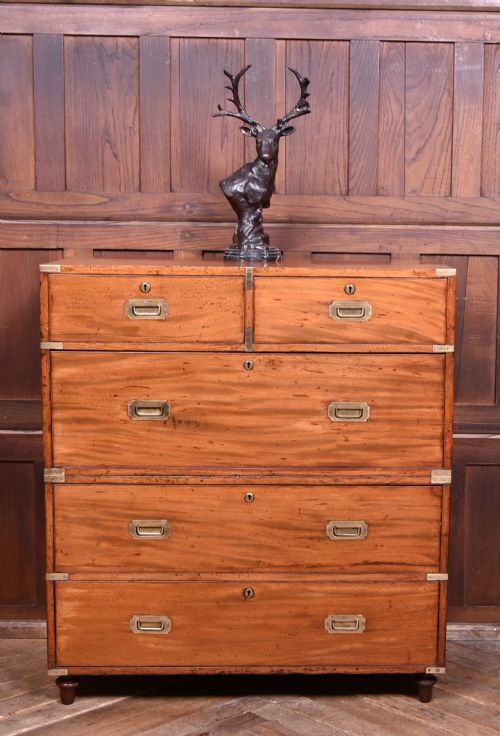
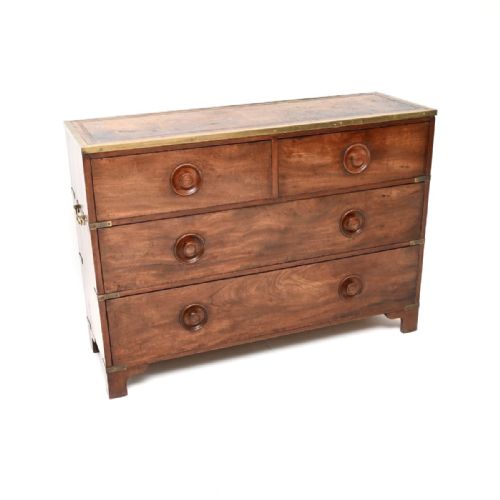
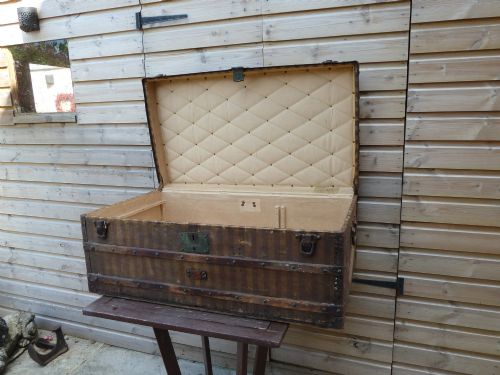
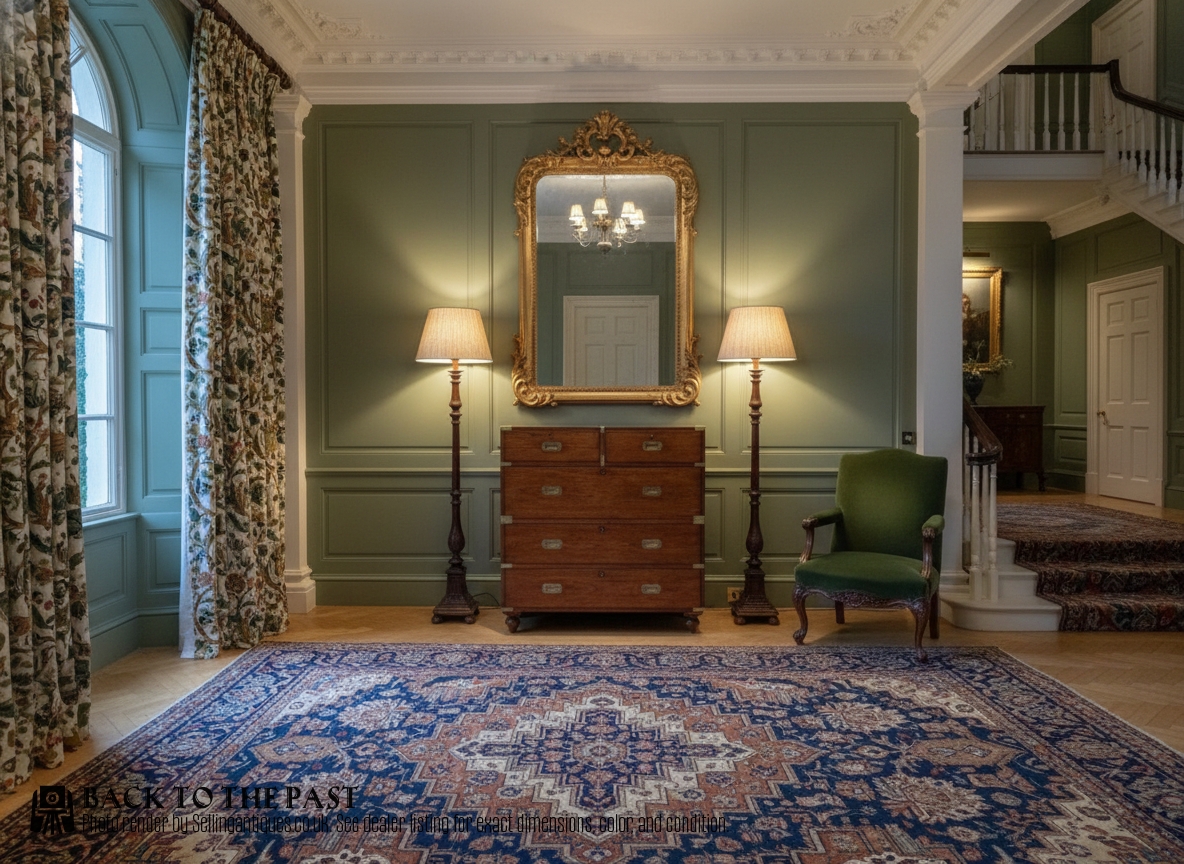
When searching for a vintage brass bound chest, buyers encounter durable storage containers originally built for transit by military officers, merchants, and travellers. These pieces originate from periods spanning the late seventeenth century through the early twentieth century, encompassing Georgian, Victorian, and Edwardian eras. The most common examples on this page are camphor wood, teak, or mahogany trunks and two-part chests of drawers fitted with brass corners and recessed carrying handles.
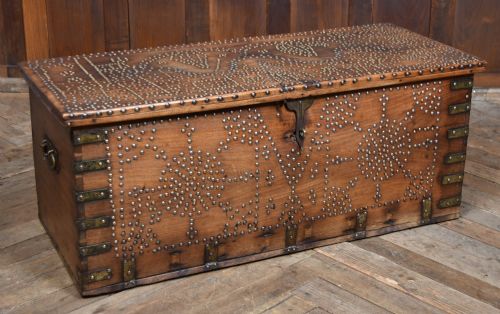
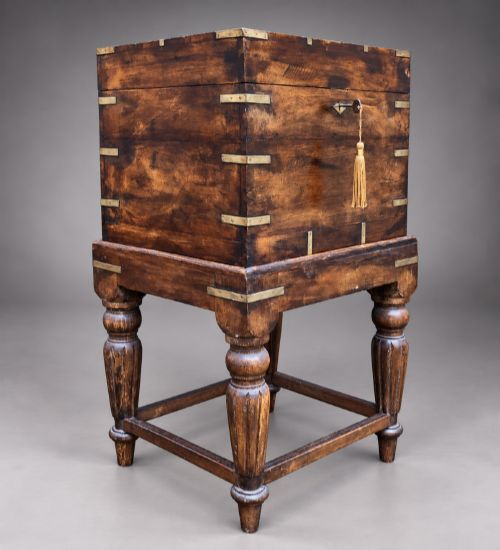
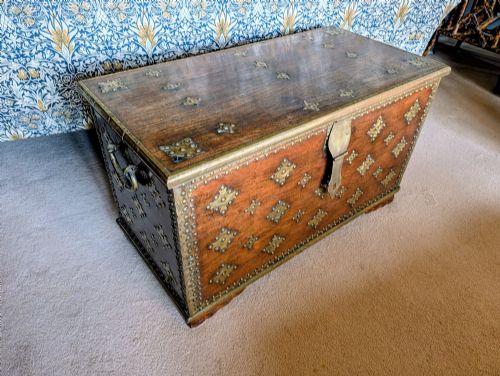
Many items reflect military campaign styles or Anglo-Indian and Zanzibar origins, constructed to withstand arduous journeys across land and sea. Alongside heavy timber trunks, the selection includes specialised forms such as cellarettes, deed boxes, blanket boxes, and modular chests of drawers. Each piece combines functional utility with decorative metalwork, whether through simple brass strapping or intricate brass stud patterns.
How They Were Made
Cabinetmakers utilised dense, durable timbers such as camphor wood, teak, mahogany, padouk, and walnut to resist warping and tropical humidity during transit. These woods were often selected for their natural oils and resilience against pests as much as their grain and colour.
Metal reinforcement defines the construction, with brass corners, straps, and banding screwed firmly to the exterior to protect vulnerable edges from impact. Recessed iron or brass drop handles and secure locks were integrated flush into the wood to save space and prevent snagging during loading.
Listings feature camphor wood, teak, mahogany, and padouk combined with brass, iron, and leather across the 18th, 19th, and early 20th centuries.
What Varies in Quality
The standard of a chest depends heavily on the integrity of its timber and the precision of its brass fittings. Superior examples display tight corner joints, well-fitted recessed hardware, and original locking mechanisms that operate smoothly despite age and movement.
Provenance and specialised internal fittings separate standard utility trunks from exceptional pieces. Items retaining original fitted interiors, maker stamps, or documented military histories demonstrate higher craftsmanship and greater fidelity to their original purpose.
Samuel Pratt·Army & Navy·William IV Austin
The Vintage Brass Bound Chest Glossary
- Campaign chest
- A modular chest of drawers built in two or more separate sections designed to be easily packed and transported by officers on military service. These units typically feature recessed brass handles and corner brackets for protection during transit.
- Camphor wood
- An aromatic hardwood frequently utilised for military trunks and blanket boxes due to its natural insect-repellent properties and resistance to dampness. The distinct scent remains detectable long after the chest was manufactured.
- Cellarette
- A specialised lockable container or chest designed for safely storing and transporting bottles of wine and spirits. Examples often appear with fitted interior compartments.
- Deed box
- A smaller secure storage box traditionally used for legal documents, correspondence, and valuables. They usually incorporate reinforced brass banding and a reliable lock.
- Bandaji
- A traditional Korean storage chest featuring distinctive metal strapwork and decorative hardware. These pieces combine structural framing with panel construction.
Vintage Brass Bound Chest: Frequently Asked Questions
What is a campaign chest?
A campaign chest is a portable set of drawers or a trunk constructed in modular sections for military officers on active service abroad. They are built to withstand rough handling while packing down efficiently for transport.
These pieces are easily recognised by their flush brass handles, corner brackets, and sectional design which allowed them to be locked together securely.
Why use camphor wood?
Camphor wood was chosen for military and maritime trunks because its natural aromatic oils repel insects and resist damp conditions. This protected uniforms and papers from mildew during long sea voyages.
The wood also provides a lightweight yet durable carcase that handles temperature shifts well without splitting easily.
How do I date a chest?
Dating relies on timber choices, brass hardware styles, and construction methods. Earlier Georgian and Victorian pieces often show hand-cut dovetails and heavy brass straps, while later examples incorporate machine-made screws and standardised locks.
Maker stamps or engraved brass plaques can also narrow down the exact decade of manufacture and the retailer involved.
How do I clean the brass?
Maintenance of brass hardware involves gentle cleaning with a soft cloth to remove dust while preserving the aged patina. Harsh commercial polishes should be avoided to prevent stripping the historic character from the metalwork.
The surrounding wood benefits from occasional treatment with appropriate wax to maintain moisture balance in the grain.