
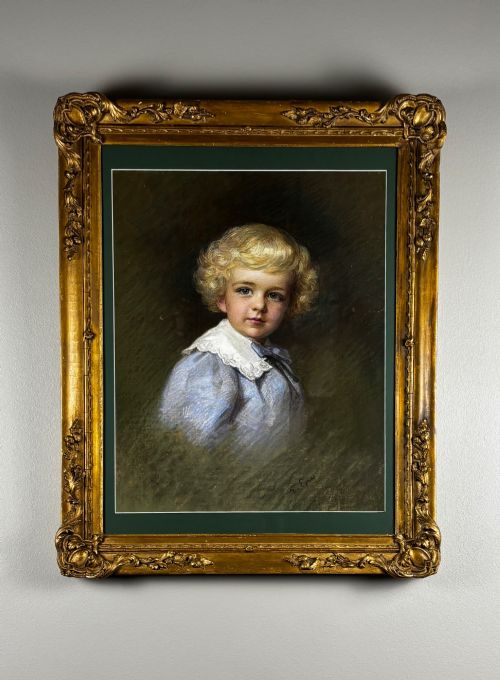


Vintage Boy Portrait Painting
A vintage boy portrait painting captures character and clothing across decades of oils, pastels, and watercolours.
Vintage Boy Portrait Painting
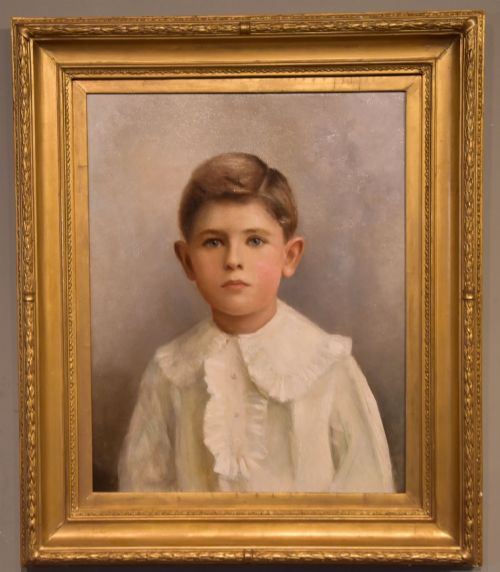
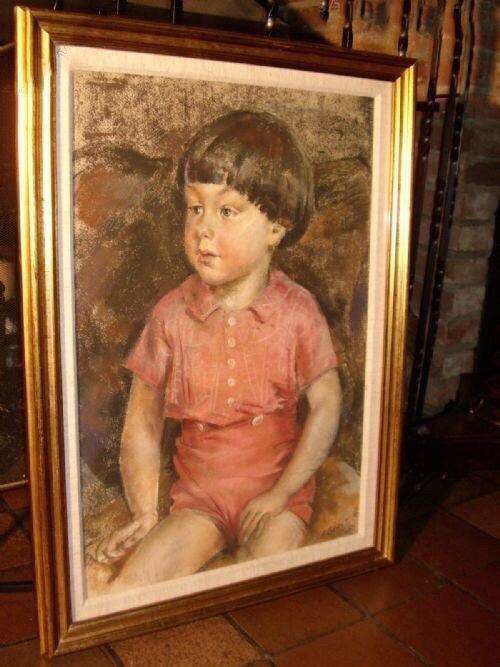
When searching for a vintage boy portrait painting, buyers encounter works spanning the nineteenth century through the mid-twentieth century. The selection ranges from Victorian oil paintings and Edwardian canvases to watercolours and pastels.
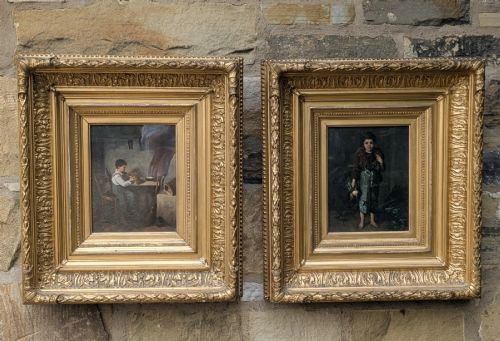
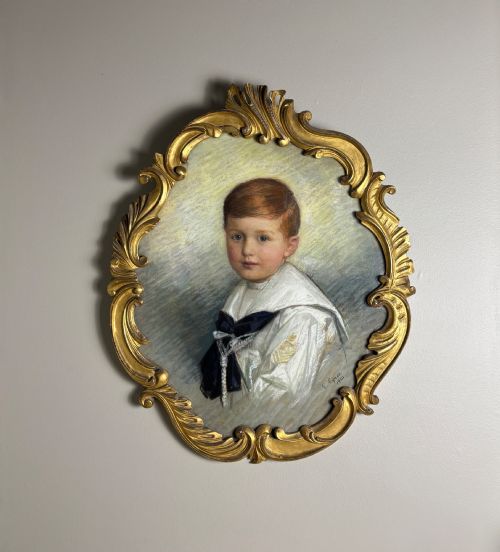
Subjects appear in various settings, from intimate interior scenes to formal framed studies. Artists recorded children in specific attire, including traditional kilts, Van Dyck dress, and everyday garments.
Pieces frequently arrive framed in glass, wood, or gilt gesso, maintaining the presentation chosen by past owners or galleries.
Materials and techniques
Artists utilised canvas, paper, and wood panel as supports for their compositions. Paint media encompasses oil paint, pastel, gouache, and watercolour.
Frames incorporate traditional materials such as carved wood, gilt wood, and gesso moulding to house the artwork securely.
One young boy is depicted mid-action while tapping a barrel, while another proudly holds his Cavalier King Charles Spaniel.
Assessing quality
The sophistication of brushwork and draftsmanship distinguishes standard works from accomplished pieces by recorded artists. Handling of light and facial expression determines the depth of the portrait.
The preservation of the original medium, whether oil on canvas or delicate pastel on paper, influences the visual integrity of the work.
Henry Windsor Fry·J.A. Grant·Emily Eyres·Septimus Scott·Luca Postiglione·Paul Jones·Herbert Butler·Molly Maurice Latham·Frank Owen Salisbury·William Orpen·Sir James Guthrie
The Vintage Boy Portrait Painting Glossary
- Oil paint
- Pigment suspended in a drying oil, typically applied to canvas or wood panel. This medium allows for rich colour blending and textured brushwork.
- Gesso
- A plaster mixture applied to wood frames to create a smooth surface for gilding. It provides ornate relief detail around the artwork.
- Gouache
- An opaque water-based paint that produces solid, matte areas of colour on paper. It often appears alongside pastel in mixed media portraits.
- Oleograph
- A mechanical colour lithograph textured to imitate the surface of an oil painting. These reproduction pictures date back to the nineteenth century.
- Watercolour
- Pigments ground in a water-soluble binder, traditionally painted on paper. The technique relies on translucent washes to build luminosity.
Vintage Boy Portrait Painting: Frequently Asked Questions
How are these portraits dated?
Portraits are dated through artist signatures, biographical records, and stylistic clues within the clothing and frame construction. Nineteenth-century and mid-century pieces each display distinct aesthetic markers.
Examine the back of the canvas or paper support for inscriptions, gallery labels, or handwritten notes regarding the sitter and date.
Where should oil paintings be hung?
Hang oil paintings away from direct sunlight and steady heat sources to protect the canvas and paint layers from drying out. Stable room temperatures prevent warping in both the canvas and the wooden frame.
Ensure wall fixings match the weight of the framed artwork, particularly for heavy gilt wood pieces.
What is the difference between oil and watercolour?
Oil paint utilises a slow-drying oil binder on canvas or wood, creating textured surfaces that can be cleaned carefully. Watercolour uses water-soluble pigments on paper and requires glass protection.
Watercolours appear translucent and light, whereas oils offer deeper pigment saturation and visible brush texture.