






Victorian Genre Painting Print
These Victorian genre painting print examples capture domestic scenes and everyday narratives that bring authentic nineteenth-century character to your walls.
Victorian Genre Painting Print
A victorian genre painting print encompasses framed prints, lithographs, oleographs, and chrystoleoms depicting daily life, children, and animals. These works capture domestic scenes and narrative moments that defined nineteenth-century visual culture.
The selections on this page span the nineteenth century through the Edwardian period, incorporating styles such as the Victorian Idyllic School and continental genre art. Buyers frequently encounter framed works featuring oil paintings, watercolours, and reproductive prints.
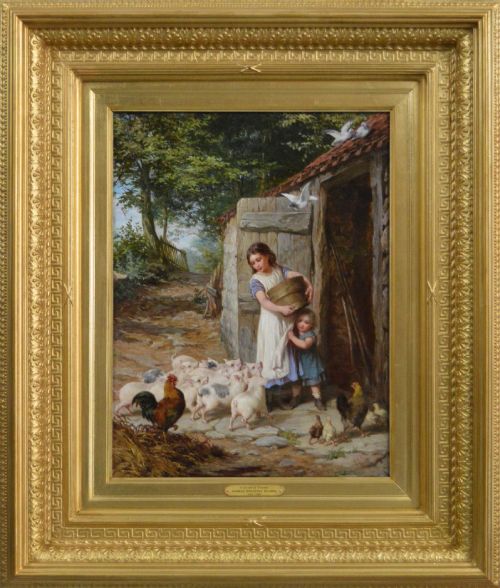
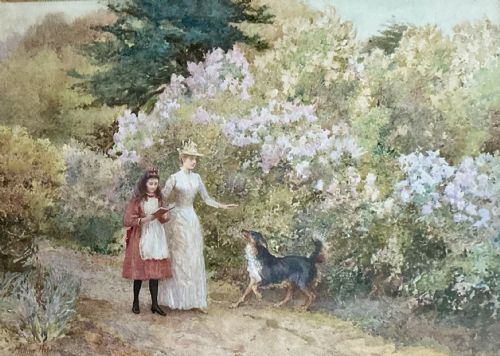
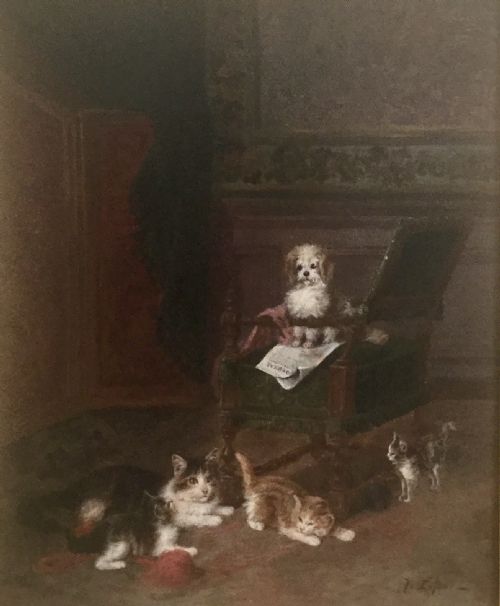
Subjects range from children feeding animals to playful kittens and courting couples, reflecting the era's taste for sentimental and anecdotal imagery. Original oils sit alongside period lithographs and advertising prints by notable artists of the time.
Materials and production techniques
Works utilise paper, canvas, and wood, often enclosed behind glass within gesso, gold leaf, and giltwood frames. Lithographs and oleographs apply colour through layered printing processes on paper, while chrystoleoms employ hand-painted concave convex photographs mounted under glass.
Oil paintings and watercolours on canvas or paper utilise traditional pigment application, captured by artists working in the nineteenth and early twentieth centuries. Original works and prints alike rely on heavy wooden framing enhanced by decorative gesso and gilt finishes.
Kittens featured in Victorian tea party scenes demand more biscuit discipline than any well-behaved human child.
Evaluating quality and execution
The calibre of a victorian genre painting print depends upon the crispness of the printing process, the preservation of the paper or canvas, and the integrity of the original giltwood and gesso framing. Finer examples maintain vibrant colour saturation and precise detail in facial expressions and textures.
The distinction between hand-finished chrystoleoms, original oils, and mass-produced reproductive prints influences the character of each piece. Superior framing with original gold leaf and uncompromised glass protection elevates the standing of decorative works from this era.
George Augustus Holmes·Frederick Walker·Charles Edward Wilson·Charles Burton Barber·Arthur Hopkins·Paul Jones·Agnes Augusta Tallboys·Jules Le Roy·Schweninger
The Victorian Genre Painting Print Glossary
- Oleograph
- A mechanical colour lithograph textured to imitate an oil painting. These reproductions gained popularity in the nineteenth century for bringing affordable art to homes.
- Chrystoleum
- A photograph painted by hand in oils or watercolours and mounted under curved glass. This meticulous Victorian technique creates a luminous, three-dimensional effect.
- Lithograph
- A planographic printing process using stone or metal plates to produce multiple image impressions. Artists used this method to disseminate popular genre scenes widely.
- Gesso
- A plaster-like mixture applied to wooden frames before gilding or painting. It provides a smooth base for intricate moulded ornamentation.
- Genre art
- Painting or printmaking that depicts aspects of everyday life. These scenes typically feature ordinary people engaged in common domestic activities.
Victorian Genre Painting Print: Frequently Asked Questions
What is a chrystoleum?
A chrystoleum is a photograph that has been made translucent, applied to glass, hand-coloured with oils or watercolours, and sealed behind a convex glass plate. This Victorian technique gives the finished image a distinct depth and a smooth, luminous finish.
Makers often produced these pieces to make popular portrait and genre subjects accessible for domestic display. They require careful handling due to the delicate layered glass construction.
How do I care for framed paper prints?
Framed paper prints and lithographs need protection from direct sunlight to prevent the fading of colours and yellowing of the paper ground. Keeping them away from excessive moisture preserves the integrity of the paper and the surrounding gilt frame.
Dust wooden and giltwood frames gently with a dry, soft cloth. Avoid using liquid cleaners on the glass to prevent moisture seeping under the edge into the print.
What distinguishes an oleograph from an oil painting?
An oleograph is a mechanical print created through lithography that replicates the rich surface texture and appearance of an oil painting. Close inspection reveals a regular dot matrix or fine printing screen rather than applied brushstrokes.
Oil paintings show physical ridges of pigment and canvas texture created by the artist's hand. Oleographs offered Victorian households an affordable way to enjoy popular gallery paintings.
How do I identify a Victorian frame?
Victorian frames often utilise heavy wood construction finished with moulded gesso and gold leaf or giltwood. The corners frequently feature decorative plaster appliques and deep box profiles designed to project the artwork forward.
Original backing boards, old nails, and aged paper tape on the reverse help confirm the period of the framing. The patination on the gilt surface develops a warm, softened tone over time.