
Vintage Bedroom Table Mirror
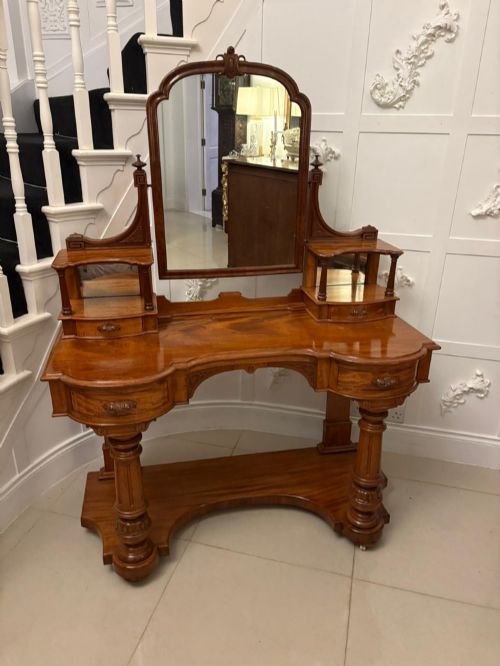
A vintage bedroom table mirror provides a practical focal point on a chest or dressing surface while reflecting period craftsmanship in wood and glass.
Vintage Bedroom Table Mirror
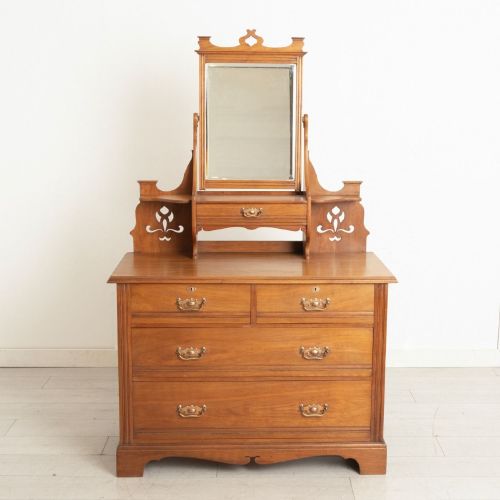
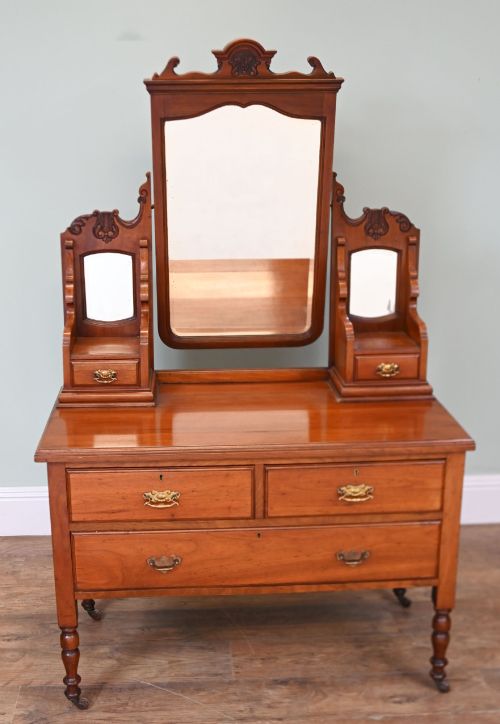
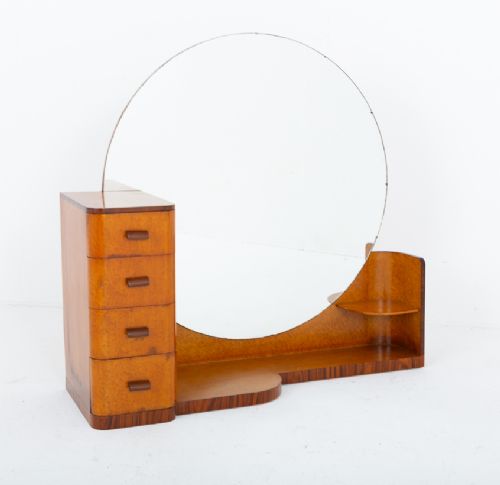
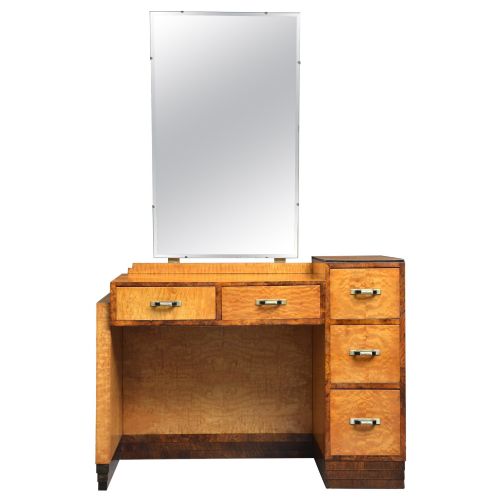
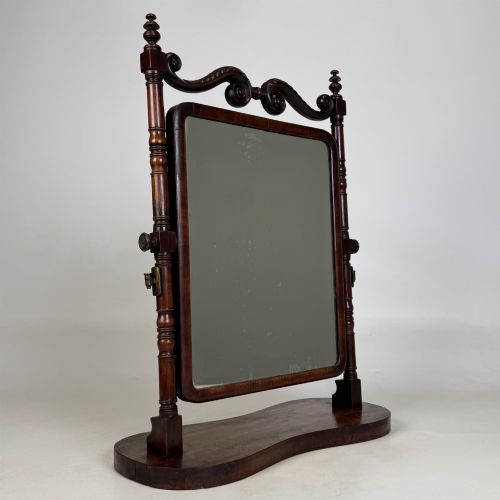
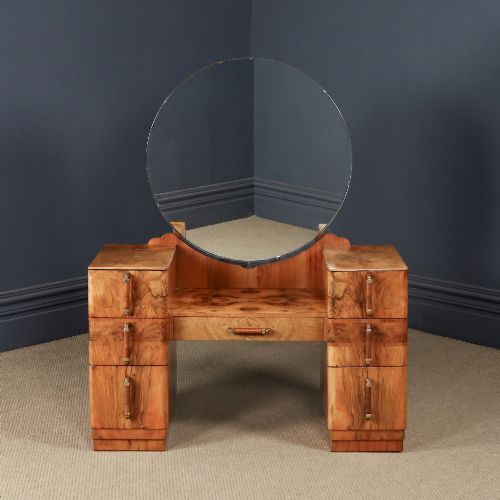
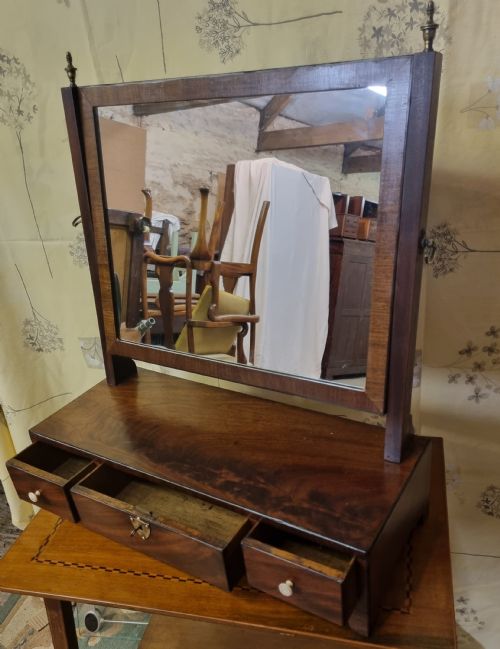
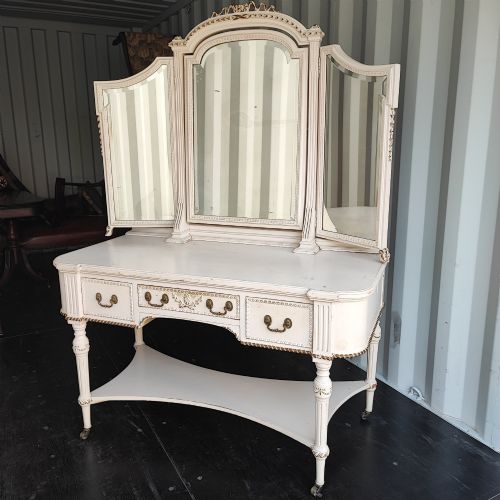
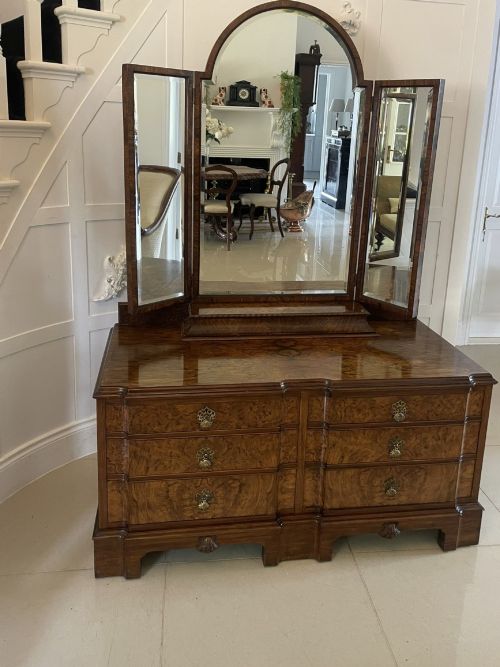
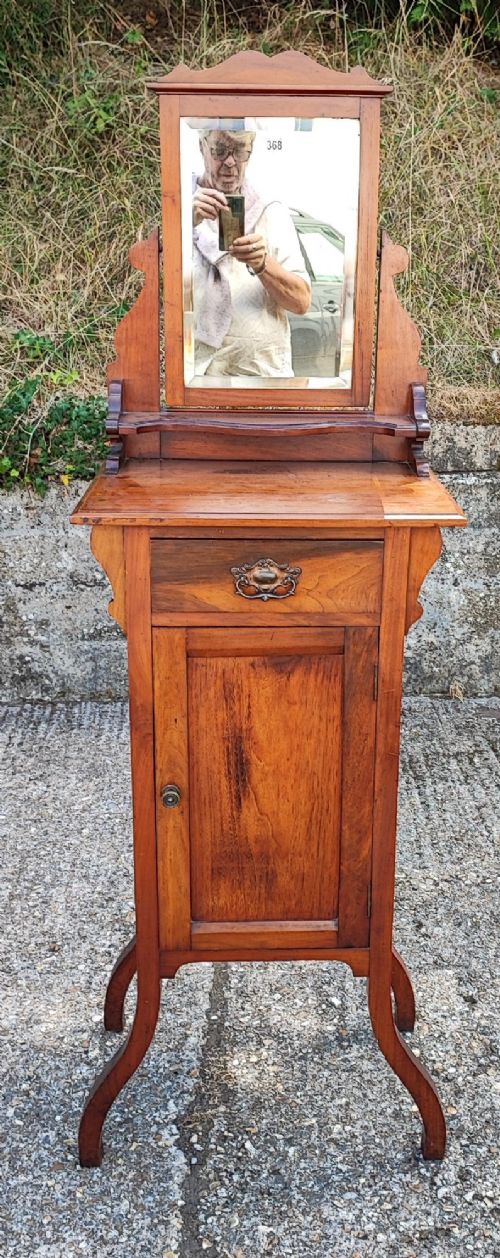
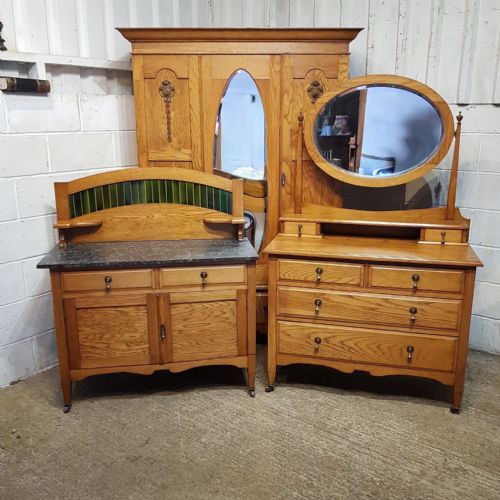
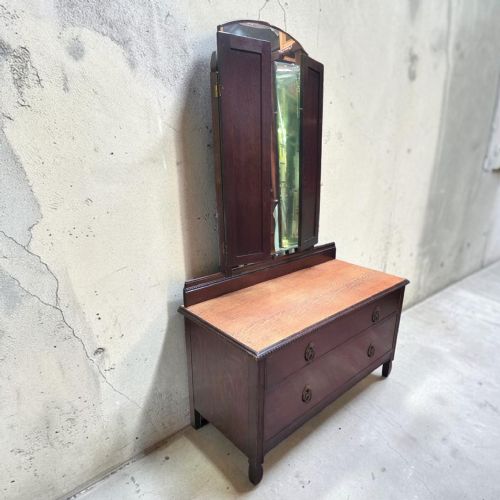
A vintage bedroom table mirror appears across diverse forms, ranging from standalone swing glasses to adjustable shields mounted on dressing chests or vanity tables.
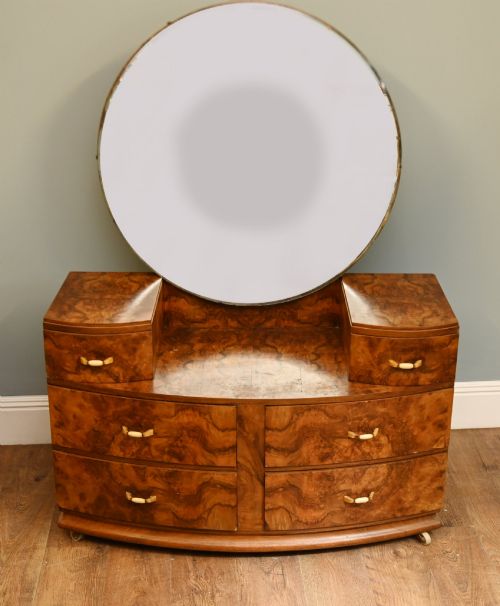
Pieces span from the Georgian period through Victorian, Edwardian, and Art Deco eras, employing timber frames such as mahogany, oak, and burr walnut.
Buyers are most likely to encounter Edwardian mahogany designs or 1930s Art Deco examples featuring integrated or matching table mirrors.
Materials and construction
Cabinet makers utilised solid and veneered timbers including mahogany, oak, maple, and walnut, often shaping the wood to suit prevailing period tastes from Georgian curves to Arts and Crafts simplicity.
Mirror glass was set into pivoting frames supported by upright arms, allowing the plate to tilt for personal use while remaining secure on its base or integrated drawers.
Some dressing chests even embraced faux bamboo framing for an exotic touch.
Evaluating quality
Quality rests upon the selection of timber figures, such as figured or burr walnut and flame mahogany, balanced against the crispness of carved details or inlaid decoration.
The integrity of the mirror plate, the smooth movement of the pivoting mechanism, and the retention of original brass fittings or maker labels distinguish finer examples from standard production.
Heals·Waring and Gillows·Shapland and Petter·Lamb of Manchester·Maurice Adams
The Vintage Bedroom Table Mirror Glossary
- Shield mirror
- A dressing glass shaped in the outline of a heraldic shield, commonly found pivoting on Edwardian tables.
- Triplate
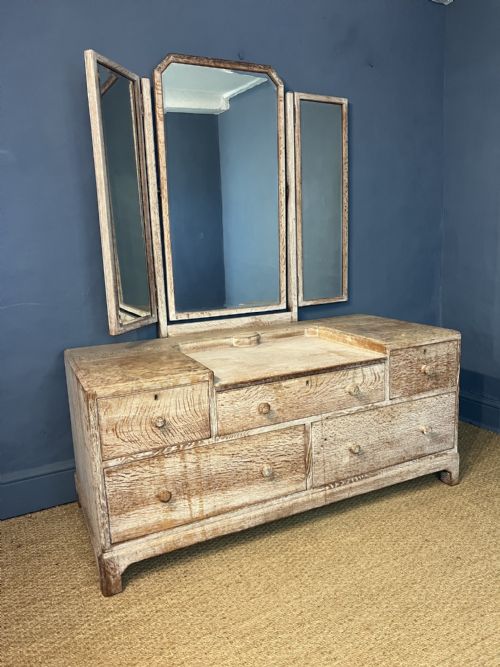
- A dressing mirror featuring three distinct glass panels, typically with a larger central plate and two smaller adjustable wings.
- Compactum
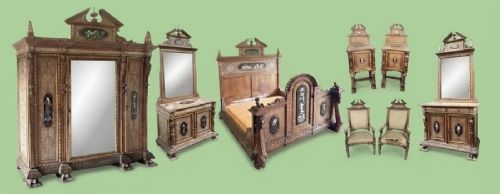
- A large fitted wardrobe or bedroom cabinet, often appearing alongside matching dressing chests and table mirrors in multi-piece suites.
- Limed oak
- A wood finishing technique that leaves a pale, chalky pigment in the open grain, characteristic of modernist and Arts and Crafts pieces.
Vintage Bedroom Table Mirror: Frequently Asked Questions
How do I date a table mirror?
Dating relies on timber selection, fixing methods, and the style of the frame support, matching characteristics found in Georgian, Victorian, or Art Deco furniture.
Secondary indicators include the bevel of the mirror glass and the construction of any attached small drawers.
Were these mirrors sold separately?
Many table mirrors were manufactured as components of larger dressing chests or complete bedroom suites, while others functioned as independent pieces.
Examining the base or mounting points often reveals whether a mirror belonged to a specific dressing table.
How should I clean the frame?
Maintenance involves gentle dusting with a dry or slightly damp cloth suitable for antique timber finishes, avoiding harsh chemical polishes.
Glass panels require standard window cleaner applied to a cloth rather than sprayed directly onto the frame joints.
Can I replace the mirror glass?
Original mirror plates frequently show foxing or age spots, which many collectors prefer to retain as evidence of authenticity.
Replacement is possible if the plate is damaged, though preserving the original glass maintains the historical integrity of the piece.