
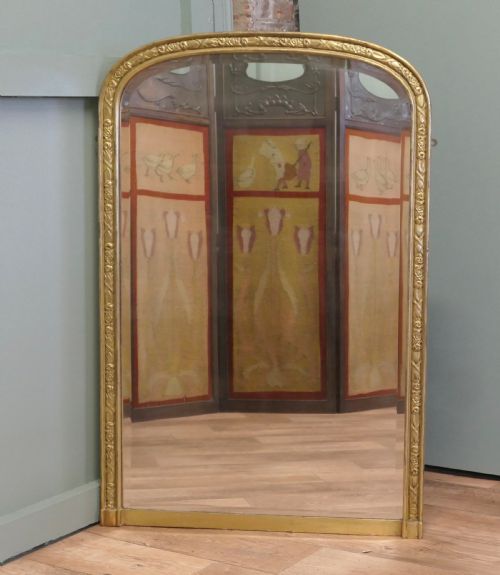
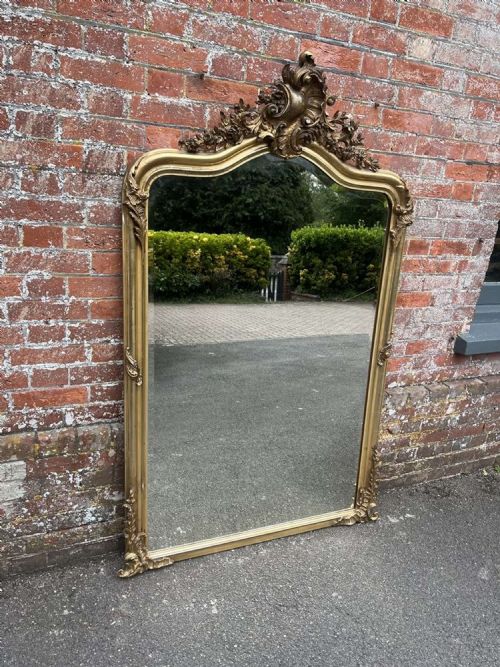
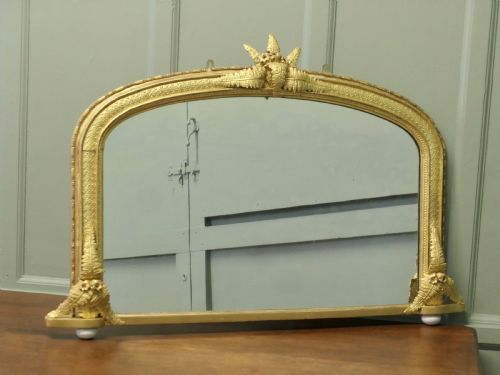
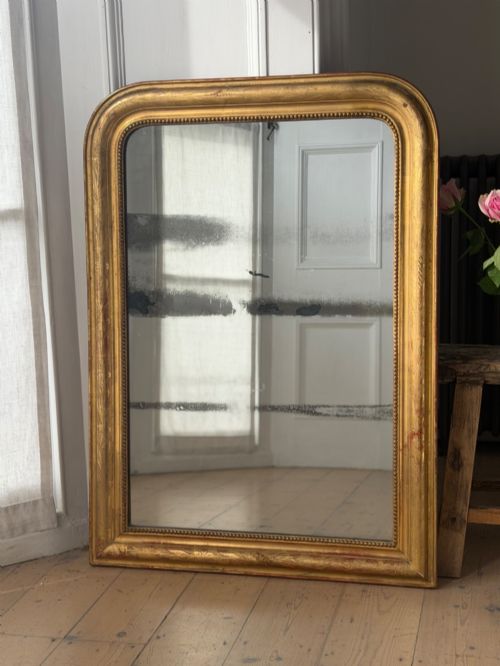


Vintage Arched Mantle Mirror
A vintage arched mantle mirror brings height and a curved crest to a room, reflecting light across fireplaces and walls.
Vintage Arched Mantle Mirror
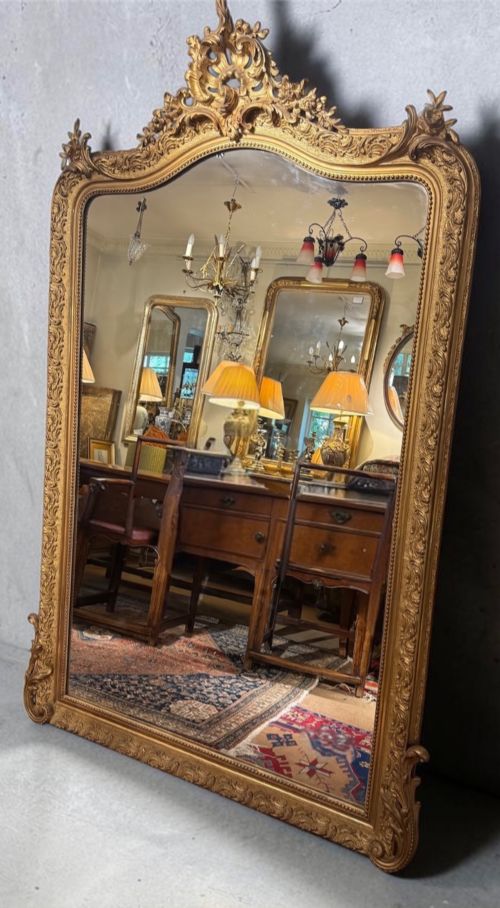
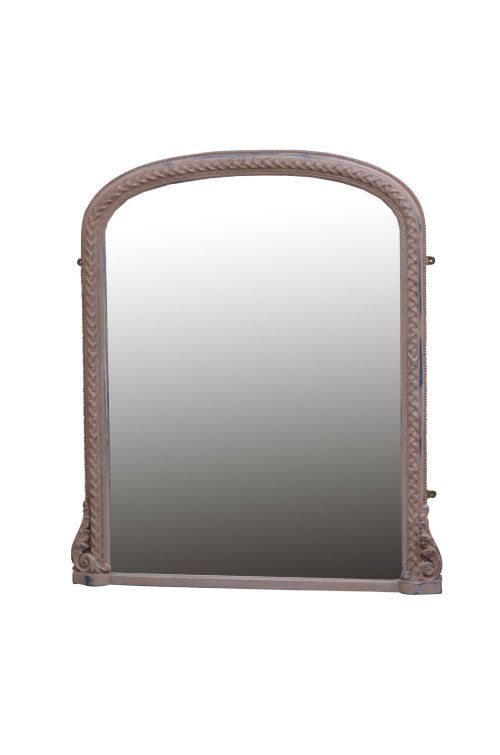
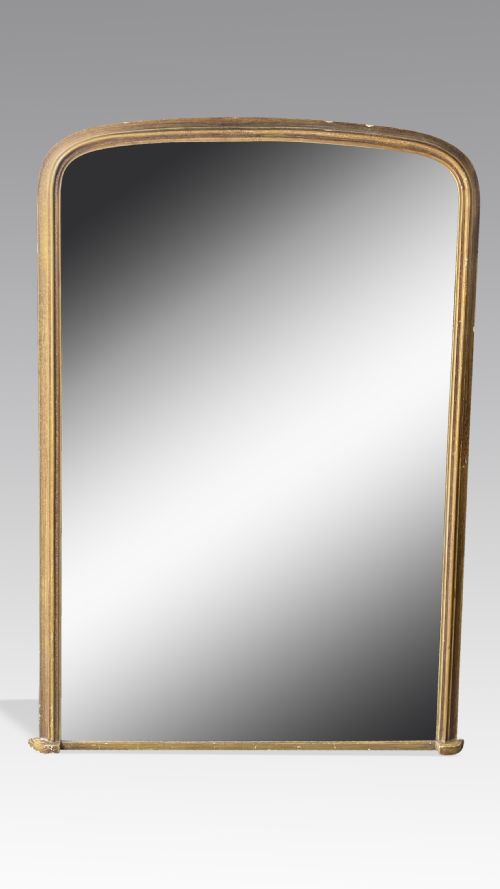
A vintage arched mantle mirror sits above a fireplace or hangs on a wall, defined by its curved top and substantial proportions. These pieces appear mostly in nineteenth-century French and English designs, spanning periods from the early Victorian era through to nineteen-hundred.
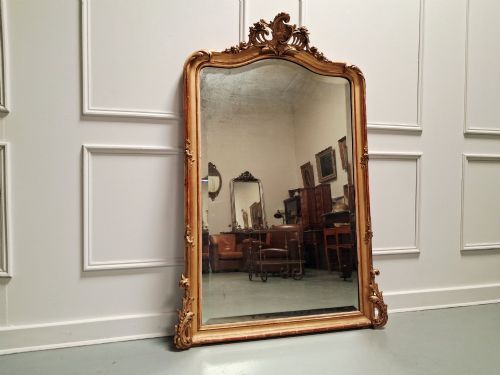
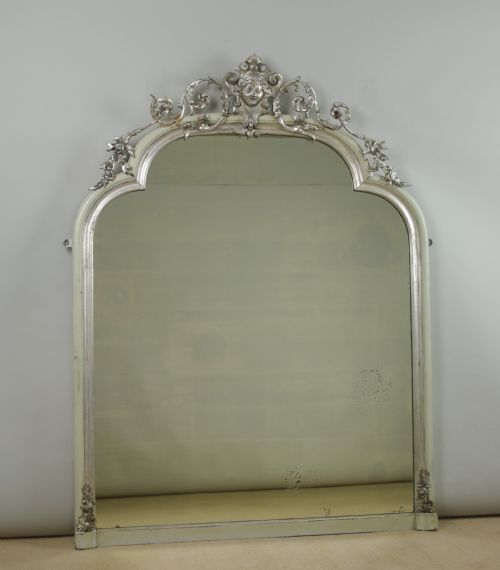
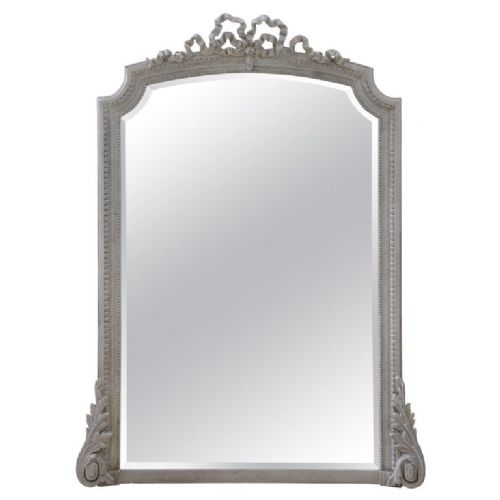
The selection here centres heavily on large overmantel mirrors and tall wall mirrors. Many follow the Louis Philippe style or French Rococo revival, carrying shaped tops and grand scales meant to anchor a room.
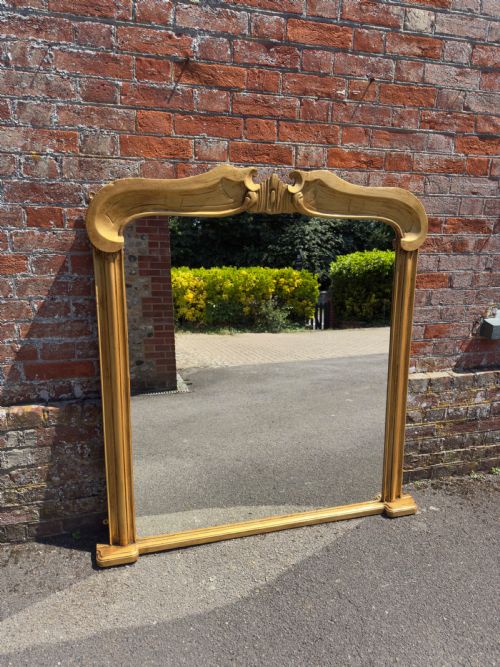
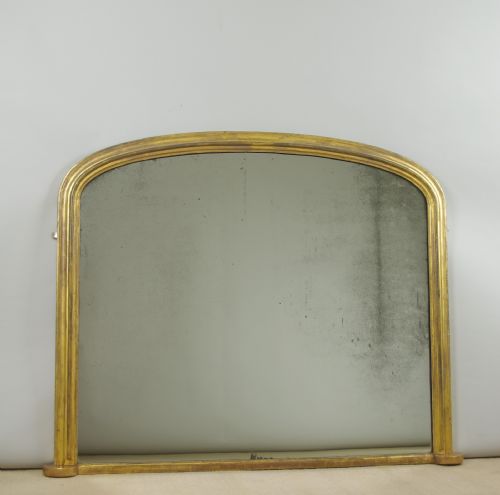
English and French examples dominate the selection, often taking the form of wide horizontal overmantels or tall vertical panels. Makers and craftsmen from the eighteen-sixties and eighteen-seventies produced many of the carved wood and gesso variants seen today.
Materials and construction
Carved wood and gesso form the foundation of many frames, providing a sturdy base for detailed ornamentation. Artisans applied layers of gesso over timber before gilding the surface with gold leaf or painting it.
Giltwood and silver leaf finishes reflect the traditional methods of nineteenth-century workshops, whilst other frames utilise walnut, African mahogany, or applied paint schemes such as layered lilac, ink blue, or black ebonisation.
Mirror glass panels are set within these heavy frames, occasionally showing historical traits such as foxed mercury glass or delicate etching.
Listings here span the Victorian era, Edwardian period, and the nineteenth century, utilising wood, gesso, giltwood, and paint.
Judging the work
The depth and precision of the hand-carved wooden details separate standard production from superior work. Crisp moulding in the gesso and balanced proportions across the arched crest indicate skilled craftsmanship.
The condition and integrity of the original gilding or paint layer matter significantly. Pieces that retain their original gold leaf, silver leaf, or layered colour palettes hold greater visual cohesion than later over-painted surfaces.
The Vintage Arched Mantle Mirror Glossary
- Overmantel mirror
- A large mirror designed specifically to hang on the wall directly above a mantelpiece or fireplace. These pieces often feature wide horizontal proportions.
- Gesso
- A plaster-like mixture applied to wood frames to create a smooth surface for gilding or painting. Artisans carved intricate decorative motifs directly into this dried layer.
- Louis Philippe
- A mid-nineteenth-century French style characterised by understated elegance and a simple arched top. It avoids excessive ornamentation in favour of clean architectural lines.
- Foxed glass
- Mirror glass that displays dark spots or mottled ageing caused by the degradation of the backing over decades. Collectors often value this authentic sign of age.
- Giltwood
- Timber that has been coated with a thin layer of gold leaf. This technique creates a bright, reflective metallic finish on the frame.
Vintage Arched Mantle Mirror: Frequently Asked Questions
Where should I hang an overmantel mirror?
An overmantel mirror traditionally sits directly above a fireplace mantel, anchored securely to the wall to support its weight. Placing it at this height allows the glass to reflect light from opposite windows across the room.
These pieces also function well on plain walls in hallways or living spaces, where their height creates a sense of scale and openness.
How do I identify a Louis Philippe mirror?
Louis Philippe mirrors typically feature a simple arched top combined with clean, restrained framing. They originate from the mid-nineteenth century and rely on subtle proportions rather than heavy carving.
Look for gently rounded corners at the top edge and a solid wood construction beneath the gilt finish.
What does foxed glass mean?
Foxed glass refers to mirror plates that have developed dark spots, mottling, or slight discoloration over time. This chemical ageing happens as the reflective backing deteriorates.
Many buyers appreciate this characteristic because it confirms the genuine age of nineteenth-century mirrors.
Can these mirrors be cleaned safely?
Cleaning requires a soft, dry cloth to remove dust from the carved frame without disturbing the gesso or gilding. Moisture can damage old paint and antique silver leaf.
Use a gentle glass cleaner sparingly on the mirror plate, applying it to the cloth rather than directly onto the glass.