
Vintage Anglo Indian Furniture
Vintage anglo indian furniture brings together British forms and subcontinental craftsmanship, offering rich woods and intricate details for domestic interiors.
Vintage Anglo Indian Furniture
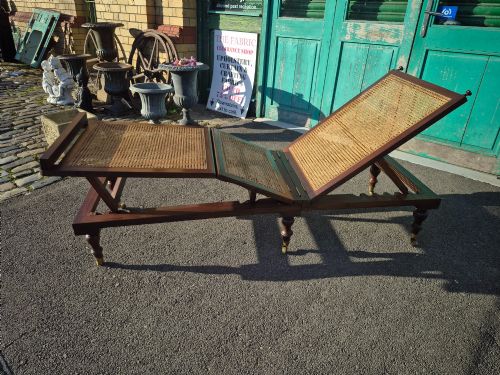
Vintage anglo indian furniture encompasses pieces produced during the colonial period, merging traditional Indian woodworking with European furniture designs. Buyers searching this phrase encounter everything from campaign desks and sideboards to occasional tables and armchairs.
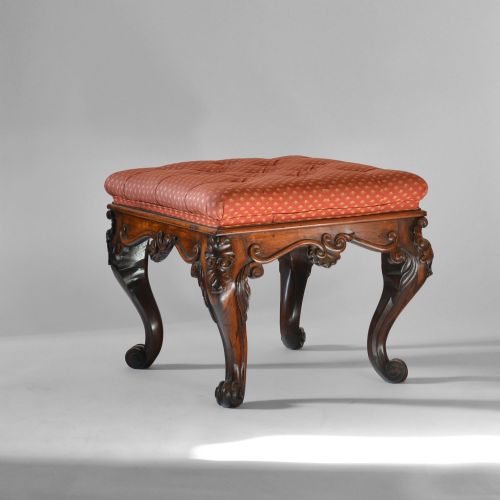
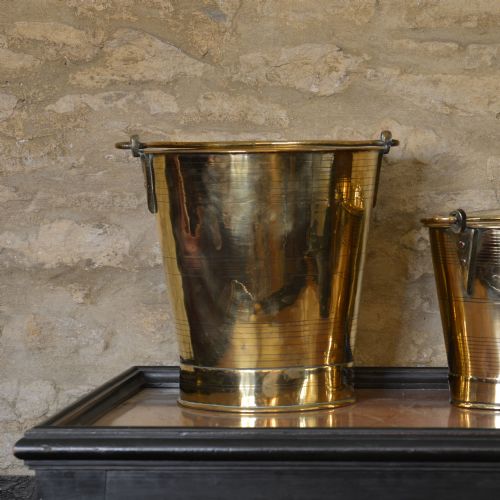
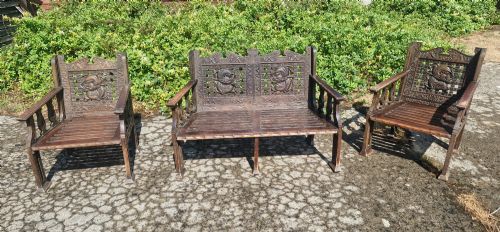
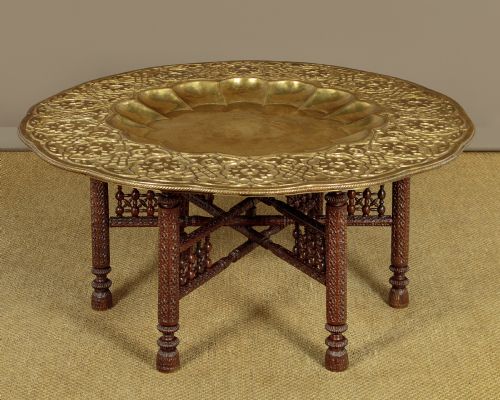
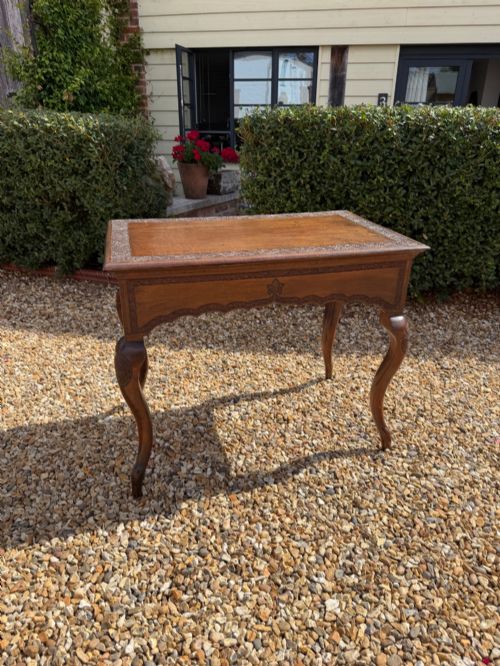
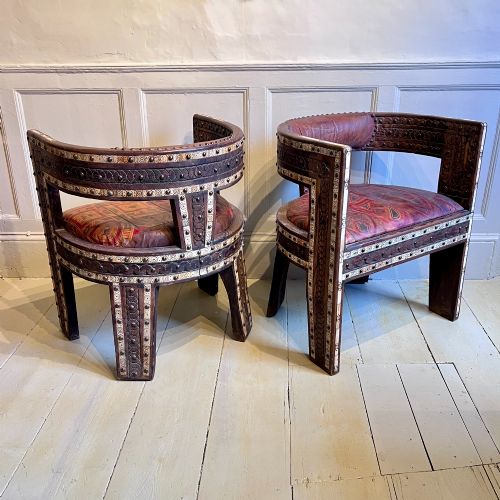
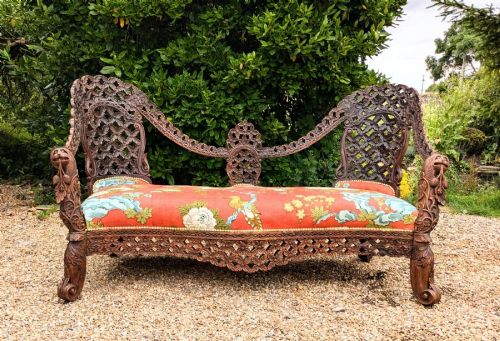
The pieces on this page span from the eighteenth century through the early twentieth century, reflecting varied regional specialisms and colonial tastes. Side tables and carved occasional tables appear frequently, alongside seating and storage chests.
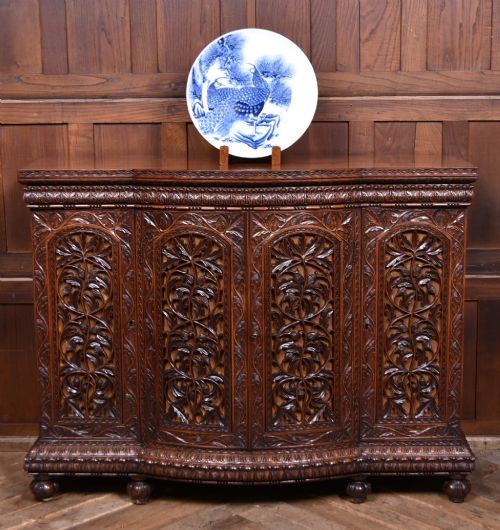
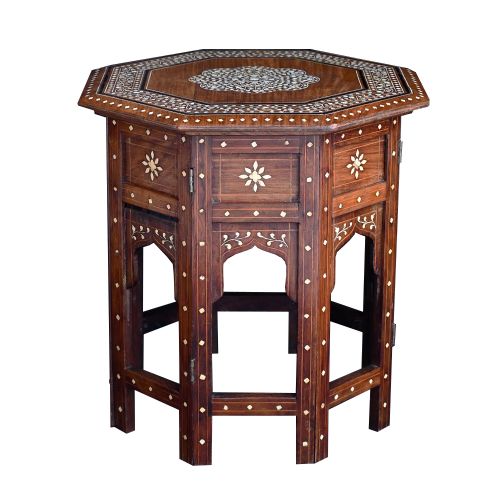
Forms range from solid padouk sideboards and ebony chairs to intricate occasional tables associated with Hoshiarpur craftsmanship. Each object displays the exchange of design ideas between British patrons and local artisans.
How they were made
Maker workshops utilised dense tropical timbers such as teak, padouk, rosewood, and ebony, which provided stable foundations for intricate carving. These native hardwoods supported deep relief work, pierced screens, and structural joinery.
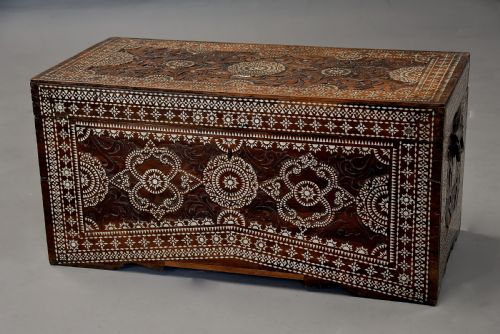
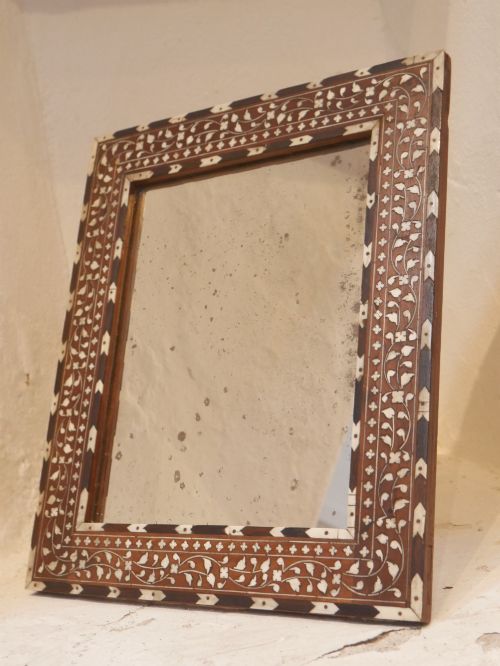
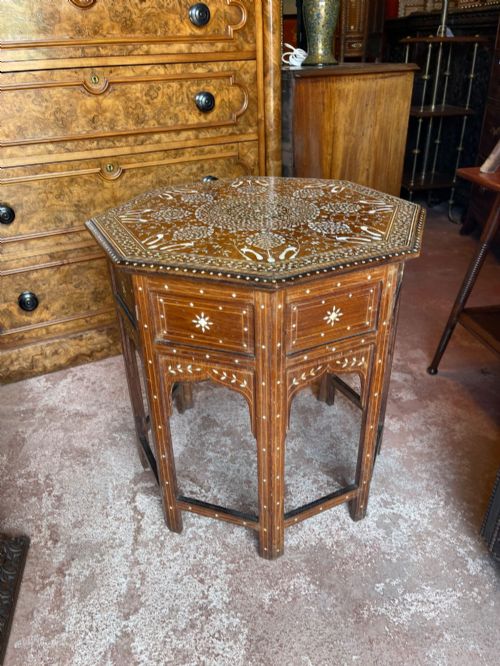
Surface enrichment relied on contrasting materials including bone inlay, mother of pearl, and brass work. Artisans set these elements meticulously into the timber grounds to create geometric patterns and figurative motifs.
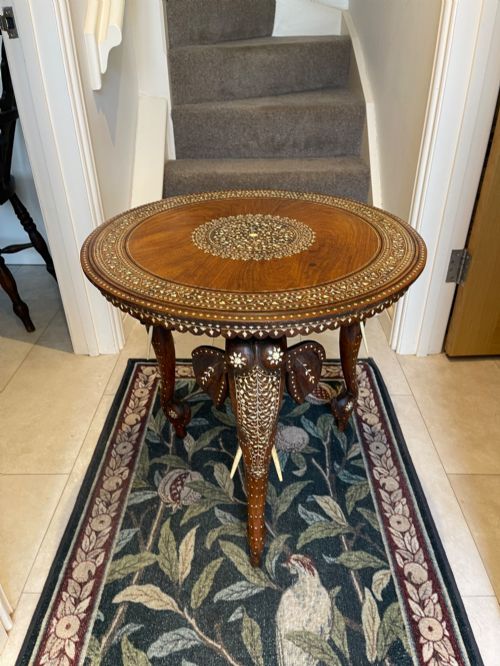
Several occasional tables take the shape of elephants, combining functional surfaces with whimsical carved trunks.
What varies in quality
Quality rests upon the crispness of the hand carving and the precision of the inlay work. Finer examples display deep, undercut relief and securely seated bone or mother of pearl without gaps in the surrounding timber.
Timber selection and structural integrity also divide the range, as well-figured grain and tight joinery distinguish superior workshops. Pieces retain their original hardware and stable frames rather than suffering from loose joints or replaced elements.
The Vintage Anglo Indian Furniture Glossary
- Padouk
- A heavy, durable reddish-brown tropical hardwood favoured for fine cabinetmaking. It darkens gracefully with age and takes a sharp carved edge.
- Hoshiarpur
- A north Indian centre renowned for intricate woodwork. Artisans here specialised in densely inlaid tables and mirrors featuring geometric patterns.
- Campaign style
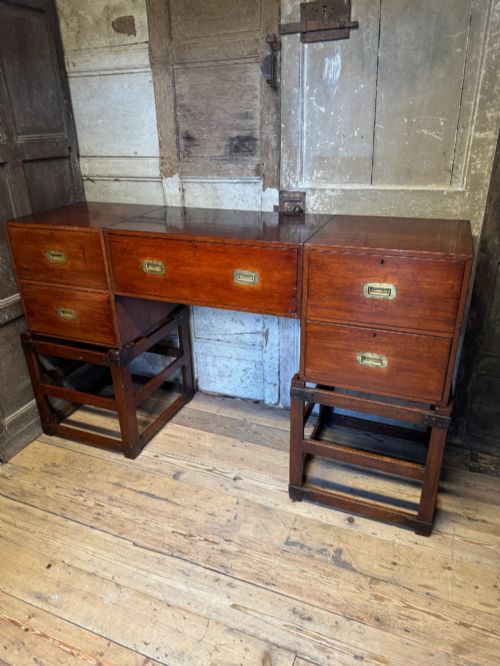
- Portable furniture designed for British officers on the move. These pieces often feature brass corners, recessed handles, and dismantling frames.
- Bergere
- A French-style upholstered armchair with enclosed cane work sides. In colonial contexts, this form was adapted using native hardwoods.
- Cellarette
- A lockable storage chest or cabinet designed for holding bottles of wine or spirits. They appear in dense timbers with fitted interior compartments.
Vintage Anglo Indian Furniture: Frequently Asked Questions
What is anglo indian furniture?
It refers to furniture made in the Indian subcontinent during the British colonial era, combining local materials and carving skills with European forms.
These items range from campaign chests and sideboards to heavily carved occasional tables and seating.
How do I identify Hoshiarpur pieces?
Hoshiarpur pieces are recognised by their dense, intricate inlay work utilising materials like bone or mother of pearl set into hardwood.
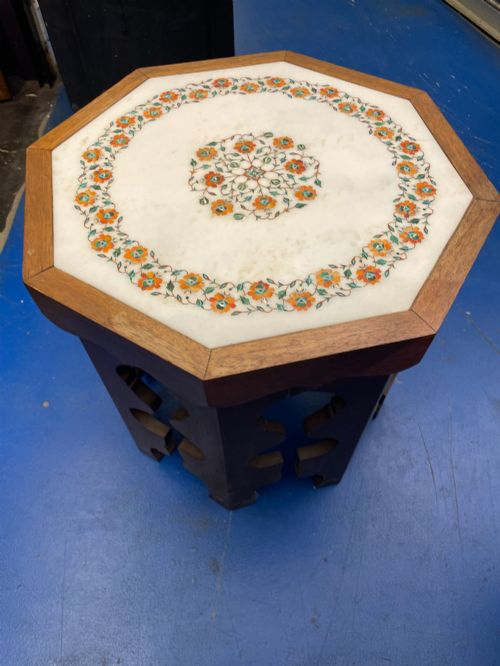
They frequently take the form of octagonal tables, elephant tables, and mirrors with all-over geometric or floral patterns.
What woods were used?
Workshops primarily utilised dense tropical timbers native to the region, including teak, padouk, rosewood, ebony, and walnut.
These hardwoods provided the stability required for deep carving and complex inlay without splitting.
Were these pieces made for export?
Many items were commissioned by British residents living in India or manufactured specifically for the export market in Britain.
As a result, the forms often mirror British domestic furniture types while retaining traditional subcontinental decorative techniques.