



Planters Lounge Chair
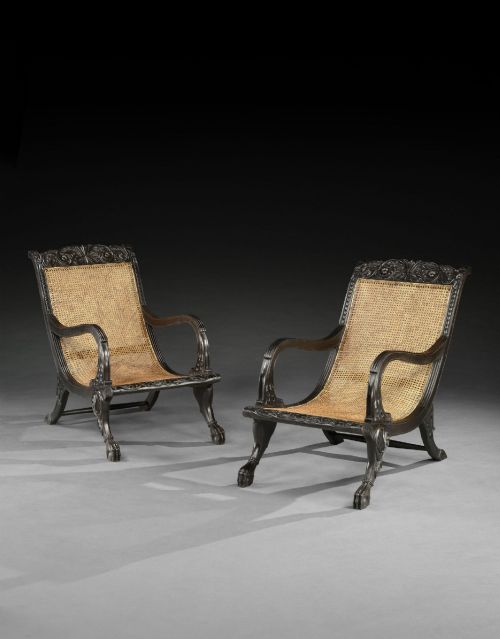
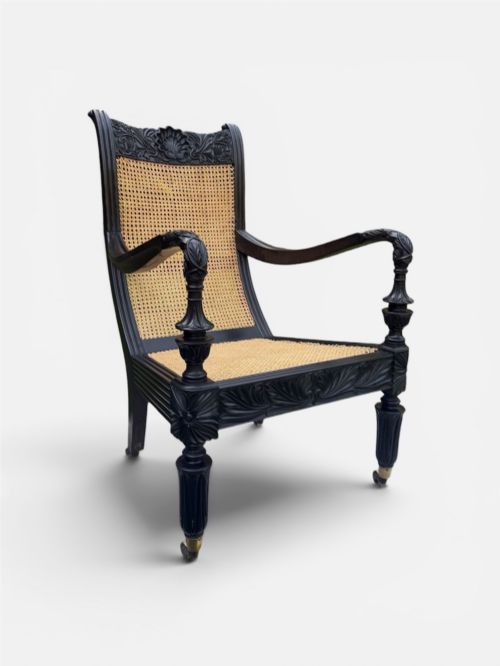
These planters lounge chair examples are substantial colonial seats built for heat and repose, offering deep proportions and extending arms.
Planters Lounge Chair
When buyers search for planters lounge chair designs, they encounter nineteenth-century colonial seating created for British residents in warmer climates. These items take the form of armchairs or chaise longue seating, designed specifically for reclining.
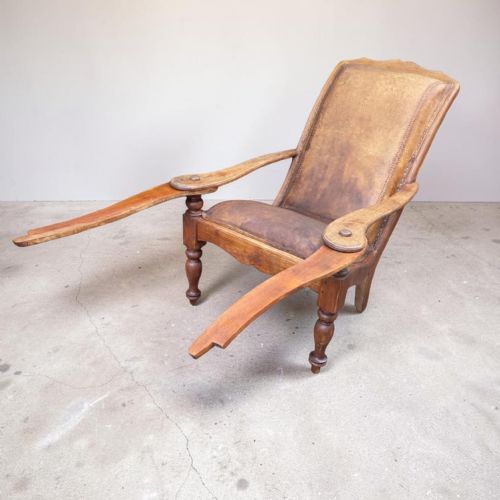
The most common version met on this page is the nineteenth-century Anglo-Indian or British Colonial teak plantation chair. These pieces often incorporate extending arms designed to support resting legs, reflecting the practical requirements of colonial life.
How they were made
Workshops utilised dense timbers such as teak, mahogany, rosewood and solid ebony to construct the frames of these chairs. These heavy hardwoods resisted local insects and warping in humid conditions.
Cane panels and original leather upholstery provided breathable surfaces for seating and reclining. Metal studs frequently secured the leather elements to the wooden frameworks.
Planters Lounge Chair Retail Price Guide 2026
Typical asking prices for planters lounge chair among the pieces listed under this phrase on Sellingantiques today, from the lower quarter to the upper quarter. They describe what is for sale here now, not the wider market.
Materials recorded across the inventory include teak, ebony, rosewood, mahogany, cane, leather, and brass.
What varies in quality
The distinction between standard examples and superior pieces rests on the choice of timber and the complexity of the woodwork. Solid ebony and finely carved Bombay rosewood represent a higher tier of production than simpler teak frames.
The survival of original elements, such as extending arm mechanisms and early leather upholstery, elevates the standing of an individual piece. Proportion and the crispness of colonial styling also determine the desirability of each chair.
The Planters Lounge Chair Glossary
- Anglo-Indian
- A style of furniture made in India during the British colonial period, combining British forms with local craftsmanship and materials. This fusion produced distinctive seating suited to tropical climates.
- Extending arms
- Armrests that pull out or unfold to support the legs of a seated person. This feature defines many plantation chairs.
- Chaise longue
- An upholstered chair for reclining, long enough to support the legs. These forms appear in Victorian colonial contexts.
- Ebony
- A dense black hardwood derived from tropical trees, utilised for luxury furniture. It offers exceptional weight and a smooth dark finish.
Planters Lounge Chair: Frequently Asked Questions
How do I date a plantation chair?
Dating these chairs relies on timber choices, construction methods, and stylistic markers recorded in nineteenth-century and early twentieth-century examples. Victorian pieces frequently exhibit specific colonial revival details.
Examining the fixings, such as metal studs and leather types, helps narrow the production window. Hardwood varieties also shift across different decades of the colonial period.
How were plantation chairs used?
These chairs served as primary resting seats on verandas and in living spaces across British colonial territories. The extending arms allowed users to recline fully with their legs elevated.
Breathable cane panels and leather seats kept the occupant cool in tropical climates. They were built for prolonged relaxation rather than formal dining.
Where were these chairs made?
They were manufactured in various workshops across the Indian subcontinent during the nineteenth and early twentieth centuries. Regional centres produced distinct variations using local materials like rosewood and teak.
British cabinet-making influences blended with local woodworking traditions to create these specific colonial forms. Ceylon and Bombay emerged as notable areas of production.