




19th Century Teak Chair
A 19th century teak chair brings solid colonial history and deep tropical timber straight into a room.
19th Century Teak Chair
A 19th century teak chair encompasses armchairs, dining chairs, and accent pieces originating from British colonial outposts and trading routes across Asia. Buyers searching this phrase look for heavy tropical timber construction combined with distinctive regional carving traditions.
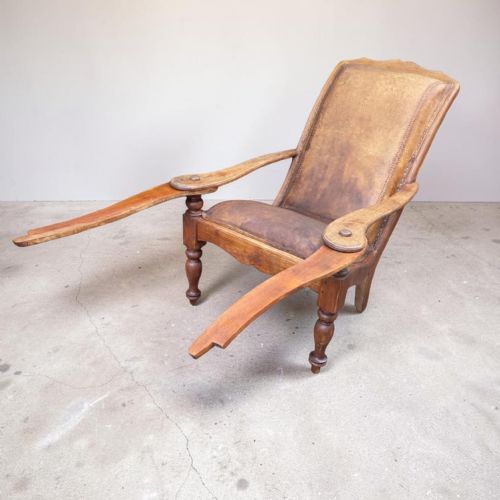
The most common forms on this page include planter's chairs with extending arms, ceremonial armchairs, and folding campaign seats. These seating options reflect the practical demands of colonial life alongside elaborate craftsmanship.
Origins span Anglo-Indian, Burmese, Chinese Export, and Ceylonese workshops, usually dating from the Victorian era down to the late decades of the century. Each piece carries the marks of global trade and domestic comfort from the period.
Materials and construction
Teak and hardwood form the primary structural framework, providing the dense, oily resilience needed for intricate carving and durability. Secondary materials such as leather, woven cane, brass, and rosewood appear across seats and fittings.
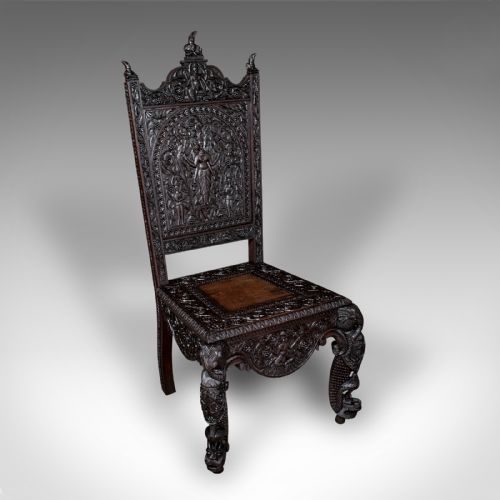
Carving techniques range from deep relief Moghul motifs to ornate peacock designs, executed by regional artisans working in colonial contexts. Folding campaign mechanisms and extending armrests utilise clever joinery and brass hardware.
Listings feature teak, rosewood, leather, woven cane, and brass across Victorian and mid-nineteenth-century dates.
Understanding quality
Quality rests in the crispness of the hand carving and the integrity of the heavy timber framework. Pieces featuring deep, untamed profusion of detail show superior artisan skill compared to simpler, flatter surfaces.
The survival of original leather, woven cane, and extending mechanisms distinguishes a preserved survivor from a heavily altered or later assembled piece. Structural stability in dense hardwoods remains essential for daily use.
The 19th Century Teak Chair Glossary
- Anglo-Indian
- Describing furniture made in India during the British period, blending European forms with local carving styles. These pieces often feature dense foliate patterns.
- Planter's chair
- A large armchair with long, extending armrests designed for reclining in tropical climates. They frequently include foot pull-outs.
- Campaign chair
- Portable folding furniture built for military officers and travellers on the move. They utilise clever hinges and removable parts.
- Cane
- Woven material made from rattan palm, used extensively for cool seating panels in tropical climates. It provides flexibility and breathability.
- Hardwood
- Dense timber derived from broad-leaved trees, including teak and rosewood. It resists humidity and supports intricate joinery.
19th Century Teak Chair: Frequently Asked Questions
How do I care for a teak chair?
Keep the dense timber away from direct heat sources and sudden humidity shifts to prevent splitting in the old wood.
Feed original leather or polish teak surfaces gently with appropriate natural waxes to maintain the grain.
Were these chairs made in Britain?
Most pieces were manufactured in workshops across India, Burma, China, and Ceylon by local artisans using regional timber.
They were commissioned or exported for British colonial administrators and merchants operating overseas.
Can I sit in a plantation chair daily?
Many examples remain sturdy enough for regular use, provided the joints and extending arms are sound.
However, delicate historic cane or brittle antique leather may require gentle treatment or occasional professional support.
How do I tell regional styles apart?
Burmese and Indian examples often display deep, ornate floral and figural carvings reflecting Moghul or temple traditions.
Chinese export pieces typically exhibit cleaner lines and distinct joinery associated with traditional cabinetmaking.