
Vintage Aneroid Barometer
A vintage aneroid barometer brings mechanical precision and rich timber cases into the home, tracking atmospheric pressure without a drop of liquid.
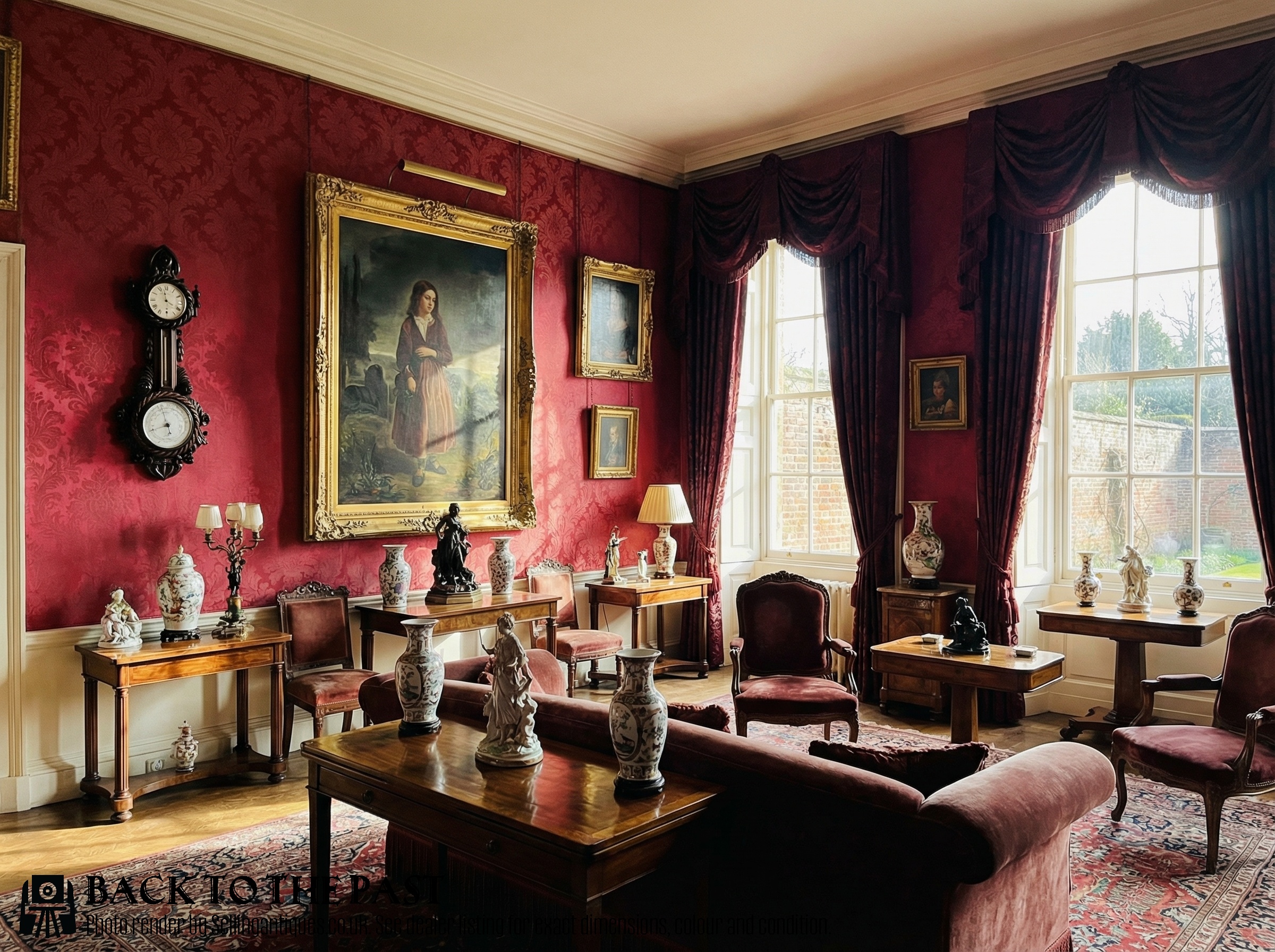
Vintage Aneroid Barometer
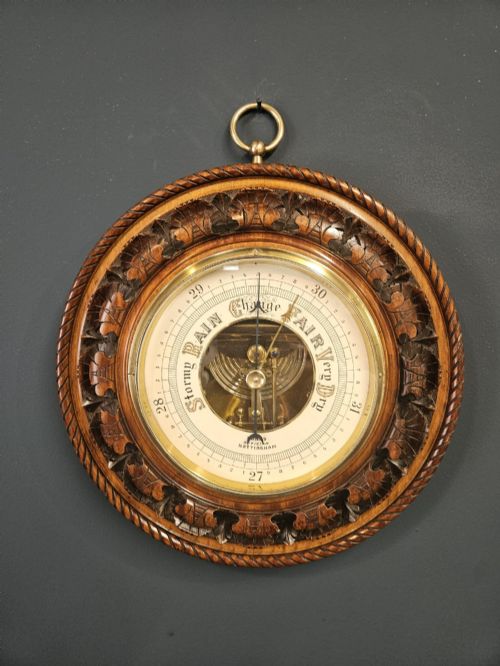
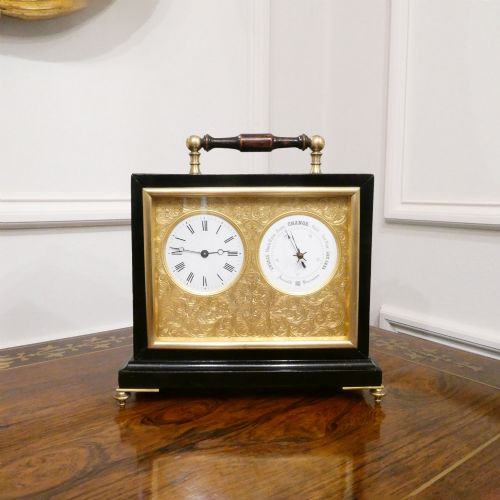
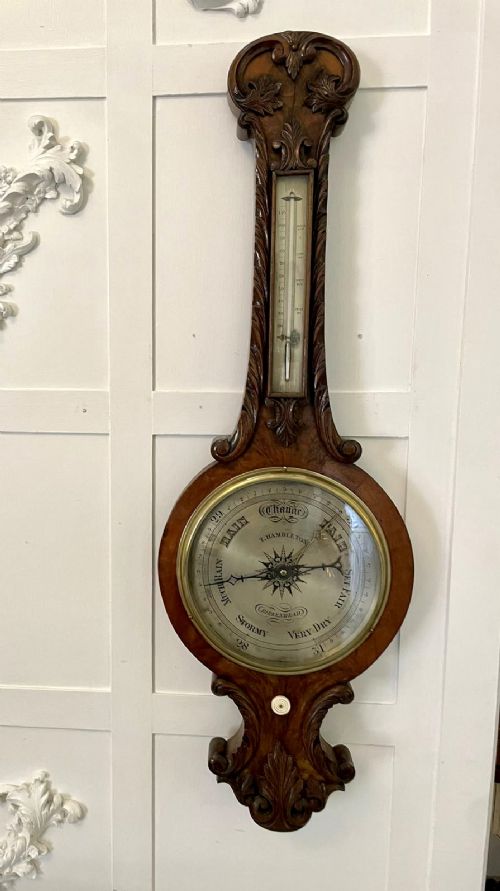
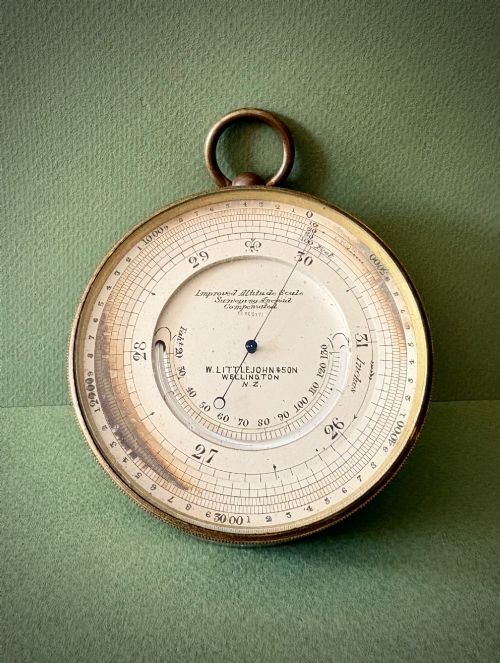
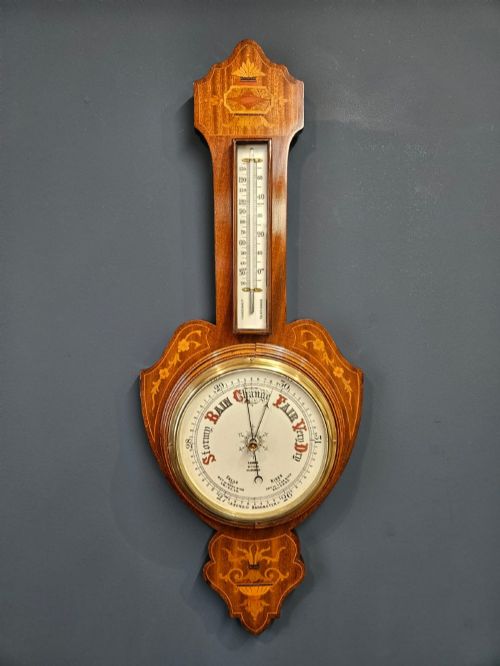
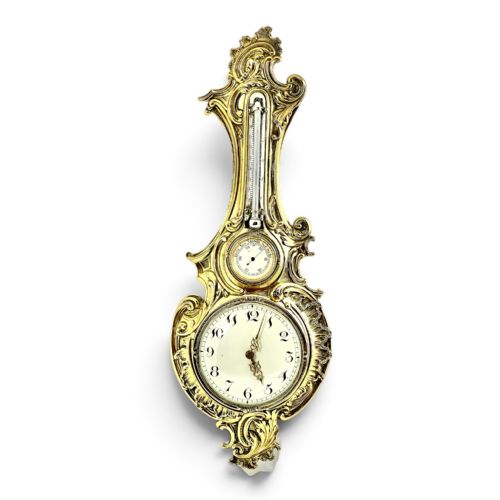
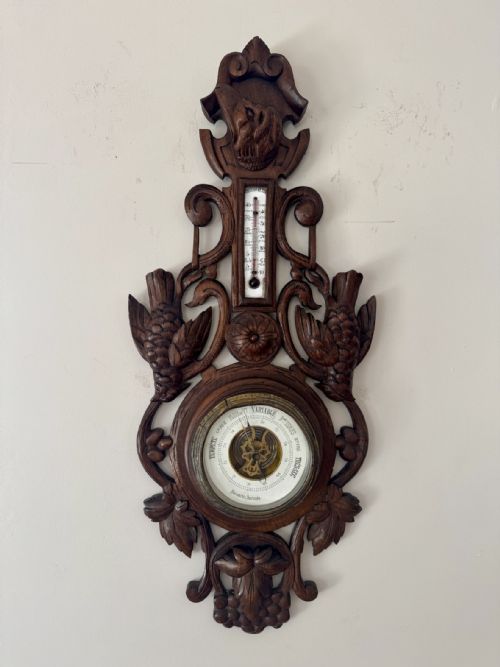
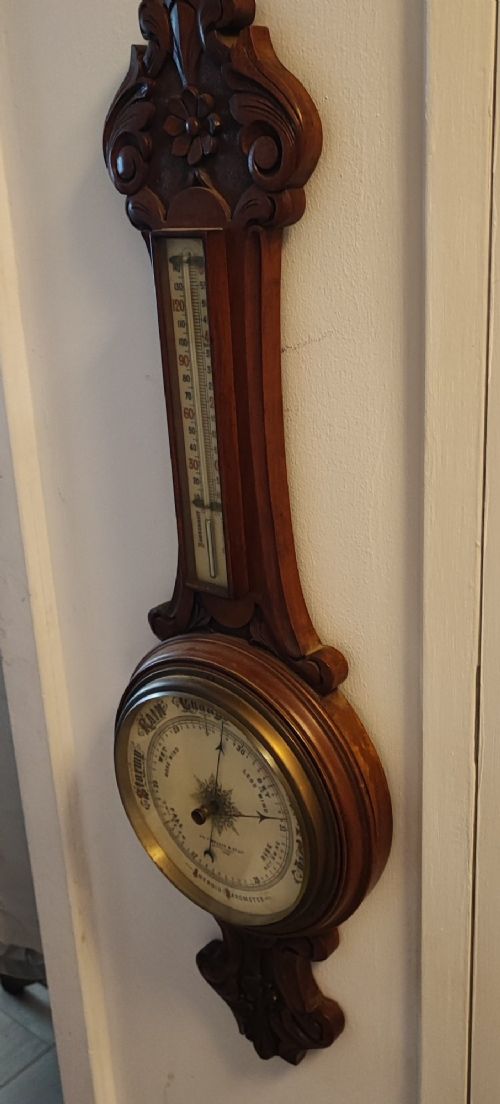
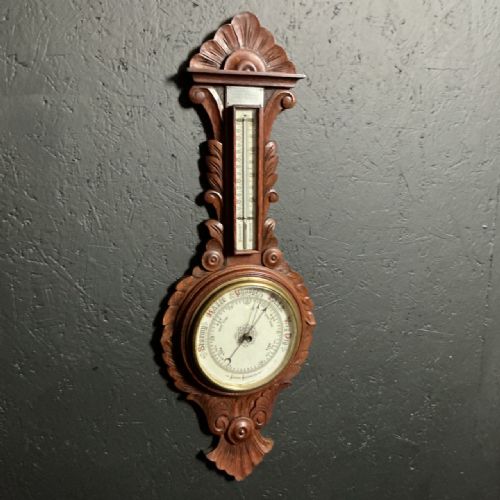
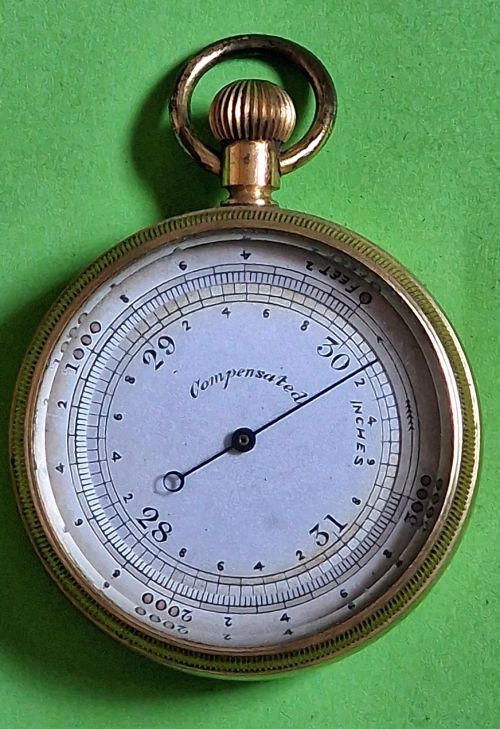
A vintage aneroid barometer is a domestic weather instrument driven by a flexible metal vacuum capsule rather than a column of mercury. When you search for this phrase, you will find wall-hanging banjo styles, heavy desk barographs, and small pocket instruments designed to travel. The examples met most often on this page date from the Victorian and Edwardian eras, housed in carved oak, mahogany, or walnut cases.
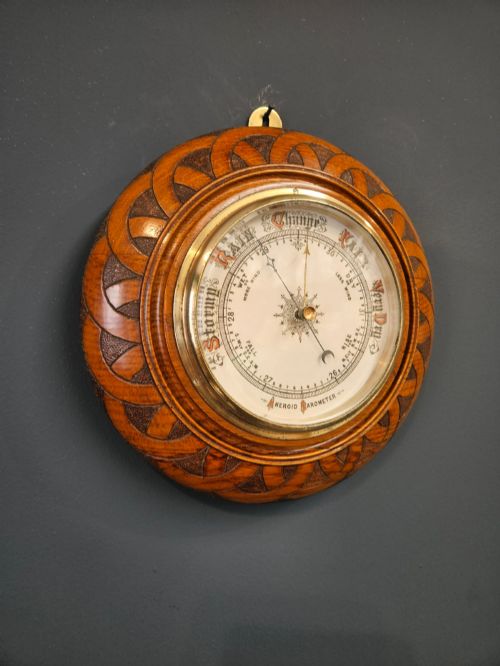
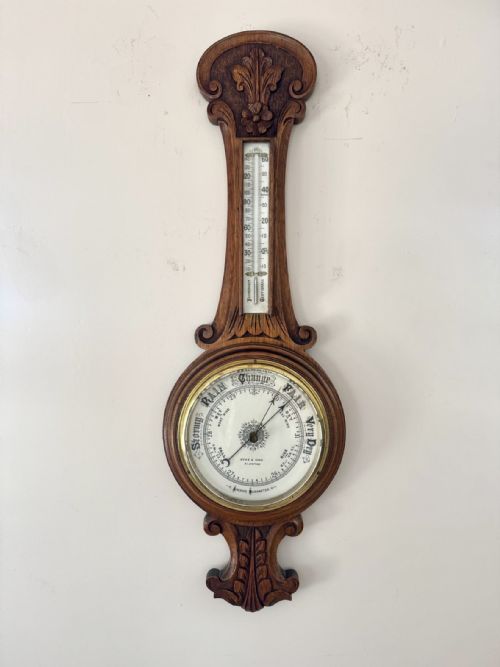
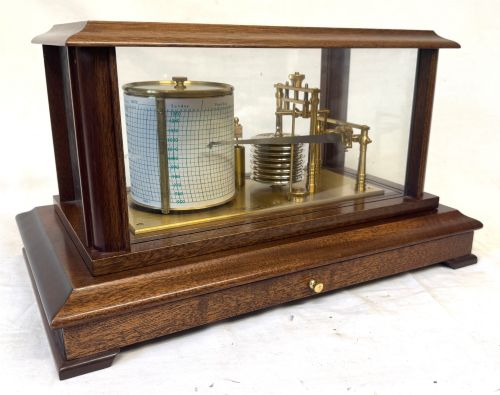
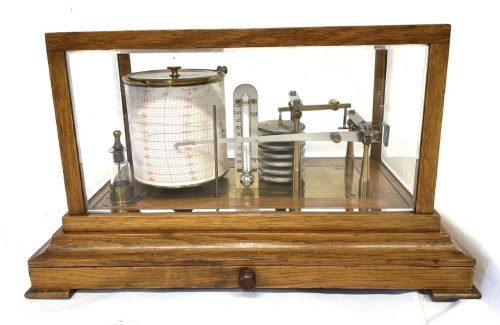
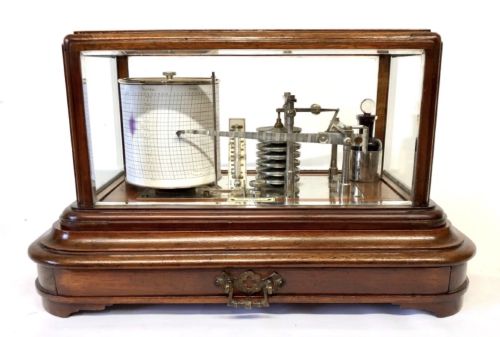
The dial reveals the barometric pressure in inches of mercury or millibars, frequently accompanied by descriptive weather predictions such as change, rain, or fair. Many pieces pair this dial with an alcohol thermometer mounted on the same wooden backboard. More complex desk instruments, known as barographs, record pressure continuously onto a paper chart using an inked arm driven clockwork.
Materials and construction
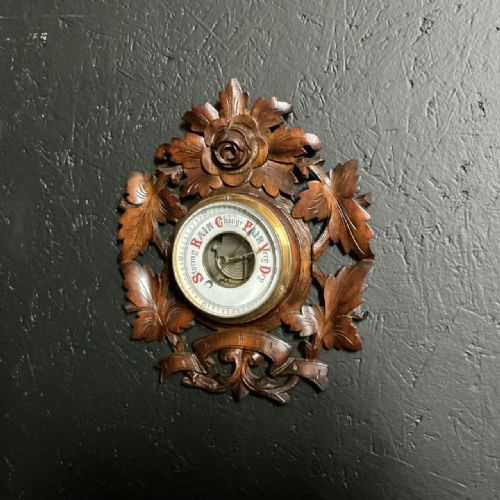
Cases rely heavily on dense hardwoods like oak, mahogany, and walnut, often shaped through steam-bending, geometric turning, or deep relief carving in the manner of Black Forest workshops. Brass and silvered metal provide the contrasting bezels, dials, and indicator hands that frame the delicate internal mechanism.
The internal aneroid mechanism depends upon a sealed corrugated metal box that expands and contracts with shifting air pressure. This microscopic movement transfers through a system of levers and springs to rotate the needle across the graduated dial behind a bevelled glass cover.
Vintage Aneroid Barometer Retail Price Guide 2026
Typical asking prices for vintage aneroid barometer among the pieces listed under this phrase on Sellingantiques today, from the lower quarter to the upper quarter. They describe what is for sale here now, not the wider market.
One sporting club commissioned an aneroid barometer shaped entirely like a tennis racquet.
Judging quality and execution
Quality rests in the crispness of the timber carving and the sophistication of the case joinery, moving from plain turned oak boards to heavily figured burr walnut and inlaid Edwardian mahogany. Maker signatures engraved upon the silvered dial or brass movement elevate certain pieces far above unmarked commercial production.
The legibility and condition of the engraved dial plates indicate the care taken during manufacture, alongside the presence of matching thermometers and original bevelled glass. Intricate models featuring barograph drums and chart drawers demonstrate a higher grade of scientific utility.
Negretti & Zambra·Hyde & Sons Sleaford·Russell Norwich·Gaupp & Co Hongkong & Singapore·Short & Mason·Bramwell & Harbron of Darlington
The Vintage Aneroid Barometer Glossary
- Aneroid barometer
- A weather-measuring device that utilises a sealed flexible metal capsule to register atmospheric pressure without liquid. This design allowed barometers to become compact and wall-mounted.
- Barograph
- A self-recording meteorological instrument that draws a continuous weekly graph of barometric pressure upon paper. It employs a clockwork drum alongside the aneroid mechanism.
- Banjo barometer
- A domestic weather glass styled with a large circular dial at the top and a long tapered wooden trunk below, frequently incorporating a thermometer or hygrometer.
- Bevelled glass
- Glass with edges ground and polished at an angle to fit snugly within a brass bezel. This technique adds depth and catches light across the instrument face.
Vintage Aneroid Barometer: Frequently Asked Questions
How do I read a vintage aneroid barometer?
Read the main pointer against the pressure scale graduated around the dial face. A secondary manual pointer can be set directly over the needle to track whether pressure rises or falls over the course of the day.
Changes in the weather correspond to the directional movement of the needle toward descriptive terms like stormy, rain, change, fair, or very dry.
Can these barometers be calibrated for local altitude?
Many instruments feature a small adjustment screw accessible through the back or face of the case. Turning this screw aligns the mechanical linkage with the known barometric pressure of your specific location.
Consult local meteorological reports to find the current pressure reading before making minor adjustments to the internal linkage.
Where should a wall barometer be placed?
Mount the instrument securely on an interior wall away from direct sunlight, central heating radiators, and exterior doors. Rapid temperature swings and strong draughts interfere with the internal metal capsule and compromise accuracy.
Solid internal partition walls provide the most stable environment for preserving antique wooden cases and maintaining mechanical reliability.
How do I date a Victorian aneroid barometer?
Examine the timber species, case silhouette, and typography upon the metal dial plate. Victorian pieces often favour heavy carved oak or burr walnut with gothic or rococo revival motifs.
Maker signatures and registration marks stamped on the mechanism or dial offer further chronological clues, linking the instrument to specific Victorian manufacturing partnerships.