
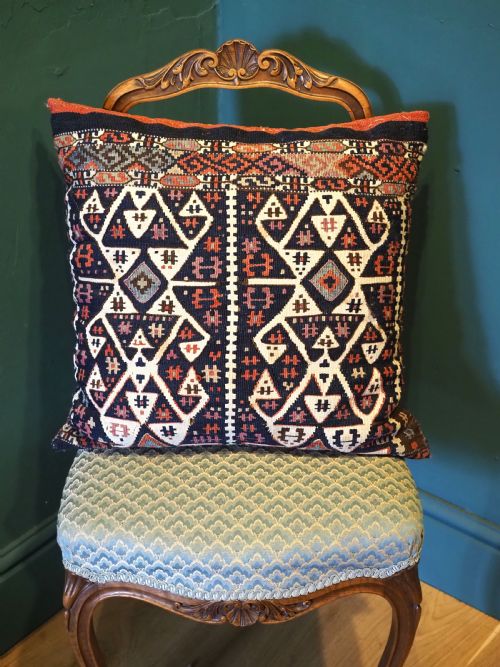


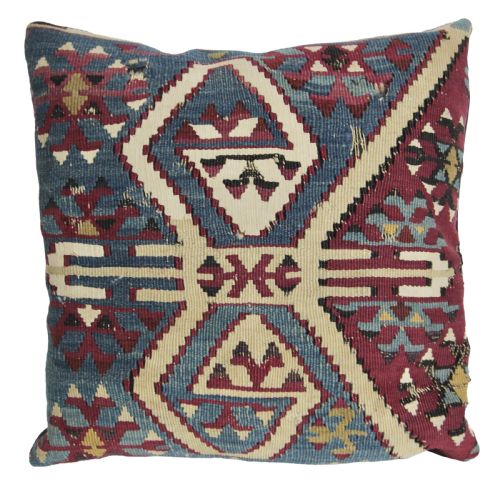

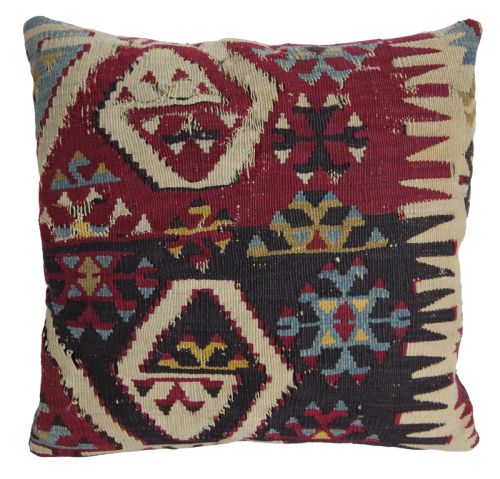


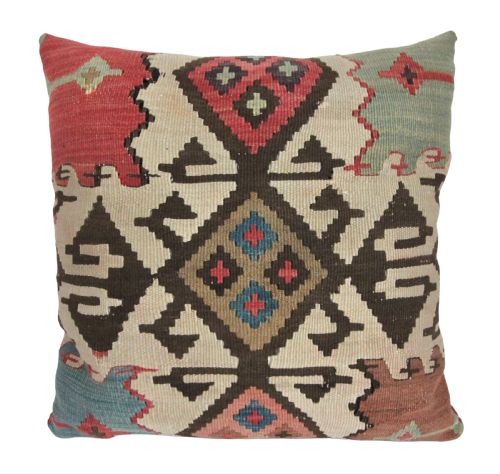
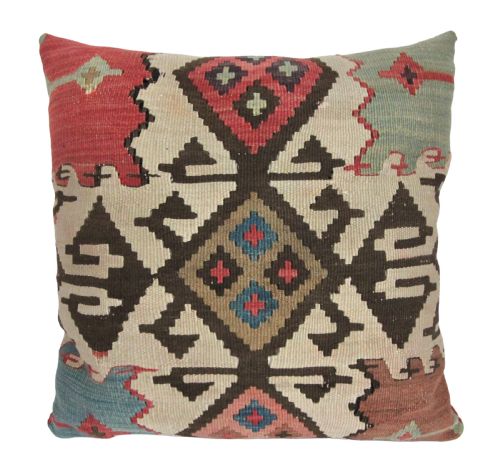


Vintage Anatolian Kilim Pillow
These vintage anatolian kilim pillow selections bring authentic tribal geometry and rich wool textures directly into your interior seating spaces.

Vintage Anatolian Kilim Pillow
When you search for vintage anatolian kilim pillow examples, you encounter hand-woven cushions adapted from traditional carpets, saddle bags, and bag faces. These textiles originate from diverse nomadic and tribal traditions across Anatolia, carrying the distinct cultural motifs of their makers.
The pieces you are most likely to meet on this page span from the mid nineteenth century through to the early twentieth century. They manifest primarily as square cushions and throw pillows constructed from durable woven wool surfaces backed with cotton.
Each item represents a repurposed fragment of larger weaving or a complete functional bag face. The forms include specific regional iterations such as Malatya saddle bag kilim cushions alongside broader tribal and nomadic styles.
How they were made
The construction relies fundamentally on hand-woven wool textiles produced using flat-weave kilim techniques without a pile. Artisans interlaced warp and weft threads to create sharp geometric patterns and distinct colour blocks.
Makers utilised sturdy cotton for backing and internal structure to support the antique wool surfaces. The integration of historic bag faces and saddle bags required careful cutting and stitching to transform utilitarian objects into domestic cushions.
Listings feature cotton and wool materials spanning periods from eighteen-fifty to nineteen-twenty, encompassing traditional Anatolian and nomadic tribal styles.
What varies in quality
The primary distinction in quality lies in the tightness of the wool weave and the crispness of the tribal geometric design. Finer pieces demonstrate dense, even interlacing that maintains structural integrity across the cushion surface.
Another factor is the character and preservation of the original antique textile fragment utilised for the face. Items retaining strong, saturated natural dye palettes and complete tribal motifs stand apart from more faded examples.
The Vintage Anatolian Kilim Pillow Glossary
- Kilim
- A flat-woven carpet or rug produced without a pile by tightly interweaving warp and weft strands. This technique results in a lightweight, durable textile with flat surfaces on both sides.
- Bag face
- The decorative front panel of a nomadic storage bag, often repurposed into a cushion. These panels frequently display the most intricate tribal motifs and superior weaving skill.
- Saddle bag
- A paired utilitarian container used by nomads for transport on animals, featuring flat-woven panels. Sections of these bags are adapted into square cushion formats.
- Warp
- The vertical foundation threads stretched tightly on a loom before weaving begins. The weft threads pass horizontally over and under these structural elements.
- Nomadic
- Pertaining to pastoral groups who move seasonally, carrying portable textile traditions that reflect tribal identity. Their weaving incorporates symbolic motifs passed down through generations.
Vintage Anatolian Kilim Pillow: Frequently Asked Questions
What is an anatolian kilim pillow?
These decorative cushions are created from historic flat-woven wool textiles originating in Anatolia. They transform traditional tribal rugs and storage bags into functional home accessories.
The resulting pieces preserve centuries-old geometric patterns and nomadic weaving techniques within a contemporary cushion format.
How do I live with antique kilim pillows?
Integrate these cushions into living spaces as accent pieces on sofas, armchairs, or beds where their geometric patterns can stand out. They pair well with neutral upholstery and natural wood furniture.
Protect the historic wool surfaces from direct, prolonged sunlight to preserve the depth of the natural dyes and fibres.
How can I tell the age of these cushions?
Dating relies on examining the characteristics of the wool, the complexity of the flat-weave structure, and the style of the tribal motifs. Pieces span from the mid nineteenth century to the early twentieth century.
Variations in the handling of traditional Anatolian designs and the degree of wear on the wool fibres provide clues to the period of origin.