


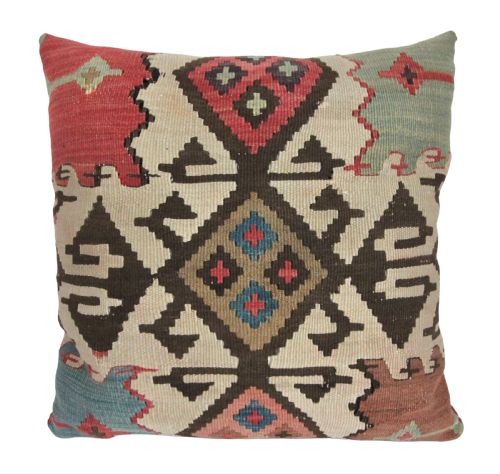


Flat Weave Cushion
A flat weave cushion brings tribal wool work into daily use, offering geometric patterns and durable texture for the home.

Flat Weave Cushion
A flat weave cushion repurposes antique tribal textiles such as kilims, half-saddlebags, bag faces, and torbas into functional home furnishings. These items originate from Anatolian, Shahsevan, Central Asian, and Turkmen tribal traditions, carrying historical patterns from the nineteenth and early twentieth centuries.
The most common form on this page is the antique kilim cushion, alongside repurposed torbas, bag faces, and half-saddlebags. Most examples date from the mid to late nineteenth century through to the early twentieth century, utilising wool and hand-spun wool.
Buyers encounter tribal nomadic and traditional styles that reflect the specific regional weaving heritage of makers in Azerbaijan, Anatolia, and Turkmenistan. Each piece preserves textile fragments complete with backings, tassels, and the original flat-woven surface structure.
Materials and construction
These textiles rely primarily on wool and hand-spun wool fibres, manipulated through traditional flat-weaving techniques without a piled surface. Artisans employed natural dyes to achieve the rich colour palettes characteristic of tribal weaving.
Construction involves repurposing older utilitarian items like torbas, chuvals, and saddlebags into cushions, often incorporating finished backs and tassels to complete the object. The resulting textile structure remains thin and sturdy, maintaining the crisp geometric clarity inherent to flat weaves.
Some cushions still retain their original nomadic tassels, happily swaying with every repositioning on the sofa.
Assessing quality in flat weave cushions
Quality depends on the integrity of the original tribal textile and the precision of the flat weave structure. Pieces retaining original elements like tassels and stable backings demonstrate superior preservation.
The sophistication of the tribal design and the depth of natural dyes separate standard examples from finer specimens. The handled texture of hand-spun wool and the complexity of regional motifs, such as those from Shahsevan or Turkmen regions, elevate the textile.
The Flat Weave Cushion Glossary
- Kilim
- A flat-woven carpet or tapestry-woven rug that lacks pile. These textiles form the main surface material for many decorative cushions.
- Torba
- A small Turkmen storage bag, wider than it is deep. Such bags are frequently repurposed into cushions and pillows.
- Chuval
- A large Turkmen tent bag used for storage. Fragments of these bags are converted into durable cushions.
- Bag face
- The decorative front panel of a nomadic storage bag. These panels display the primary tribal patterns and are often made into cushions.
- Natural dyes
- Colourants derived from plants, insects, and minerals rather than synthetic chemicals. They provide the characteristic muted tones found in older tribal wool work.
- Hand-spun wool
- Wool yarn spun manually rather than by industrial machinery. This yarn yields an irregular, tactile texture typical of nomadic textiles.
Flat Weave Cushion: Frequently Asked Questions
What is a flat weave cushion?
A flat weave cushion is made by repurposing antique nomadic and tribal textiles, such as kilims and saddlebag faces, into home furnishings.
These pieces use traditional wool and natural dye techniques from regions like Anatolia and Central Asia, dating from the nineteenth and early twentieth centuries.
How do I care for my cushion?
These antique wool items require gentle handling, preferably professional textile cleaning when necessary. Avoid direct sunlight to protect the natural dyes.
Keep the cushion in low-traffic areas of the home to preserve the integrity of the flat weave structure and any attached tassels.
Where do these cushions originate?
The pieces originate from tribal and nomadic groups in Anatolia, Azerbaijan, and Turkmenistan. Communities such as the Shahsevan, Ersari, and Tekke Turkmen created the original textiles.
Each region utilised distinct geometric motifs and weaving structures that identify the provenance of the piece.
Are these cushions made from old rugs?
Many cushions are constructed from fragments of antique kilims, torbas, chuvals, and half-saddlebags. Artisans cut and stitch these historical flat weaves together with backing materials.
This process gives utilitarian tribal items a second life as decorative home accessories.
How can I tell the age of a cushion?
Age is indicated by the materials, such as hand-spun wool, and the use of natural dyes rather than synthetic ones. Regional tribal styles and production methods typical of the nineteenth century also help date the textile.
Structural details like wool quality and traditional motifs provide context for the era in which the original item was woven.