
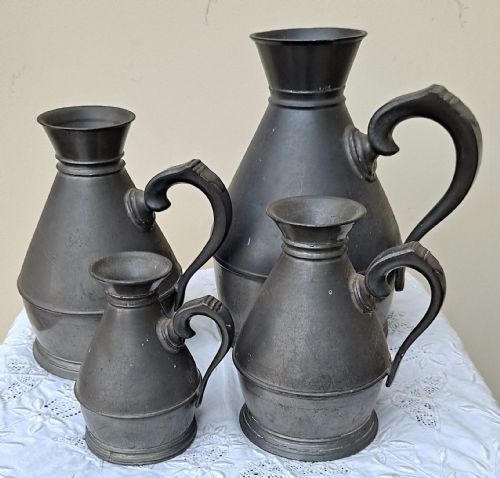


Vintage Ale Pitcher
These vintage ale pitcher examples combine heavy metals and warm earthenwares for pouring stout and beer at table.
Vintage Ale Pitcher
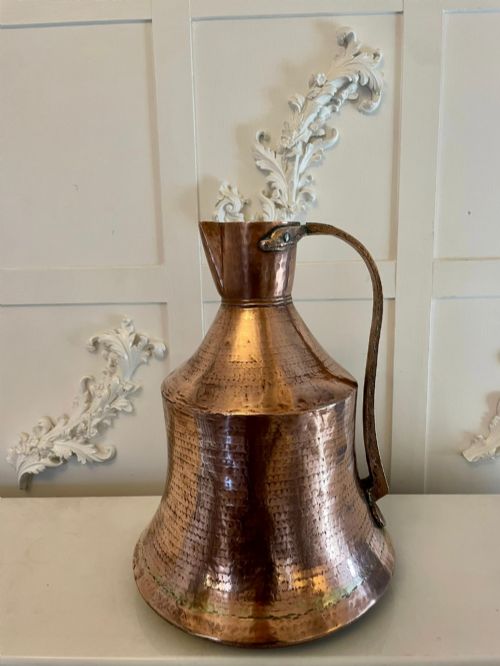
A vintage ale pitcher brings historical tavern service directly into a modern dining room, serving as both a functional vessel and a decorative statement. Buyers searching for a vintage ale pitcher will encounter heavy metal flagons, capacious copper measures, and salt-glazed earthenware jugs spanning several centuries. The selection here leans heavily towards 19th-century metalware and ceramic vessels designed for holding large volumes of beer.
Forms range from tall coopered oak flagons bound in brass to slender pewter haystack measures and slipware tavern jugs. These objects originated in domestic kitchens, rural inns, and bustling city hostelries where bulk liquids required sturdy, reliable containers. Surviving examples demonstrate the shift from utilitarian tavern equipment to decorative domestic collectables.
How they were made
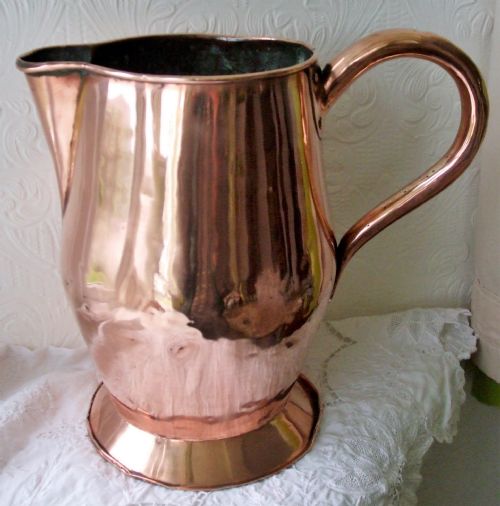
Makers utilised durable metals like copper, brass, and pewter, shaping sheets through hand-beating, seaming, and soldering. Copper vessels often feature folded seams and applied brass bands, while pewter was cast in moulds and finished by lathe-turning. Oak staves were coopered together and secured with tight brass hoops to hold liquids without leaking.
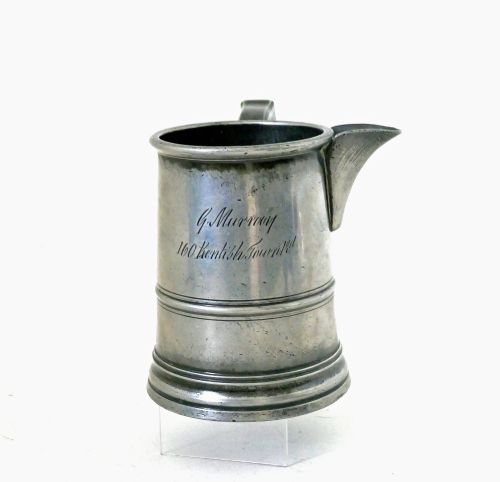
Ceramic examples rely on local clays, finished with slip decoration, salt glaze, or silver plating in the case of Old Sheffield plate. Earthenware bodies were thrown on wheels, hand-modelled in the case of figural toby jugs, and fired in traditional kilns. Metal surfaces frequently bear touchmarks, capacity stamps, and engraved ownership inscriptions.
Materials range from humble lead and earthenware to silver plate, copper, and coopered oak.
What varies in quality
The distinction between ordinary utility items and superior pieces rests on gauge thickness, handling comfort, and crispness of form. Heavy-gauge copper and substantial pewter retain their structural integrity better over generations of hard use. Clean solder lines, well-fitted lids, and balanced spouts separate standard workshop output from finer craftsmanship.
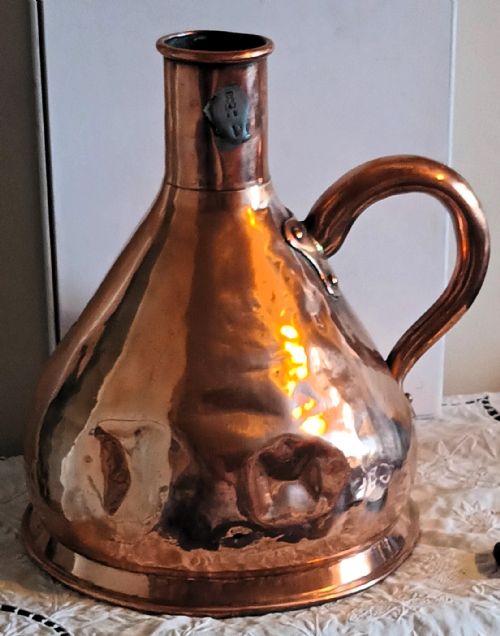
Surface patination and legibility of maker stamps or capacity marks heavily influence desirability. Vessels retaining original unpolished metal surfaces or authentic slip glazes hold greater visual depth than aggressively cleaned examples. The presence of royal verification ciphers or crisp armorial crests adds historical distinction to individual pieces.
J Bower·G Murrouy·S Hancock·Loftus of Oxford Street London
The Vintage Ale Pitcher Glossary
- Haystack measure
- A distinctively shaped Irish or English metal liquid container featuring a tapering body resembling a stacked heap of hay. These measures were produced in graduated sets for trade and domestic use.
- Tappit hen
- A traditional Scottish pewter jug fitted with a lid and a characteristic knob or tappit on the thumbpiece. They held specific capacity volumes such as the Scots pint.
- Coopered
- Constructed from curved wooden staves bound together with metal hoops, following the traditional method of barrel and tub makers. This technique allowed large wooden jugs to remain watertight.
- Slipware
- Earthenware pottery decorated with liquid clay diluted to a creamy consistency and applied to the vessel body before firing. It creates bold contrasting patterns under a clear lead glaze.
- Old Sheffield plate
- A composite material made by fusing a thin sheet of silver to a thicker copper base under high heat. It produces durable wares that display silver surfaces while utilising stronger underlying metal.
Vintage Ale Pitcher: Frequently Asked Questions
How were these pitchers used in old taverns?
Historic taverns utilised these vessels to draw ale from large casks and serve it directly to patrons at tables. Their generous capacities allowed vintners and landlords to measure and pour bulk beer efficiently during busy service hours.
Many metal measures and ceramic jugs also served as legal standards for trade, ensuring customers received exact quantities. Their robust construction withstood the rough handling typical of 18th and 19th-century drinking establishments.
Are copper ale pitchers safe for holding drinks?
Most antique copper and brass vessels were manufactured before modern food safety standards and often lack interior tin linings. Historic pieces frequently display oxidation and residues unsuitable for direct consumption of acidic beverages.
Collectors generally display these items as decorative objects rather than using them for daily catering. If utilised for serving, modern food-safe lining is strictly necessary to prevent metal contamination.
How do I clean antique pewter safely?
Pewter requires gentle washing with warm water and mild soap, followed by thorough drying with a soft cloth. Aggressive metal polishes strip away valuable historical patination and can permanently scratch softer alloy surfaces.
Leaving the natural dark oxide layer intact preserves the age and character of 18th and 19th-century pieces. Regular dusting and occasional application of microcrystalline wax help protect the metal from atmospheric corrosion.
What does a VR stamp mean on a jug?
A VR stamp denotes Victoria Regina, indicating that the vessel was inspected and verified during the reign of Queen Victoria. These official marks confirm that the jug met legal standards for commercial liquid measurement.
Collectors value these stamped verification marks because they provide a reliable date bracket and a verified historical use. Such government stamps appear frequently on 19th-century metal and ceramic measures.