




17th Century Earthenware
These 17th century earthenware pieces bring tactile early ceramics into your home, offering tangible links to domestic life centuries ago.
17th Century Earthenware
When you search for 17th century earthenware, you encounter robust utility wares and decorative objects shaped from fired clay. The selection spans utilitarian vessels alongside domestic display items.
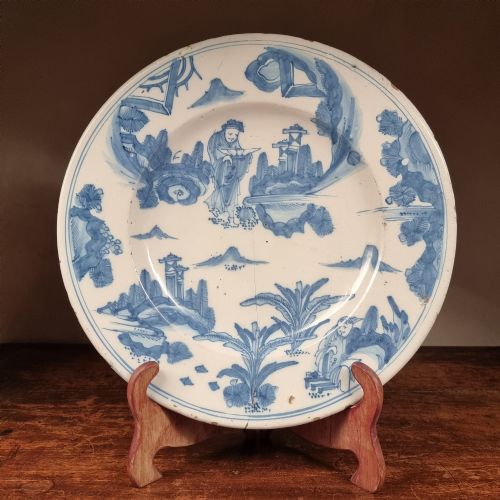
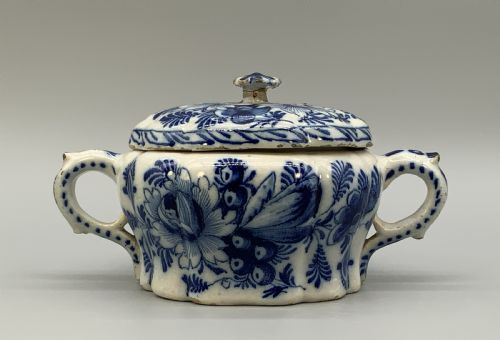
You meet various utilitarian and decorative forms on this page, including chargers, plates, tiles, posset pots, and jugs. Dutch delft chargers and plates dominate the selection alongside slipware jugs and jars.
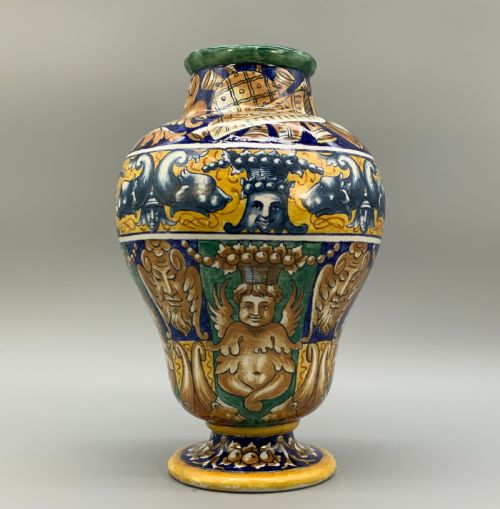
The objects originate from diverse regions, including England, the Netherlands, Italy, Persia, and India. Pieces range from period originals to revival styles created in later centuries.
How these ceramics were shaped and glazed
Potters formed bodies from earthenware clay, applying lead glaze or tin glaze to seal the porous material. Tin glaze provided a white opaque surface suitable for painting in cobalt pigment and polychrome colours.
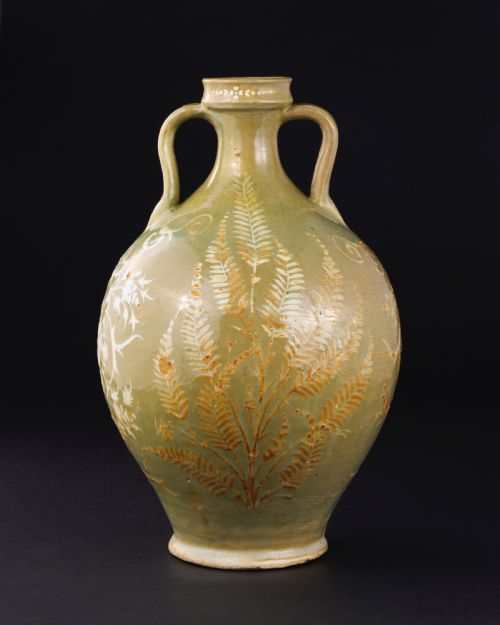
Makers decorated surfaces using hand-painted motifs, cobalt pigment for blue and white designs, and slip decoration on tavern jugs and strawberry jars. Painting styles incorporate floral designs, bird motifs, swan motifs, and Chinoiserie scenes.
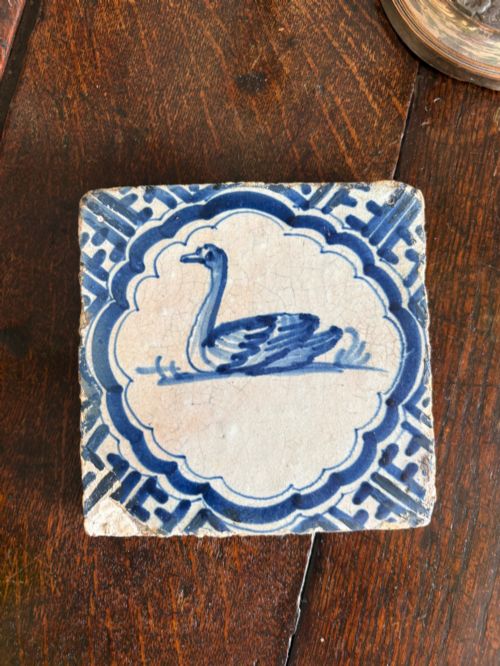
A painted swan motif peers out from a seventeenth-century Dutch delft tile.
What separates standard examples from exceptional pieces
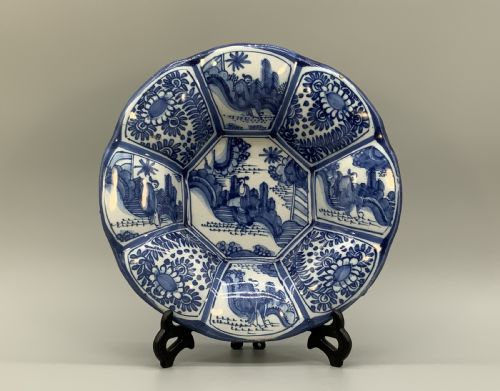
Quality rests in the crispness of the hand-painted brushwork and the complexity of the design, such as elaborate Kraak style patterns or detailed figures. The stability of the tin glaze or lead glaze and the preservation of the earthenware body dictate desirability.
Scale and ambition separate standard domestic items from large chargers and grand vases. Original period execution distinguishes authentic early pieces from later revival items.
The 17th Century Earthenware Glossary
- Earthenware
- Porous pottery fired at lower temperatures, requiring a glaze to hold liquids. This forms the foundational material for the entire category.
- Tin glaze
- An opaque white glaze containing tin oxide, used as a ground for painted decoration. It allows vibrant colours to adhere firmly during firing.
- Slip
- Liquid clay applied to pottery bodies for surface decoration or coating. It creates raised patterns on jugs and jars.
- Delft
- Tin-glazed earthenware produced in the Netherlands and England. It frequently imitates Chinese porcelain styles.
- Kraak style
- Chinese porcelain design style characterised by panelled borders and central motifs, heavily copied on European delftware. Collectors prize these imported aesthetic influences.
17th Century Earthenware: Frequently Asked Questions
What is a posset pot?
A posset pot is a multi-handled vessel used for serving a warm drink made from curdled milk, wine, and spices. These shared drinks formed part of social gatherings.
They often feature spouts and sturdy handles to pass around a table. Surviving examples showcase early British and European domestic habits.
Are these pieces waterproof?
Most pieces carry lead or tin glazes that seal the porous earthenware body. However, age can create hairline cracks or crazing in the glaze.
Treat antique earthenware with care and avoid prolonged exposure to standing water. Display them primarily as decorative objects.
What is Chinoiserie on pottery?
Chinoiserie is European artistic interpretation of Chinese and East Asian design motifs. Painters applied these imagined landscapes, birds, and flowers onto tin-glazed surfaces.
This aesthetic reflects global trade influences during the seventeenth century. It remains a defining characteristic of many decorative plates and vases.