


Vintage Alabaster Statue
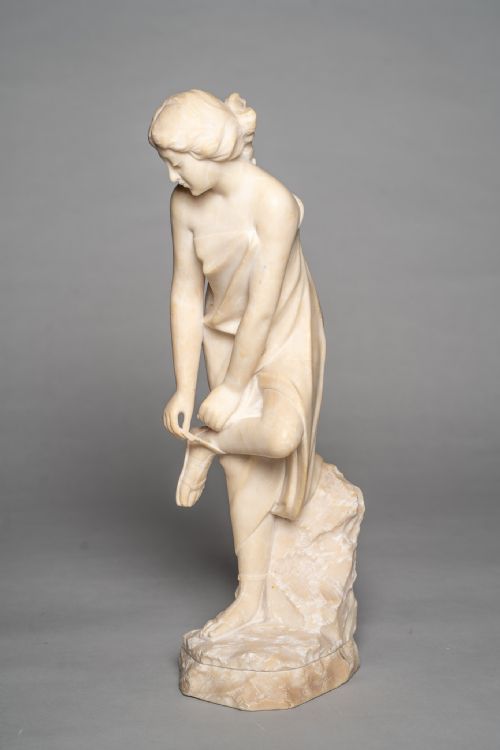
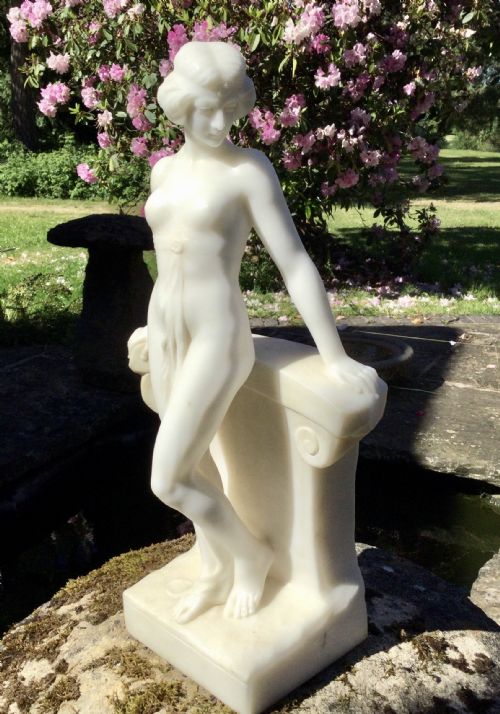
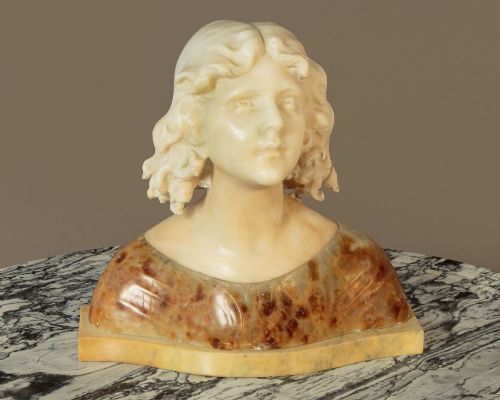
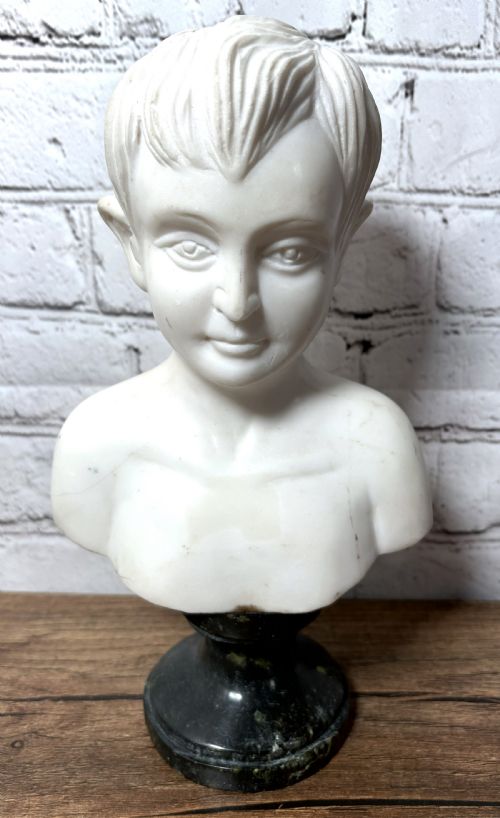
A vintage alabaster statue brings carved stone figures and portrait busts into a room, offering tactile warmth and classic form.
Vintage Alabaster Statue
When you search for a vintage alabaster statue, you encounter carved figures, portrait busts, and figurative groups spanning the nineteenth and early twentieth centuries. These works include Neoclassical deities, Art Deco dancers, and domestic studies produced across Europe, particularly in Italy and France.
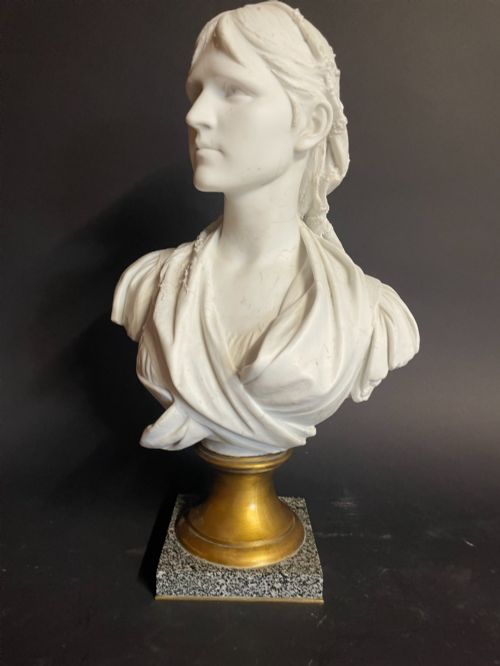
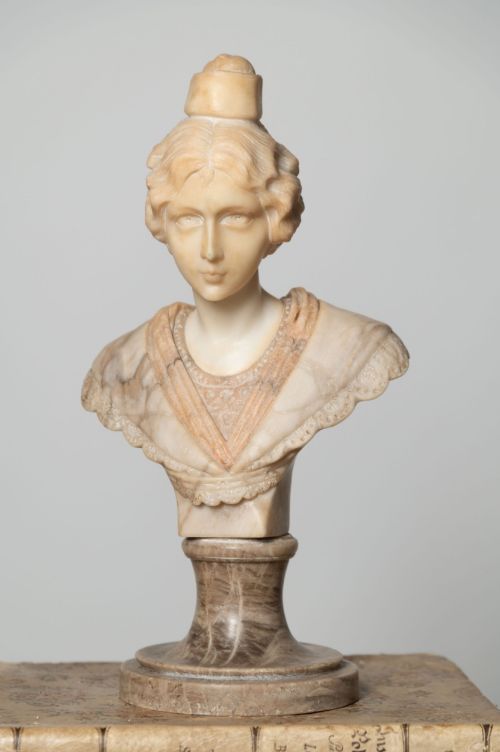
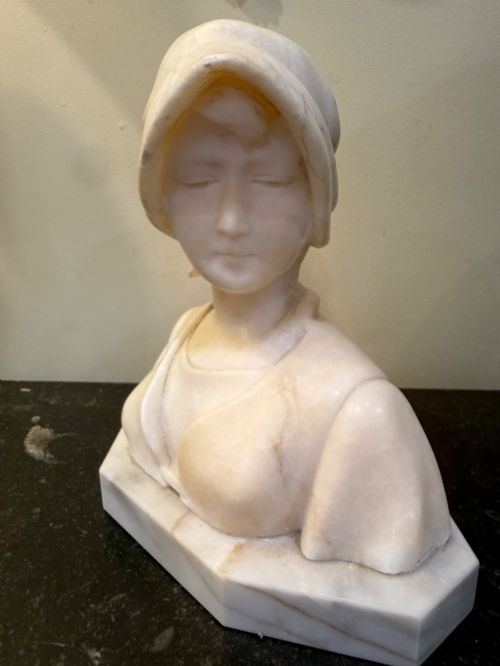
The pieces you meet most often on this page take the form of young women, children, and literary or mythological subjects rendered in soft stone. Makers utilised the translucent quality of the material to suggest drapery, skin, and hair with remarkable sensitivity.
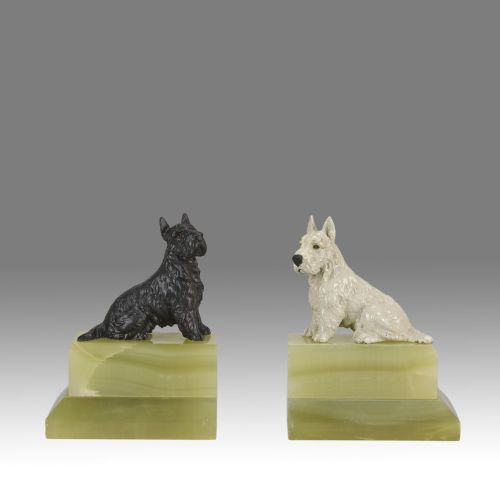
Beyond standalone sculptures, the selection includes functional items such as bookends, table lamps, and figural bases combining stone with bronze or spelter. These varied forms reflect how late nineteenth and early twentieth-century makers adapted carved stone for domestic display.
How they were made
Carvers shaped these pieces from blocks of alabaster, marble, and onyx using chisels, rasps, and abrasive powders to achieve smooth surfaces. The stone was often quarried in Italy or France, selected for its fine grain and ability to hold crisp detail.
Many works combine carved stone with metal elements, incorporating bronze, cold-painted bronze, or spelter for figures, mounts, or bases. This mixed-media approach allowed makers to contrast the creamy opacity of alabaster with patinated metal details.
Several Victorian sculptors carved delicate alabaster hairnets and lace collars that fooled visitors into thinking real fabric had been draped over the stone.
What varies in quality
The standard of carving distinguishes exceptional pieces from ordinary workshop output, visible in the treatment of hands, drapery, and facial expression. Finer examples display subtle undercutting and a natural fall of cloth that gives the stone a lifelike weight.
The choice and purity of the mineral block also set pieces apart, with superior statues utilising translucent stone free from heavy grey veins or internal flaws. The presence of a signature from a known sculptor or studio further elevates the standing of an individual work.
A.Gamay·Mieczyslaw Leon Zawiejski·Antonio Frilli·Pugi·Cipriani·Joseph Gott·GREUZE
The Vintage Alabaster Statue Glossary
- Alabaster
- A soft, fine-grained stone that ranges from opaque white to translucent cream, prized for sculpture and decorative objects. Its relative softness allows carvers to achieve delicate details and soft, skin-like transitions.
- Spelter
- A zinc alloy commonly utilised as a less costly alternative to bronze for figures and decorative mounts. It is frequently given a bronze-like finish and appears paired with stone bases.
- Neoclassical
- A style drawing inspiration from the classical art and architecture of ancient Greece and Rome. Works in this idiom often depict mythological figures, goddesses, and heroic subjects.
- Grand Tour
- A cultural journey undertaken by wealthy Europeans to study classical antiquities, inspiring the creation of smaller marble and alabaster copies for travellers to bring home.
- Cold-Painted Bronze
- Bronze sculpture decorated with non-firing paint applied after casting. This technique appears on decorative figures and bookends from the turn of the twentieth century.
Vintage Alabaster Statue: Frequently Asked Questions
How do I clean an alabaster statue?
Alabaster is water-soluble and relatively soft, meaning moisture can permanently damage the polished surface. Dust the piece gently with a dry, soft brush rather than using damp cloths or chemical cleaners.
Keep the statue away from direct sunlight and damp environments to preserve the stone. Professional restoration is recommended if the piece requires deep cleaning or repair.
How do I tell alabaster from marble?
Alabaster is softer than marble and can be scratched with a coin or fingernail in an inconspicuous area, though testing is rarely necessary. Alabaster also possesses a distinct translucency when held near a light source.
Marble tends to be harder, heavier, and displays a more crystalline structure when fractured. Many nineteenth-century works actually combine both materials, using marble for structural bases and alabaster for carved figures.
Where were these statues made?
The majority of these carved pieces originated in European workshops, with major production centres in Italy and France during the nineteenth and early twentieth centuries. Italian carvers often worked near the quarries, producing Grand Tour pieces and portrait busts.
French studios frequently combined carved stone with cast metal elements like bronze and spelter. These works were exported across Europe and beyond to furnish middle-class and aristocratic homes.
How do I date an alabaster sculpture?
Dating relies on stylistic clues, costume, subject matter, and signatures carved into the stone or cast onto metal mounts. Neoclassical and romantic subjects often point to the mid-to-late nineteenth century, while sleek lines and stylized drapery indicate Art Deco or Edwardian periods.
The presence of specific signatures or foundry marks helps narrow the date further. Comparing the mounting style and base construction also provides clues to the era of manufacture.