


Art Nouveau Marble Figure
These pieces combine sweeping organic lines with carved stone, offering an art nouveau marble figure that captures turn-of-the-century elegance in solid form.
Art Nouveau Marble Figure
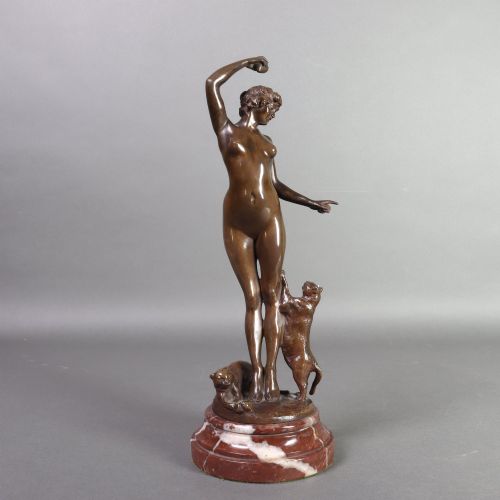
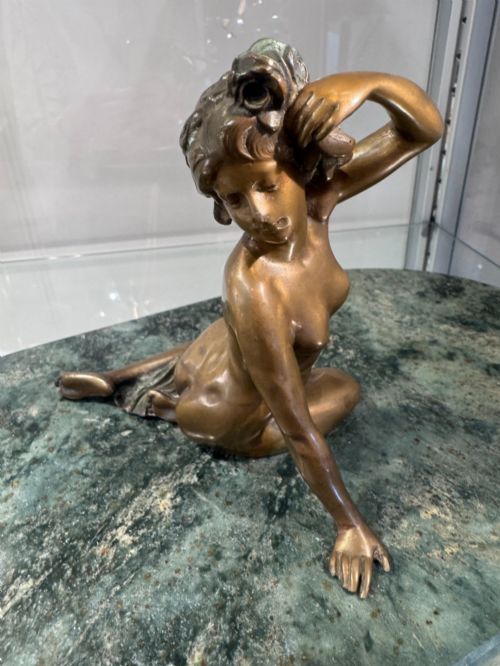
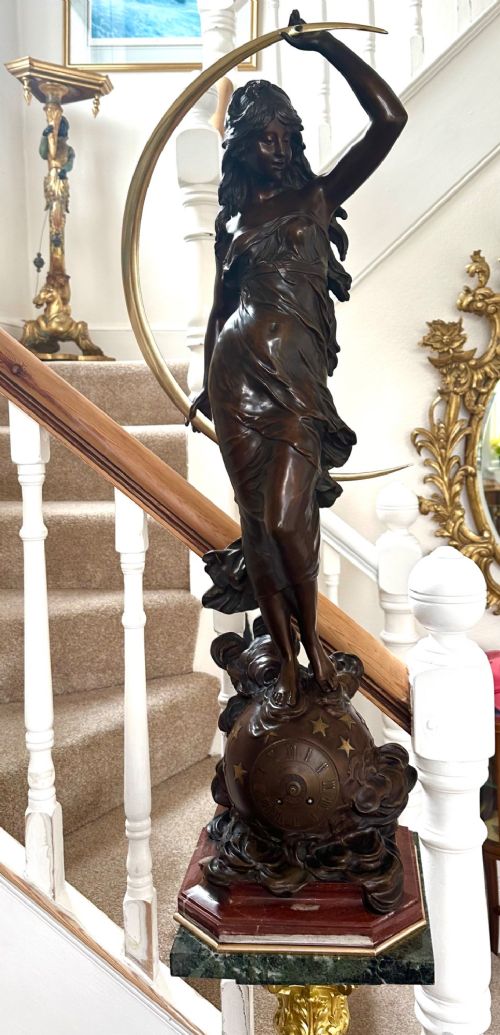
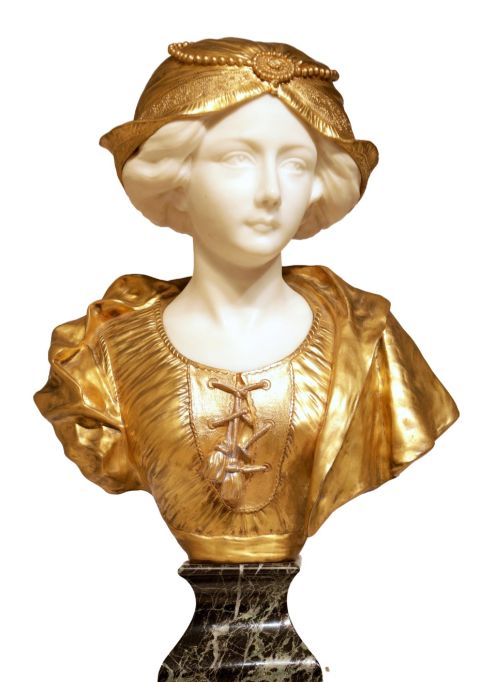
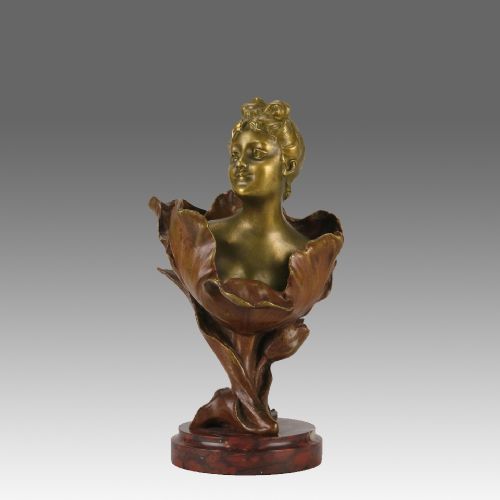
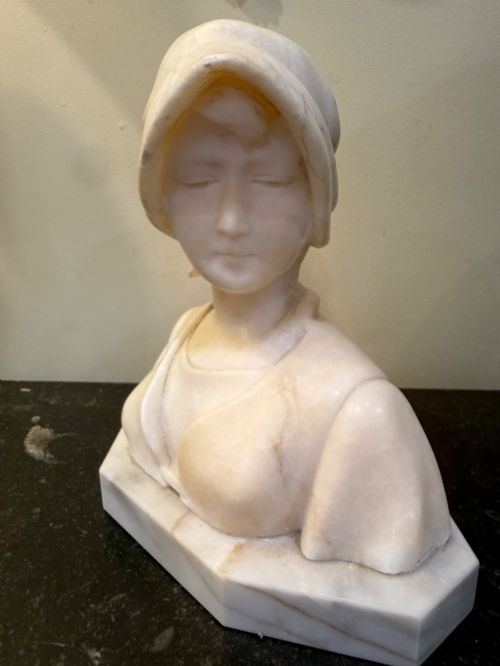
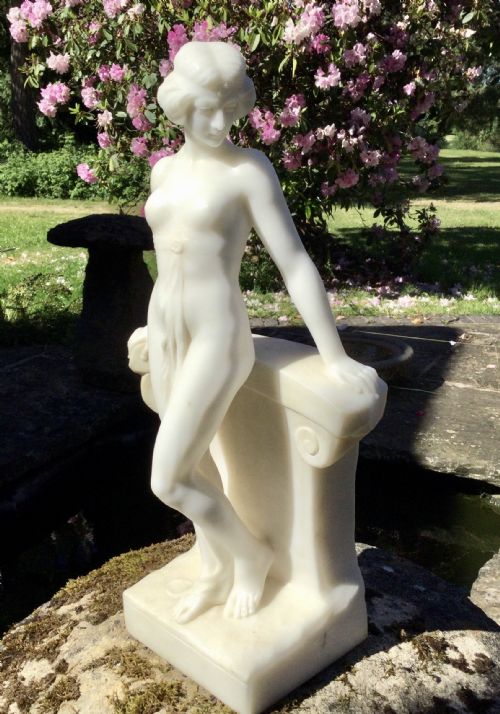
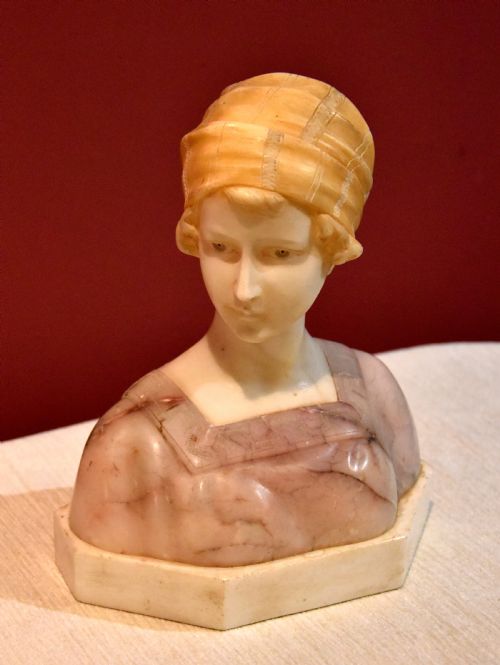
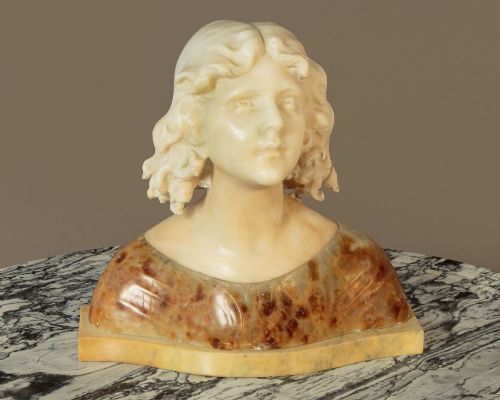
An art nouveau marble figure typically presents a carved depiction of a female subject, often rendered as a bust or standing nude. These works frequently date from the late nineteenth century through the early twentieth century, spanning periods from Victorian production to Art Deco.
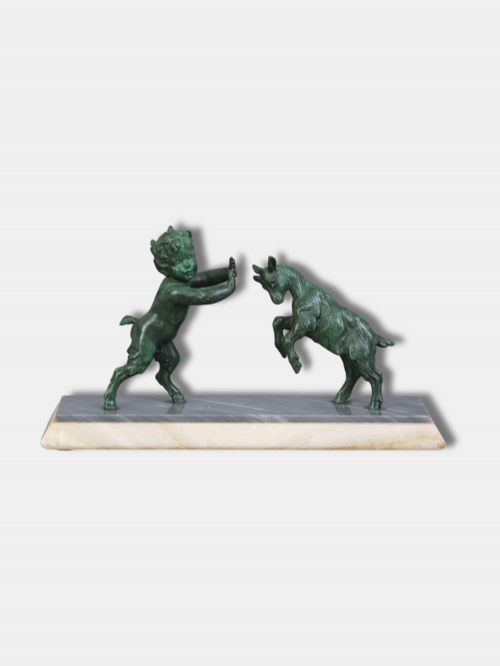
The form often integrates carved stone with cast metal elements. Figures regularly sit atop circular or rectangular bases made of contrasting green or dark stone.
Subjects range from allegorical maidens and nymphs to specific titled characters. Many examples originate from French and Italian workshops active during the Belle Epoque.
Materials and construction methods
Makers shaped the primary subjects from white marble, Carrara marble or translucent alabaster. Artisans carved these stones by hand to achieve soft drapery, hair and facial expressions.
Foundries cast accompanying metal components in bronze, gilt bronze, silvered spelter or ormolu. These metal parts were often patinated or gilded before being joined to the stone bases.
Among the elegant maidens and classical busts, sculptors also immortalised a lobster boy.
Distinctions in craftsmanship and design
The choice of materials also elevates a piece, particularly when workshops combined white marble or alabaster with richly veined portoro or verdi green marble bases.
August Moreau·Affortunato Gory·Emile Carlier·Henri Godet·Georges Van Der Straeten·Georges-Charles Coudray·Fritz Kochendorfer·Carl Kauba·Ernst Barrias·Eugène Désiré Piron·Emmanuel Villanis·Charlotte Monginot·R. Lusili
The Art Nouveau Marble Figure Glossary
- Alabaster
- A fine-grained, translucent stone favoured for soft figurative carving. It allows light to penetrate slightly beneath the surface.
- Spelter
- A zinc-based alloy commonly used as a cost-effective alternative to bronze for sculptural figures. It is often painted or electroplated to resemble bronze.
- Patinated bronze
- Metal sculpture treated with chemicals to produce a specific surface colour or tone. This finish protects the metal and adds visual depth.
- Portoro marble
- A distinctive black Italian marble with prominent golden veins. It frequently forms the heavy base for mixed-media sculptures.
Art Nouveau Marble Figure: Frequently Asked Questions
How do I clean an art nouveau marble figure?
Dust the stone gently with a soft, dry brush to prevent dirt settling into porous areas. Avoid using household detergents or excess water on both marble and alabaster surfaces.
Metal parts require equally gentle care without abrasive polishes. Keep these sculptures away from direct heat sources to prevent cracking in the stone.
Where were most of these sculptures made?
The majority of these pieces originate from workshops in France and Italy during the late nineteenth and early twentieth centuries. Parisian foundries and Italian carving studios produced the bulk of figurative works from this period.
Artists trained in classical academies often worked between these countries, combining Italian stone carving with French metal casting techniques.
Are these figures solid marble?
Many figures are carved entirely from solid marble or alabaster, particularly portrait busts and full-length female statues. Other examples combine a stone body with metal elements such as bronze drapery or wings.
Base sections frequently consist of a contrasting green or dark marble to support the main sculpture.
How can I tell the period from the style?
Works from the eighteen nineties lean towards classical revival and ornate Victorian details. Pieces from nineteen hundred onwards display characteristic whiplash lines and naturalistic floral motifs typical of the movement.
Later examples from the nineteen twenties introduce sharper, more geometric tendencies associated with early art deco designs.