



Vienna Style Porcelain
Vienna style porcelain pieces are richly painted decorative objects depicting classical and mythological scenes, prized by collectors for their intricate hand-painted detail and generous gilding.
Vienna Style Porcelain
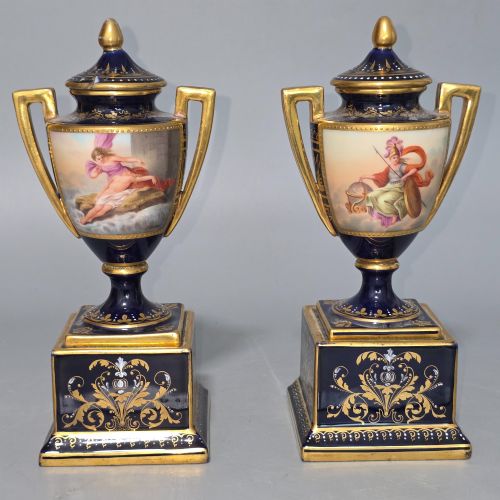
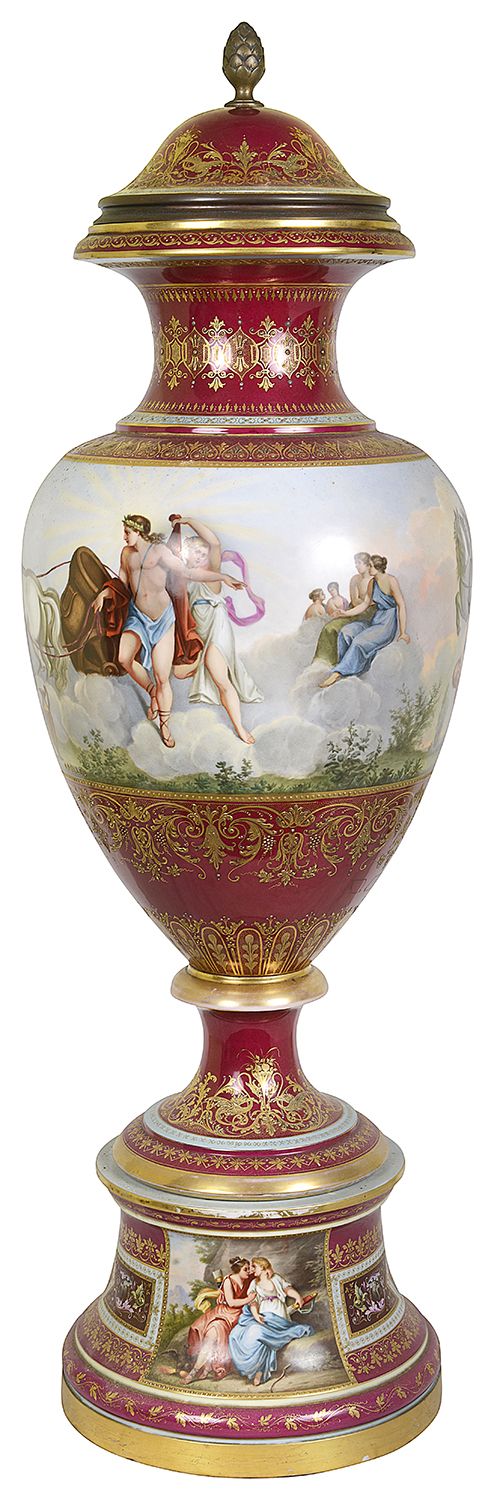
When you search for Vienna style porcelain, you encounter a selection of decorative ceramics that typically take the form of cabinet plates, chargers, lidded vases, and urns. These pieces often feature mythological, classical, or literary subjects painted across the surface in vibrant colours.
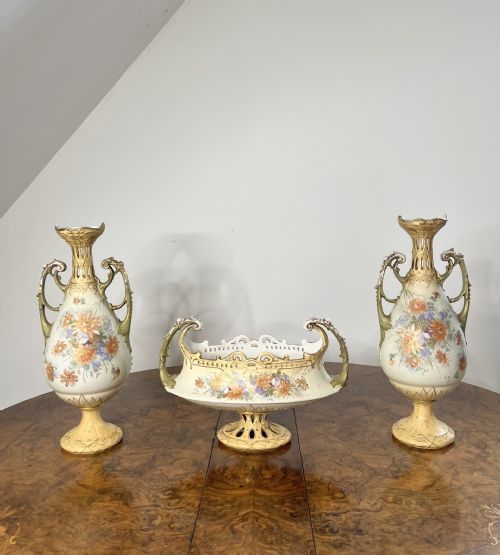
The objects appearing on this page originate predominantly from the nineteenth century, including specific dates ranging from 1850 through to 1920. Forms vary from single decorative chargers and cabinet plates to matched pairs of large urns and garniture sets.
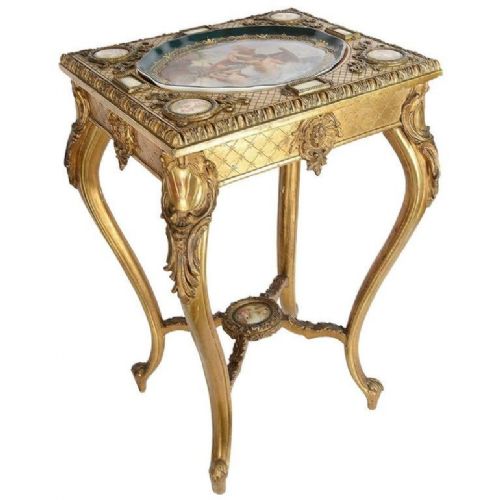
Stylistically, these items draw heavily upon Neoclassical, Empire, and Rococo Revival designs, reflecting the historicism popular during the Victorian era. Many pieces incorporate elaborate mounts of ormolu or sit within giltwood frames.
Materials and technique
The foundation of these objects is hard-paste porcelain, which is shaped into plates, vessels, and tables before being glazed and fired. Artisans then applied detailed hand-painted pictorial scenes, frequently depicting named figures or dramatic narratives.
Gilding plays a major role in the decoration, utilising gold leaf and heavy gold highlights to frame the central painted reserves. Cobalt glaze and enamel colours are also applied to enhance the borders and ground colours of the porcelain body.
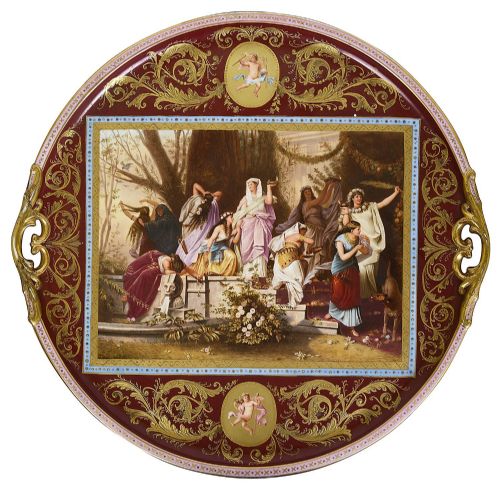
Tristan dies on a plate while Bacchus keeps company with Ariadne.
Evaluating quality
Quality in these ceramics rests primarily upon the skill of the hand-painted artistry shown in the central pictorial subjects. Pieces that display finely rendered facial expressions, anatomical accuracy, and detailed drapery stand apart from simpler decorative output.
The application and tooling of the gilding also determine the tier of the piece. Dense, burnished gold leaf and complex raised enamel work indicate superior craftsmanship compared to flat, unornamented painted borders.
F. Koller·Johner·C. Kiesel·Wagner
The Vienna Style Porcelain Glossary
- Cabinet plate
- A decorative plate intended for display on a wall or within a cabinet rather than for dining use. These often feature elaborate painted scenes and pierced rims.
- Garniture
- A set of matching decorative vases or urns, usually numbering three, designed to be displayed together on a mantelpiece or sideboard.
- Cobalt glaze
- A deep blue metallic oxide glaze applied beneath or over the glaze to provide a rich background colour. It frequently contrasts with heavy gilding.
- Ormolu
- Gilded bronze used for decorative mounts, handles, and stands attached to porcelain vessels and tables. It provides structural support and visual ornamentation.
- Charger
- A large decorative plate or dish used primarily for display. In these listings, chargers frequently display complex narrative figure scenes.
Vienna Style Porcelain: Frequently Asked Questions
How do I identify Vienna style porcelain?
Look for heavily gilded borders, cobalt blue grounds, and finely executed hand-painted classical or mythological scenes across plates, urns, and chargers.
Many pieces also date from the nineteenth century and bear signatures from individual painters or decorative studio markings.
Were these pieces made in Vienna?
The original Imperial manufactory in Vienna closed in the early nineteenth century, but subsequent factories across Europe continued producing wares in the same aesthetic.
These later items are designated as Vienna style, capturing the neoclassical forms and painterly techniques of the earlier period.
How should I display large vases and urns?
Large urns and garniture sets require stable surfaces such as heavy sideboards, mantelpieces, or dedicated pedestals where their painted details remain visible.
Because many examples incorporate delicate ormolu mounts and gold leaf, positioning them away from direct sunlight preserves the enamel colours.
What subjects appear on cabinet plates?
Common subjects include scenes drawn from classical mythology, opera, and literature, such as portraits of historical or theatrical figures.
Titles often reference specific stories, including classical deities, tragic deaths, and dramatic narratives painted within elaborate gilt borders.