
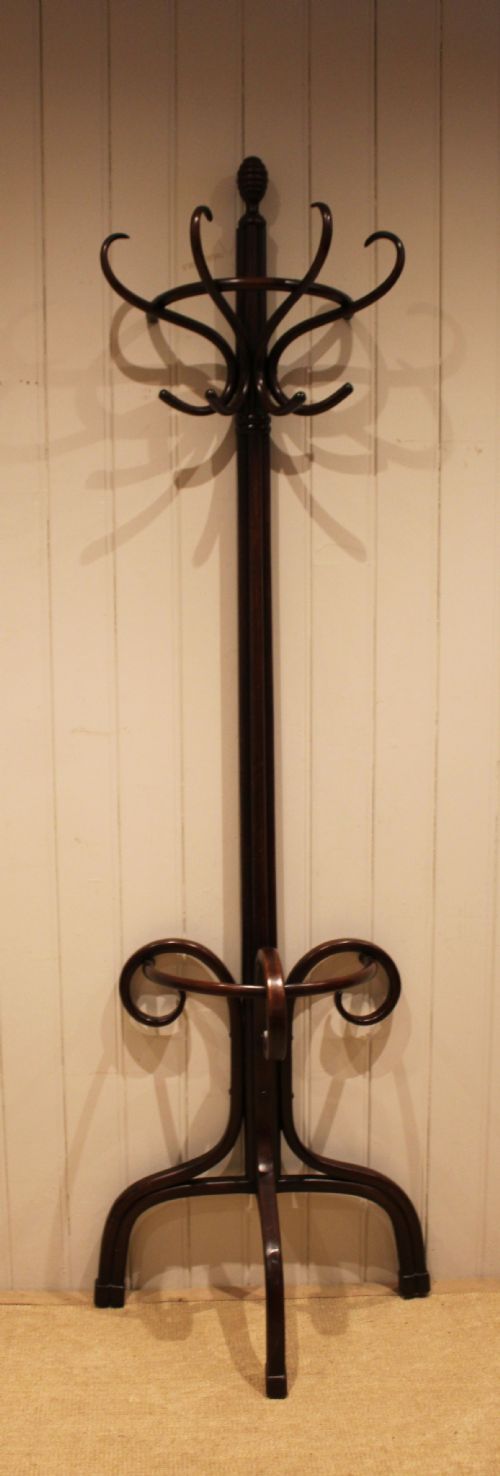


Vienna Bentwood Coat Stand
A vienna bentwood coat stand brings lightness and structural ingenuity to an interior, offering practical hanging space through steam-bent curves of timber.
Vienna Bentwood Coat Stand
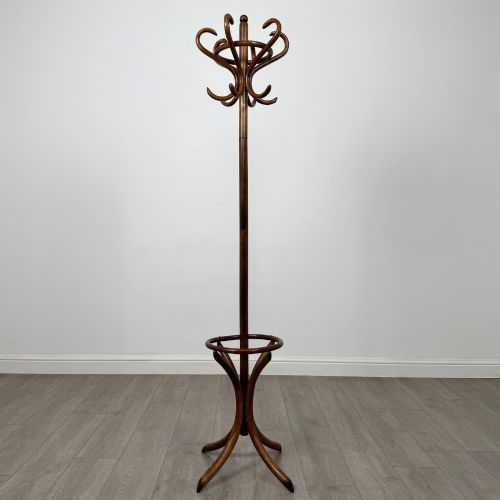
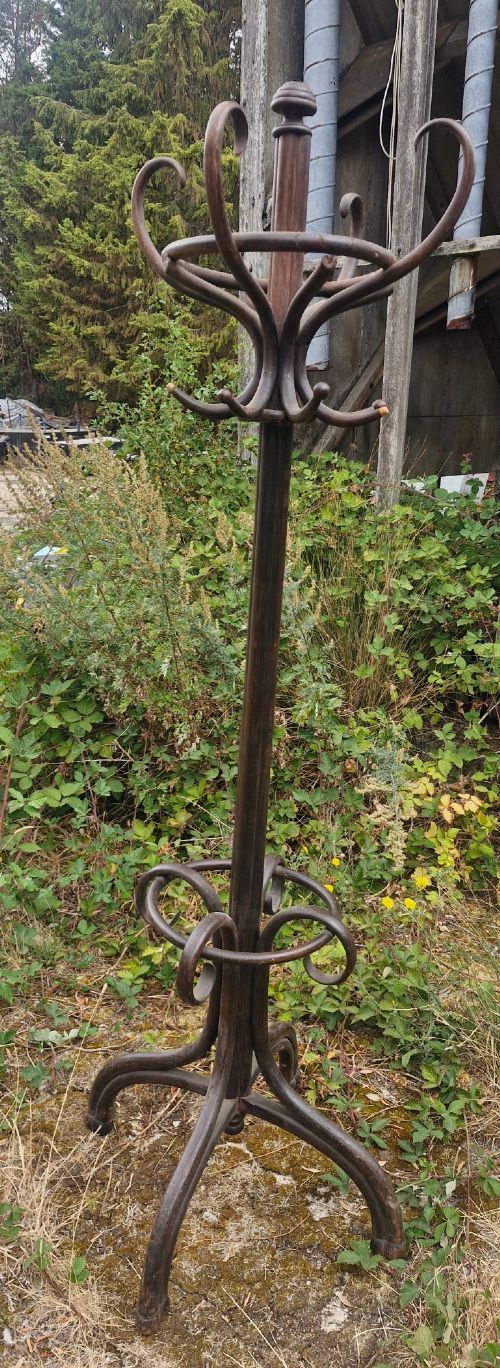
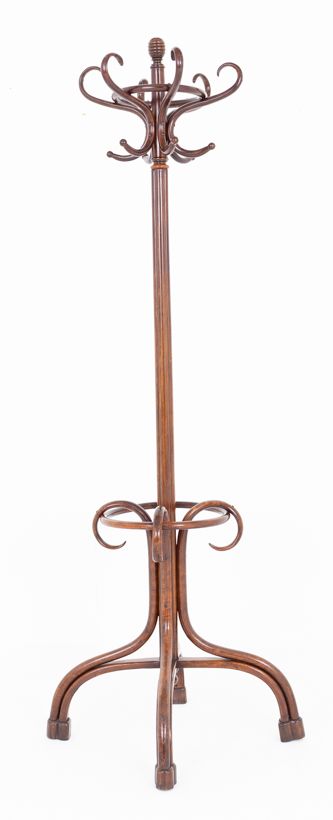
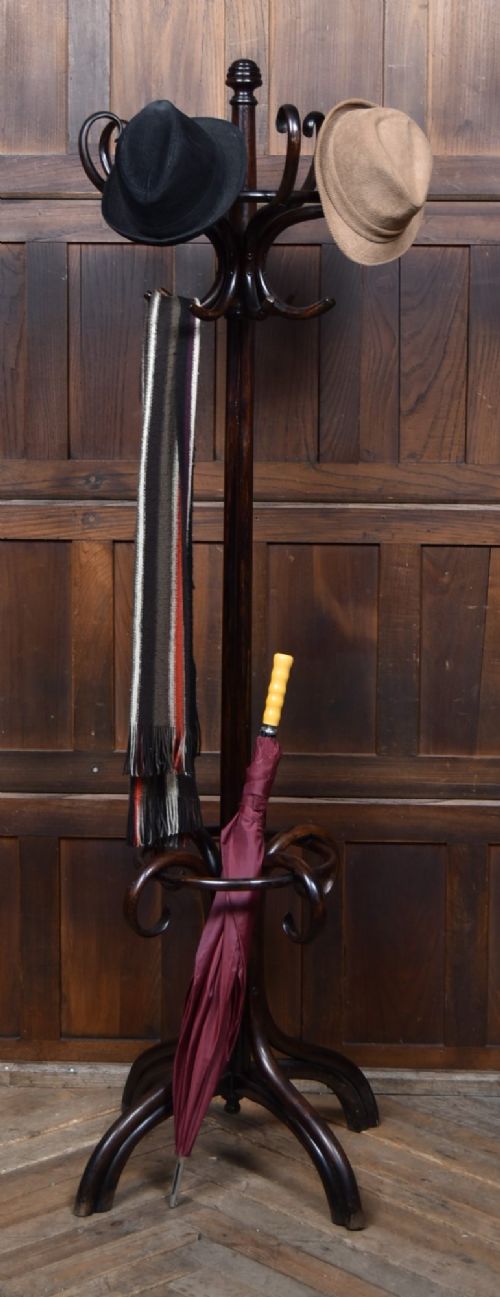
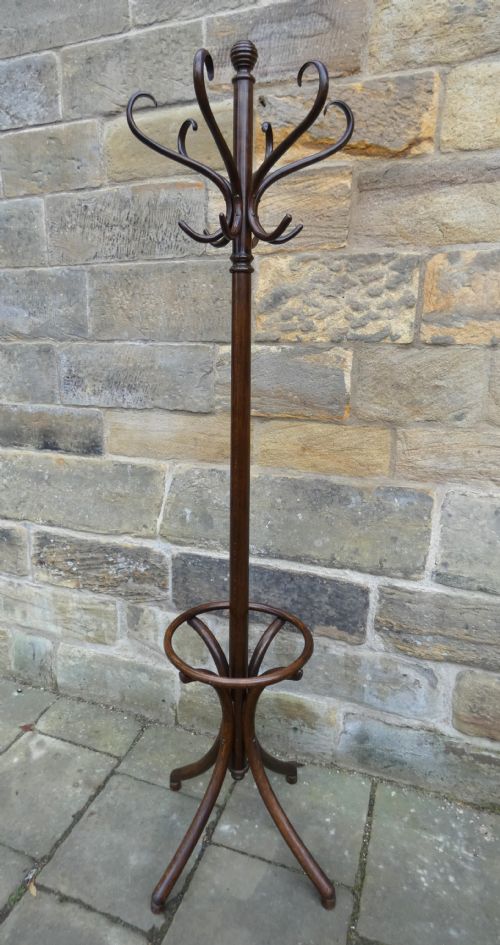
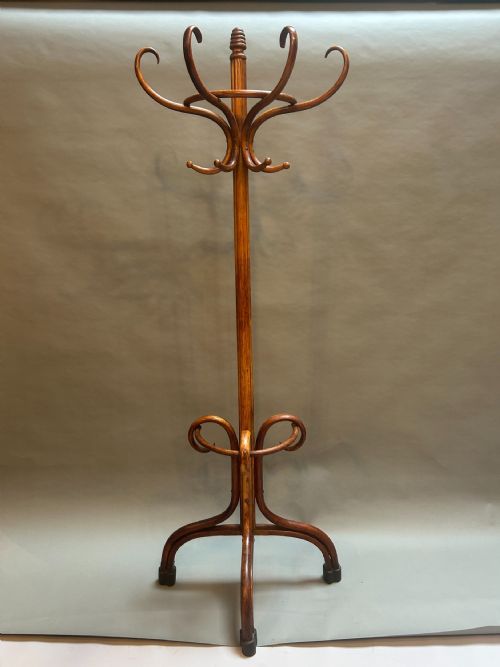
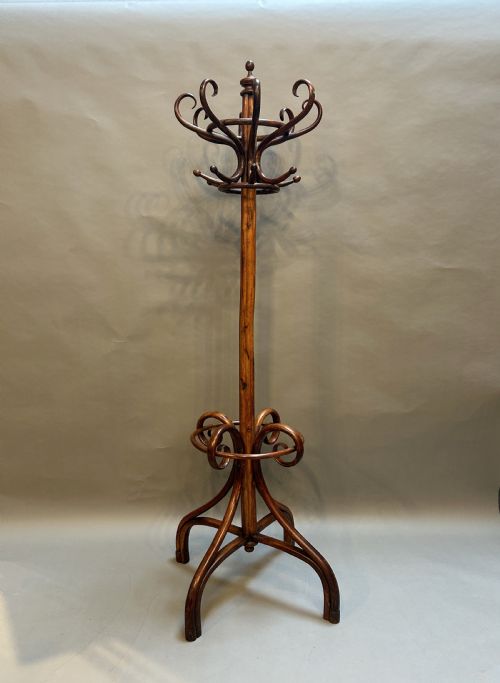
When you search for a vienna bentwood coat stand, you enter a field defined by steam-bent timber and slender vertical forms designed for hallway utility. These pieces emerged from late nineteenth and early twentieth century production, spanning the Victorian, Edwardian, and Art Nouveau eras up to the nineteen-thirties.
You are most likely to meet tall freestanding designs configured for coats and hats, often featuring revolving top sections or demi lune formats that sit flush against a wall. The forms rely on curved uprights and branching hooks rather than heavy carving, presenting an airy silhouette derived from Austrian and Viennese workshops.
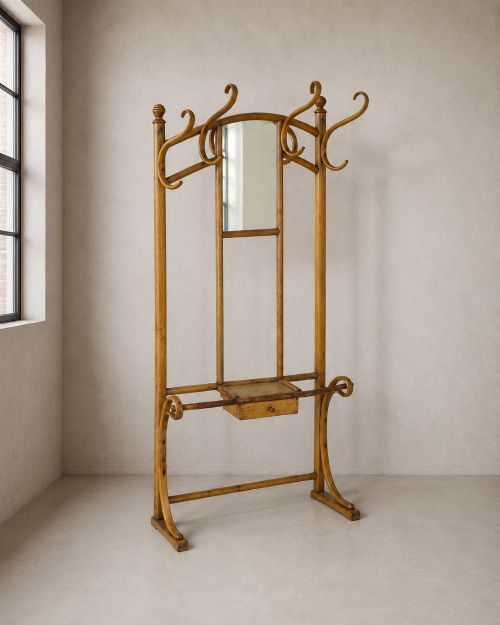
The objects listed range from simple upright coat stands to elaborate hall stands combining bent timber with glass or specialised rack configurations. Their longevity relies entirely upon the resilience of the curved wooden members and the soundness of the central stem.
How they were made
Construction centres on the use of beech and beechwood subjected to steam treatment, which allows solid timber to be bent into flowing radii without snapping the grain. Once pliable, the wood was locked into metal forms until it dried and retained its shape permanently.
Makers finished the bentwood using wood stain or polished wood finishes to protect the surface while highlighting the natural grain of the beech. Individual components were then joined with screws and threaded fittings, creating a rigid skeletal structure that could often be disassembled for transport.
Revolving hall stands allowed Victorians to play a merry-go-round with their bowlers.
What varies in quality
Quality reveals itself in the purity of the curves and the uniformity of the beech timber selected for the frame. Superior examples maintain tension and alignment across multiple bent branches, whereas lesser pieces show strain or distortion where the wood was forced.
The sophistication of the turning on the central column and the presence of maker attribution, such as Thonet or Fischel stamps, elevate certain pieces above standard workshop production. Attention to the joinery and the integrity of the rotating mechanisms also separates standard utility items from finer surviving specimens.
Thonet·Fischel
The Vienna Bentwood Coat Stand Glossary
- Bentwood
- Wood shaped by exposure to steam and pressure, allowing furniture makers to create continuous curves and loops. This technique eliminated traditional heavy joinery in favour of light, resilient frames.
- Demi Lune
- Half-moon shape designed to stand flat against a hallway wall. This configuration maximised floor space in narrow corridors.
- Thonet Style
- Furniture produced in the manner of the pioneering Austrian maker famous for steam-bent chairs and stands. It is characterised by minimalist structural curves and elegant economy of material.
- Hall Stand
- A piece of furniture combining coat hooks, hat receptacles, and sometimes umbrella storage or glass panels. These served as the functional greeting point in entrance halls.
Vienna Bentwood Coat Stand: Frequently Asked Questions
How do I date a bentwood coat stand?
Dating involves examining the construction methods, design labels, and overall form relative to periods like the Victorian era, Edwardian period, or early twentieth century. Simpler Victorian pieces often feature heavier turning, while later examples lean towards minimalist Art Nouveau styling.
Papers labels or stamped signatures from makers such as Thonet or Fischel provide more precise chronological markers.
Are bentwood stands sturdy enough for heavy coats?
The steam-bending process gives beech timber exceptional tensile strength and flexibility, allowing these slender structures to support considerable weight. The curved branches distribute loads down the central column rather than putting stress on individual joints.
Placing the heaviest items lower down maintains stability, especially on freestanding models with spreading wooden legs.
How do I care for antique bentwood furniture?
Care requires keeping the wood away from direct heat sources and drastic humidity changes, which can dry out the beech and loosen the steam-bent curves. Occasional dusting with a soft cloth and minimal application of appropriate wood polish preserves the finish.
Checking that connecting screws remain properly tightened ensures the structural integrity of the frame over time.