






Victorian Work Box Table
A victorian work box table combines a ladies sewing box with a useful side table, offering fitted compartments for needlework alongside a display surface.
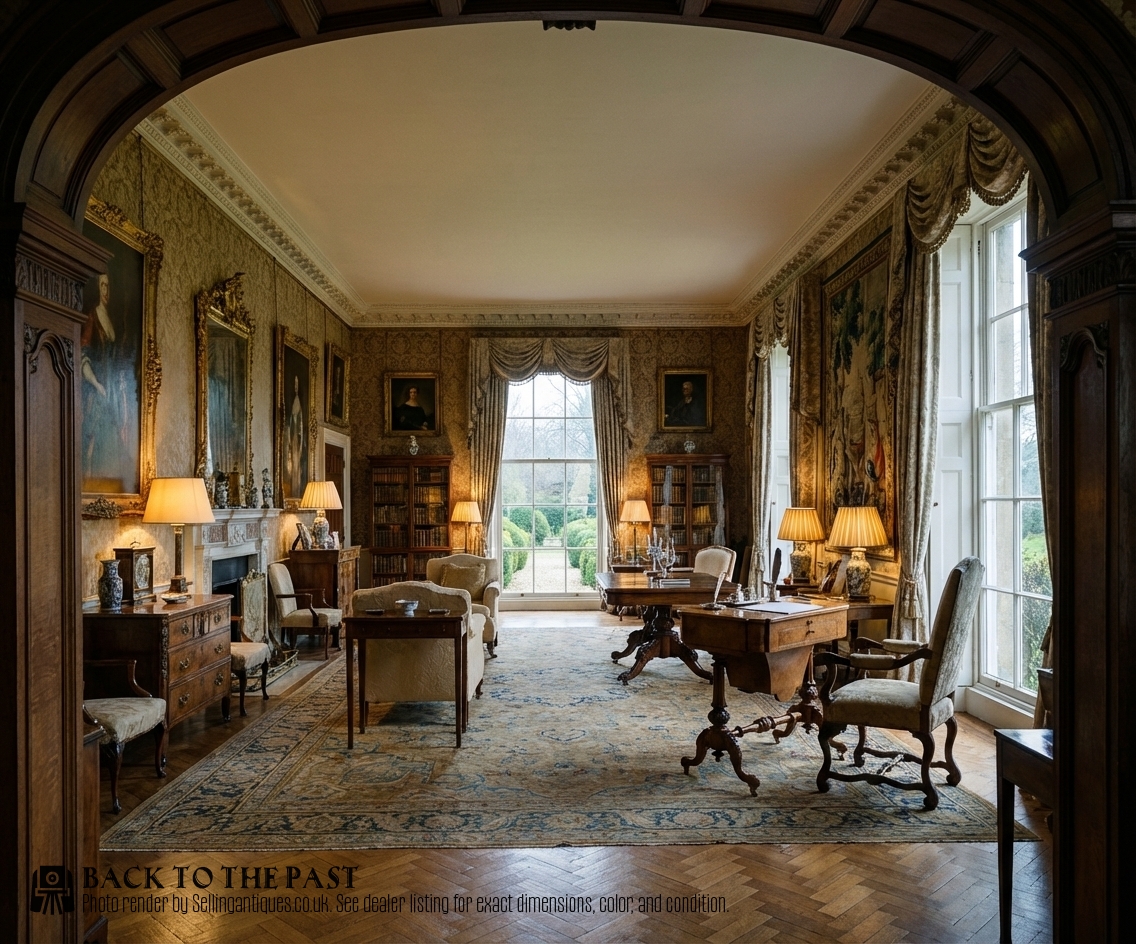
Victorian Work Box Table
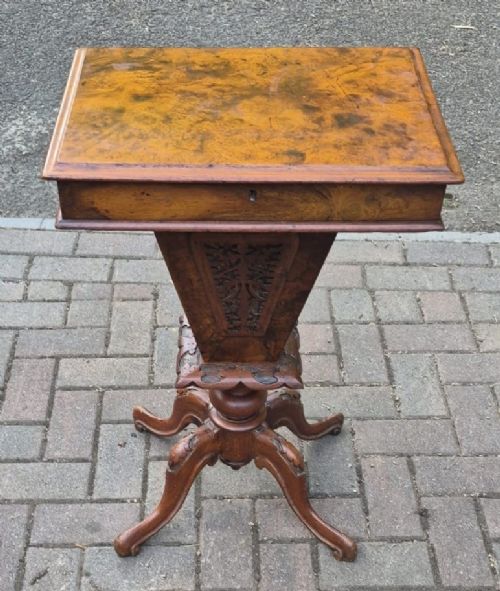
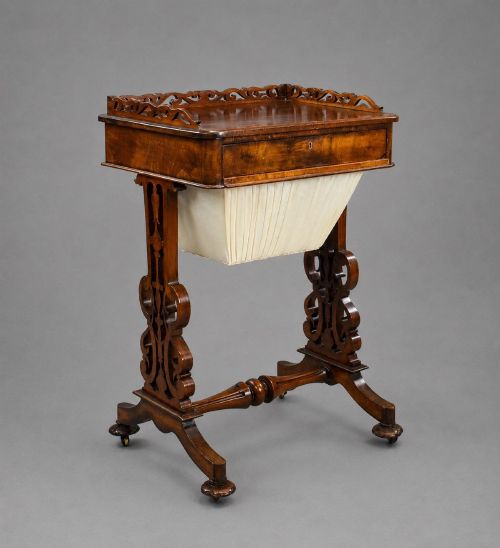
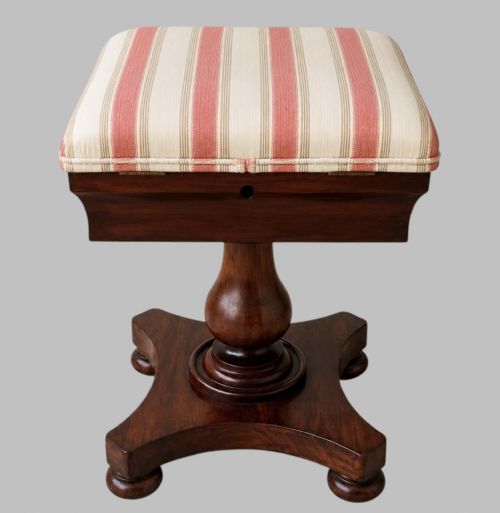
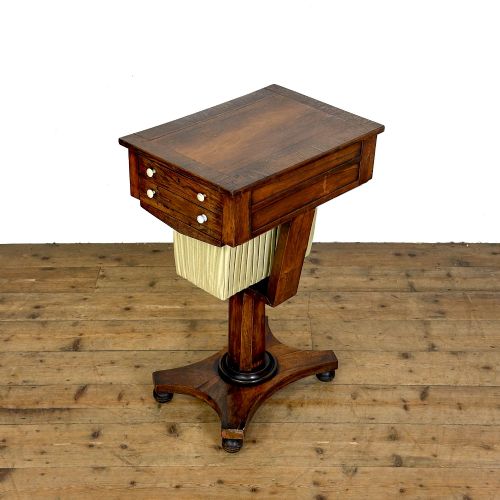
A victorian work box table brings together practical sewing storage and a compact occasional surface for the nineteenth century drawing room. These pieces combine a hinged top enclosing fitted compartments with a drop bag or internal tray for haberdashery and needlework. Buyers looking at this page will find occasional tables, sewing tables, and work tables spanning the nineteenth century.
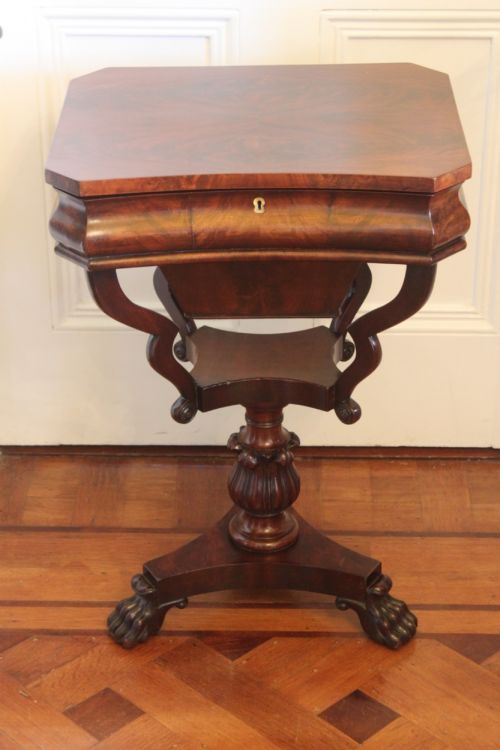
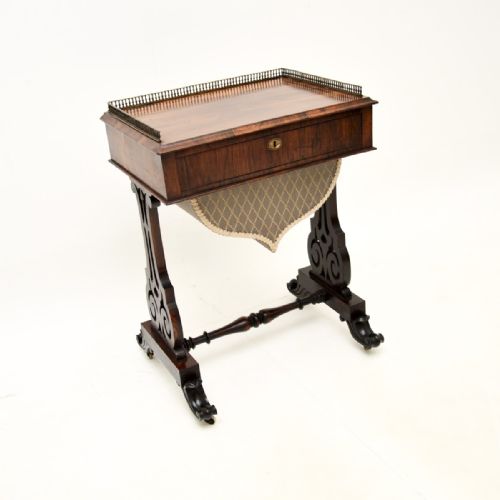
The forms range from rectangular pedestal designs to octagonal trumpet shapes and fold-over games tables. Most examples on offer date from the mid to late nineteenth century, reflecting the Victorian and William IV periods. Walnut, burr walnut, rosewood, and mahogany appear frequently across the pieces recorded in the listings.
Many items double as games tables with inlaid chess boards or card playing surfaces. Others incorporate specialised compartments for needles, cottons, and wools alongside a fabric or velvet lined work bag. Their dual purpose made them central pieces for ladies sitting rooms throughout the Victorian era.
Materials and Construction
Cabinet makers utilised solid timbers and decorative veneers over secondary woods to build these sewing tables. Burr walnut, flame mahogany, and rosewood supply the distinctive figured surfaces seen on both lids and column supports. Brass fittings secure internal lids and hinges while fabric and velvet line the interior compartments and hanging bags.
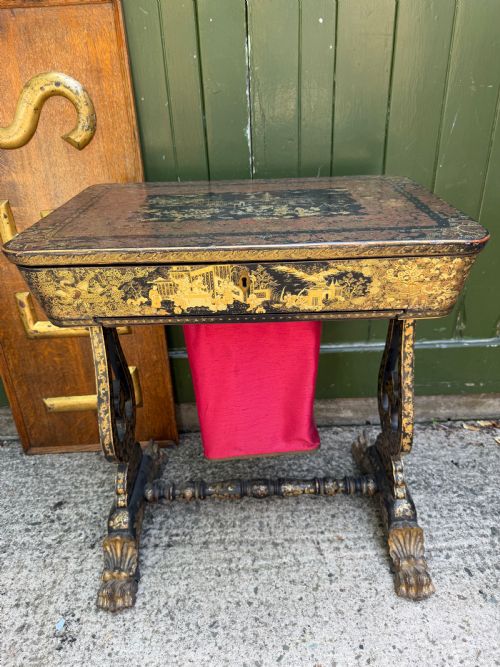
Certain examples incorporate marquetry inlay using lighter woods or mother of pearl to decorate the top surface. Japanned finishes also appear among the materials used to ornament the exterior woodwork. Turned columns and carved supports rest upon platform bases or multi-lobed feet.
Retail Price Guide 2026
Typical UK retail prices for victorian work box table, calculated from the Sellingantiques database of over a million retail prices indexed since 2003. This retail price guide relies exclusively on Sellingantiques data; no external sources or auction records are used, so the figures do not describe the wider market.
Nineteenth century examples incorporate occasional tables, sewing tables, and work boxes with occasional games boards.
Standards of Manufacture
The standard of timber selection and veneer matching defines the upper tier of these sewing tables. Grain patterns flow naturally across the surfaces, and finer examples use richly figured burr walnut or flame mahogany. Superior craftsmanship shows in the neatness of internal compartment dividers and the tight fit of joining timber.
The complexity of the piece alters its standing, with combination games and work tables demanding greater joinery skill. Integrated folding mechanisms and well-preserved original fabric or velvet linings elevate a piece. Solid construction in the pedestal column and stable foot attachments mark out better workshop production.
The Victorian Work Box Table Glossary
- Trumpet table
- A sewing table form featuring an octagonal or flared body widening towards a flat base, resembling the bell of a musical instrument. This shape became popular during the mid-Victorian period for holding wool and sewing gear.
- Burr walnut
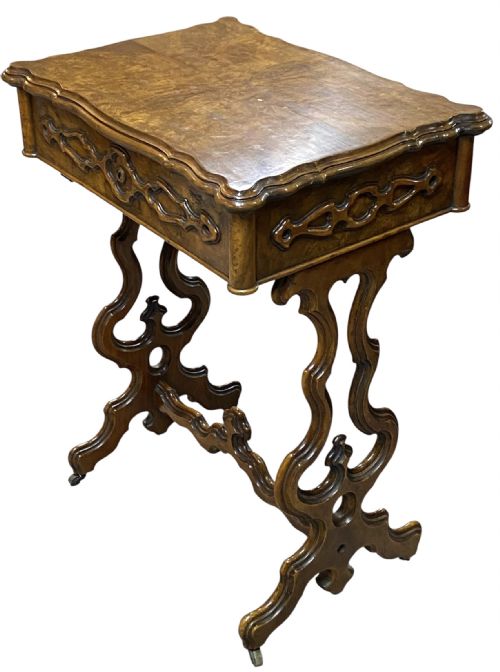
- A decorative timber sliced from walnut tree growths, producing swirling and mottled grain patterns. Cabinet makers used these highly figured veneers on the lids and bodies of superior Victorian tables.
- Haberdashery
- Small sewing requisites and tailoring supplies such as pins, threads, needles, and tapes. Tables designed for this purpose include specialised internal trays and fitted compartments.
- Marquetry
- The art of forming decorative patterns on wooden surfaces using thin veneers of different coloured woods. This technique adorns the tops of many Victorian work boxes and games tables.
- Japanned
- A European imitation of East Asian lacquerwork achieved through successive coats of varnish and heat curing. Surviving pieces display this glossy dark finish decorated with metallic designs.
Frequently Asked Questions
What is a victorian work box table used for?
These pieces served as dedicated stations for ladies to store sewing, needlework, and haberdashery items. The integrated box held threads and tools while the top provided a convenient surface for writing or light handwork.
Many designs also incorporated folding leaves or rotating chess boards to double as occasional or games tables. Their compact proportions suited the domestic spaces of nineteenth century parlours.
How do I identify a burr walnut sewing table?
Burr walnut displays distinctive swirling, mottled grain patterns created by knot growths on the tree. You will typically find these decorative veneers applied to the outer lid and body of the table.
Underneath the lid, the piece reveals fitted wooden compartments and a fabric work bag designed to hold textiles. The timber colour ranges from warm honey tones to deep rich browns.
Did these tables double as games tables?
Certain Victorian work tables incorporated reversible or fold-over tops featuring inlaid chess, draughts, or card playing surfaces. Lifting the playing board revealed the sewing storage compartment underneath.
This multi-functional design allowed households to maximise space in drawing rooms by combining entertainment and practical craft storage into a single item.