

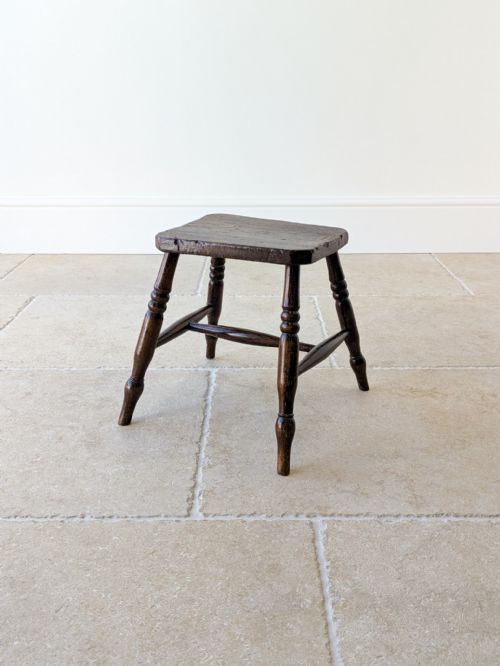
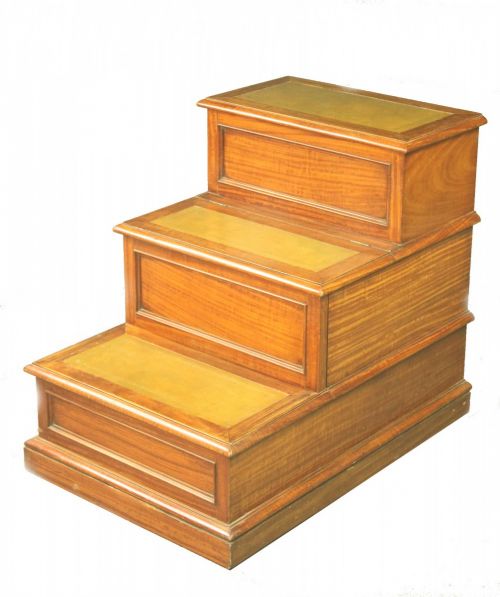
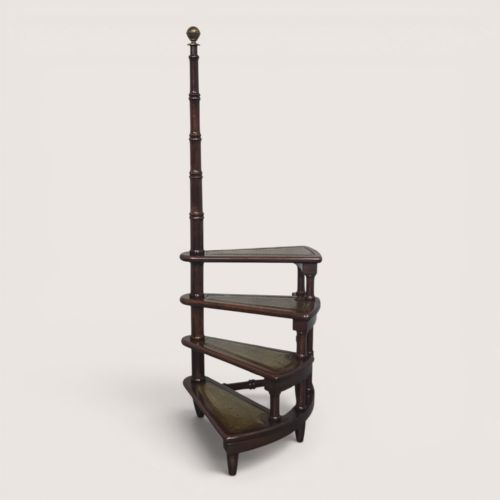


Victorian Wooden Steps
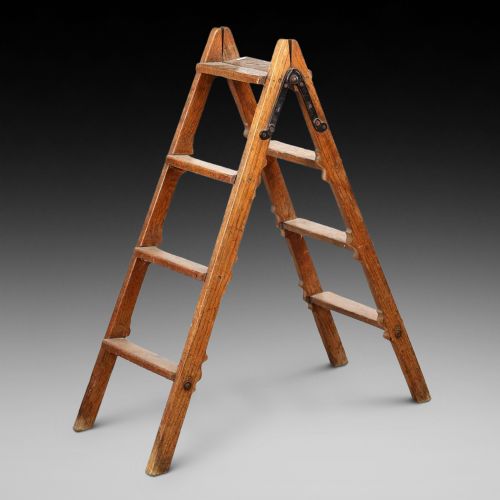
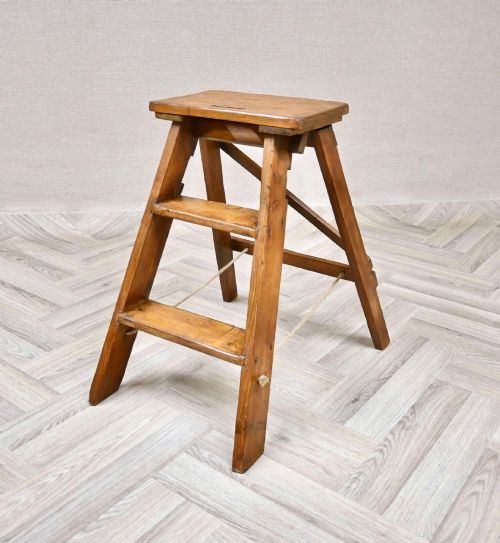
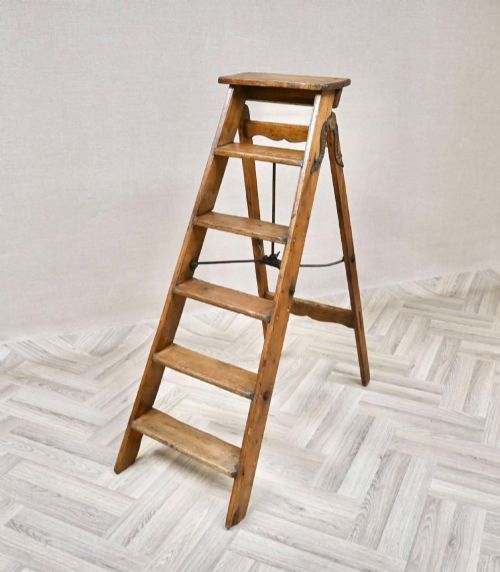
Victorian wooden steps offer practical elevation and traditional craftsmanship, bringing genuine period utility to any high-shelf library or multi-level interior.
Victorian Wooden Steps
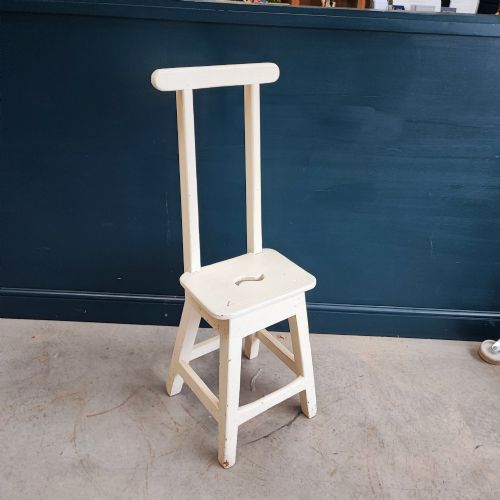
These pieces range from straightforward country pine designs to architectural Gothic Revival items and clever metamorphic library chair steps that double as seating. Alongside standard flights, the selection includes pieces with leather-topped treads and spiral supports from the nineteenth century.
How they were made
Joiners constructed these steps using solid timbers like mahogany, oak, fruitwood, and pine, often enhancing treads with inset leather surfaces for grip. Metal elements such as brass and iron appeared in hinges, rods, and folding mechanisms to ensure structural stability.
Construction techniques included dovetailed joints, turned supports, and folding frames designed for practical everyday use. Cabinetmakers also incorporated decorative flourishes such as part-ebonised details, marquetry, and Gothic Revival carving.
Victorian Wooden Steps Retail Price Guide 2026
Typical asking prices for victorian wooden steps among the pieces listed under this phrase on Sellingantiques today, from the lower quarter to the upper quarter. They describe what is for sale here now, not the wider market.
Some library chairs enjoyed a double life, transforming from a quiet spot to sit into a ladder for reaching top-shelf poetry.
What varies in quality
Quality in these items rests on the choice of primary timber, ranging from dense golden oak and fine mahogany down to utilitarian pine. The complexity of the mechanism, such as metamorphic folding actions or spiral turning, also separates standard items from more ambitious workshops.
The integrity of the structural joints and the preservation of original leather treads dictate the grade of a piece. Better examples retain their original surface patination and operational hardware without excessive modern reinforcement.
The Victorian Wooden Steps Glossary
- Metamorphic
- Furniture designed to transform from one object into another, such as a chair that unfolds into a flight of library steps. This ingenious design saved space in period libraries.
- Treads
- The horizontal upper surfaces of steps upon which a person places their feet. On library examples, these are frequently lined with leather.
- Gothic Revival
- An architectural and decorative style drawing on medieval forms, featuring pointed arches and heavy timber construction. Pieces in this taste often utilise oak.
- Commode
- A piece of furniture that often disguised its functional interior behind faux drawers. In this selection, such pieces occasionally align with bedroom or library steps.
Victorian Wooden Steps: Frequently Asked Questions
How were library steps used?
Library steps provided access to high bookshelves in tall private rooms and institutional spaces. Users climbed the timber treads to reach elevated volumes.
Some sophisticated versions doubled as seating or chairs until unfolded for climbing.
What woods are typical for these steps?
Mahogany and oak predominate across the nineteenth-century examples. Joiners also utilised pine, fruitwood, and satinwood depending on the intended room and budget.
Leather and brass frequently complemented the primary timbers on treads and hinges.
Are folding library steps stable?
Period folding steps relied on robust iron or brass hinges and locking mechanisms to remain secure under weight. Original joints were built to withstand regular domestic use.
Buyers should check that folding actions lock firmly into place before climbing.
What is a metamorphic chair?
A metamorphic chair is dual-purpose furniture engineered to convert between a seat and a set of steps. This clever format was popular in Victorian studies.
They allowed owners to save floor space while maintaining full library access.