



Victorian Wooden Coal Box
These Victorian wooden coal boxes combine practical fireside fuel storage with fine period cabinet-making.
Victorian Wooden Coal Box
A Victorian wooden coal box is a fireside accessory designed to store fuel neatly in the main living rooms of nineteenth-century homes. Buyers seeking a victorian wooden coal box will find practical household containers that double as decorative furniture items.
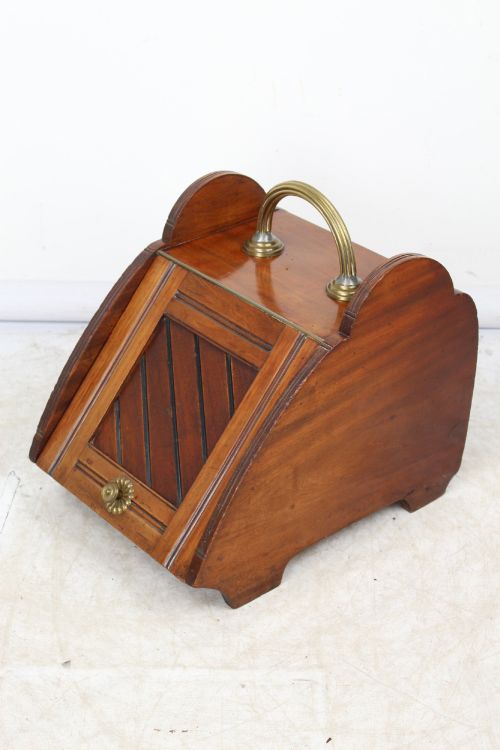
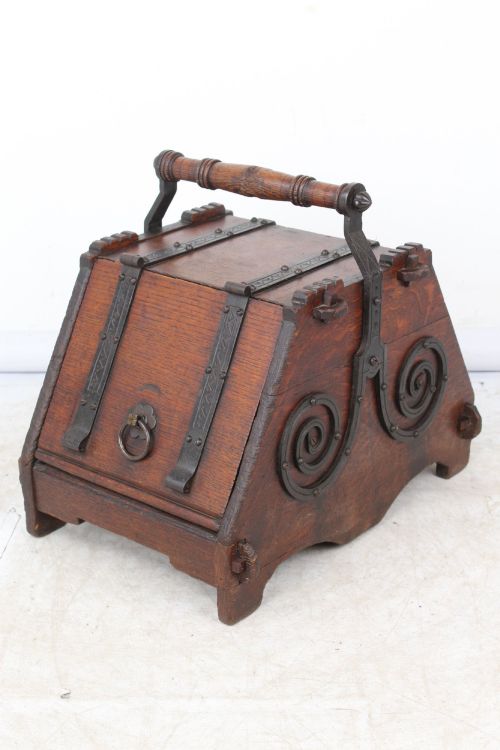
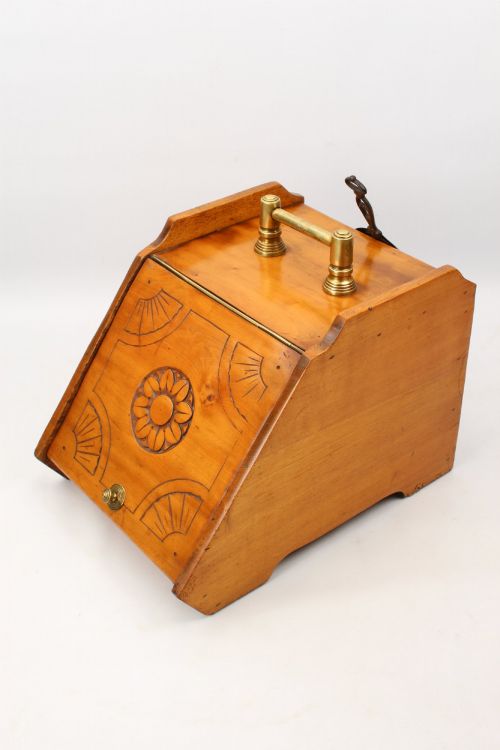
The pieces appearing on this page span the Victorian and Edwardian eras, encompassing formats from traditional scuttles to drop-front purdoniums. Makers of the period utilised durable timbers to house metal liners designed to contain coal dust and ash safely.
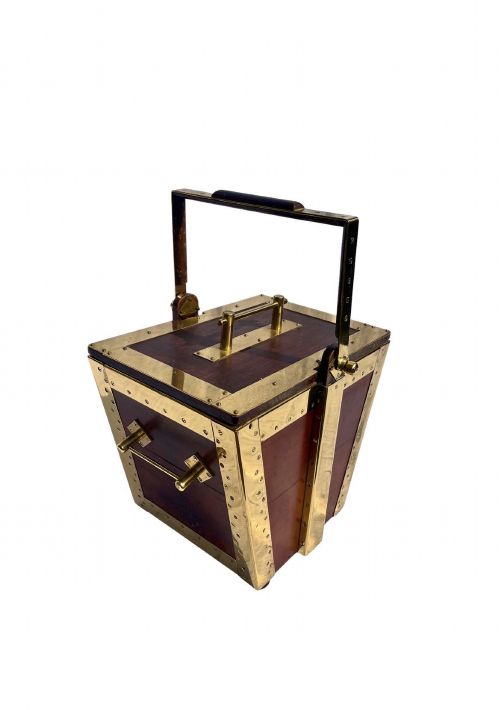
Beyond standard boxes, the selection includes novelty forms shaped like railway coal wagons alongside elaborately carved or inlaid receptacles. These variations reflect the Victorian desire to disguise utilitarian objects as refined parlor furnishings.
Materials and construction
Cabinet-makers constructed these fireside containers using dense domestic and imported hardwoods including oak, mahogany, walnut, and rosewood. Selected pieces feature decorative marquetry inlay, carved wooden fronts, or pollard oak veneers.
Functional durability relied upon internal metal liners and shovels designed to handle heavy fuel loads without damaging the surrounding timber. Brass handles, hinges, and ormolu mounts provide both structural reinforcement and decorative contrast against the dark woods.
Listings feature oak, mahogany, walnut, and rosewood timbers paired with brass mounts and metal liners across the Victorian and Edwardian periods.
Evaluating craftsmanship
Superior examples distinguish themselves through crisp wood carving, intricate marquetry inlay, and the retention of original metal liners and matching shovels. The integration of robust brass mountings and smooth mechanical action in purdoniums marks the work of better workshops.
Simpler constructions rely on plain timber panels with basic metal fittings, serving a purely utilitarian purpose by the hearth. Quality ultimately rests in the harmony between decorative cabinet-making and the durable hardware required for daily fireside use.
Christopher Dresser
The Victorian Wooden Coal Box Glossary
- Purdonium
- A specialised coal box featuring a sloping drop-front door that tilts forward to release fuel. This cabinet form kept coal neatly concealed beside the fireplace.
- Coal Scuttle
- A deep bucket-shaped container, often fitted with a fixed top handle and a smaller grab handle at the back for tipping fuel. They frequently include a matching shovel stored in an external side sleeve.
- Metamorphic
- A descriptive term for furniture that transforms into another object or reveals hidden compartments. In this context, it refers to scuttles with clever mechanical tipping actions.
- Marquetry Inlay
- The art of applying decorative pieces of contrasting wood veneer onto a solid timber carcase to form geometric or floral patterns.
- Humidor
- A specialised storage box, though listed here in humorous novelty forms resembling miniature railway coal wagons rather than tobacco containers.
Victorian Wooden Coal Box: Frequently Asked Questions
What is a purdonium?
A purdonium is a specific type of enclosed wooden coal box featuring a hinged, dropping front panel. This design allows coal to slide forward easily without requiring the lid to be lifted entirely.
Inside, these cabinets house removable metal liners that catch dirt and make replenishment straightforward.
How were these boxes used?
Victorian households kept these containers by the fireplace to store fuel close at hand without littering the hearth. The enclosed wooden housing kept coal dust contained inside the room.
Accompanied by metal shovels and scoops, they allowed servants or homeowners to top up fires cleanly.
Do they still include the original liners?
Many surviving examples retain their original metal liners, which protected the wooden structure from moisture and coal residue. Finding a matching shovel or scoop alongside the box is also common.
These interior components are essential for practical modern use and preserve the integrity of the piece.
How do I date a wooden coal box?
Dating relies on identifying timber choices, stylistic revivals, and construction methods characteristic of the nineteenth and early twentieth centuries. Pieces displaying heavy Gothic Revival carving or elaborate marquetry typically point to the Victorian period.
Edwardian iterations often feature lighter oak frames and simpler brass mountings suited to twentieth-century interiors.