
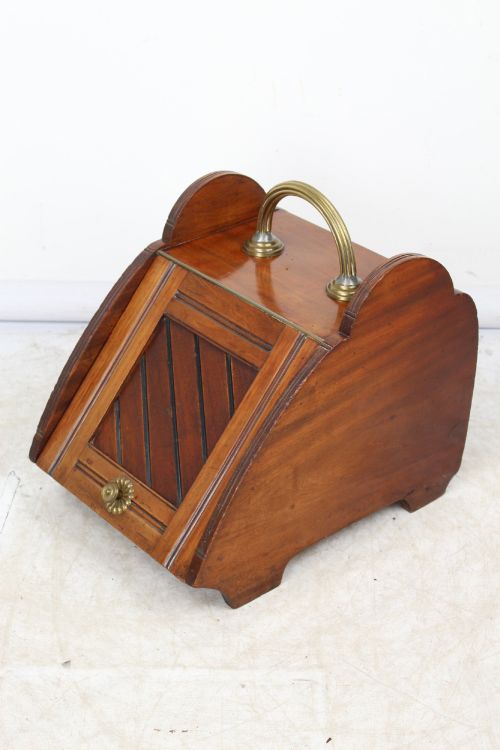
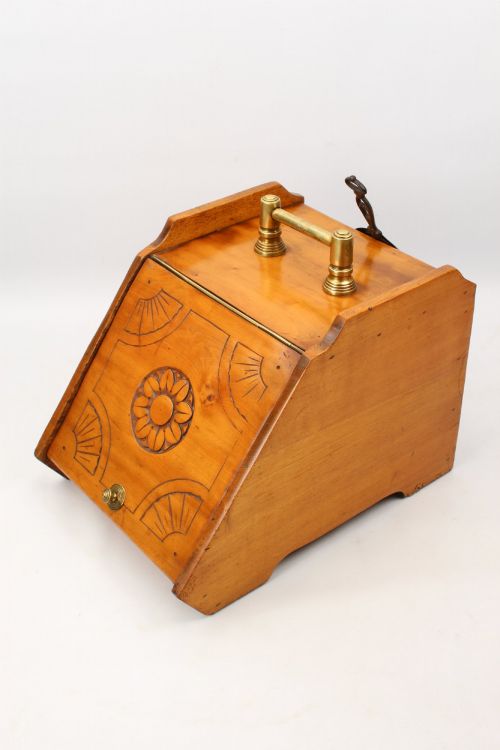


Slanted Wooden Purdonium
A slanted wooden purdonium is a practical fireside storage box designed to hold coal or logs neatly beside your hearth.
Slanted Wooden Purdonium
When you search for a slanted wooden purdonium, you are looking at functional fireside accessories designed to store coal or fuel near a fireplace. These pieces date from the eighteenth century through to the Edwardian era, with Victorian examples appearing most frequently on this page.
The form typically combines a hinged slanted lid or front panel with metal liners and carrying handles. You will find items described variously as coal boxes, bunkers, scuttles, and purdoniums, often originating from English or Scottish workshops.
How they were made
These items are constructed predominantly from solid timbers such as oak, walnut, and mahogany, frequently enhanced by marquetry inlay or carved wooden fronts. Craftsmen paired these woods with durable iron and brass mountings, including handles, hinges, and accompanying shovels.
The defining feature is the slanted access point, which required precise carpentry to ensure the front lid or flap operated smoothly within the wooden carcase. Metal linings were fitted internally to contain the coal dust and protect the timber from moisture.
What varies in quality
Quality in a slanted wooden purdonium rests primarily on the selection of timber and the refinement of the metal mounts. Pieces fashioned from figured walnut or detailed marquetry inlay represent a higher tier of craftsmanship than plain oak or generic storage boxes.
The integrity of the internal metal liner and the solidity of the brass handles also distinguish better examples. Finer pieces retain their original shovels and exhibit crisp carving or secure, flush-fitting joints on the slanted doors.
The Slanted Wooden Purdonium Glossary
- Purdonium
- A decorative household container specifically designed for storing coal by the fireplace. This term came into common usage during the Victorian period.
- Marquetry inlay
- Decorative patterns formed by fitting small pieces of contrasting veneer into the wooden surface. It appears on finer Edwardian and Victorian examples.
- Brass mounting
- Metal fitments made of brass used for handles, hinges, and protective corners. These elements provide both structural reinforcement and visual contrast against the dark wood.
- Scuttle
- A utensil or box for holding coal, often featuring a sloping front or an open scoop shape. Many versions include a dedicated compartment to hold a small shovel.
Slanted Wooden Purdonium: Frequently Asked Questions
What is a slanted wooden purdonium?
A slanted wooden purdonium is a traditional fireside container built to house coal or logs next to a fireplace. They combine wooden cabinetry with metal linings and handles for daily domestic use.
Most surviving examples date from the Victorian and Edwardian eras, constructed from woods like oak, walnut, and mahogany with brass or iron mounts.
How were these coal boxes used?
These boxes sat by the hearth to keep fuel close at hand while concealing the dirt and dust associated with coal. The slanted front or lid allowed easy access for shovelling fuel directly into the fire.
Many included a matching metal shovel stored in a side rack or compartment, keeping the fireside tidy when not in use.
How do I date a wooden purdonium?
Dating relies on observing the timber choice, decorative styles, and construction methods. Georgian and eighteenth-century examples tend to be simpler oak bunkers, whereas Victorian and Edwardian versions often feature elaborate brass mounts, carved fronts, or marquetry inlay.
Terminology in the listings also guides the period, with terms like purdonium pointing towards the late nineteenth century.
Can I still use an antique purdonium for coal?
While originally built for solid fuel, many owners now utilise them as general storage boxes for items like logs, blankets, or magazines. The internal metal lining makes them practical for holding dry firewood.
Care should be taken to protect any fragile wood finishes or antique brass mounts from heavy wear if used actively.