

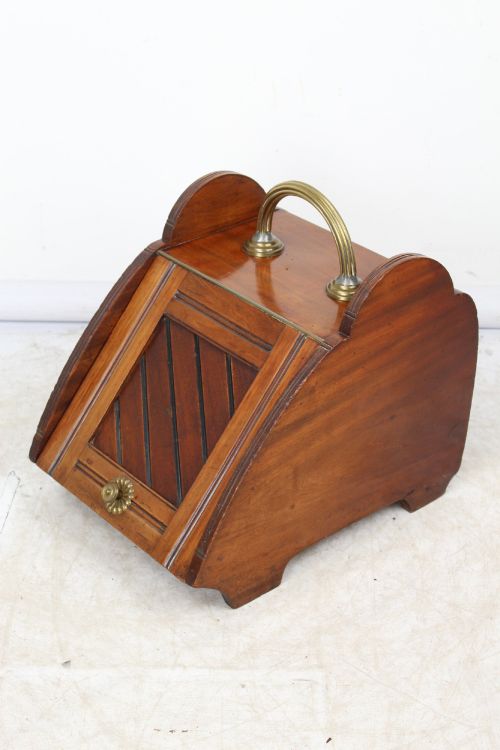


Brown Wooden Coal Box
A brown wooden coal box brings hearthside practicality and rich timber warmth to a room, storing fuel with nineteenth-century utility.
Brown Wooden Coal Box
A brown wooden coal box serves as a functional fireside container, housing solid fuel near the grate. These pieces range from simple country boxes to elaborate Victorian scuttles designed for formal reception rooms.
The selection on this page centres primarily on Victorian and Edwardian examples. You encounter traditional coal scuttles alongside purdoniums, log boxes, and novelty railway wagon storage pieces.
Makers utilised various regional timbers to suit different interiors, creating items that doubled as decorative furniture. Their primary purpose was keeping fuel contained while complementing the fireplace surround.
How they were made
Cabinet makers constructed these boxes using solid woods and veneers like mahogany, oak, walnut, and rosewood. Boxwood inlay frequently provides decorative contrast on the polished timber surfaces.
Metal components such as brass handles, hinges, and cast iron liners add structural durability to the wooden frames. Metamorphic mechanisms and drop-front doors reveal fitted metal interiors designed to hold fuel cleanly.
Brown Wooden Coal Box Retail Price Guide 2026
Typical asking prices for brown wooden coal box among the pieces listed under this phrase on Sellingantiques today, from the lower quarter to the upper quarter. They describe what is for sale here now, not the wider market.
Listings feature oak, mahogany, walnut, and rosewood, spanning the Victorian and Edwardian periods with rustic country and revival styles.
What varies in quality
Quality rests in the selection of cabinet timbers and the crispness of any inlay work. Finer items feature figured veneers, substantial brass hardware, and well-fitted original metal liners rather than plain utility construction.
The complexity of the form distinguishes standard boxes from exceptional pieces. Novelty items like railway coal wagon designs or metamorphic scuttles demonstrate higher joinery ambition than basic rectangular storage boxes.
The Brown Wooden Coal Box Glossary
- Purdonium
- A specialised cabinet for holding coal, usually featuring a sloping front drop-door and an internal metal liner. This form keeps dust contained beside the hearth.
- Scuttle
- A vessel designed for carrying and storing coal, often equipped with a hinged lid and a sturdy carrying handle. It sits beside the fireplace for easy access.
- Inlay
- A decorative technique where contrasting materials like boxwood are set into the surface of the primary wood. It creates geometric or floral patterns on the lid and panels.
- Metamorphic
- A descriptor for furniture that transforms from one form into another through mechanical action. In coal boxes, this often involves tilting or sliding mechanisms.
Brown Wooden Coal Box: Frequently Asked Questions
How do I use a coal box today?
These boxes provide practical storage for firewood logs, kindling, or modern fireplace accessories. They keep hearth clutter concealed within decorative period timber.
Many owners place them beside wood-burning stoves or open fireplaces as functional decorative accents in the room.
What woods were commonly used?
Cabinet makers relied heavily on oak and mahogany for everyday strength and rich grain patterns. Walnut and rosewood appeared in more formal, highly finished reception room pieces.
Boxwood inlay was frequently added to mahogany and rosewood surfaces to provide sharp geometric or floral contrast.
How do I date a coal box?
Dating relies on observing timber choices, hardware styles, and construction techniques typical of the Victorian and Edwardian eras. Finer inlaid details and brass fittings often point to specific late nineteenth-century workshops.
Unusual novelty forms, such as railway wagon designs, typically date from the final decades of the nineteenth century.