


![Pen and Ink Sketch - Female Nudes by William Edward Frost [1810-1877]](https://www.sellingantiques.co.uk/photosnew/dealer_kendallhouse/dealer_kendallhouse_full_1758970795762-8493507346.jpg)


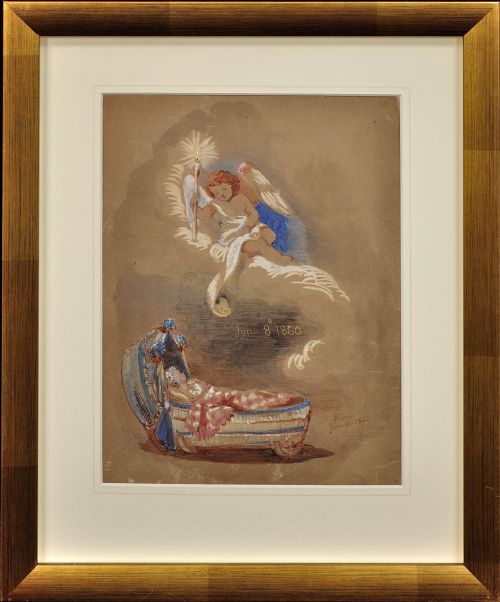
Victorian Watercolour Sketch
A victorian watercolour sketch captures the spontaneous atmosphere of nineteenth-century life on paper through fluid brushwork and rapid observation.
Victorian Watercolour Sketch
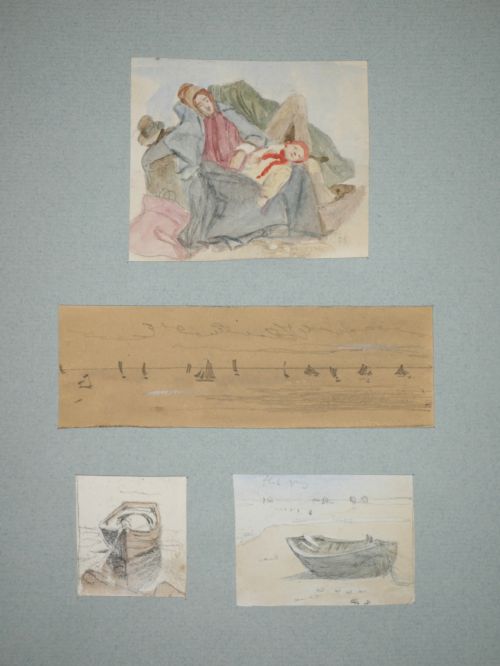
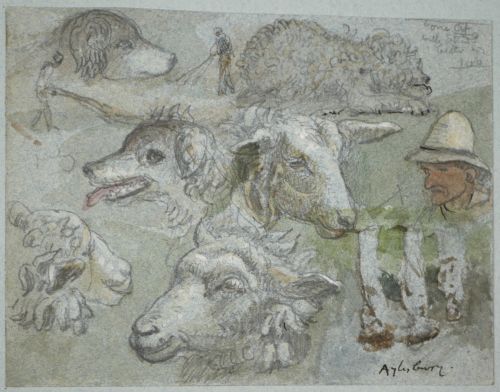
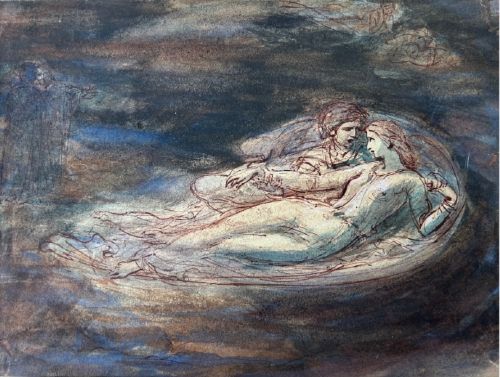
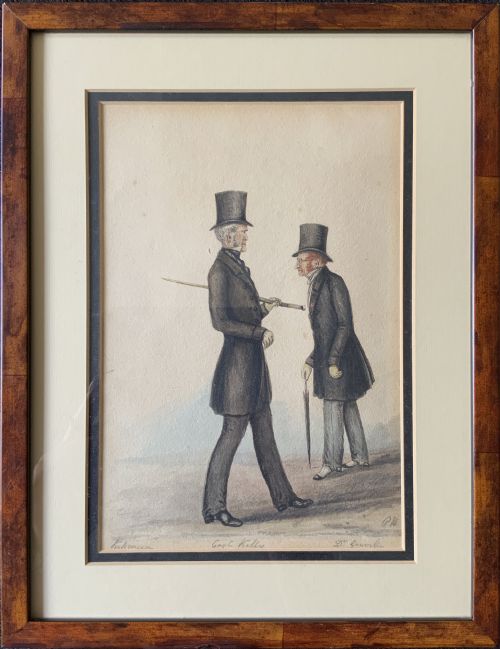
A victorian watercolour sketch brings together original paper works, drawings, and paintings created across the nineteenth century, ranging from rapid maritime notes to detailed topographical views. Buyers search for these pieces to acquire intimate, immediate windows into past centuries, executed directly by hand.
The versions most commonly met on this page include nineteenth-century marine scenes, coastal landscapes, and portrait studies. These take the form of framed artwork and works on paper, often bearing the signatures or attributions of period artists.
Subjects stretch from English seaside vistas and Venetian canals to botanical gardens and historical literary themes. Each piece offers a distinct record of nineteenth-century observation, preserved behind glass within wooden or gilt frames.
Materials and technique
Artists worked primarily on paper supports, applying watercolours alongside graphite pencil, pen and ink, and wash. These media allowed practitioners to build transparent colour washes or define rapid linear contours on the spot.
Finished works were frequently housed in wooden or gilt wood frames, sometimes protected beneath glass to preserve the delicate pigments of the period.
Several sketches capture everyday nineteenth-century life, including figures battling the rain with umbrellas and young girls reading newspapers.
Factors of quality
Quality rests upon the sureness of the hand and the economy of line, separating confident, rapid observations from stiff or laboured copies. The best examples display a mastery of watercolour wash and pencil structure that conveys light and movement with minimal effort.
Condition and presentation also define the upper tier, where original paper surfaces remain stable and well-preserved within appropriate period framing. The distinction lies in how vividly the artist has captured atmosphere and form without overworking the medium.
James Smetham·Princess Alice Maud Mary·William Frederick Settle·William Edward Frost·Hercules Brabazon Brabazon·Tom Dudley·Thomas Bush Hardy·Sir William Charles Ross·Thomas Lound
The Victorian Watercolour Sketch Glossary
- Watercolour
- A paint consisting of pigment suspended in a water-soluble vehicle, applied to paper to create transparent washes of colour.
- Graphite
- A form of carbon used as a drawing material in pencils, providing grey or black marks beneath or alongside watercolour washes.
- Wash
- A fluid layer of diluted watercolour or ink spread thinly across paper to create broad areas of tone or background colour.
- Gilt wood
- Wood carved and coated with gold leaf or metallic gilding, commonly used for traditional picture framing.
- Topographical
- Pertaining to the accurate depiction of specific places, buildings, or landscapes, a common genre in nineteenth-century art.
Victorian Watercolour Sketch: Frequently Asked Questions
How do I care for a watercolour sketch?
Keep works on paper away from direct sunlight to prevent the fading of delicate nineteenth-century pigments. Maintaining stable indoor humidity also protects both the paper support and any historic wooden framing.
Were these sketches meant to be finished artworks?
Many pieces served as preliminary studies or direct observations captured outdoors before being developed into larger studio paintings. Others were treated by their makers as complete, portable statements of a particular scene.
How can I tell the period of a sketch?
Dating relies on the paper stocks, framing methods, handwritten inscriptions, and stylistic markers characteristic of nineteenth-century academic and amateur traditions. Many examples carry direct dates or signatures from the artist.
Can I display these pieces in modern interiors?
Their modest scale and varied subject matter, from coastal views to portraits, make them adaptable for grouping on walls or placing within traditional and contemporary rooms alike. Proper framing behind glass ensures they remain protected during daily display.