




19th Century Landscape Sketch
A 19th century landscape sketch captures the immediacy of natural scenery and historic views through direct observation on paper.
19th Century Landscape Sketch
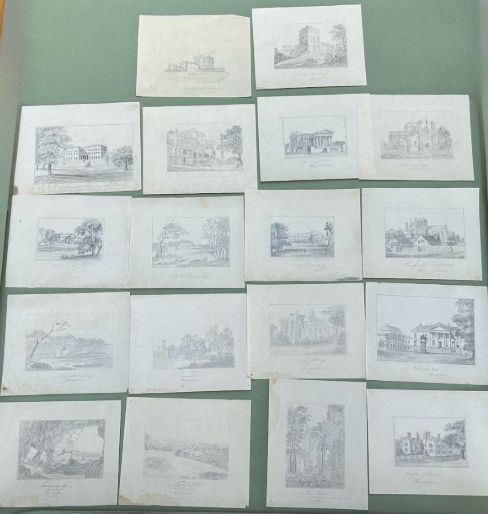
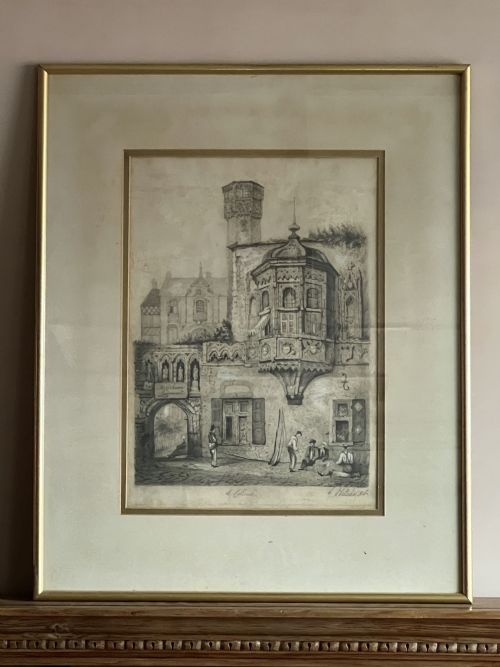
A 19th century landscape sketch encompasses original works on paper capturing rural scenes, coastal views, and architectural studies from the period.
The selections frequently feature pencil, charcoal, ink, and watercolour applications executed outdoors or developed in the studio from initial observations.
Buyers encounter intimate pencil studies of country estates alongside finished watercolours and oil paintings depicting British and European settings.
How They Were Made
Artists worked primarily on paper supports using graphite, charcoal, and pen and ink to record rapid topographical details and lighting conditions.
Watercolour washes and gouache additions provided transparent colour and highlights, while selected works utilised oil paint on panel or canvas.
Recorded styles span the Barbizon School, British Impressionism, Regency, and nineteenth-century Neoclassical movements.
What Varies in Quality
The distinction lies in the sureness of the draughtsmanship and the ability of the hand to capture atmospheric depth with minimal strokes.
Documentary value enhances certain sheets, particularly those annotated with specific locations, dates, and identified topographical landmarks.
Hercules Brabazon Brabazon·Sir Francis Leggatt Chantrey·Henry Bright·Henri Joseph Harpignies·Thomas Lound
The 19th Century Landscape Sketch Glossary
- Grisaille
- Monochrome painting executed in shades of grey, often used to study tonal values before applying colour. This technique appears in historical Welsh landscape works.
- Watercolour
- Pigment suspended in a water-soluble binder, applied to paper to create translucent washes. It served as a primary medium for capturing changing light in topographical views.
- Charcoal
- Compressed carbon material used for making bold, smudgeable lines and deep shadows. It produced dramatic effects in maritime and architectural studies.
- Gilt wood
- Wood decorated with gold leaf or metallic gilding, commonly utilised in framing works on paper. It provided a traditional decorative border for church and country house drawings.
19th Century Landscape Sketch: Frequently Asked Questions
How do I care for a paper sketch?
Keep drawings out of direct sunlight to prevent the fading of graphite, ink, and watercolour pigments over time.
Display the artwork using acid-free mounting materials and conservation glass to protect the delicate paper support from environmental moisture.
Were these sketches meant to be finished artworks?
Many sheets served as preliminary studies made on location, intended to record composition and lighting for later studio paintings.
Other examples were gathered into sketchbooks as personal travel records, capturing spontaneous impressions of European and British scenery.
What is the difference between a sketch and a painting?
Sketches generally rely on rapid graphite, ink, or charcoal marks on paper to capture immediate visual information.
Paintings involve layered pigment on canvas, panel, or heavy paper, representing a more fully realised and structurally complete composition.