


Victorian Washstand Ewer
These Victorian washstand ewer pieces bring utility and ornament together, offering a glimpse into nineteenth-century bedroom hygiene.
Victorian Washstand Ewer
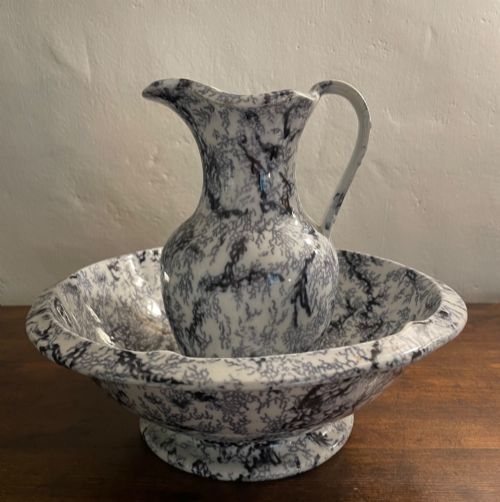
A Victorian washstand ewer forms part of a larger washing set designed for the bedroom before plumbed bathrooms became standard. These pitchers range from individual water jugs to complete wash basin sets paired with matching bowls.
Most examples found here date from the nineteenth century, including pieces made during the Victorian era, the Aesthetic Movement, and Art Nouveau periods. Makers such as Masons, Minton, and Doulton Burslem produced these ceramic vessels for everyday domestic use.
Materials and manufacture
Potters shaped these ewers from earthenware, ironstone, and porcelain, applying glazes to create a durable surface for containing water. Ironstone provided a heavier, robust body, while porcelain allowed for finer, thinner vessel walls.
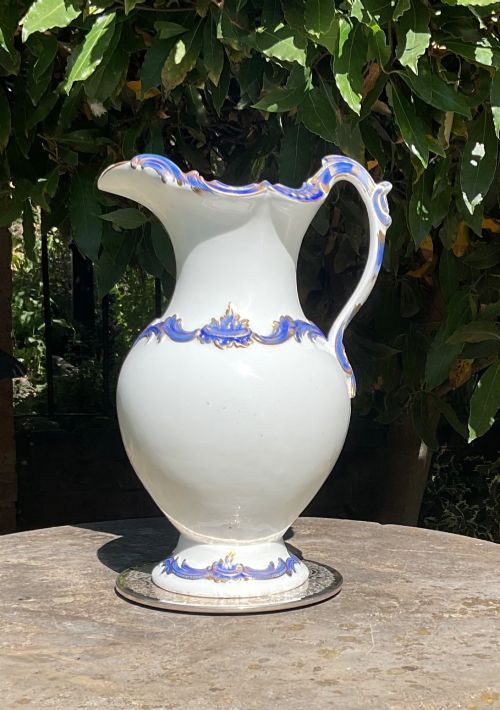
Decoration involved enamel pigments, flow blue techniques, and gilt or gold leaf highlights applied over the glaze. Some pieces incorporated transfer-printed patterns, including Victorian Chinoiserie designs.
Some nineteenth-century bedroom sets include chamber pots tucked discreetly beneath the washstand, proving that Victorian domestic life valued both art and absolute utility.
Assessing quality in washstand ewers
Quality rests on the crispness of the transfer print, the evenness of the glaze, and the precision of any hand-painted enamel or gilding. Finer porcelain and ironstone bodies indicate superior manufacture compared to basic earthenware.
Completeness dictates much of the interest, as surviving sets that keep both the ewer and its matching basin together remain more desirable. The presence of recognised factory marks adds further weight to an individual piece.
Masons Ironstone·Minton·Doulton Burslem
The Victorian Washstand Ewer Glossary
- Ewer
- A large jug with a wide spout and flared rim, designed specifically for holding washing water on a bedroom washstand. This vessel sits inside or beside a matching basin.
- Ironstone
- A dense, heavy type of feldspathic earthenware patented in the nineteenth century for its durability and resistance to chipping. Masons stands out as a prominent producer of this material.
- Flow blue
- A cobalt blue transfer printing technique where the colour bleeds slightly into the surrounding white glaze during firing. This effect produces a soft, blurred appearance popular in nineteenth-century ceramics.
- Aesthetic Movement
- A late nineteenth-century design style that emphasised visual beauty over narrative or moral content, often drawing inspiration from Japanese art. Pieces from this movement feature stylized motifs and asymmetrical compositions.
Victorian Washstand Ewer: Frequently Asked Questions
What is a washstand ewer?
A washstand ewer is a ceramic pitcher used to hold water for washing hands and face in the bedroom before indoor plumbing. It was typically paired with a large bowl on a dedicated wooden washstand.
These pieces formed the centrepiece of nineteenth-century personal hygiene sets before bathrooms became common in homes.
How do I date a ceramic ewer?
Dating relies on maker marks stamped or printed on the base, combined with stylistic clues such as Aesthetic Movement motifs or Art Nouveau curves. Material choices, including ironstone versus early porcelain, also help narrow the period.
Examining the glazing technique and colour palette provides further context for when the piece was manufactured during the nineteenth or early twentieth century.
Can I use these ewers today?
These ceramic ewers function well as decorative objects, flower vases, or umbrella stands in a hallway. Their historical glaze and enamel work mean they deserve careful handling rather than heavy daily use.
Displaying them alongside their matching basins preserves the complete domestic set for future enjoyment.
What styles are common?
Victorian, Victorian Chinoiserie, Aesthetic Movement, and Art Nouveau represent the primary design styles found among these ewers. Each style reflects the changing artistic tastes of the nineteenth and early twentieth centuries.
Flow blue decoration and gilt highlights often accompany these distinct aesthetic periods.