


19th Century Porcelain Pitcher
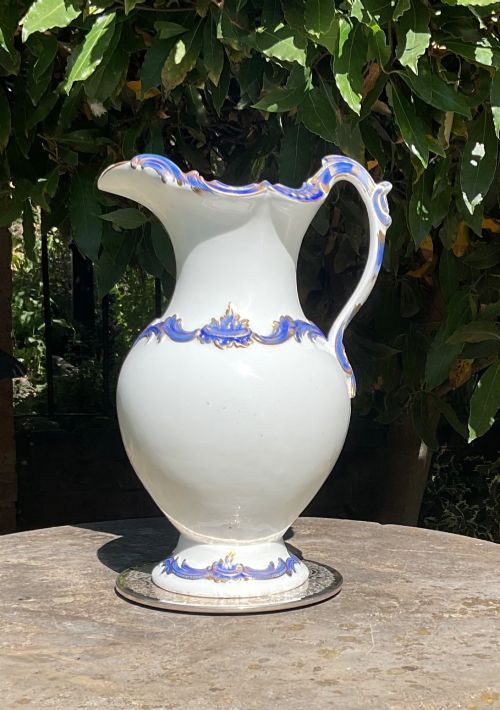
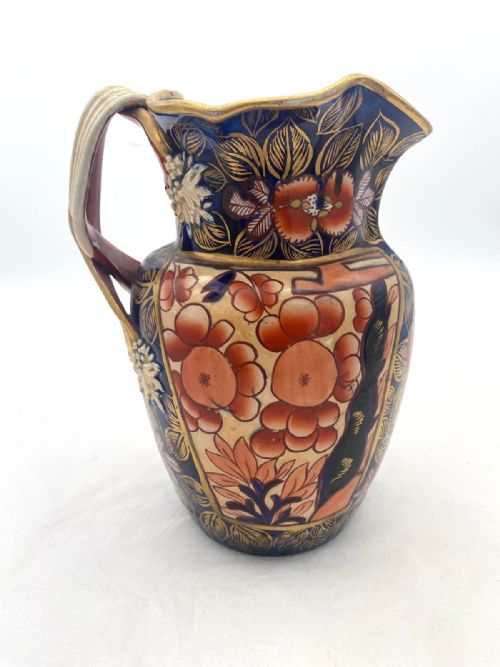
These 19th century porcelain pitcher examples bring heavy hand-painted gilding and robust ironstone forms straight to the sideboard.
19th Century Porcelain Pitcher
A 19th century porcelain pitcher typically arrives as a substantial water jug, a decorative ewer, or a smaller milk vessel spanning periods from the Regency era through to Victorian times.
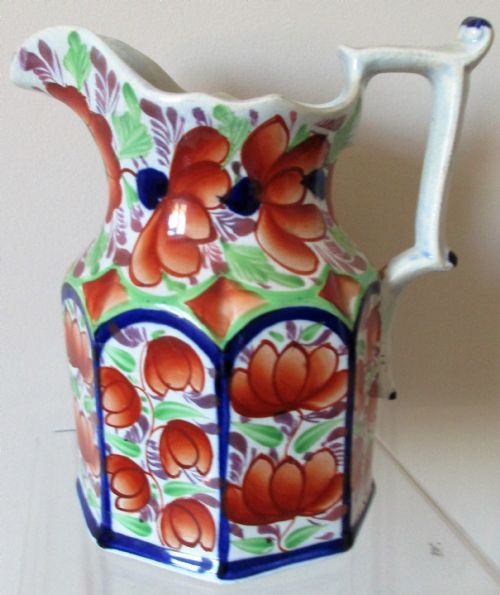
Makers shaped these utilitarian and display items into bulbous bodies, pedestal feet, and grotesque or scroll handles that reflect dominant tastes such as Chinoiserie, Aesthetic Movement, and Victorian Rococo Revival.
The buyer meets pieces ranging from miniature cabinet ewers to large water vessels, frequently bearing hand-painted floral panels, cobalt blue grounds, or raised gold decor.
Materials and production methods
Potters utilised fine porcelain, ironstone, and earthenware bases, shaping the clay through throwing or moulding before applying detailed ceramic body formulations.
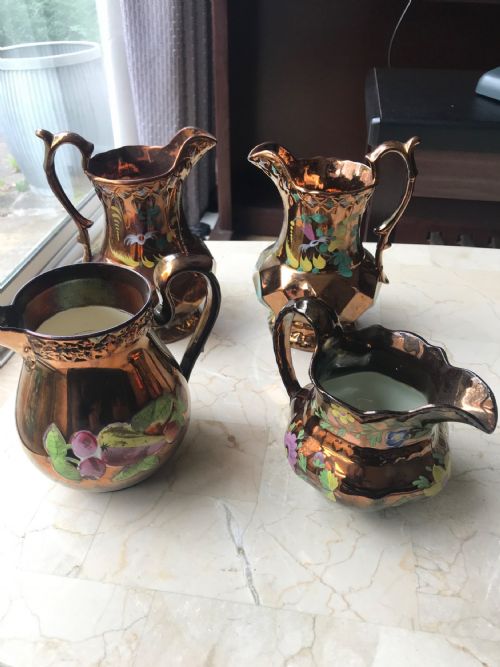
Artisans decorated the surfaces using enamel painting, copper lustre glaze, and gold leaf or gilding to highlight raised motifs and hand-painted bird or insect scenes.
Some nineteenth-century makers attached wonderfully grotesque handles to otherwise polite floral jugs, ensuring domestic tea tables kept a sense of theatre.
Separating ordinary vessels from superior pieces
Quality rests upon the crispness of the moulding, particularly on complex handles and reticulated work, alongside the precision of the hand-painted enamel details.
Superior examples display balanced proportions, rich cobalt grounds, and well-preserved gilding that remains intact across high-relief decorative elements.
Mason's Ironstone·Grainger Worcester·Royal Worcester·Doulton Burslem·Meissen·Rockingham·Royal Crown Derby·Vienna·Chamberlain Worcester
The 19th Century Porcelain Pitcher Glossary
- Ewer
- A large jug or pitcher with a wide spout and a handle, traditionally used for holding water but frequently produced for display in the nineteenth century. These vessels often feature elaborate handles and pedestals.
- Ironstone
- A heavy, durable type of earthenware patented in the early nineteenth century that mimics porcelain. It resists chipping and provided a sturdy canvas for colourful transfer-printed or hand-painted patterns.
- Reticulated
- Describes ceramics featuring openwork lattice or pierced geometric designs cut into the body before firing. This delicate technique demands great skill from the potter to prevent warping in the kiln.
- Parian ware
- A type of fine biscuit porcelain developed in the mid-nineteenth century to resemble carved marble. It is particularly suited for unglazed sculptural jugs and classical ewers.
- Gilding
- The application of gold leaf or powdered gold to ceramic surfaces to accent handles, rims, and painted panels. It is often fired at high temperatures to bond with the glaze.
19th Century Porcelain Pitcher: Frequently Asked Questions
Were these pitchers used for water or display?
Many nineteenth-century vessels served practical functions on the dining table or washstand for holding water and milk. Others were made strictly as decorative cabinet ewers to showcase ceramic artistry and painting skill.
Over time, changing domestic habits turned these functional jugs into purely decorative mantel and sideboard pieces.
How do I spot a Regency period piece?
Regency era jugs tend to feature cleaner neoclassical lines, restrained gilding, and simpler handle attachments compared to later Victorian iterations. Their shapes often draw inspiration from ancient Greek and Roman forms.
Examining the paste and the style of the floral hand-painting helps distinguish these earlier pieces from heavier Victorian ironstone.
What is copper lustre glaze?
Copper lustre glaze involves applying a metallic salt solution to the ceramic surface during firing to produce a reflective, coppery sheen. It creates a warm metallic glow that complements hand-painted fruit and floral decorations.
Potters used this technique extensively on earthenware and porcelain jugs throughout the nineteenth century.