




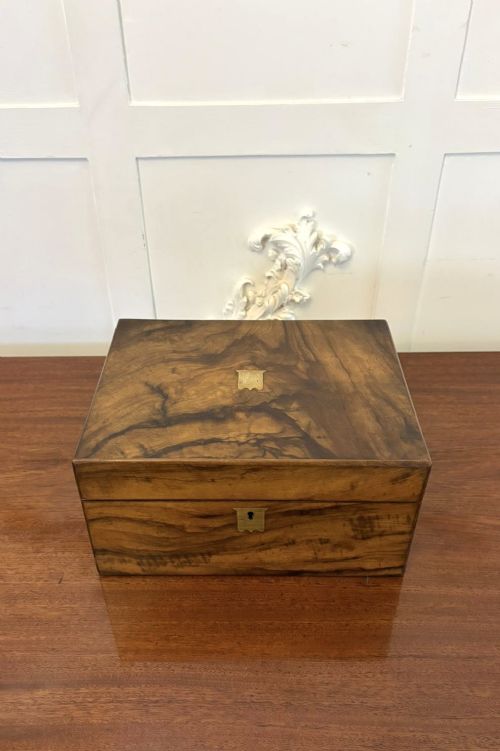
Victorian Walnut Writing Box
A victorian walnut writing box brings solid 19th-century craftsmanship to a desk, offering fitted compartments and fold-out slopes for correspondence.
Victorian Walnut Writing Box
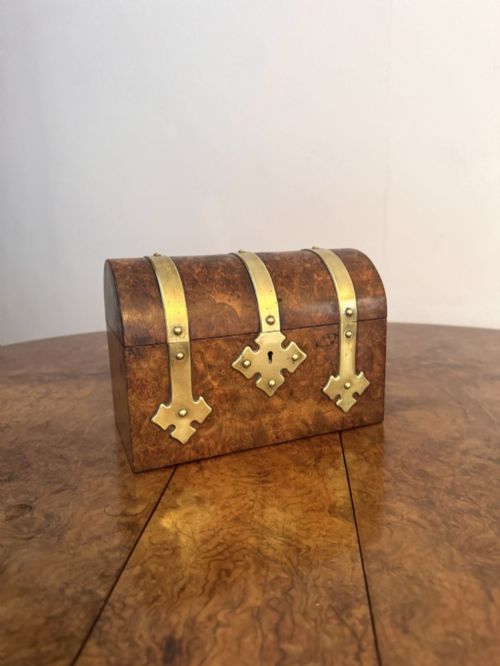
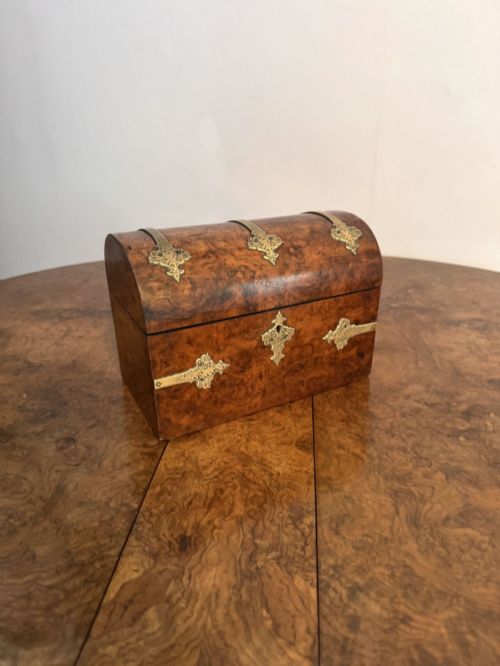
A victorian walnut writing box encompasses portable lap desks, slope-front writing boxes, and stationery cabinets designed for the 19th-century study. The pieces appearing most often on this page are folding writing slopes and stationery boxes constructed from walnut timbers.
Makers of the period also produced related desk accessories including jewellery boxes, glove boxes, and travelling inkwells. These desktop items share the characteristic dark timber grains and fitted internal compartments typical of Victorian cabinet work.
How they were made
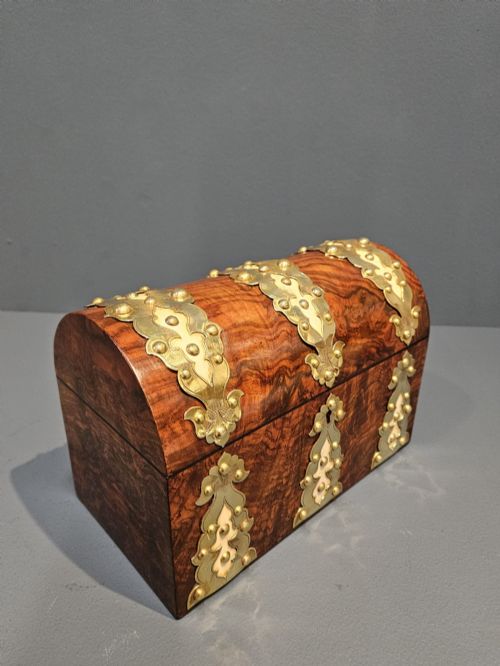
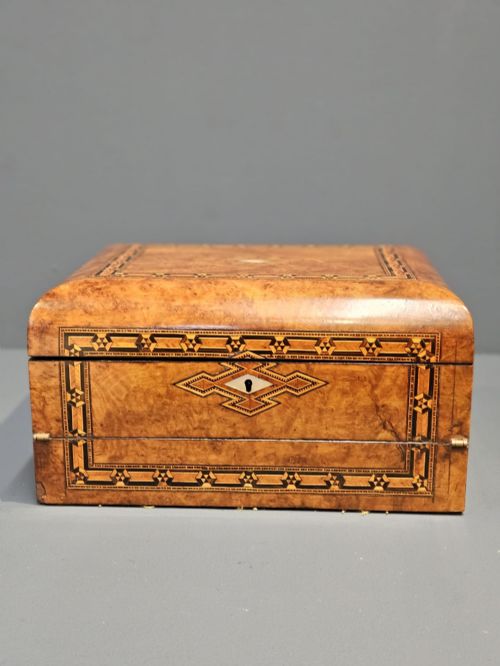
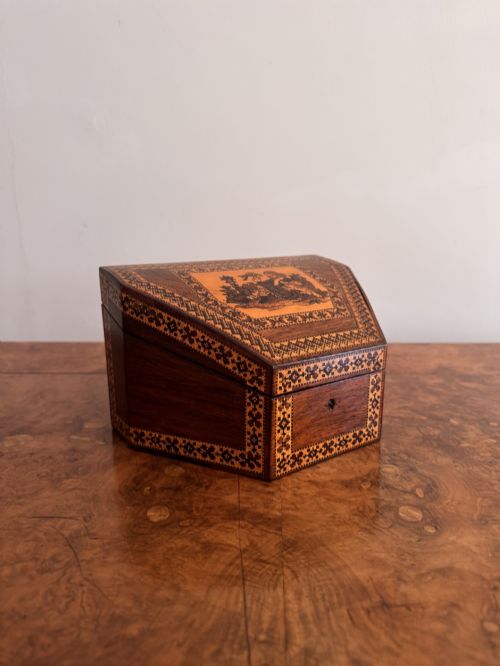
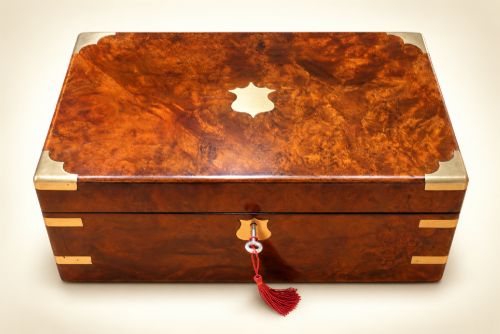
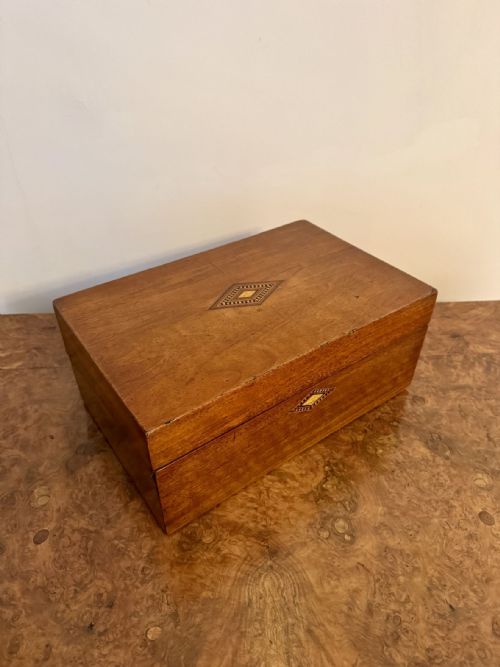
Cabinet makers utilised solid walnut and burr walnut veneers over secondary woods to create decorative surfaces with rich grain patterns. Many examples incorporate contrasting details in boxwood, parquetry, marquetry, and Tunbridge ware mosaic work.
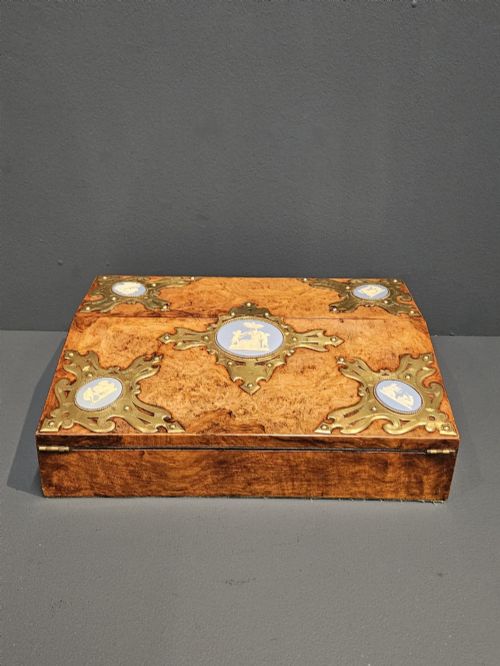
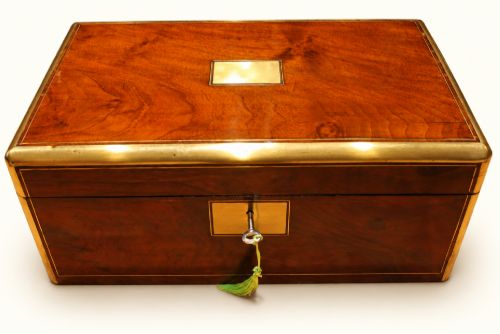
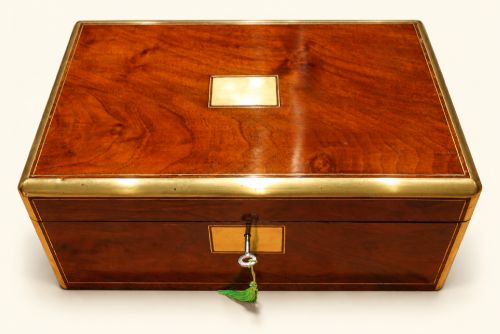
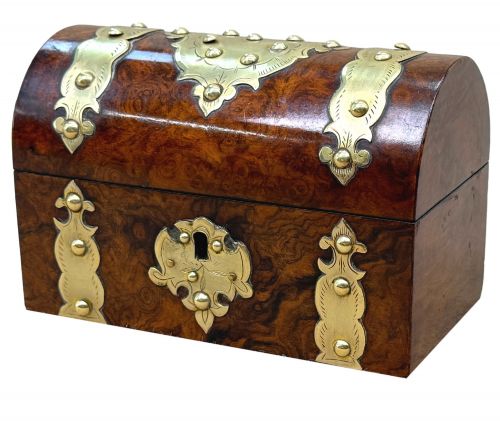
Structural reinforcement and decorative contrast came from brass corner mounts, strapping, and escutcheons. Internal fitments often integrate leather writing surfaces, velvet linings, porcelain panels, and concealed secret drawers secured by quality locks such as Bramah mechanisms.
Victorian Walnut Writing Box Retail Price Guide 2026
Typical asking prices for victorian walnut writing box among the pieces listed under this phrase on Sellingantiques today, from the lower quarter to the upper quarter. They describe what is for sale here now, not the wider market.
A travelling inkwell ensures your Victorian desk travels safely, provided you remember to screw the lid down before catching the coach.
What varies in quality
The selection of timber veneer determines much of the visual appeal, with highly figured burr walnut commanding greater attention than plain grain. Finer examples display meticulous alignment in parquetry patterns and precise execution of Tunbridge ware geometric mosaics.
Hardware and internal complexity separate standard boxes from superior pieces. Robust brass mountings, complex secret drawer mechanisms, and branded hardware from known makers elevate the standard of construction.
Edmund Nye·George Austin of Dublin·Mappin & Webb
The Victorian Walnut Writing Box Glossary
- Burr walnut
- Timber taken from a growth on the walnut tree, prized for its swirling, highly figured grain patterns. It provides a decorative surface veneer on finer Victorian boxes.
- Tunbridge ware
- Wood mosaic work originating from Kent, forming microscopic geometric patterns or pictorial scenes. It appears on the lids and panels of mid-century boxes.
- Writing slope
- A box with a hinged lid that opens to form an inclined surface covered in leather or velvet for writing letters. Internal partitions hold inkwells and pens.
- Bramah lock
- A high-security cylindrical lock patented in the late 18th century. It frequently secures better-quality Victorian writing boxes and desks.
- Stationery box
- A desktop cabinet designed to hold writing paper and envelopes upright in tiered compartments. These often feature sloping fall-front doors.
Victorian Walnut Writing Box: Frequently Asked Questions
How do secret drawers work?
Secret drawers are concealed behind movable wooden partitions or dummy dividers within the stationery well of a writing box. Accessing them usually requires removing a pen tray or releasing a hidden spring catch.
Cabinet makers added these compartments to secure private correspondence and valuables. They remain a defining feature of mid-19th-century writing furniture.
What is the difference between a writing slope and a stationery box?
A writing slope folds open to provide an angled, leather-lined surface for writing letters, housing inkwells and flat storage beneath the board. A stationery box remains upright on the desk to store paper and envelopes in vertical slots.
Writing slopes focus on active correspondence, whereas stationery boxes serve for desktop organisation.
How should I clean the wood and leather?
Clean walnut surfaces with a soft cloth and microcrystalline wax to preserve the finish without moisture damage. Leather writing surfaces respond well to gentle dusting and specialised conditioning balms.
Avoid liquid polishes and harsh modern cleaners that strip original polishes. Regular maintenance keeps the grain lustrous.
Can these boxes still be used for writing?
Modern fountain pens and notepaper fit comfortably on the traditional inclined writing surfaces of these boxes. The internal compartments accommodate contemporary stationery items just as they did in the Victorian era.
Using them daily connects the user to traditional correspondence methods while organising modern desks.