





Victorian Walnut Workbox
A victorian walnut workbox brings together mid-nineteenth-century timber and fitted interior compartments for needlework and small treasures.
Victorian Walnut Workbox
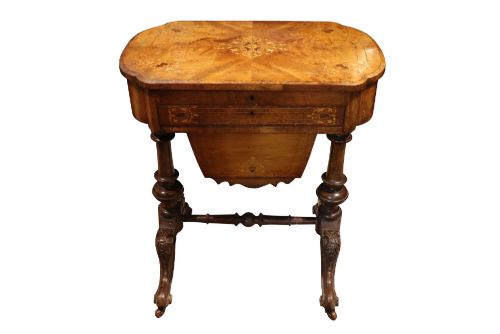
When you search for a victorian walnut workbox, you encounter a selection of lidded desktop caskets, freestanding trumpet tables, and combination games tables designed for sewing and leisure. These pieces date principally from the nineteenth century, spanning decades such as the eighteen-fifties, sixties, seventies, and eighties.
The most common formats on this page are tabletop boxes and pedestal trumpet tables featuring octagonal or circular lids that lift to reveal fitted interior trays. Many examples double as games tables with chess or draughts boards incorporated into their tops, reflecting the domestic pursuits of the period.
Materials and construction
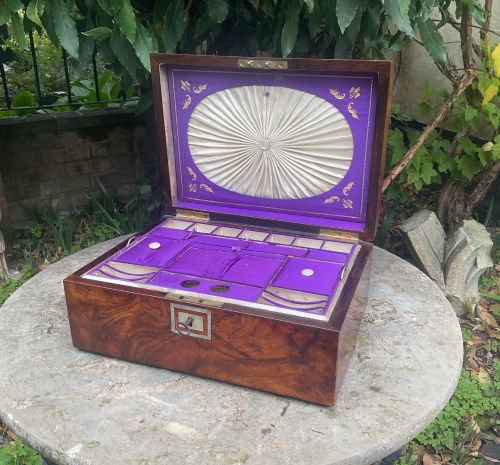
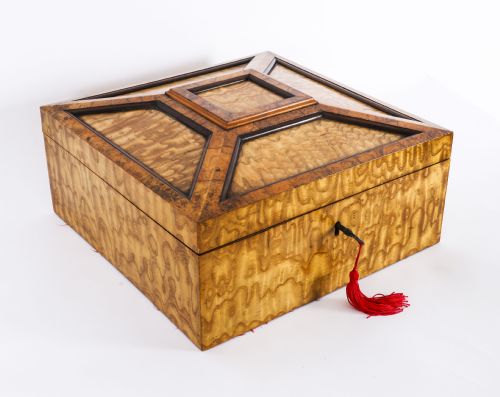
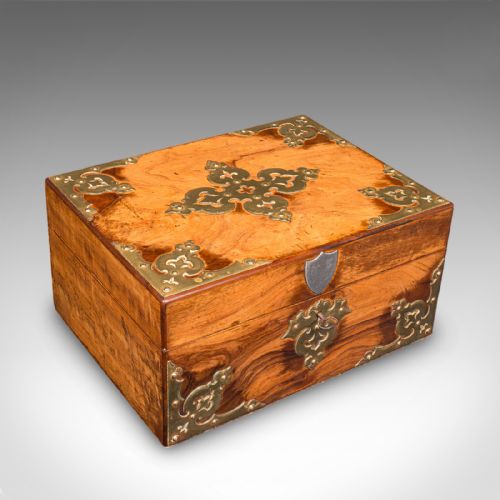
Maker workshops utilised solid walnut and decorative burr walnut veneers applied over secondary timbers, often accented with contrasting boxwood and marquetry inlay. Specific pieces incorporate Tunbridge ware mosaic detailing, brass hardware, and delicate fabric linings inside the storage compartments.
Freestanding variants rely on tripod or pedestal bases supporting shaped trumpet bodies, while smaller tabletop boxes utilise dovetailed corner joints and fitted internal lift-out trays. Surface finishes are typically applied to highlight the natural figuring and grain patterns of the walnut timber.
Victorian Walnut Workbox Retail Price Guide 2026
Typical asking prices for victorian walnut workbox among the pieces listed under this phrase on Sellingantiques today, from the lower quarter to the upper quarter. They describe what is for sale here now, not the wider market.
Cone-shaped sewing boxes proved popular for keeping thread from rolling away during carriage journeys.
Gradations of quality
The distinction between standard and superior pieces rests on the choice of timber veneer and the complexity of the surface decoration. Highly figured burr walnut and intricate marquetry inlay or Tunbridge ware panels indicate elevated workshop standards.
Interior architecture also separates examples, with fitted compartments, original fabric linings, and integrated games boards demonstrating greater original cost and higher grade construction compared to plain lidded boxes.
The Victorian Walnut Workbox Glossary
- Burr walnut
- A veneer taken from the growth excrescences of a walnut tree, prized for its swirling, highly figured grain patterns. It forms the primary decorative surface on many nineteenth-century boxes and tables.
- Trumpet workbox
- A freestanding sewing table featuring a body that flares outward from a narrow base toward a wider top, resembling the bell of a musical instrument. These typically incorporate an internal fabric bag or compartmentalised tray beneath the lid.
- Tunbridge ware
- A form of mosaic woodwork originating in Kent, created by gluing together thousands of tiny blocks of naturally coloured woods to form geometric or pictorial scenes. It frequently decorates the lids of nineteenth-century ladies boxes.
- Marquetry inlay
- The technique of applying pieces of veneer into a fitted recess within a solid wood ground to create decorative patterns. In these listings, floral and geometric motifs appear across box lids and table tops.
Victorian Walnut Workbox: Frequently Asked Questions
What did people keep in a workbox?
These boxes served as tidy storage containers for domestic needlework equipment including spools of thread, needles, thimbles, and fabric scraps. Ladies utilised them to keep sewing projects organised in the parlour.
Many examples include fitted internal trays with small lidded compartments and pin cushions specifically dimensioned for sewing tools and small personal accessories.
How do I identify a trumpet workbox?
A trumpet workbox stands on a pedestal base, often supported by three carved feet, with a body that widens upward toward a hinged lid. The upper section usually opens to reveal a compartmentalised tray and a fabric storage well below.
These pieces combine the function of a sewing box with the stability of a small occasional table suitable for placement beside a chair.
Are all these boxes from the Victorian period?
The majority of pieces date from the nineteenth century, encompassing the Victorian era alongside related nineteenth-century French and Gothic Revival interpretations. A small number originate from later decades. Nomenclature often bridges categories, with individual listings describing similar lidded forms as sewing cases, caskets, or occasional tables.
How do I care for walnut veneer?
Burr walnut benefits from stable room environments away from direct heat sources and strong sunlight, which can dry out timber and fade polishes. Occasional dusting with a soft, dry cloth preserves the finish.
Harsh chemical cleaners and excessive moisture should be avoided to protect both the polished wood surfaces and any delicate interior fabric linings.