
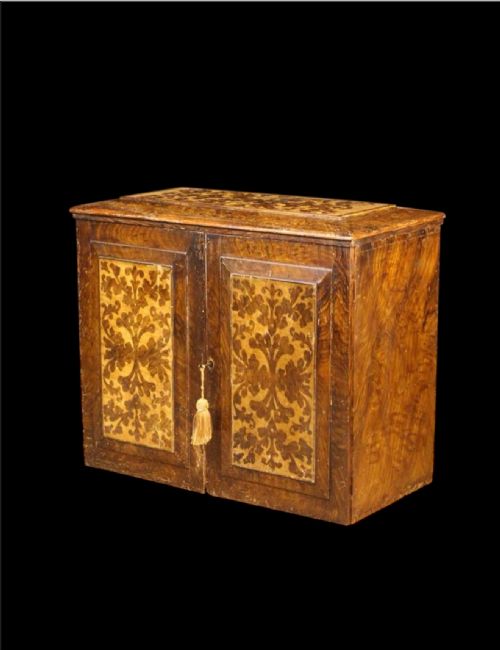
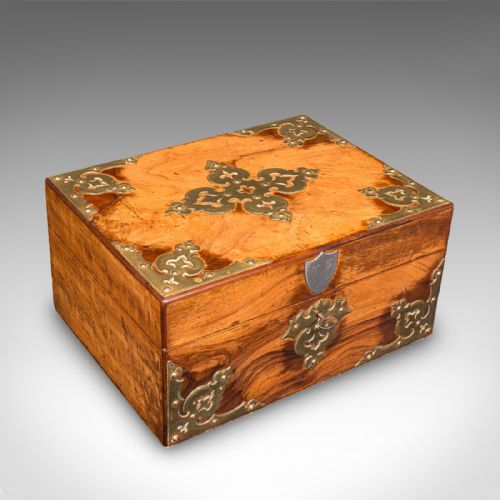


Victorian Walnut Storage Box
A victorian walnut storage box brings warmth and practicality to a room, offering a neat home for letters, games, or trinkets.
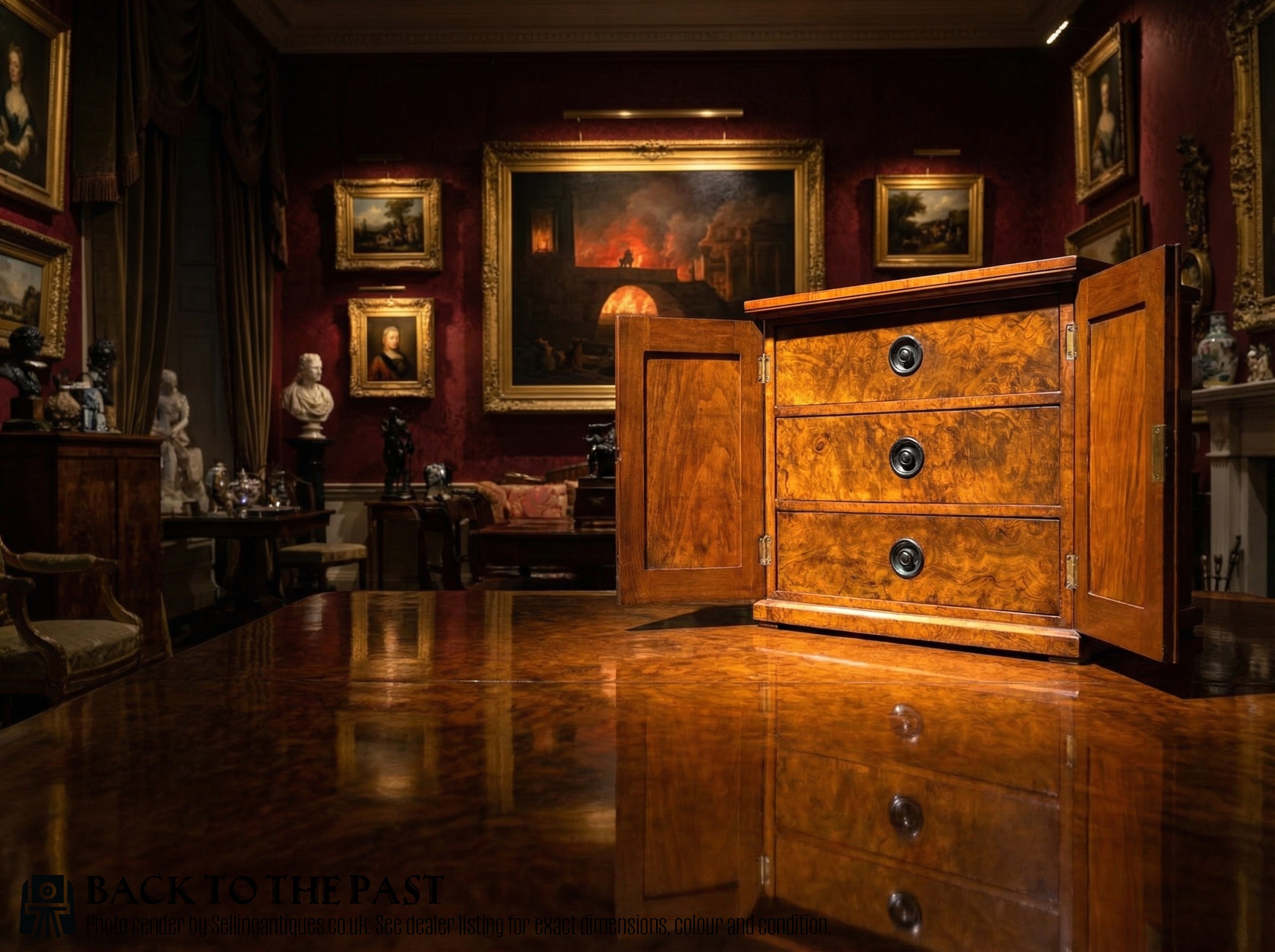
Victorian Walnut Storage Box
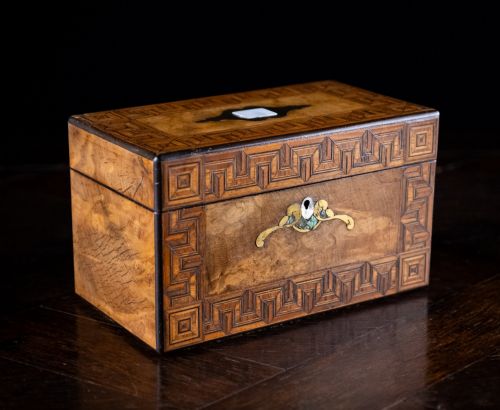
When you search for a victorian walnut storage box, you encounter a wide variety of timber containers spanning the nineteenth century. These objects served specific domestic purposes, functioning as tea caddies, sewing cases, stationery boxes, and collectors cabinets. Most pieces date from the Victorian period, though examples stretch from the early nineteenth century into the Edwardian era.
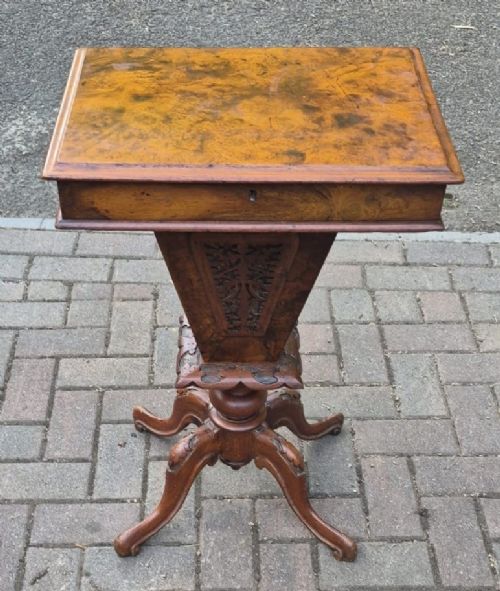
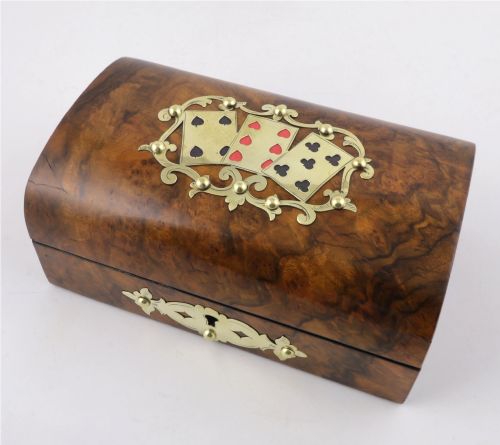
The domestic forms recorded on this page range from small table boxes to larger fireside fuel keeps and games caskets. Cabinetmakers utilised walnut for its rich grain, often selecting burr walnut to create striking figured surfaces on lids and panels. Alongside standard desktop boxes, the selection includes tables fitted with storage compartments and specialised cabinets for cards or microscope slides.
How They Were Made
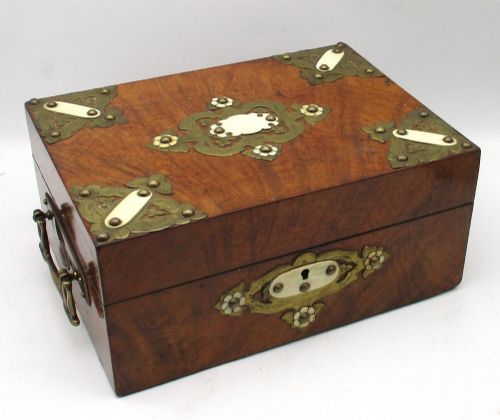
Cabinetmakers built these boxes using solid walnut or applied figured walnut veneers over secondary timbers. They embellished the wooden surfaces with brass mounts, boxwood stringing, parquetry, and mother-of-pearl inlays. Interiors often received silk, velvet, or paper linings alongside fitted compartments for specific items.
Joinery methods varied according to the object type, utilising dovetailed corners for structural stability on heavy-use containers like coal scuttles and document boxes. Lid constructions included domed, sloping, and flat profiles, sometimes secured with brass locks and hinges. Specialised pieces incorporated Tunbridge Ware mosaic decoration or carved Gothic revival motifs.
Materials recorded across these listings include solid walnut, burr walnut, brass, mother-of-pearl, boxwood, rosewood, and glass.
What Varies in Quality
The standard of a piece rests largely on the selection of the timber and the precision of the cabinetwork. Figured burr walnut yields a more decorative surface than plain timber, while intricate parquetry and careful brass mounting elevate the visual impact of a box. The complexity of the interior fitting, from simple open spaces to silver-fitted dressing arrangements, also distinguishes standard containers from elaborate examples.
Makers and origin play a role in distinction, with signed pieces or works from recognised firms indicating higher workshop standards. The integrity of the original construction, including the survival of matching keys, functional locks, and intact internal trays, shapes the character of each surviving container.
Waring & Gillow·Parkins and Gotto
The Victorian Walnut Storage Box Glossary
- Burr walnut
- A specialised timber cut from walnut tree growths, yielding a swirling, highly figured grain pattern prized for decorative box lids.
- Tea caddy
- A container designed specifically for storing loose tea leaves, often featuring internal lidded compartments to separate varieties.
- Parquetry
- A geometric mosaic of wood veneer arranged to create decorative patterns on the exterior surfaces of boxes and tables.
- Tunbridge Ware
- Small wooden items decorated with microscopic tesserae forming detailed pictorial or geometric mosaic designs.
- Purdonium
- A specialised Victorian cabinet or box designed to hold household coal near a fireplace.
Victorian Walnut Storage Box: Frequently Asked Questions
What were victorian walnut storage boxes used for?
These containers held household valuables, correspondence, sewing implements, and playing cards. Different forms suited specific domestic tasks, from organising letters on a desk to storing tea in the parlour.
Larger versions functioned as coal scuttles, cigar humidors, or cabinets for natural history specimens like microscope slides. Their fitted interiors kept delicate items secure and organised.
How do I identify a burr walnut box?
Burr walnut displays a distinctive swirling, mottled grain pattern full of small knot clusters. Cabinetmakers used these highly decorative veneers on the most visible exterior surfaces, particularly box lids.
Plain walnut has a straighter, more uniform grain. Burr walnut creates a rich, textured appearance that catches the light differently than standard timber.
Are these boxes lined with original materials?
Many surviving boxes retain their original paper, silk, or velvet linings inside the lid and compartments. The presence of fitted trays and velvet pads indicates the original function of the piece.
Over the decades, some interiors received new textiles when the original fabrics wore out from use. Examining the adhesive and wear patterns helps determine the age of the lining.
How can I tell the difference between periods?
Early nineteenth-century pieces often display restrained classical lines, while mid-Victorian boxes frequently incorporate bolder veneers, brass stringing, and mother-of-pearl inlay. Gothic revival examples show architectural motifs and pointed arches.
Edwardian items tend toward lighter construction and simpler decorative schemes. Comparing the hardware, lock types, and secondary woods helps narrow down the manufacturing date.