


Fitted Wooden Drawers
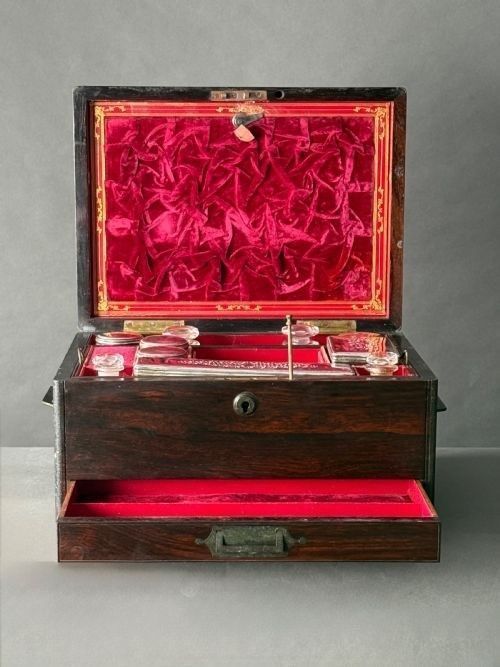
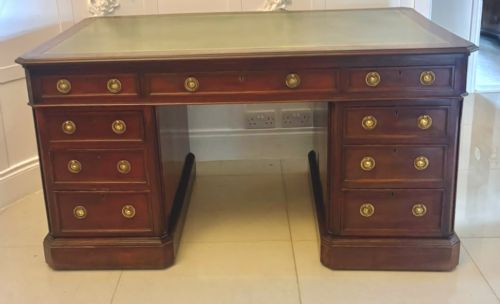
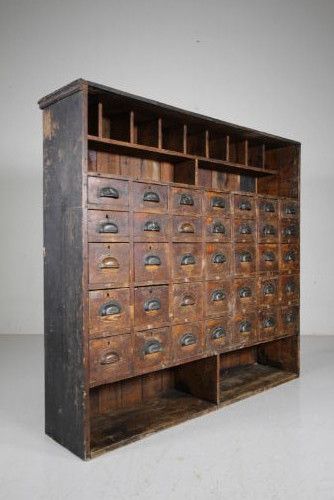
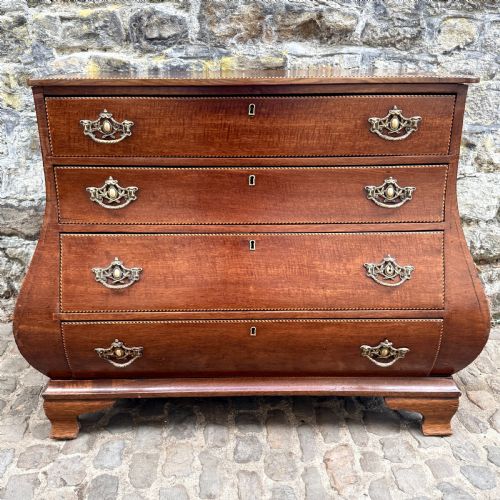
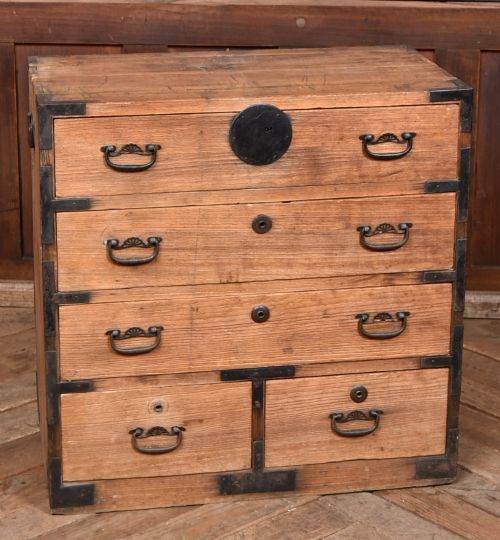
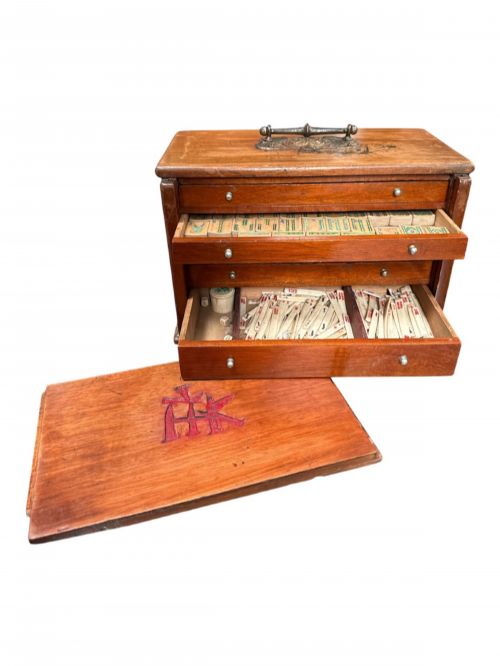
Fitted wooden drawers are practical storage pieces designed with internal compartments, and you encounter them here in forms from banks of drawers to writing slopes.
Fitted Wooden Drawers
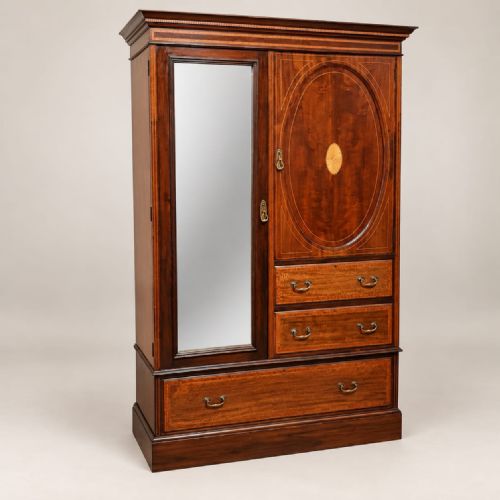
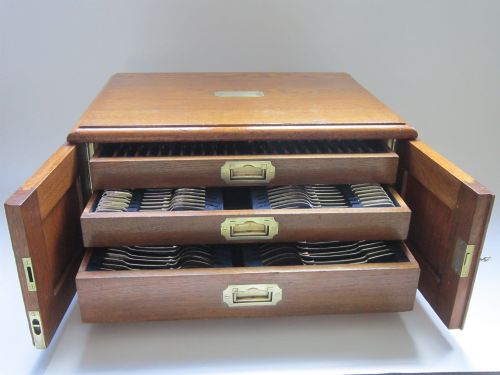
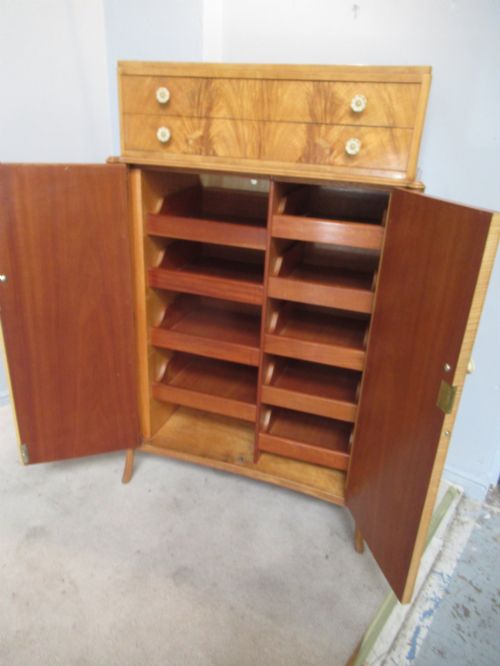
When you search for fitted wooden drawers, you are looking at items engineered to organise small items, documents or specialised goods through internal partitions, secret compartments or multiple smaller receptacles. The pieces on this page span several centuries, reaching from the Georgian and 18th century periods through the Victorian era and into Edwardian and 1920 or 1930 designs.
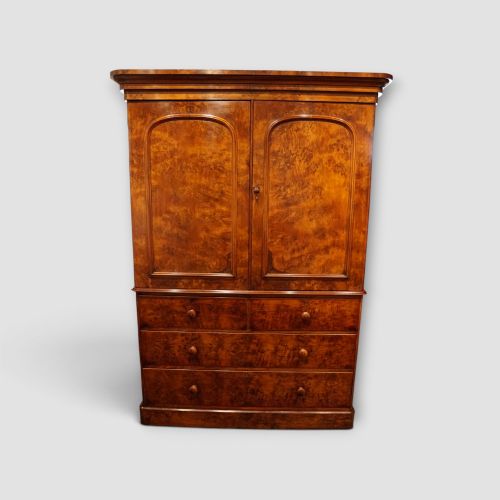
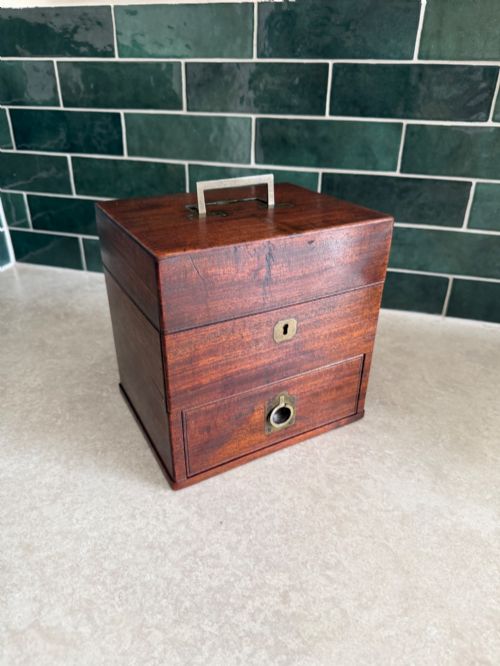
The most common forms you meet include banks of drawers, chests of drawers, linen presses, and smaller tabletop items such as writing slopes, apothecary boxes and smoker's boxes. These objects originate from domestic settings, workshops, chemist shops and draper stores, reflecting both household utility and commercial organisation.
Makers and retailers range from individual cabinetmakers to large firms, with specific pieces bearing the hallmarks of commercial outfitters like Maple and Co or specialist suppliers. Period styles cover traditional Georgian and Victorian aesthetics alongside Dutch Baroque, Art Deco and industrial workshop adaptations.
Materials and construction
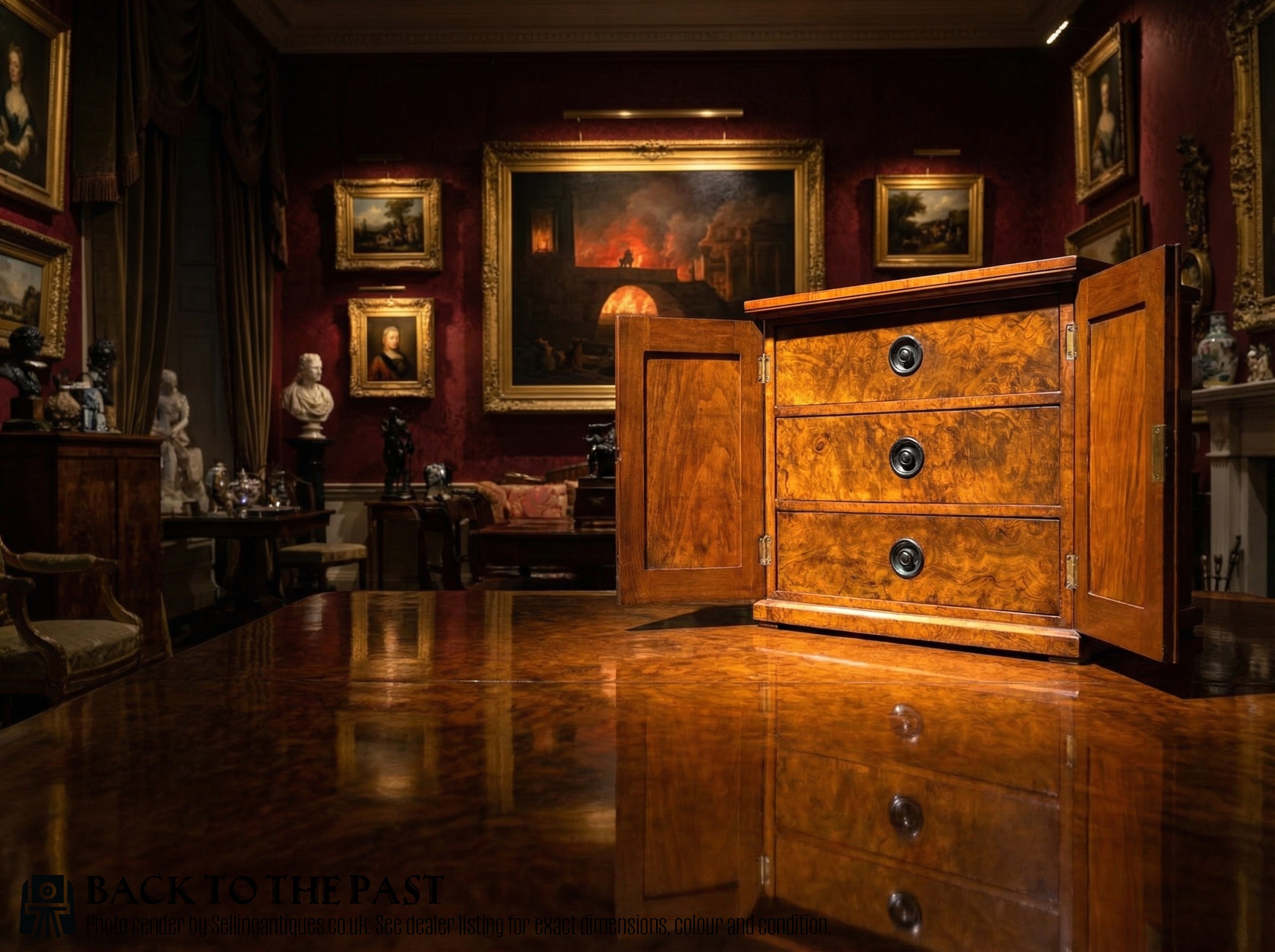
Cabinetmakers utilised timber stocks including mahogany, walnut, burr walnut, pine, oak, satin birch, palmwood and maple, often pairing primary display surfaces with secondary woods for internal dividers. Grain selection played a major role in visual appeal, particularly in flame mahogany veneers and figured burr walnut panels.
A tiny key kept in a secret drawer unlocks compartments designed for Victorian secrets.
Assessing craftsmanship and condition
Quality rests on the integrity of the internal fittings, such as whether secret drawers slide true, dividers remain intact, and original brass locks and handles survive. Superior examples display precise dovetail joints on every small drawer and flawless matching of timber veneers across the facade.
The distinction between utilitarian workshop pieces and fine domestic furniture lies in the finishing touches, such as hand-polished surfaces, secondary timber choice, and the complexity of the internal arrangement. Pieces retaining their original configuration without later alterations command greater appreciation among collectors.
Maple and Co·Luxmore's of Ilfracombe
The Fitted Wooden Drawers Glossary
- Campaign chest
- A portable set of drawers made in sections with brass corners and recessed handles designed for military travel. These units split apart for ease of transport during campaigns.
- Wellington chest
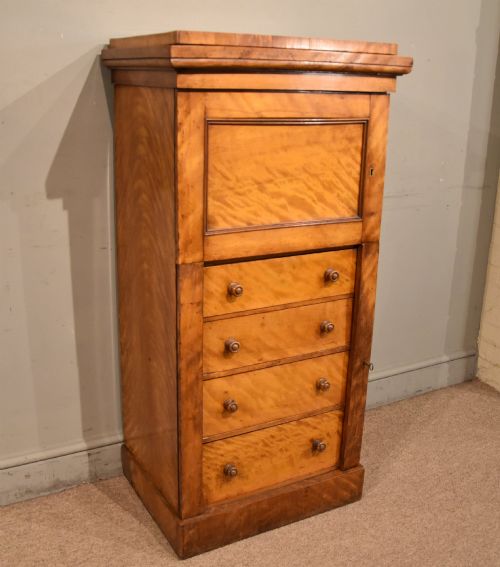
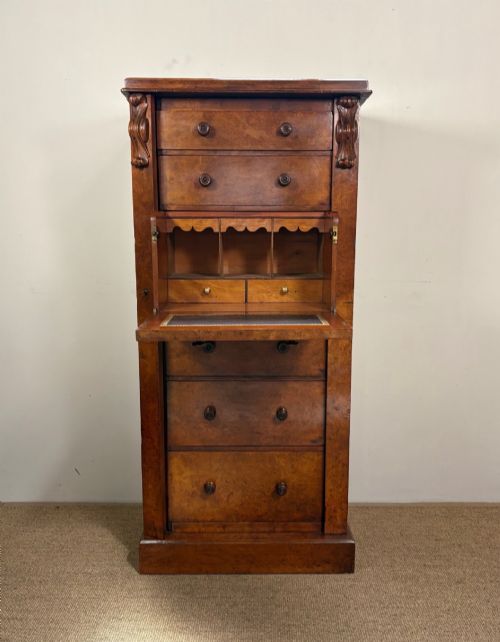
- A tall, narrow chest of drawers secured by a hinged locking side bar that fastens with a key. This design originated in the 19th century to protect sensitive papers.
- Writing slope
- A portable box with a sloping hinged lid that opens to reveal a fitted interior for stationery, inkwells and secret compartments. The writing surface is often lined with leather or velvet.
- Linen press
- A large storage cabinet featuring upper sliding trays or shelves enclosed by doors, positioned above a base tier of wider drawers. They were traditionally used to store household linens flat.
- Bank of drawers
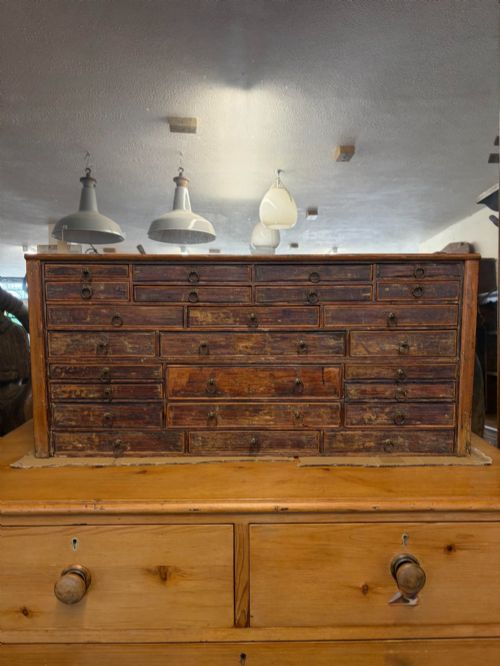
- A multi-drawer cabinetry unit designed for commercial, workshop or apothecary use to organise large quantities of small stock or specimens. They feature numerous uniform drawers.
Fitted Wooden Drawers: Frequently Asked Questions
What are fitted wooden drawers?
Fitted wooden drawers are storage items containing built-in internal compartments, secret spaces, or specialised trays designed to hold specific items like stationery, samples, or medical goods.
They appear across various antique periods in forms ranging from large merchant banks of drawers down to small portable writing slopes and apothecary boxes.
How were campaign drawers used?
Campaign drawers were built in sections with recessed brass hardware so military officers could pack and transport their belongings during travels.
The sectional design allowed the furniture to withstand rough handling while keeping personal papers and clothing organised.
How do I identify a Wellington chest?
A Wellington chest is characterised by its tall, narrow proportions and a distinctive vertical locking bar on one side that secures all the drawers at once.
This mechanism was designed to keep the contents private and secure inside the numerous shallow drawers.
Where were banks of drawers used?
Banks of drawers were utilised in commercial shops, apothecaries, workshops, and draper stores to sort large inventories of small goods.
Their numerous small receptacles kept working materials accessible and neatly classified for daily trade.
What is a linen press used for?
A linen press combines upper cupboard space, originally fitted with sliding trays for folded textiles, with lower drawers for additional storage.
This form allowed households to store linens flat and protected from dust before modern wardrobes became standard.