
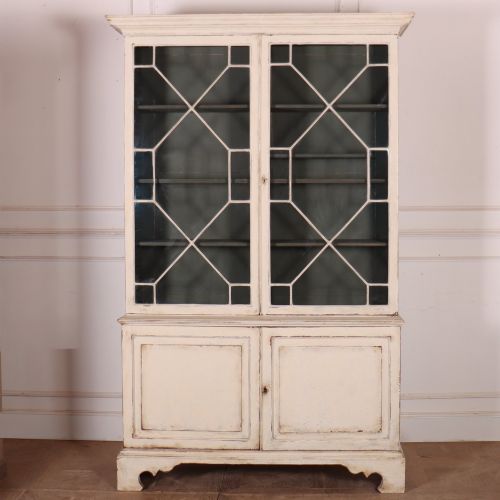
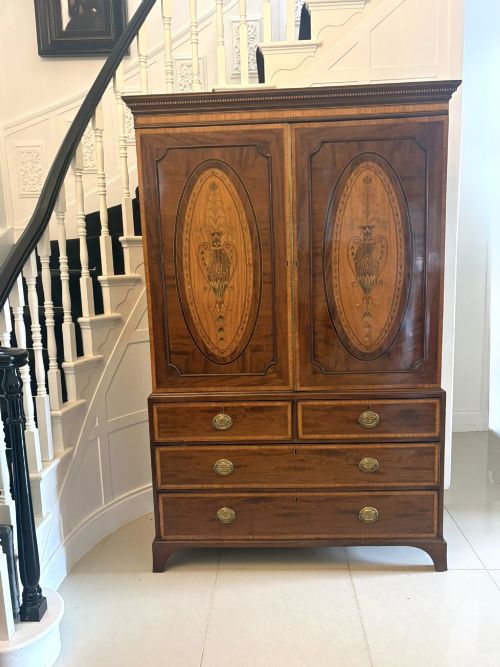
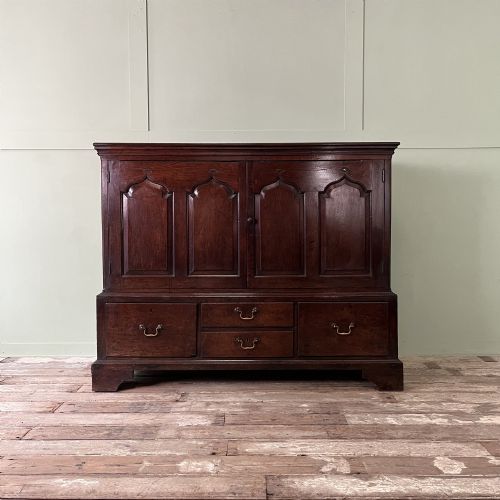
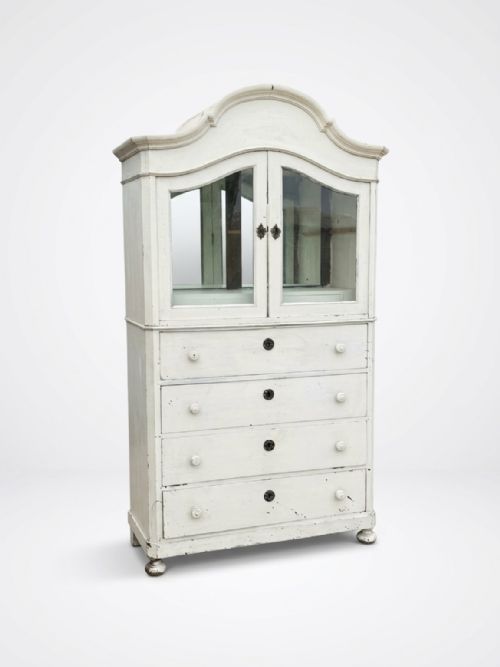

Antique Linen Cabinet
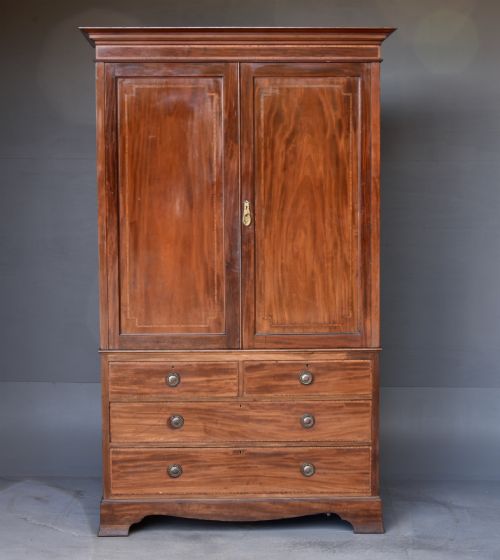
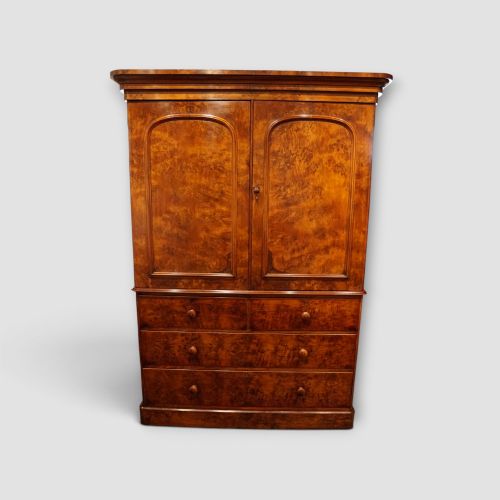
An antique linen cabinet offers substantial storage for textiles and garments while bringing centuries of fitted timber craftsmanship into the bedroom or hallway.
Antique Linen Cabinet
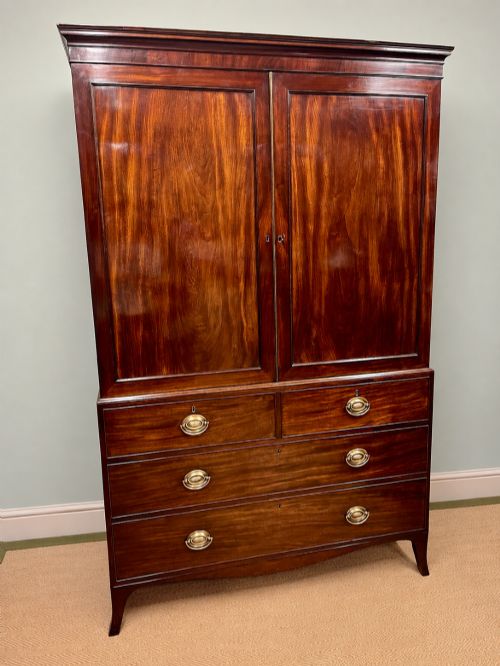
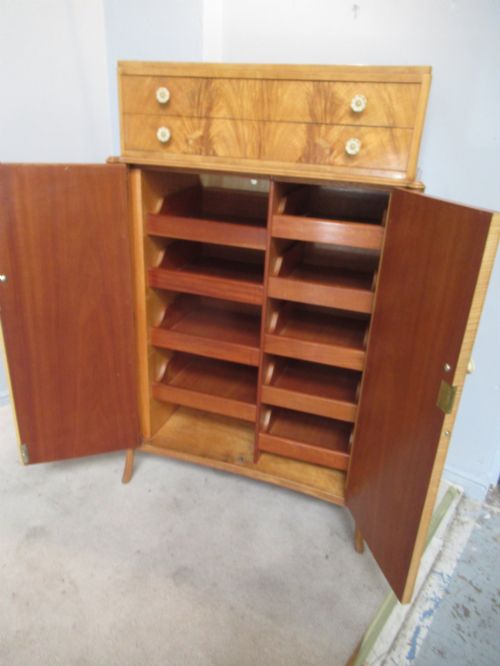
When you search for an antique linen cabinet, you encounter a versatile category of storage furniture that includes linen presses, tallboys, compactums, and housekeepers' cupboards designed to keep household textiles organised. These pieces bridge the gap between traditional wardrobe hanging space and compartmentalised drawer storage.
The versions most commonly met on this page span the Georgian, Victorian, and Edwardian periods, often constructed from dense hardwoods like mahogany and oak, alongside regional pine examples. Many designs feature upper doors enclosing sliding trays or shelves above a chest of base drawers.
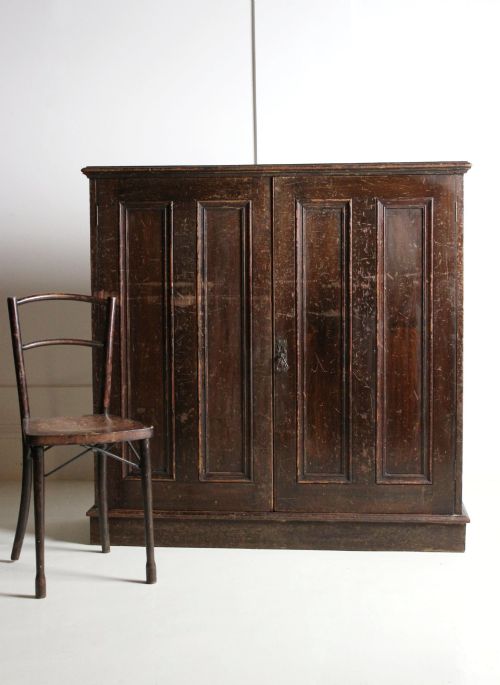
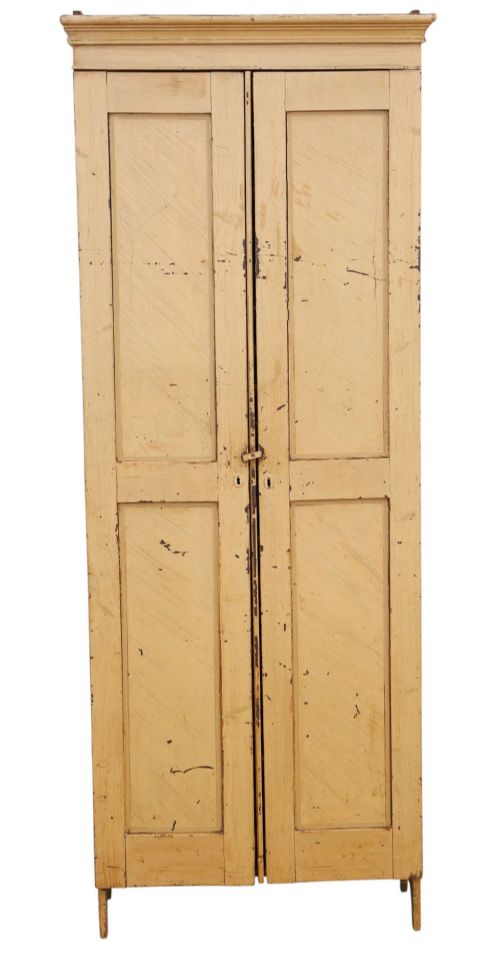
Originating in domestic interiors before the widespread adoption of built-in closets, these cabinets reflect the domestic habits of earlier centuries. They range from formal English gentleman's wardrobes to robust provincial French and Welsh storage cupboards.
Construction and materials
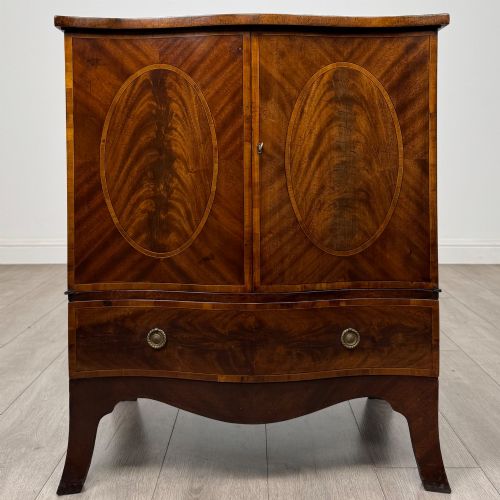
Cabinet makers relied primarily on solid timbers such as mahogany, oak, walnut, and pine, frequently applying figured veneers like burr walnut or flame mahogany to the primary display surfaces. Structural elements often incorporated secondary woods such as deal or ash for drawer linings and internal framing.
Joinery techniques demanded high skill, utilising dovetailed drawer construction, mortise and tenon frames, and panelled doors that allowed timber to move naturally with seasonal humidity changes. Decorative enrichment included brass hardware, satinwood stringing, marquetry floral inlay, and carved mouldings specific to regional workshops.
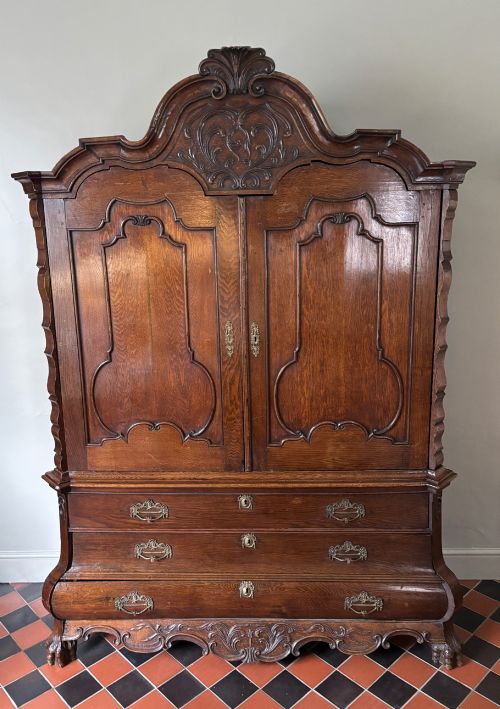
Regional styles represented include French provincial armoires, Dutch marquetry cabinets, and English Cotswold school cupboards.
Judging cabinet quality
Quality in these storage pieces depends heavily on timber selection and the precision of the cabinet work, distinguishing high workshop output from utilitarian regional production. Superior examples display well-matched veneer grains across drawer fronts and doors, alongside crisp, deep carving and intact original brass handles.
Internal architecture further separates standard storage from finer craftsmanship, seen in sliding linen slides that run smoothly within dedicated grooves and drawer boxes constructed with fine, hand-cut dovetails. The structural integrity of the cornice and the alignment of heavy doors under their own weight reveal the underlying competence of the original maker.
maples & co·Edwards and Roberts·Gillows
The Antique Linen Cabinet Glossary
- Linen press
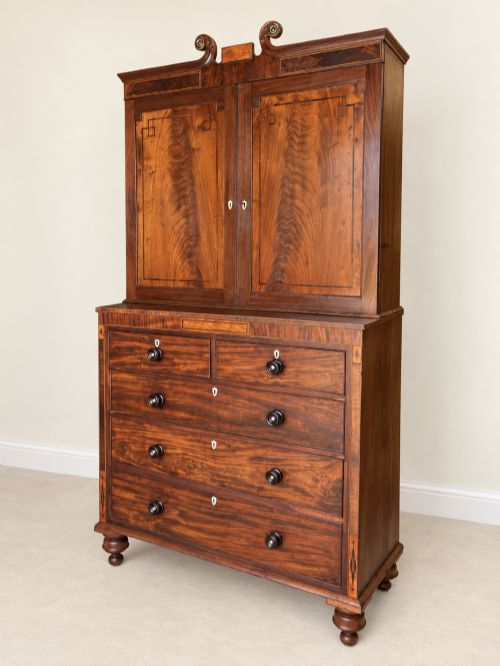
- A large storage cabinet featuring upper doors enclosing sliding trays or shelves, positioned above a chest of lower drawers. This form was traditionally utilised for flat-folding textiles before vertical wardrobe hanging became standard.
- Tallboy
- A tall storage chest comprising a double-carcass chest of drawers stacked upon a further base section, sometimes topped with a cornice. These pieces maximise vertical storage floor space in smaller bedchambers.
- Compactum
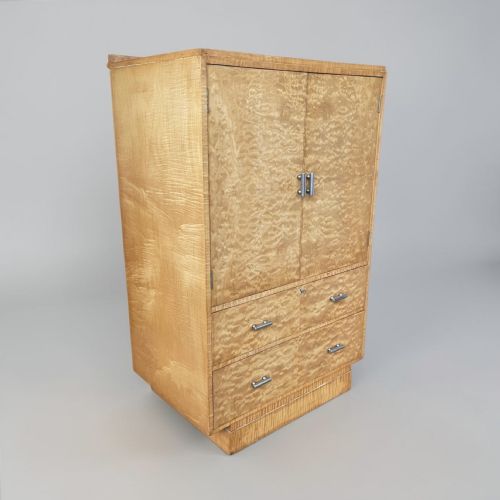
- A fitted wardrobe design introduced in the later nineteenth century that combines hanging spaces, sliding trays, and multiple drawers within a single unified footprint. They represent advanced interior partitioning for clothing.
- Marquetry
- The decorative technique of applying thin veneers of various woods, bone, or ivory onto a structural core to form intricate pictorial or floral motifs. It is frequently observed on Dutch and English walnut pieces.
- Cornice
- The moulded architectural projection running along the top edge of a cabinet or wardrobe. It often conceals the joint where the upper crown meets the main body of the furniture.
Antique Linen Cabinet: Frequently Asked Questions
What is a linen press?
A linen press is a large storage piece consisting of upper cupboard doors housing sliding trays, paired with a chest of drawers below. They were built to store household linens flat rather than hanging them.
Over time, many of these cabinets have been converted internally with clothes rails to accommodate modern garment storage while retaining their traditional exterior proportions.
How do I date an antique cabinet?
Dating relies on observing timber choices, construction methods, and stylistic details such as brass hardware, bracket feet, or cornice moulding profiles. Georgian pieces often display rich mahogany with cockbeaded drawer edges, while Victorian examples frequently utilise heavier walnut or pine.
Examining the secondary woods inside drawer linings and the nature of the hand-cut dovetails provides further confirmation of the manufacturing period.
Can I use a linen press as a wardrobe?
Many buyers adapt these cabinets for modern bedroom use by removing internal sliding trays to insert a hanging rail. The deep proportions of Georgian and Victorian presses make them well-suited for bulky garments.
Unmodified examples retain their original sliding trays, which suit folded knitwear, bedlinen, and accessories.
What is the difference between an armoire and a press?
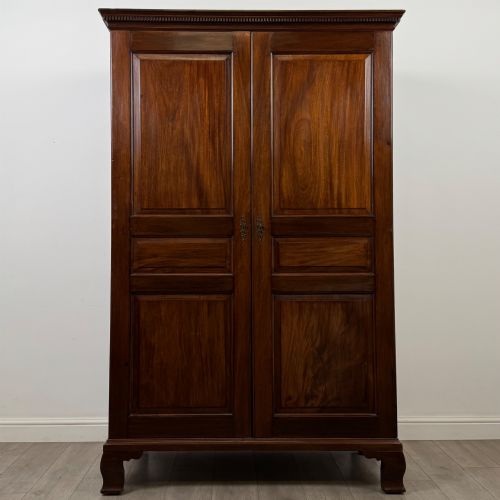
An armoire is typically a tall, two-door wardrobe designed primarily for hanging garments behind full-length doors, originating largely from continental European traditions. A linen press traditionally incorporates horizontal sliding shelves in the upper section with drawers underneath.
While both serve as major bedroom storage furniture, their internal layouts reflect different historical approaches to clothing organisation.
How do I care for antique wood furniture?
Maintaining antique timber involves keeping pieces away from direct heat sources and dramatic humidity fluctuations that cause wood to split or warp. Applying natural beeswax periodically nourishes the polish and protects the surface finish.
Avoid using modern silicone sprays, which penetrate the grain and damage the historic patina accumulated over centuries.