

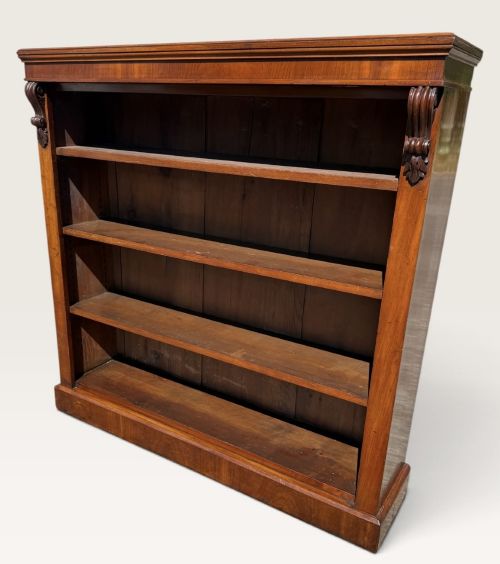
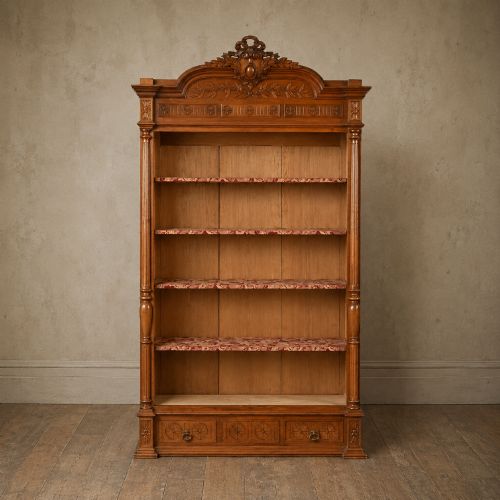
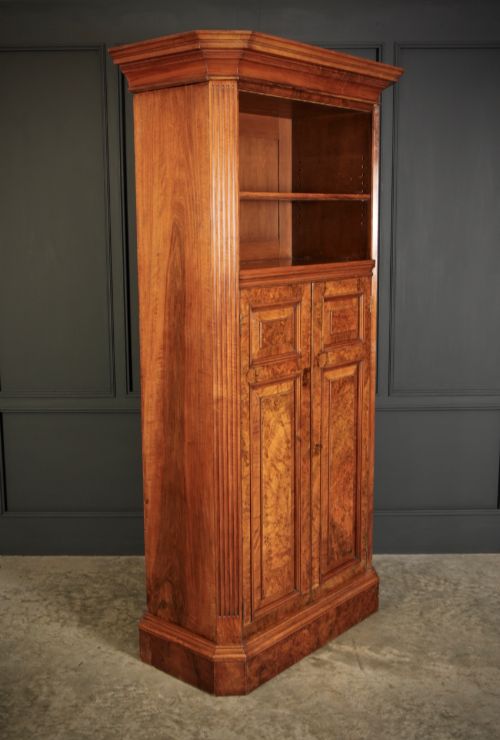
Victorian Walnut Shelving
Victorian walnut shelving brings together rich timber and tiered display forms, offering a practical yet decorative way to organise books and ornaments.
Victorian Walnut Shelving
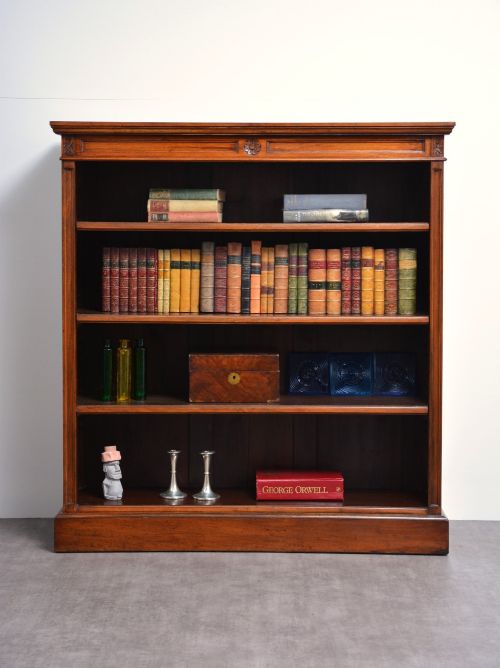
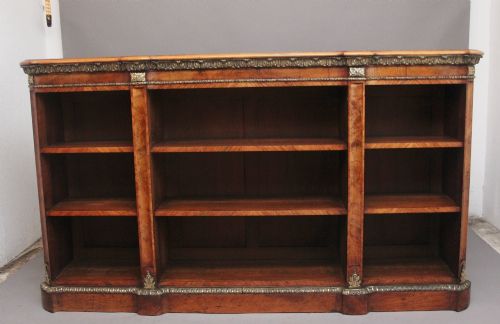
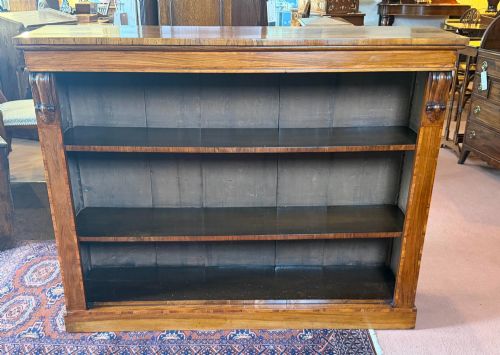
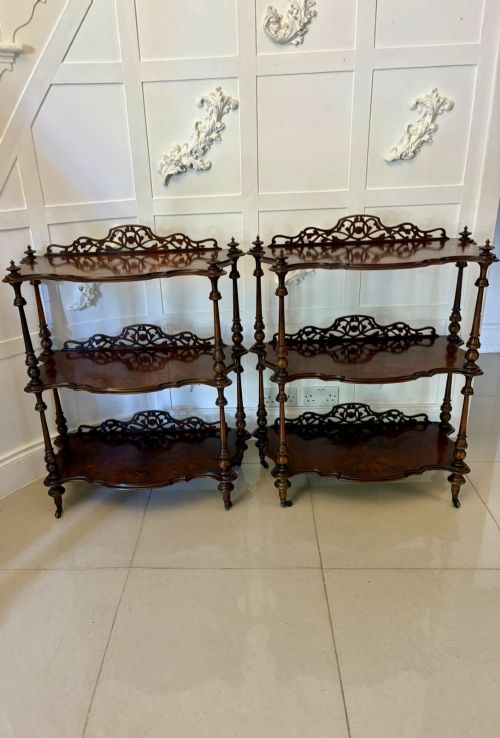
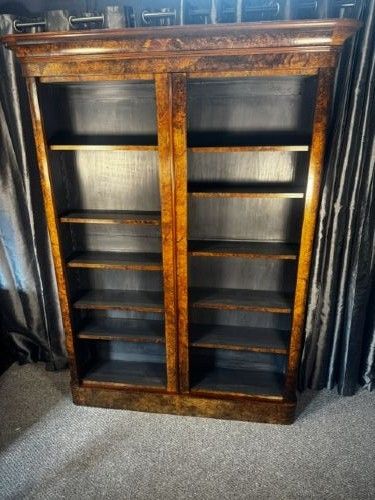
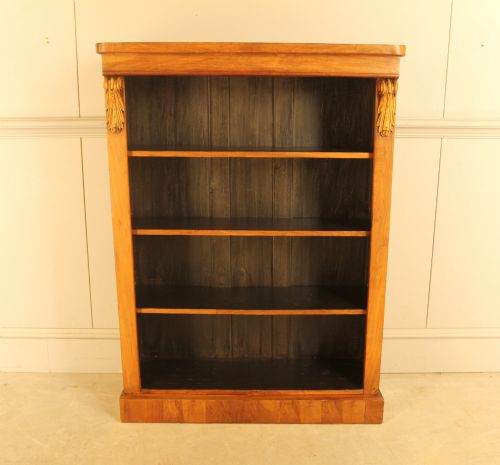
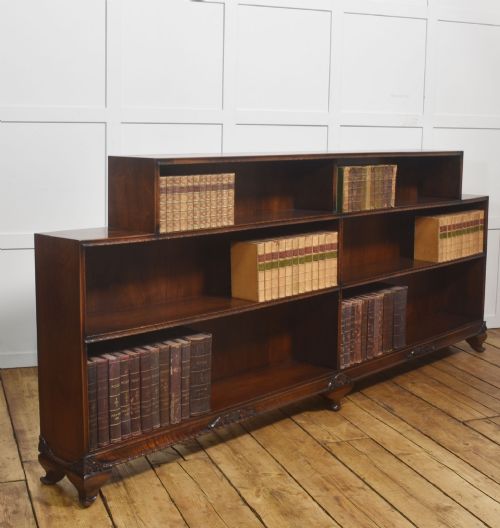
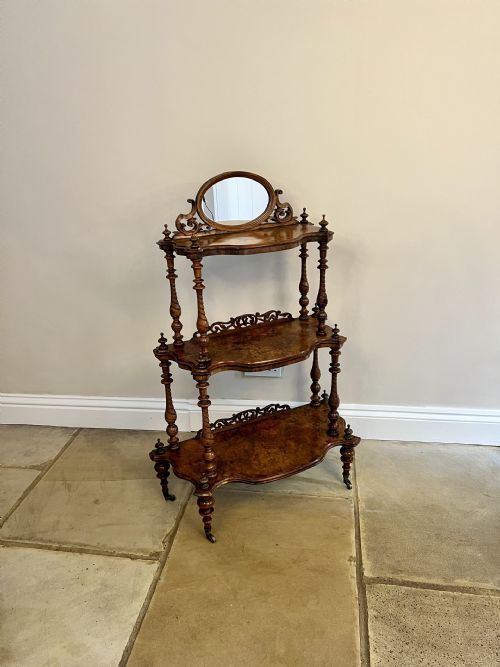
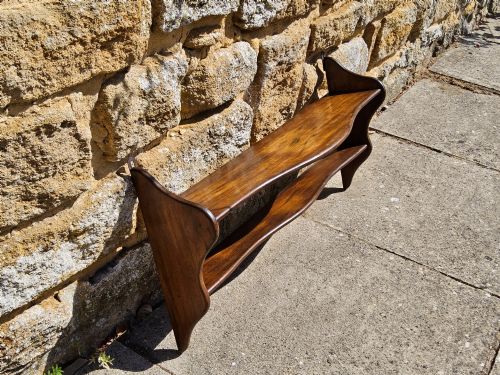
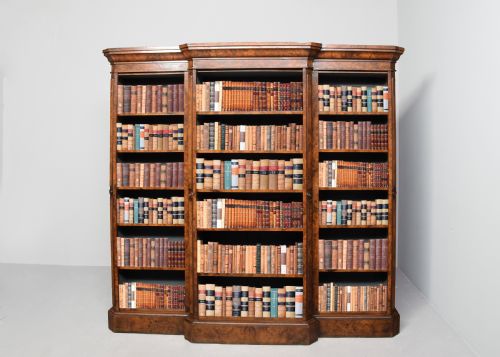
Victorian walnut shelving encompasses open bookcases, multi-tiered whatnots, corner stands, and wall-mounted shelves originating across the nineteenth century. Buyers searching this phrase meet everything from neat corner whatnots and hanging wall cabinets to large breakfront library bookcases.
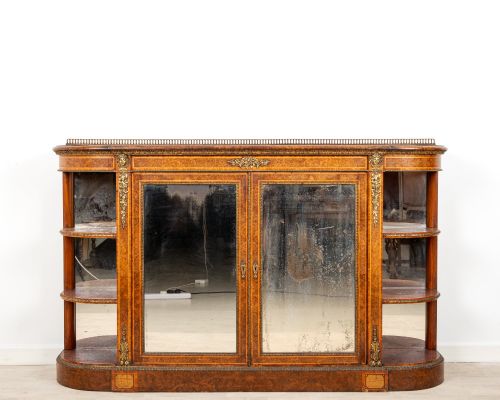
The material palette spans plain timber to highly figured burr veneers, frequently augmented with brass, ormolu mounts, and mirrored doors. Pieces emerge in distinct stylistic revivals, including William IV and French Rococo Revival forms.
Materials and Technique
Cabinetmakers utilised solid timber frames combined with walnut veneer and burr walnut to create highly decorative surface grain patterns. Interior shelving often incorporates adjustable wooden supports.
Metal mounts in brass and ormolu add structural highlights and decorative contrast to the timber surfaces. Glazed doors and mirrored panels appear on larger cabinet and credenza forms.
Listings feature pieces spanning the Victorian era from the 1840s through to 1910, alongside William IV and continental examples.
Factors of Construction
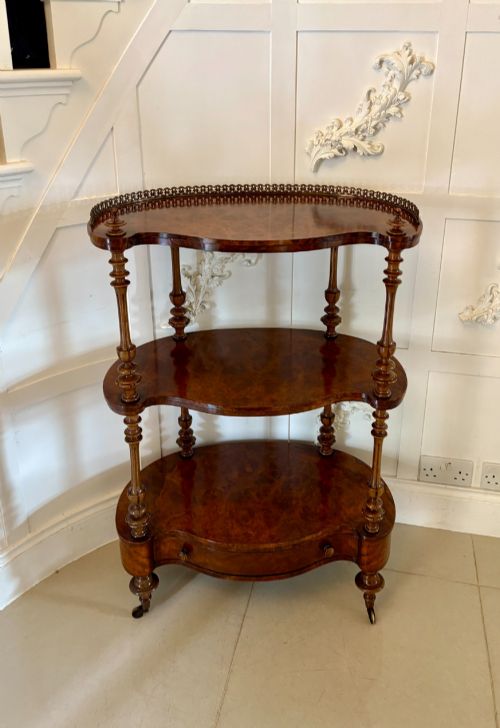
The distinction between tiers rests on the choice of timber and the complexity of the silhouette, such as serpentine shaping on whatnots. Plain walnut surfaces contrast with densely figured burr veneers and matched grain patterns.
Additional ornamentation like cast ormolu mounts, inlaid details, and maker stamps elevate specific pieces above standard workshop production.
Johnstone and Jeanes·Gillows
The Victorian Walnut Shelving Glossary
- Whatnot
- A multi-tiered piece of furniture designed for displaying ornaments and small objects. These stands typically feature three or more open shelves supported by slender columns.
- Etagere
- An open tiered piece for display, frequently associated with French design influences. This form mirrors the function of the whatnot.
- Credenza
- A low cabinet enclosed by doors, often featuring mirrored panels and ormolu mounts. These pieces provide concealed storage alongside top display surfaces.
- Burr Walnut
- A specialised timber cut from walnut tree growths, yielding intricate swirling grain patterns. Cabinetmakers applied this veneer to primary display surfaces for decorative impact.
Victorian Walnut Shelving: Frequently Asked Questions
What is a whatnot?
A whatnot is a tiered open shelving unit designed specifically for displaying ornaments and decorative objects in nineteenth-century interiors.
These pieces typically feature several graduated shelves supported by turned columns, appearing in corner or freestanding formats.
How do I use an open bookcase?
Open bookcases provide accessible storage for book collections while displaying bindings and decorative items within a room.
Many period examples include adjustable shelves, allowing the interior height to be adapted for different volumes.
Where were wall shelves placed?
Wall shelves and hanging cabinets were mounted in parlours and studies to hold small ornaments or books without taking up floor space.
Their compact scale makes them suitable for hanging above sideboards or desks.
What is burr walnut?
Burr walnut is a veneer taken from the knotted growth of a walnut tree, creating complex and highly figured grain patterns.
Cabinetmakers utilised this timber on prominent surfaces of bookcases and whatnots to showcase decorative movement.