





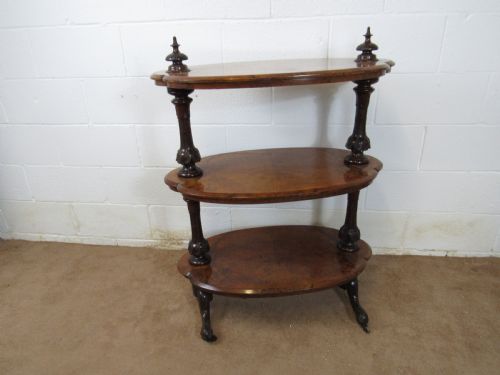
Dark Walnut Whatnot
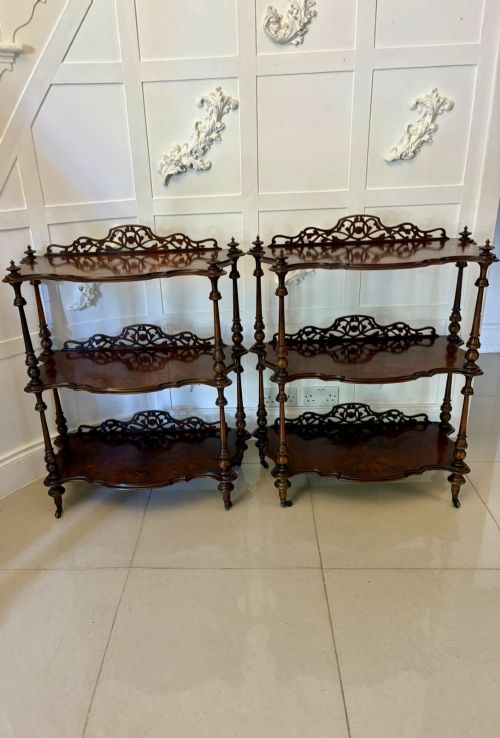
These dark walnut whatnots are tiered Victorian display stands built to hold books and ornaments in the nineteenth-century interior.
Dark Walnut Whatnot
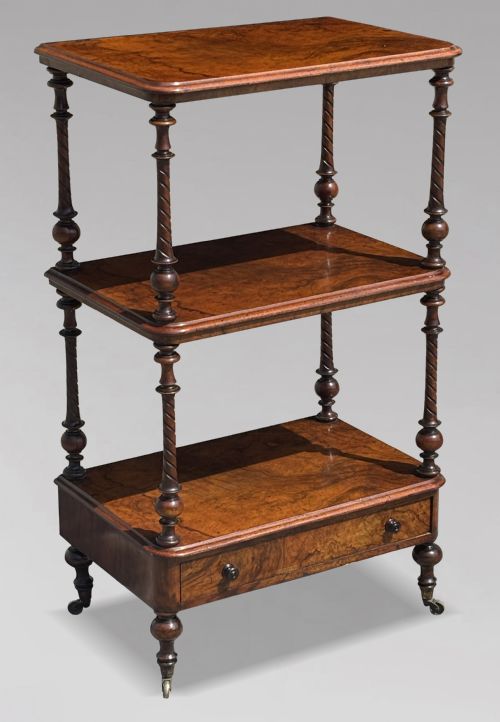
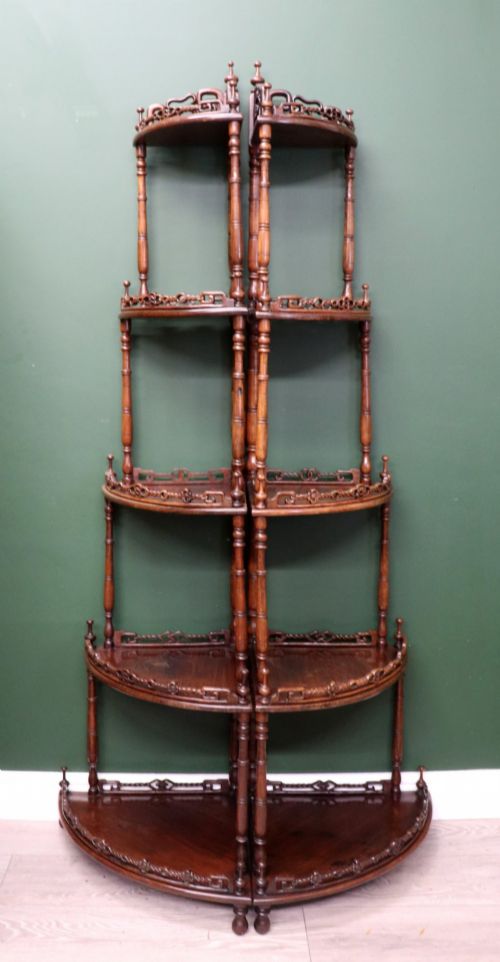
When you search for a dark walnut whatnot, you are looking at multi-tiered Victorian display stands and étagères designed for the nineteenth-century parlour. These pieces provide open shelving supported by turned or carved uprights, often featuring corner configurations or freestanding forms.
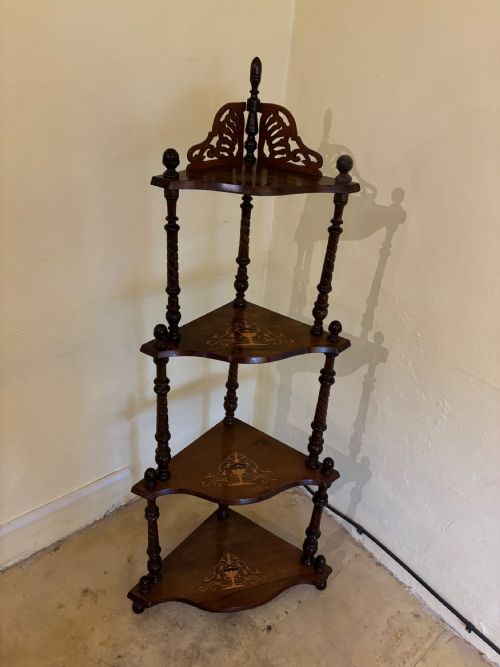
The versions you are most likely to meet on this page date from the Victorian period, spanning the mid-nineteenth century around eighteen fifty to eighteen eighty. They appear in standard rectilinear formats or as specialised corner shelving units tailored to make use of awkward spaces.
Makers of the era utilised the deep, rich tones of walnut and burr walnut to construct these display units. Many examples integrate decorative elements such as wood inlay, brass fittings, and carved detailing suited to country house interiors.
How they were made
Cabinetmakers constructed these pieces primarily from solid walnut and burr walnut veneers, selecting timber for its dramatic grain patterns. Wood inlay work frequently enhances the shelves, adding geometric or botanical motifs into the primary surface.
Structural elements often incorporate turned upright columns and carved supports, occasionally complemented by brass accents or glass components. Joinery from the period relies on traditional methods to secure multiple tiers while maintaining stability for display purposes.
Listings feature Victorian pieces utilising walnut, burr walnut, mahogany, brass, and glass across various shelf formats.
What varies in quality
Quality in these pieces depends heavily on the selection of timber veneers and the intricacy of the carving. Burr walnut surfaces with high figure contrast sit at the top of the range, offering a richer visual depth than plain walnut boards.
The presence of specialised craftsmanship, such as fine wood inlay work and exhibition-quality carving, separates standard domestic furniture from exceptional pieces. Structural ambition, including freestanding multi-tier formats and paired sets, also defines the upper tier of quality.
The Dark Walnut Whatnot Glossary
- Whatnot
- A set of open shelves used for displaying ornaments, books, and small objects. These tiered stands gained popularity during the Victorian era for domestic display.
- Etagere
- A piece of furniture consisting of a set of open shelves for displaying small articles. The term is often used interchangeably with whatnot in nineteenth-century contexts.
- Burr Walnut
- Timber taken from a tree growth or burr, yielding highly figured and swirling grain patterns. Cabinetmakers prized this material for decorative veneering on high-status furniture.
- Wood Inlay
- The technique of inserting pieces of contrasting timber into a solid wood base to form decorative patterns. This method adds surface ornamentation to shelves and tabletops.
- Corner Whatnot
- A specialised shelving unit designed to fit squarely into the corner of a room. These pieces maximise display space in smaller Victorian interiors.
Dark Walnut Whatnot: Frequently Asked Questions
What is a dark walnut whatnot used for?
These pieces function primarily as tiered display stands for books, ceramics, and ornaments in Victorian rooms.
Their open shelving design allows owners to showcase decorative objects from multiple angles.
How do I date a Victorian whatnot?
Dating relies on examining the timber selection, construction methods, and stylistic cues present in the piece.
Examples from this selection date from the mid to late nineteenth century, specifically between eighteen fifty and eighteen eighty.
What is the difference between a whatnot and an etagere?
Both terms describe multi-tiered shelving units used for display in nineteenth-century interiors.
While regional preferences varied, the terms frequently describe the same form of open furniture.
Where should I place a corner whatnot?
Corner whatnots fit directly into ninety-degree room angles to utilise empty floor space efficiently.
They provide vertical display storage without crowding the main circulation areas of a room.