
Victorian Walnut Nursing Chair
A victorian walnut nursing chair brings low, compact seating and carved timber into the bedroom or parlour.
Victorian Walnut Nursing Chair
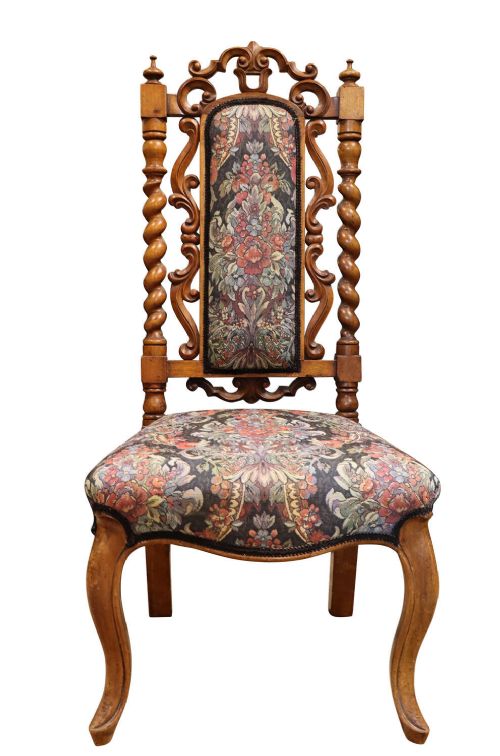
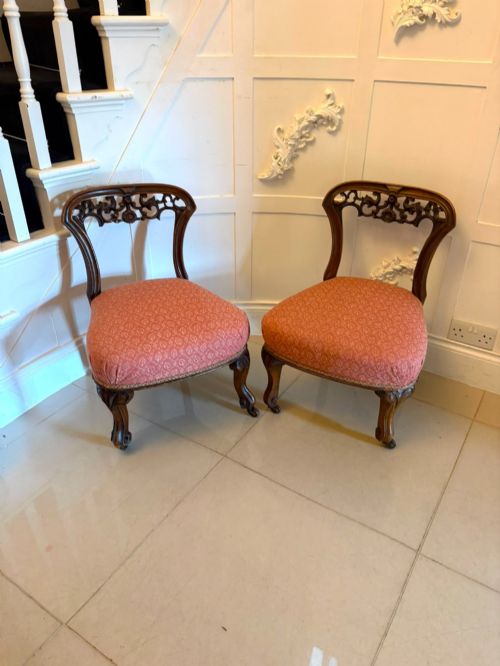
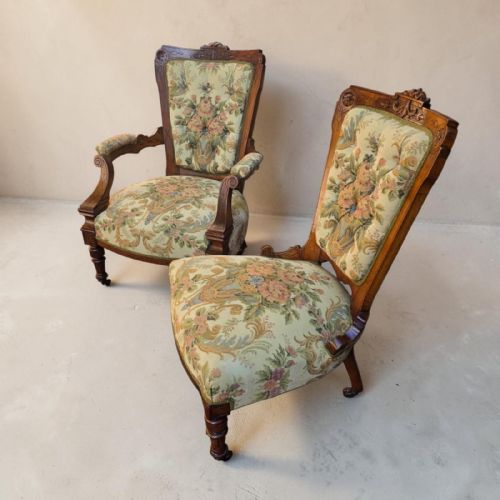
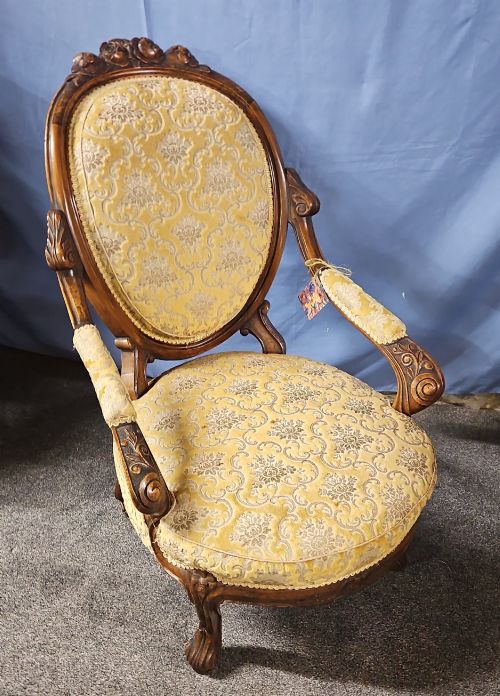
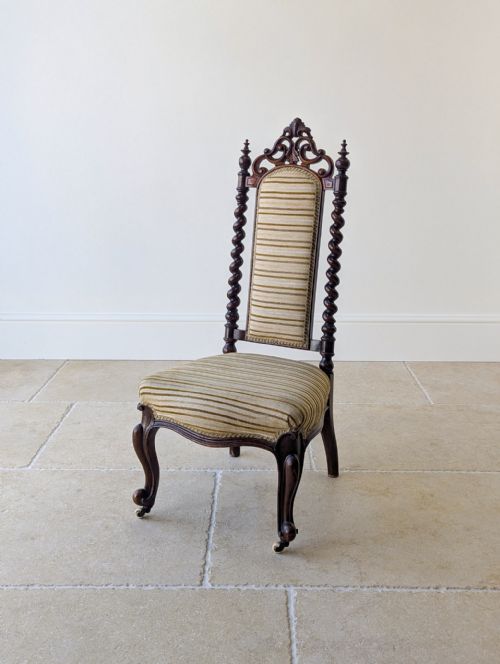
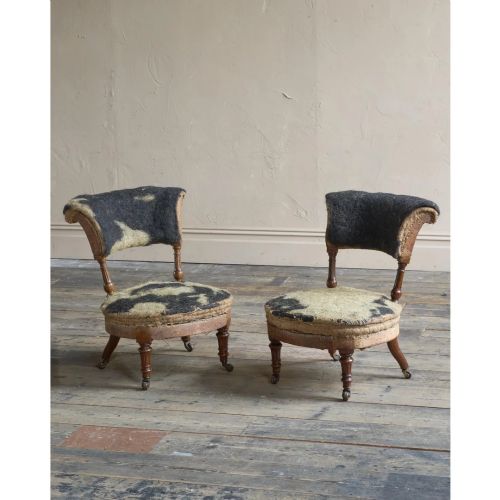
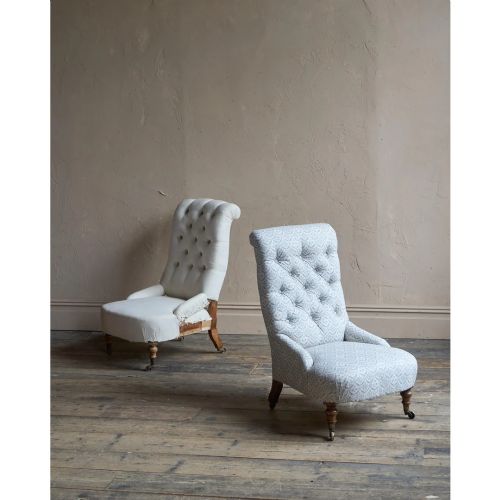
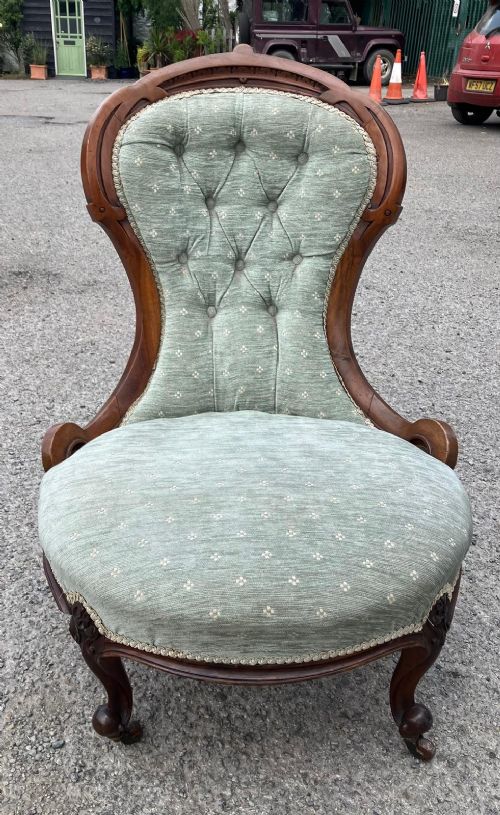
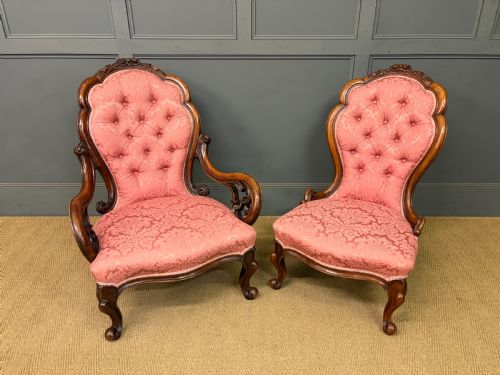
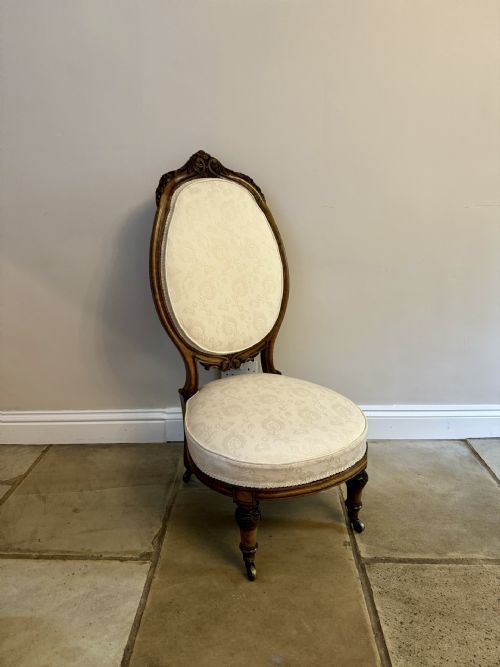
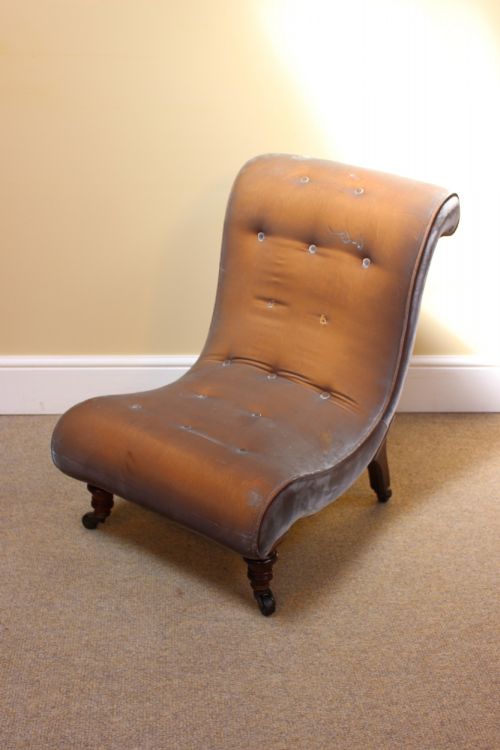
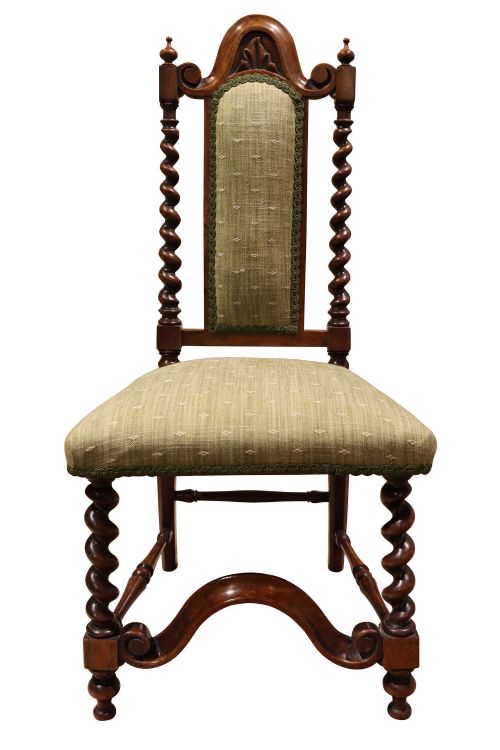
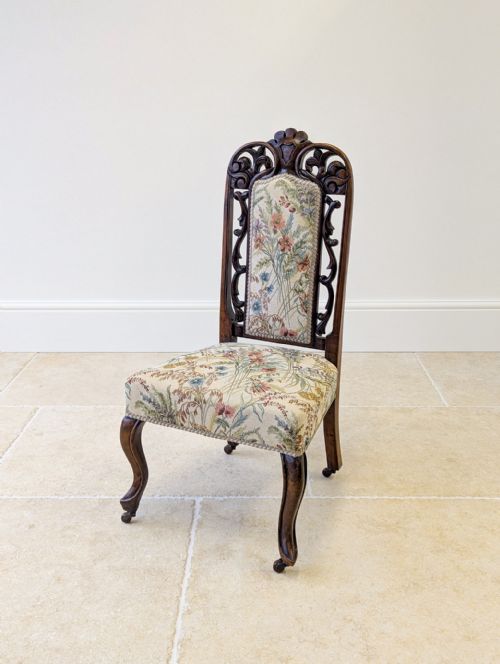
Makers shaped these pieces into various forms such as slipper chairs, spoon-backs, and high-back parlour chairs. The timber frame is almost invariably solid walnut, often shaped with carved details or cabriole legs.
Buyers also encounter related bedroom and salon chairs that share the low proportions and upholstered seats characteristic of the type.
Materials and construction
Frames rely upon solid walnut for its rich grain and capacity for intricate hand-carved ornamentation. Joinery incorporates traditional methods to support the stress placed on low-slung, compact seating.
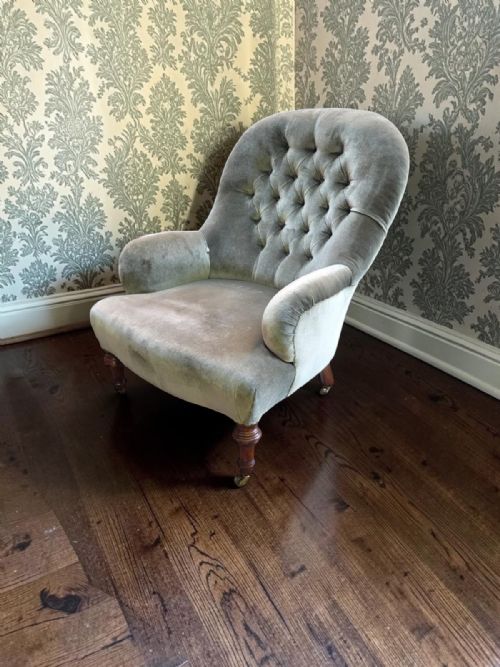
Upholstery uses textiles such as velvet, tapestry, linen, and needlework, frequently secured with buttoning or brass tacks over stuffing supported by webbing and springs.
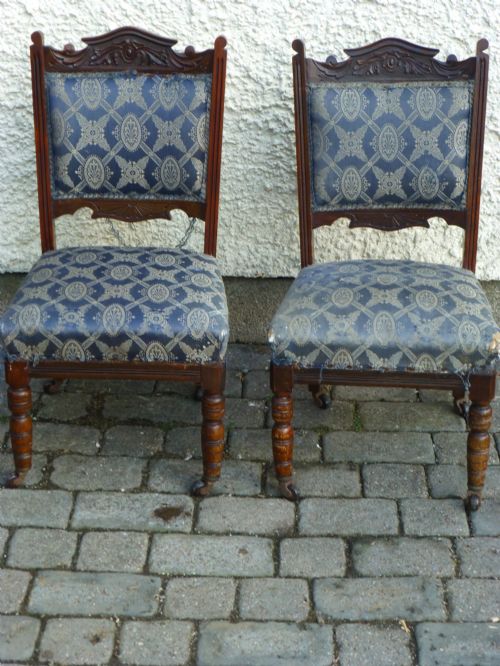
Listings feature walnut frames paired with tapestry, velvet, and ceramic castors across the Victorian and Edwardian periods.
Distinctions in craftsmanship
The distinction between standard production and exhibition quality lies in the crispness of the hand-carving on the walnut frame and the proportion of the silhouette. Superior examples exhibit fluid lines, deeply sculpted wood, and robust structural integrity.
Upholstery condition varies widely, with original period tapestry or needlework elevating the historical interest, while other pieces require complete re-upholstery to restore their utility.
Howard and Sons·Hindley and Sons·R Whytock of Edinburgh·Holland and Sons
The Victorian Walnut Nursing Chair Glossary
- Nursing chair
- A low-seated chair designed for comfort during nursery duties or dressing. They often lack arms to accommodate bulky nineteenth-century garments.
- Spoon-back
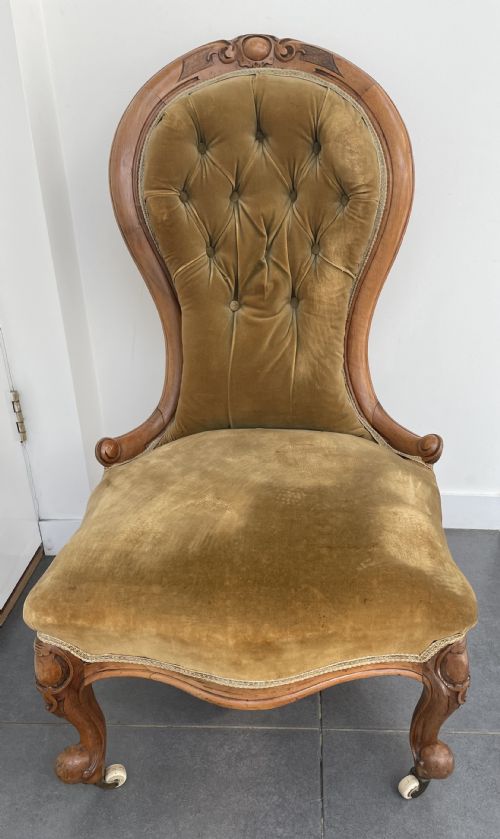
- A padded chair back shaped in a concave oval resembling the bowl of a spoon. This design conforms to the contour of the sitter's spine.
- Cabriole leg
- A furniture leg that curves out and then in, commonly ending in a scroll or plain foot. It derives inspiration from animal legs.
- Prie-dieu chair
- A devotional prayer chair featuring a high, narrow back and a low seat, sometimes equipped with a shelf for kneeling.
- Button-back
- An upholstery technique where buttons are pulled deep into the padding to create a quilted, tufted diamond pattern. It secures the internal stuffing while adding texture.
Victorian Walnut Nursing Chair: Frequently Asked Questions
Why are these chairs lower than standard armchairs?
The low seat height was originally intended to make dressing or nursing infants easier while wearing heavy layered garments of the period.
This proportion also gives the furniture a compact silhouette that fits well in smaller bedrooms or dressing rooms today.
Can I use a nursing chair in a modern living room?
Their compact size makes them suitable as accent or occasional seating in sitting rooms, studies, or hallways.
They pair effectively with both antique and contemporary interior schemes due to their sculptural walnut frames.
How do I distinguish an early Victorian chair from a late one?
Early examples from the 1840s and 1850s often feature heavy scrolling woodwork, serpentine rails, and deep spoon-backs. Later nineteenth-century pieces may show lighter framing or influences from the Aesthetic Movement.
Edwardian interpretations tend to incorporate simpler lines while retaining the low seat format.
What does re-upholstery mean for these chairs?
Many listings require new fabric and internal padding due to the natural degradation of nineteenth-century materials over time.
Re-upholstery allows owners to select textiles that match their interior decor while preserving the underlying walnut frame.