



Carved Walnut Twist Chair
A carved walnut twist chair brings tactile warmth and historic presence to a room through dark timber and spiralling uprights.
Carved Walnut Twist Chair
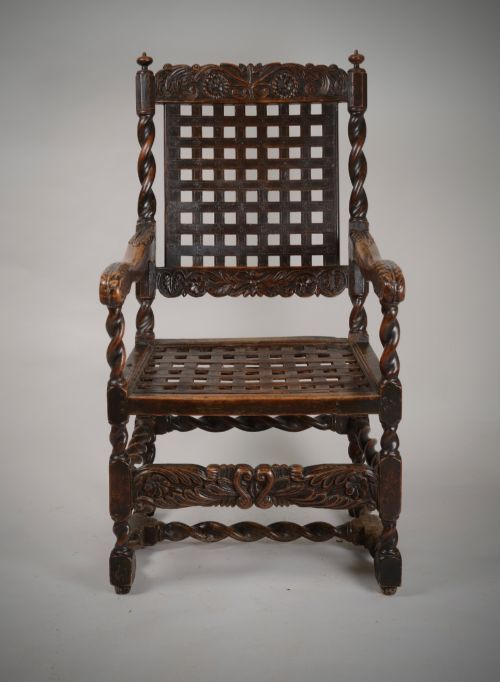
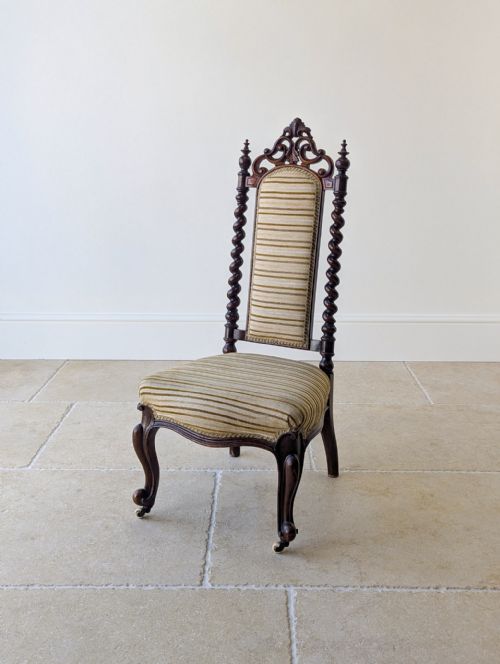
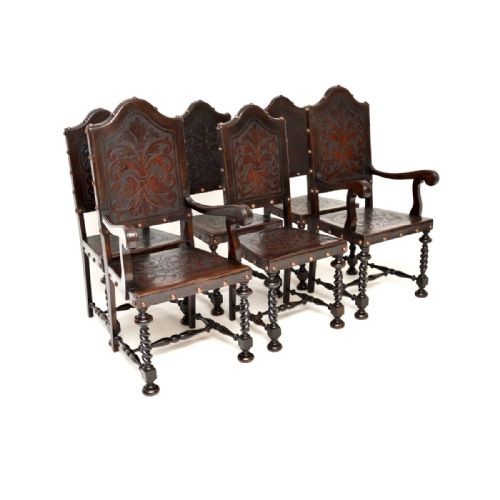
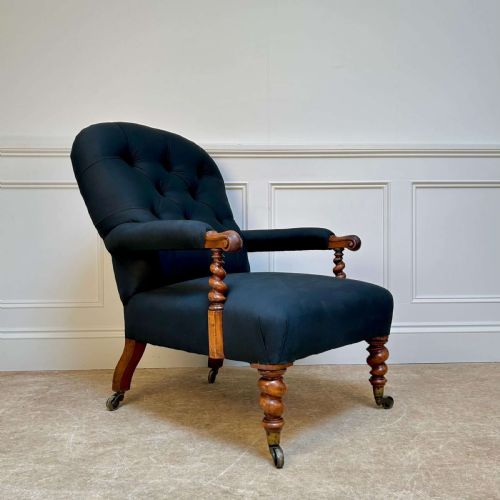
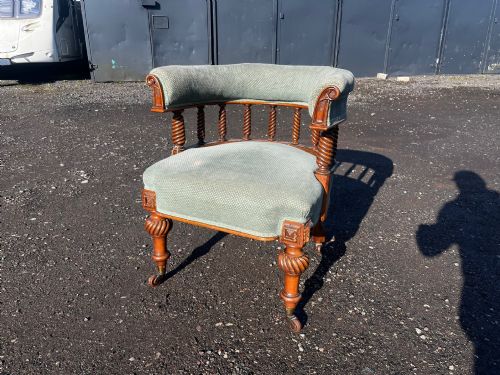
When you search for a carved walnut twist chair, you encounter seating built across several centuries, with Victorian revivals and 17th Century originals forming the core of the selection. These pieces range from compact parlour chairs and hall chairs to grand armchairs, elbow chairs, and sets of dining chairs.
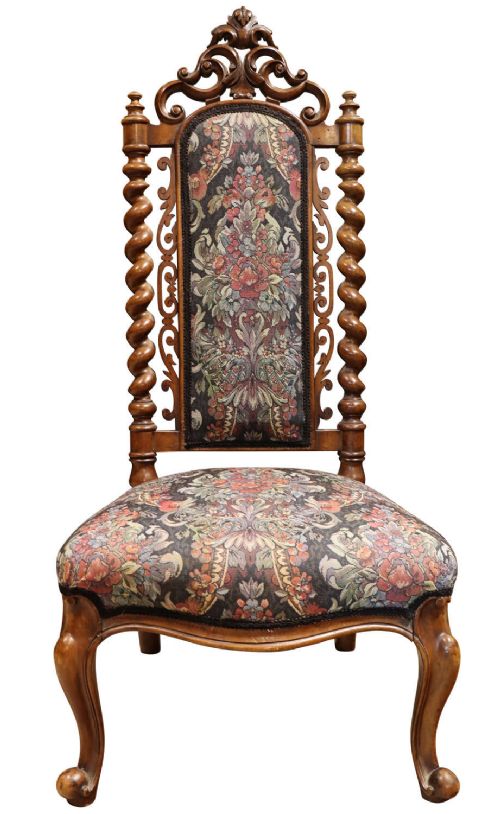
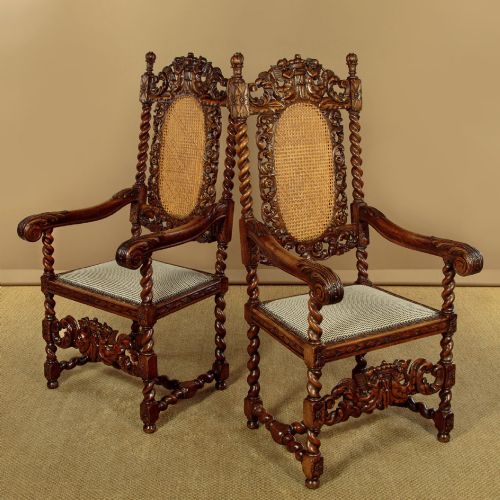
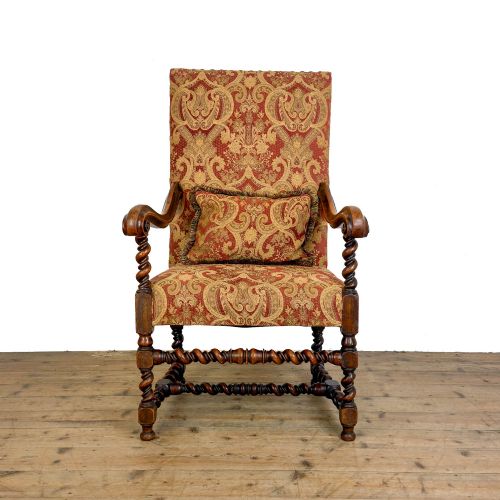
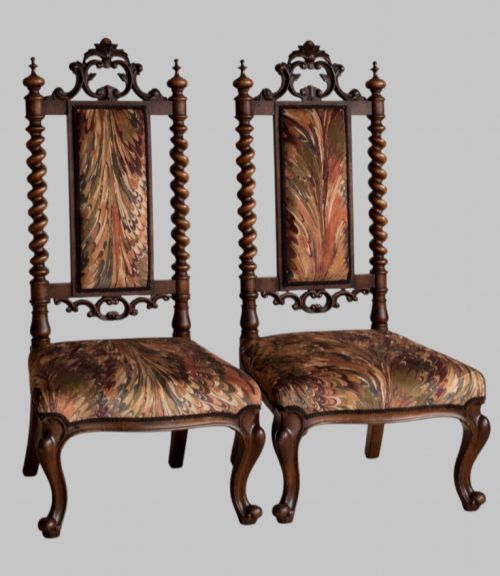
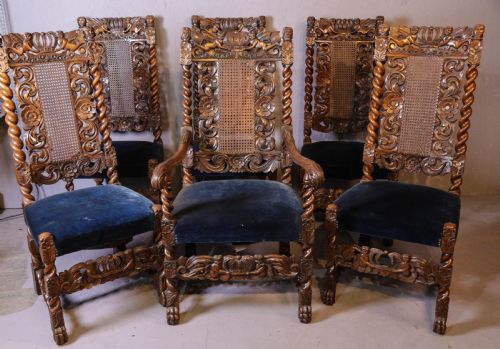
The version you are most likely to meet on this page is a Victorian interpretation, often drawing on Carolean, Charles II, or Renaissance Revival styles. These chairs frequently feature high backs, open arms, and turned wooden supports alongside period upholstery.
How they were made
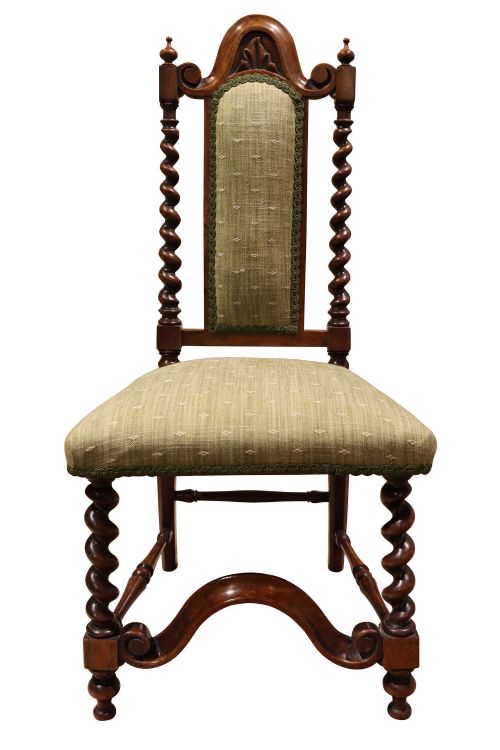
Maker's workshops built these chairs using solid walnut, shaping the timber with lathe-turned barley twist or rope legs and uprights. Artisans embellished the frames with deep hand-carving along the crest rails and stretchers.
Upholstery methods varied by period, attaching materials such as leather, cane, velvet, tapestry fabric, and brass accents directly to the wooden framework using traditional stuffing and tacking techniques.
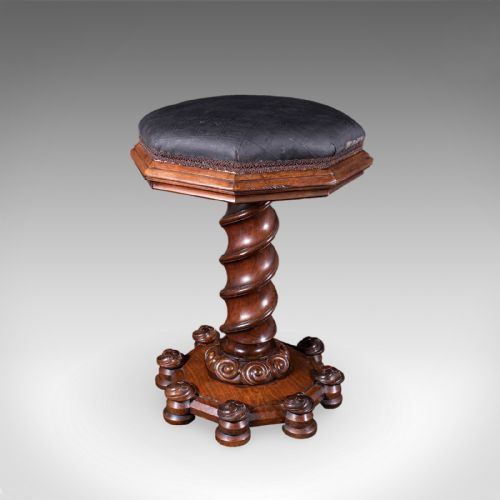
One chapel organist ensured proper Sunday posture by sitting on a dedicated walnut music riser.
What varies in quality
The standard of a carved walnut twist chair depends on the crispness and depth of the hand-carving on the crest rails and stiles. Superior examples display sharp, detailed relief work rather than shallow or soft shaping.
Construction integrity also separates the tier of pieces, seen in the tightness of the frame joints and the authenticity of the timber grain. Chairs retaining their original period upholstery materials or high-grade replacement leather hold a distinct distinction.
Hindley & Sons
The Carved Walnut Twist Chair Glossary
- Barley twist
- A spiralling turned wooden leg or support resembling the shape of barley sugar. This decorative turning technique defined much of 17th Century seating and its 19th Century revivals.
- Carolean
- A stylistic term referring to the reign of Charles II, characterised by rich walnut frames, intricate carving, and scrolling details. Pieces in this aesthetic often incorporate crown and cherub motifs.
- Prie-dieu
- A devotional prayer chair featuring a low seat and a high, padded shelf back designed for kneeling and leaning during private worship. These ecclesiastical examples frequently utilise walnut framing.
- Stretcher
- A horizontal wooden rail connecting the legs of a chair to provide structural rigidity. On twist chairs, these stretchers often feature matching turned spirals.
- Crest rail
- The uppermost horizontal member of a chair back, typically shaped and carved. It serves as the primary decorative focal point for Victorian and 17th Century seating.
Carved Walnut Twist Chair: Frequently Asked Questions
How do I date a twist chair?
Dating relies on examining the construction methods, tool marks, and wood patination visible on the underside and frame joints. 17th Century originals show distinct hand-tooling, whereas Victorian revival pieces exhibit 19th Century manufacturing signatures.
The style of the carving and the turning also provide clues, as revival periods integrated earlier motifs like those from the Carolean era into later Victorian parlour and dining chairs.
Are these chairs comfortable for daily use?
Many examples, particularly Victorian parlour and armchairs, offer supportive upright seating with padded seats and backs. Models with cane or wooden seats benefit from adding cushions for extended sitting.
Dining chairs and hall chairs are typically firmer and more upright, designed originally for formal settings rather than lounging.
How do I care for antique walnut furniture?
Maintain the timber by keeping the chair away from direct heat sources and strong sunlight, which can dry out and split the walnut. Apply a quality wax periodically to nourish the grain and preserve the surface sheen.
Protect upholstered sections by avoiding moisture and gently vacuuming textiles using a soft brush attachment.